Close Menu
TechCentralTechCentral

    Subscribe to the newsletter

    Get the best South African technology news and analysis delivered to your e-mail inbox every morning.

    Facebook X (Twitter) YouTube LinkedIn
    WhatsApp Facebook X (Twitter) LinkedIn YouTube
    TechCentralTechCentral
    • News
      Vuyani Jarana: Mobile coverage masks a deeper broadband failure

      Vuyani Jarana: Mobile coverage masks a deeper broadband failure

      30 January 2026
      SABC Plus to flight Microsoft AI training videos

      SABC Plus to flight Microsoft AI training videos

      30 January 2026
      Fibre ducts

      Fibre industry consolidation in KZN

      30 January 2026
      Watts & Wheels S1E3: 'BYD's Corolla Cross challenger'

      Watts & Wheels S1E3: ‘BYD’s Corolla Cross challenger’

      30 January 2026
      What ordinary South Africans really think of AI

      What ordinary South Africans really think of AI

      30 January 2026
    • World
      Apple acquires audio AI start-up Q.ai

      Apple acquires audio AI start-up Q.ai

      30 January 2026
      SpaceX IPO may be largest in history

      SpaceX IPO may be largest in history

      28 January 2026
      Nvidia throws AI at the weather

      Nvidia throws AI at weather forecasting

      27 January 2026
      Debate erupts over value of in-flight Wi-Fi

      Debate erupts over value of in-flight Wi-Fi

      26 January 2026
      Intel takes another hit - Intel CEO Lip-Bu Tan. Laure Andrillon/Reuters

      Intel takes another hit

      23 January 2026
    • In-depth
      How liberalisation is rewiring South Africa's power sector

      How liberalisation is rewiring South Africa’s power sector

      21 January 2026
      The top-performing South African tech shares of 2025

      The top-performing South African tech shares of 2025

      12 January 2026
      Digital authoritarianism grows as African states normalise internet blackouts

      Digital authoritarianism grows as African states normalise internet blackouts

      19 December 2025
      TechCentral's South African Newsmakers of 2025

      TechCentral’s South African Newsmakers of 2025

      18 December 2025
      Black Friday goes digital in South Africa as online spending surges to record high

      Black Friday goes digital in South Africa as online spending surges to record high

      4 December 2025
    • TCS
      TCS+ | How Cloud On Demand is helping SA businesses succeed in the cloud - Xhenia Rhode, Dion Kalicharan

      TCS+ | Cloud On Demand and Consnet: inside a real-world AWS partner success story

      30 January 2026
      Watts & Wheels S1E3: 'BYD's Corolla Cross challenger'

      Watts & Wheels S1E2: ‘China attacks, BMW digs in, Toyota’s sublime supercar’

      23 January 2026

      TCS+ | Why cybersecurity is becoming a competitive advantage for SA businesses

      20 January 2026
      Watts & Wheels S1E3: 'BYD's Corolla Cross challenger'

      Watts & Wheels: S1E1 – ‘William, Prince of Wheels’

      8 January 2026
      TCS+ | Africa's digital transformation - unlocking AI through cloud and culture - Cliff de Wit Accelera Digital Group

      TCS+ | Cloud without culture won’t deliver AI: Accelera’s Cliff de Wit

      12 December 2025
    • Opinion
      South Africa's skills advantage is being overlooked at home - Richard Firth

      South Africa’s skills advantage is being overlooked at home

      29 January 2026
      Why Elon Musk's Starlink is a 'hard no' for me - Songezo Zibi

      Why Elon Musk’s Starlink is a ‘hard no’ for me

      26 January 2026
      South Africa's new fibre broadband battle - Duncan McLeod

      South Africa’s new fibre broadband battle

      20 January 2026
      AI moves from pilots to production in South African companies - Nazia Pillay SAP

      AI moves from pilots to production in South African companies

      20 January 2026
      South Africa's new fibre broadband battle - Duncan McLeod

      ANC’s attack on Solly Malatsi shows how BEE dogma trumps economic reality

      14 December 2025
    • Company Hubs
      • Africa Data Centres
      • AfriGIS
      • Altron Digital Business
      • Altron Document Solutions
      • Altron Group
      • Arctic Wolf
      • AvertITD
      • Braintree
      • CallMiner
      • CambriLearn
      • CYBER1 Solutions
      • Digicloud Africa
      • Digimune
      • Domains.co.za
      • ESET
      • Euphoria Telecom
      • Incredible Business
      • iONLINE
      • IQbusiness
      • Iris Network Systems
      • LSD Open
      • NEC XON
      • Netstar
      • Network Platforms
      • Next DLP
      • Ovations
      • Paracon
      • Paratus
      • Q-KON
      • SevenC
      • SkyWire
      • Solid8 Technologies
      • Telit Cinterion
      • Tenable
      • Vertiv
      • Videri Digital
      • Vodacom Business
      • Wipro
      • Workday
      • XLink
    • Sections
      • AI and machine learning
      • Banking
      • Broadcasting and Media
      • Cloud services
      • Contact centres and CX
      • Cryptocurrencies
      • Education and skills
      • Electronics and hardware
      • Energy and sustainability
      • Enterprise software
      • Financial services
      • Information security
      • Internet and connectivity
      • Internet of Things
      • Investment
      • IT services
      • Lifestyle
      • Motoring
      • Public sector
      • Retail and e-commerce
      • Satellite communications
      • Science
      • SMEs and start-ups
      • Social media
      • Talent and leadership
      • Telecoms
    • Events
    • Advertise
    TechCentralTechCentral
    Home » World » Big tech becomes Theresa May’s terrorism scapegoat

    Big tech becomes Theresa May’s terrorism scapegoat

    By Agency Staff24 November 2017
    Twitter LinkedIn Facebook WhatsApp Email Telegram Copy Link
    News Alerts
    WhatsApp
    Theresa May

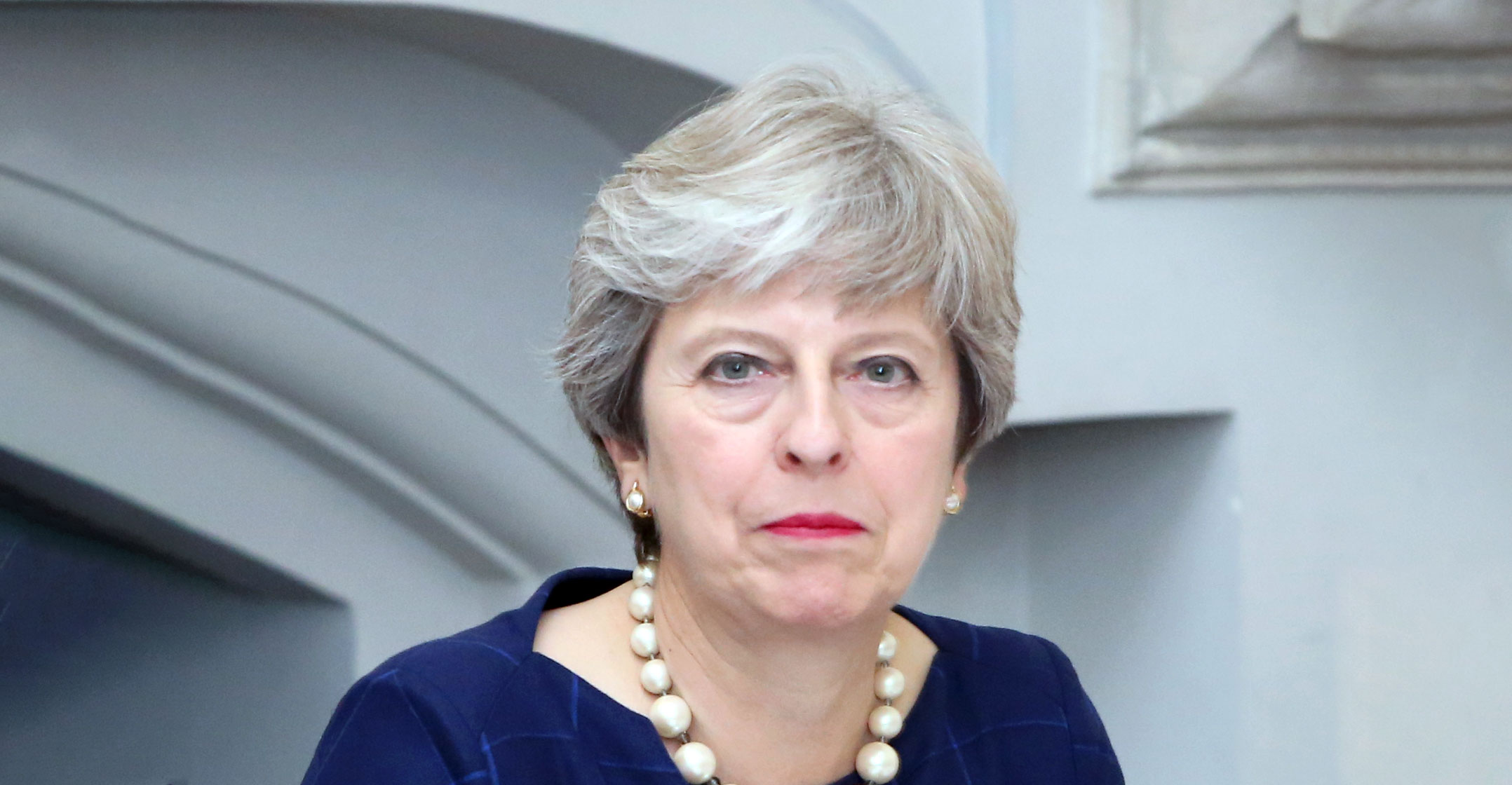
    British Prime Minister Theresa May emerged from 10 Downing Street and stepped somberly to a podium. The previous night, 3 June, three terrorists had driven a van into pedestrians on London Bridge and attacked people in nearby Borough Market, using 12-inch knives. Eight victims were dead and 48 injured. After expressing condolences to their families, May identified two forces behind the previous night’s carnage.

    They were Islamic extremist views — and American social media.

    “We cannot allow this ideology the safe space it needs to breed, yet that is precisely what the Internet and the big companies that provide Internet services provide,” she said.

    We cannot allow this ideology the safe space it needs to breed, yet that is precisely what the Internet and the big companies that provide Internet services provide

    While other European political leaders, including France’s Emmanuel Macron and Germany’s Angela Merkel, have also criticised social media for not keeping extremists off their platforms, May has gone further. Her government has made bashing Facebook, Twitter and YouTube a regular rhetorical trope following a string of terrorist attacks in the past 12 months.

    May’s rhetoric coincides with a plunge in tech companies’ reputations on both sides of the Atlantic, fuelled by revelations about Russia’s use of social media to interfere in the US presidential election, antitrust concerns and anger at the companies’ use of complex offshore structures to avoid tax.

    But turning Big Tech into Public Enemy Number One risks alienating the very firms whose support British police and intelligence agencies need to thwart terrorist threats, said the government’s independent terrorism watchdog, trial lawyer Max Hill.

    “I struggle to see how it would help if our parliament were to criminalise tech company bosses who ‘don’t do enough’,” he told a conference in July. Technology companies, he said, “need to be brought firmly onside, they do not need to be forced offside”.

    Criticism

    Alan West, a member of the house of lords who previously served as an adviser to then-Prime Minister Gordon Brown, is among politicians and security experts saying May’s government is beating up on social media companies because its own counter-terrorism strategy hasn’t worked.

    The UK’s signature programme to fight radicalisation, called Prevent, aims to identify individuals with extremist views and connect them with intervention to keep them from committing terrorist acts. Yet suicide bomber Salman Abedi, who killed 22 people at a pop concert in Manchester in May, was repeatedly flagged to authorities — and wasn’t known to Prevent, according to police. Of 7 631 referrals made to Prevent in 2015 and 2016, action was taken in only one in 20 cases, according to a home office report released in early November.

    We are making significant progress but removing all of this content within a few hours … poses an enormous technological and scientific challenge

    May’s government and her Conservative Party have pressured big tech — despite the absence of evidence that those who carried out the spate of UK attacks were radicalised on one of the large social networking platforms. (The attacker who targeted the Westminster Bridge in March, Khalid Masood, used the encrypted messaging app WhatsApp, which is owned by Facebook, as well as Telegram, a smaller messaging service. The London Bridge and Borough Market attackers are suspected of having used Telegram.)

    “It is not morally acceptable for tech giants to wash their hands of all liability when it comes to discussions on safety and security,” Vicky Ford, a Conservative lawmaker and co-chair of the cross-party parliamentary technology forum, said in an interview.

    May has proposed a two-hour timeframe for removing terrorist content, with substantial fines should the companies not comply. If adopted into law, it would be the most stringent such rule in the world.

    Sinead McSweeney, Twitter’s vice president of public policy and communications in Europe, the Middle East and Africa, said: “Terrorism is a societal problem and therefore requires a societal response.” She added: “For our part, we’ve dramatically reduced the presence of terrorist groups on Twitter.”

    Twitter said in September it has increased its use of artificial intelligence to screen for terrorist content. Worldwide, it now suspends 95% of accounts that post extremist content within hours and finds and removes 99% of offending posts without having to rely on complaints from users. It blocks three-quarters of suspect accounts before they post a single tweet, it said in a report.

    Lena Pietsch, a Facebook spokeswoman, said the company removes terrorists’ accounts and posts that support terrorism whenever it becomes aware of them, and informs authorities if needed. Facebook announced in May plans to hire thousands of additional contractors to screen for content that violates its service terms.

    A spokesman for Google’s YouTube said violent extremism is a complex problem and the company is committed to being part of the solution. YouTube’s algorithms, as of November, helped spot about 83% of the terrorist-related content it removes. And in three-quarters of removals, these automated systems spot the problematic content before anyone sees it.

    Machines are simply not at the stage where they can replace human judgment

    These efforts have helped to chase terrorist groups such as Islamic State off of the best-known social media platforms, such as Twitter, and onto smaller group chat apps like Telegram and Signal, according to Peter Neumann, who runs the International Centre for the Study of Radicalisation and Political Violence at King’s College, London. Rob Wainwright, the head of Europol, said that Telegram is “a major problem” and that Facebook, Twitter and “some others” were proving more cooperative.

    Telegram has said in messages posted to all its users that it bans Isis content and shuts down terrorist content “within hours”. The company opposes allowing security agencies to penetrate the end-to-end encryption of its messages.

    The big tech companies say their relationship with British law enforcement has never been better.

    “When I have been in the room with industry leaders and government people, there has always been a quite constructive dialogue,” said Antony Walker, deputy CEO of techUK, a trade association representing technology companies. A lawmaker, speaking on condition of anonymity because of the issue’s sensitivity, also said the government has good private communication with the industry, a sense backed up by a European security source.

    Closed-door meetings

    British home secretary Amber Rudd has conducted a series of closed-door meetings with tech executives, including in March after a terrorist attack targeted Westminster Bridge and the British Parliament. In late July, Rudd traveled to California and met with Facebook, Google, Microsoft and Twitter executives both separately and as a group.

    These exchanges have done little to temper Rudd’s public stance. At the October Conservative Party conference, she again faulted social media companies for not doing enough and said she was tired of being “sneered at” and “patronised” by technologists.

    The companies say complying with May’s proposed two-hour requirement would be difficult.

    “We are making significant progress but removing all of this content within a few hours — or indeed stopping it from appearing on the Internet in the first place — poses an enormous technological and scientific challenge,” Kent Walker, Google’s general counsel, said at the September meeting with May.

    Newscasts, terrorism experts and anti-radicalisation activists all might have legitimate cause to use snippets of terrorist videos or other extremist content. Today’s artificial intelligence is not sophisticated enough to decipher context, Walker said.

    “Machines are simply not at the stage where they can replace human judgment,” he said.  — Reported by Jeremy Kahn and Kitty Donaldson, (c) 2017 Bloomberg LP



    Amber Rudd Facebook Google Signal Telegram Theresa May WhatsApp YouTube
    WhatsApp YouTube Follow on Google News Add as preferred source on Google
    Share. Facebook Twitter LinkedIn WhatsApp Telegram Email Copy Link
    Previous ArticleYour future commute could be by taxi drone
    Next Article Kalon invests R10m in SA payments firm i-Pay

    Related Posts

    What ordinary South Africans really think of AI

    What ordinary South Africans really think of AI

    30 January 2026
    Meta, TikTok, YouTube to stand trial on youth addiction claims

    Meta, TikTok, YouTube to stand trial on youth addiction claims

    27 January 2026
    WhatsApp boosts defences for high-risk users

    WhatsApp boosts defences for high-risk users

    27 January 2026
    Company News
    Huawei turns 25 in South Africa, celebrates with major device discounts

    Huawei turns 25 in South Africa, celebrates with major device discounts

    30 January 2026
    Phishing has not disappeared, but it has grown up - KnowBe4

    Phishing has not disappeared, but it has grown up

    30 January 2026
    Smartphone affordability: South Africa's new economic divide - PayJoy

    Smartphone affordability: South Africa’s new economic divide

    29 January 2026
    Opinion
    South Africa's skills advantage is being overlooked at home - Richard Firth

    South Africa’s skills advantage is being overlooked at home

    29 January 2026
    Why Elon Musk's Starlink is a 'hard no' for me - Songezo Zibi

    Why Elon Musk’s Starlink is a ‘hard no’ for me

    26 January 2026
    South Africa's new fibre broadband battle - Duncan McLeod

    South Africa’s new fibre broadband battle

    20 January 2026

    Subscribe to Updates

    Get the best South African technology news and analysis delivered to your e-mail inbox every morning.

    Latest Posts
    Vuyani Jarana: Mobile coverage masks a deeper broadband failure

    Vuyani Jarana: Mobile coverage masks a deeper broadband failure

    30 January 2026
    TCS+ | How Cloud On Demand is helping SA businesses succeed in the cloud - Xhenia Rhode, Dion Kalicharan

    TCS+ | Cloud On Demand and Consnet: inside a real-world AWS partner success story

    30 January 2026
    Huawei turns 25 in South Africa, celebrates with major device discounts

    Huawei turns 25 in South Africa, celebrates with major device discounts

    30 January 2026
    SABC Plus to flight Microsoft AI training videos

    SABC Plus to flight Microsoft AI training videos

    30 January 2026
    © 2009 - 2026 NewsCentral Media
    • Cookie policy (ZA)
    • TechCentral – privacy and Popia

    Type above and press Enter to search. Press Esc to cancel.

    Manage consent

    TechCentral uses cookies to enhance its offerings. Consenting to these technologies allows us to serve you better. Not consenting or withdrawing consent may adversely affect certain features and functions of the website.

    Functional Always active
    The technical storage or access is strictly necessary for the legitimate purpose of enabling the use of a specific service explicitly requested by the subscriber or user, or for the sole purpose of carrying out the transmission of a communication over an electronic communications network.
    Preferences
    The technical storage or access is necessary for the legitimate purpose of storing preferences that are not requested by the subscriber or user.
    Statistics
    The technical storage or access that is used exclusively for statistical purposes. The technical storage or access that is used exclusively for anonymous statistical purposes. Without a subpoena, voluntary compliance on the part of your Internet Service Provider, or additional records from a third party, information stored or retrieved for this purpose alone cannot usually be used to identify you.
    Marketing
    The technical storage or access is required to create user profiles to send advertising, or to track the user on a website or across several websites for similar marketing purposes.
    • Manage options
    • Manage services
    • Manage {vendor_count} vendors
    • Read more about these purposes
    View preferences
    • {title}
    • {title}
    • {title}