 If anyone still has any doubts about the severity of our electricity crisis, two recent articles should act as a final wake-up call.
The first reported that cabinet had been briefed by Eskom on the risk of a nationwide blackout. This is what happens when the grid fails and everything shuts down indefinitely. In other words, when load shedding wasn’t enough to protect the grid from collapse. If this happens, we’d need to source a huge amount of electricity elsewhere to “restart” the grid. This is not available from any of our neighbours.
To avoid this catastophe, it is inevitable that we will face heavy load shedding for the foreseeable future.
In the second story, we read that the ANC had decided, at its annual lekgotla, to abandon the Independent System Market Operator Bill. This is legislation that would have taken the management of our national power grid away from Eskom, allowing far greater involvement of independent power producers.
There is only one conclusion to be drawn here: keeping Eskom’s monopoly and control is more important to the ANC than solving this crisis.
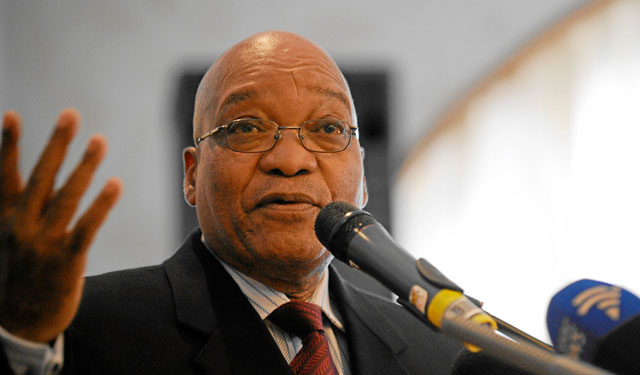
Now, more than ever, we need courageous, selfless leadership. Instead, we have President Jacob Zuma. Between his attempts at laying the blame for the infrastructure neglect on apartheid and ANC secretary general Gwede Mantashe’s preposterous assertion that our grid is strained because of “growth and development”, it’s hard to know whether to laugh or cry.
Never before has the notion of restoring power to the people seemed more pertinent.
On 12 February at 7pm, a packed national assembly in Cape Town, and millions more watching on television, will listen to Zuma’s state of the nation address (Sona). This is his opportunity to share with South Africa a frank and honest assessment of our current socioeconomic situation, along with clear plans to tackle our biggest challenges.
However, having sat through all seven of his previous Sonas, I would be very surprised if this is what we get from him. Instead we will likely be regaled with several pages of “good news” factoids, cherry-picked from reams and reams of not-so-good news. It will be little more than a state-sponsored PR exercise designed to make the ANC government, along with its provinces and municipalities, appear competent and caring.
A visitor to our shores with no prior knowledge of South Africa (more likely a visitor from Mars) might leave the national assembly with a warm, fuzzy feeling, and an image of a country bravely overcoming its past and delivering opportunities for all our people to transform their lives.
But there will be no fooling those of us who live here. We know this is not the true state of our nation.
Ours is a nation where a third of the municipalities are, to use the official euphemism, in financial distress, and unable to deliver the bare minimum of basic services. Where half the children who enroll for grade 1, don’t end up writing matric. Where connected cadres are deployed to high positions as a reward for their loyalty and not as a result of their competence. Where government corruption is endemic and vital state institutions have been “captured” by the ruling faction, in order to enrich themselves and be protected from the consequences. Where more than a third of the adult population is unemployed. Where our inability to get our economy out of first gear has seen our growth lagging far behind most of our continental neighbours.
This is the real state of our nation. But very little, if any of it, will make it into the text of Zuma’s speech.
The biggest obstacle casting a shadow — quite literally — over our ability to grow our economy, to start and sustain businesses, to attract investment and ultimately, to create the job opportunities we need to include everyone in our economy, is our unstable electricity supply.
The damage to our economy since load shedding began in 2008 is estimated to be around R300bn, and this number grows every day. If Eskom says we should brace for another five years of interrupted power supply, you can be sure that this is not a worst-case scenario. They mean at least five years.
There is no quick fix to this problem either. Power technologies have long lead times, and the problem is more complex than just the capacity to produce megawatts (generation). Our grid’s ability to move these megawatts from where they’re generated to transformers across the country (transmission) as well as our ability to then bring the power to end users in municipalities (distribution) is also compromised.
But that doesn’t mean we can’t make immediate changes. If Zuma was serious about ending the electricity crisis soon, there are a number of steps he could announce right away to start turning the ship around. Next Thursday evening presents the perfect opportunity for him to do so, and we will all be holding our collective breath. The South African economy, having lost an estimated million jobs to load-shedding, is in desperate need of some key interventions.
The first step is to recognise that the biggest threat to a stable and steady supply of electricity in South Africa is Eskom. And by Eskom, I mean the stifling monopoly the company enjoys (95% of our electricity supply), as well as the revolving door of unqualified cadres deployed to run this vital organisation.
Opening the grid, in a meaningful way, to independent power producers is key to solving our electricity generation shortfall. There is certainly no shortage of project proposals for co-generation, and with every round of bidding, the cost has come down.
These are typically projects that are quicker to establish, and many of them can come online within 18 months to two years. This is exactly what we need — not the gargantuan coal and nuclear projects that take decades and hundreds of billions of rand to bring into service.
Connecting these projects to the grid is the next challenge, as many of them would be in remote locations. And, unfortunately, investment in the expansion of the grid is another area where Eskom has dropped the ball badly in the past two decades.
While I expect Zuma to wax as lyrical as is possible to be when reading his speech about capital investment in infrastructure projects (his only apparent plan to spur growth and create jobs), it is worrying to learn that our infrastructure spending has halved from 2013 to 2014.
It is crucial that we invest in the expansion and maintenance of the grid so that we can tap into the massive potential for private electricity generation and connect these projects.
It is equally important that we take the management of the grid — the buying of electricity from producers and selling to distributors such as municipalities — out of the hands of Eskom. This is precisely what the canned bill would have done.
Apart from the fact that Eskom has proven woefully inadequate at handling our electricity transmission, it is not healthy at all for the same company that produces the bulk of the power, to also make decisions on transmission and grid expansion. We need competition, not a protected monopoly.
The second step is to relook our ideal energy mix, taking the fast-changing energy landscape into account. And by this, I mean a far, far greater allocation to renewable energy sources.
In 2011, we drew up an integrated resource plan. This is a long-term (20-year) framework that sets out our goals in terms of capacity as well as the ideal mix of electricity types. In drawing up this plan, it was stipulated that it should be reassessed and revised every two years.
It took three years for the first revision (2014), and this revision has subsequently been rejected. The result is that we’re now working off a plan that is completely outdated, in an energy landscape that has changed significantly in recent years.
When the original resource plan was drawn up, renewable energy was still relatively expensive compared to coal and nuclear power. But since the start of the process to procure private investment in renewable energy projects (64 projects to date worth R120bn), the price of wind power has dropped by 42%, and solar power by an incredible 68%. And the latest developments in biogas look even more promising.
In addition, the energy from the first wind and solar projects is estimated to have saved diesel and coal to the value of R3,7bn.
But it’s not just the supply side that has changed. Demand has also dropped significantly from what was projected in the 2011 integrated resource plan, and we’re currently using less power than we did in 2007. (We can only imagine the icy grip that this has placed around any chances for sustained economic growth.)
And yet we’re still working off a plan that says renewables are too costly and we need massive nuclear builds to cope with projected demand.
This has to change. There are currently private sector bids for 6GW of wind and solar power plants. This is almost a quarter more than the huge Medupi’s 4,8GW capacity, but government is expected to authorise no more than a fifth of this. We’re talking energy that is entirely funded by the private sector and uses free fuel.
It is absolutely crucial that our integrated resource plan takes these factors into account.
Which brings me to the third step: we must abandon the R1 trillion nuclear deal.
Given our immediate need for power, the falling cost of renewables and the revised projection of our demand, it is sheer madness to persist with the nuclear procurement programme.
The only reason there could be for pursuing this project is the obvious opportunities for bribery and corruption on a mega arms deal scale so far unprecedented in South Africa. This is what these nuclear power stations are really about, because every rational analyst knows they are way too expensive and will take way too long, especially in a country where we have the abundant natural resources required to make renewable energy viable more quickly.
Government is yet to show us how this deal — reported to be worth as much as R1 trillion — will be financed, but you don’t have to be a financial genius to know that the user will pay. Electricity price hikes will be expected to cover a project of this scale, putting the final nail in our economy’s coffin and forcing future generations of South Africans to pay for it for decades to come. We simply have to walk away from it.
Government is also yet to explain how they will mitigate against a drop (or a smaller increase) in demand. Once we’ve committed to these reactors, we have to pay for them. And the less of their power we use (and the more energy individuals and factories generate from natural sources in their own homes and factories), the more costly nuclear stations become to run. We simply cannot end up paying off underutilised nuclear power stations when we have so many other infrastructure investment priorities.
Of course there’s a fourth step, too, and that is for the Eskom executive to return the absurd performance bonuses paid out to them. They must also be included in the public demand to #PayBackTheMoney.
Since load shedding began in 2008, Eskom’s top brass has received a staggering R63m in performance bonuses. In 2012 and 2013 alone, the nine members of the Eskom board received R31m in vested “performance shares”.
The salaries of the directors and group executives in 2014 amounted to R60m (up from R57m the previous year), of which R24,4m went to its top three executives.
Former CEO Brian Dames received a whopping R22,8m when he left, of which R5m was simply for terminating his contract — all of this as the blackouts returned.
Everybody who hears about these huge amounts has the same question: bonuses for doing what exactly?
If ever anyone failed to perform their duty, it is the Eskom executive. Their salaries and bonuses are an insult to every South African who has to cope daily with the effects of Eskom’s mismanagement.
I will be there, in the national assembly, on 12 February. And I will listen very carefully to every word of the president’s speech.
With so much at stake, is bold leadership, for once, too much to ask for?
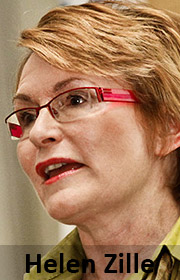
- Helen Zille is leader of the Democratic Alliance