Close Menu
TechCentralTechCentral

    Subscribe to the newsletter

    Get the best South African technology news and analysis delivered to your e-mail inbox every morning.

    Facebook X (Twitter) YouTube LinkedIn
    WhatsApp Facebook X (Twitter) LinkedIn YouTube
    TechCentralTechCentral
    • News
      Cell C cleans up its balance sheet but faces tough trading reality

      Cell C cleans up its balance sheet but faces tough trading reality

      13 February 2026
      MVNO business shines in Cell C's first post-listing results - Jorges Mendes

      MVNO business shines in Cell C’s first post-listing results

      13 February 2026
      Ramaphosa presses ahead with Eskom break-up - Cyril Ramaphosa

      Ramaphosa presses ahead with Eskom break-up

      13 February 2026
      The key technology takeaways from Ramaphosa's 2026 Sona - Cyril Ramaphosa

      The key technology takeaways from Ramaphosa’s 2026 Sona

      13 February 2026
      Toyota SA CEO: NEV inaction will cost South Africa its motoring industry - Andrew Kirby

      Toyota SA CEO: NEV inaction will cost South Africa its motoring industry

      12 February 2026
    • World
      Russia bans WhatsApp

      Russia bans WhatsApp

      12 February 2026
      EU regulators take aim at WhatsApp

      EU regulators take aim at WhatsApp

      9 February 2026
      Musk hits brakes on Mars mission

      Musk hits brakes on Mars mission

      9 February 2026
      Crypto firm accidentally sends R700-billion in bitcoin to its users

      Crypto firm accidentally sends R700-billion in bitcoin to its users

      8 February 2026
      AI won't replace software, says Nvidia CEO amid market rout - Jensen Huang

      AI won’t replace software, says Nvidia CEO amid market rout

      4 February 2026
    • In-depth
      How liberalisation is rewiring South Africa's power sector

      How liberalisation is rewiring South Africa’s power sector

      21 January 2026
      The top-performing South African tech shares of 2025

      The top-performing South African tech shares of 2025

      12 January 2026
      Digital authoritarianism grows as African states normalise internet blackouts

      Digital authoritarianism grows as African states normalise internet blackouts

      19 December 2025
      TechCentral's South African Newsmakers of 2025

      TechCentral’s South African Newsmakers of 2025

      18 December 2025
      Black Friday goes digital in South Africa as online spending surges to record high

      Black Friday goes digital in South Africa as online spending surges to record high

      4 December 2025
    • TCS
      Watts & Wheels S1E4: 'We drive an electric Uber'

      Watts & Wheels S1E4: ‘We drive an electric Uber’

      10 February 2026
      TCS+ | How Cloud On Demand is helping SA businesses succeed in the cloud - Xhenia Rhode, Dion Kalicharan

      TCS+ | Cloud On Demand and Consnet: inside a real-world AWS partner success story

      30 January 2026
      Watts & Wheels S1E4: 'We drive an electric Uber'

      Watts & Wheels S1E3: ‘BYD’s Corolla Cross challenger’

      30 January 2026
      Watts & Wheels S1E4: 'We drive an electric Uber'

      Watts & Wheels S1E2: ‘China attacks, BMW digs in, Toyota’s sublime supercar’

      23 January 2026

      TCS+ | Why cybersecurity is becoming a competitive advantage for SA businesses

      20 January 2026
    • Opinion
      A million reasons monopolies don't work - Duncan McLeod

      A million reasons monopolies don’t work

      10 February 2026
      Eskom unbundling U-turn threatens to undo hard-won electricity gains - Busi Mavuso

      Eskom unbundling U-turn threatens to undo hard-won electricity gains

      9 February 2026
      South Africa's skills advantage is being overlooked at home - Richard Firth

      South Africa’s skills advantage is being overlooked at home

      29 January 2026
      Why Elon Musk's Starlink is a 'hard no' for me - Songezo Zibi

      Why Elon Musk’s Starlink is a ‘hard no’ for me

      26 January 2026
      A million reasons monopolies don't work - Duncan McLeod

      South Africa’s new fibre broadband battle

      20 January 2026
    • Company Hubs
      • Africa Data Centres
      • AfriGIS
      • Altron Digital Business
      • Altron Document Solutions
      • Altron Group
      • Arctic Wolf
      • AvertITD
      • Braintree
      • CallMiner
      • CambriLearn
      • CYBER1 Solutions
      • Digicloud Africa
      • Digimune
      • Domains.co.za
      • ESET
      • Euphoria Telecom
      • Incredible Business
      • iONLINE
      • IQbusiness
      • Iris Network Systems
      • LSD Open
      • Mitel
      • NEC XON
      • Netstar
      • Network Platforms
      • Next DLP
      • Ovations
      • Paracon
      • Paratus
      • Q-KON
      • SevenC
      • SkyWire
      • Solid8 Technologies
      • Telit Cinterion
      • Tenable
      • Vertiv
      • Videri Digital
      • Vodacom Business
      • Wipro
      • Workday
      • XLink
    • Sections
      • AI and machine learning
      • Banking
      • Broadcasting and Media
      • Cloud services
      • Contact centres and CX
      • Cryptocurrencies
      • Education and skills
      • Electronics and hardware
      • Energy and sustainability
      • Enterprise software
      • Financial services
      • Information security
      • Internet and connectivity
      • Internet of Things
      • Investment
      • IT services
      • Lifestyle
      • Motoring
      • Public sector
      • Retail and e-commerce
      • Satellite communications
      • Science
      • SMEs and start-ups
      • Social media
      • Talent and leadership
      • Telecoms
    • Events
    • Advertise
    TechCentralTechCentral
    Home » Sections » Investment » How Brics hopes to shake up the world order

    How Brics hopes to shake up the world order

    The world’s leading emerging market powers are mounting their most ambitious challenge yet to the status quo.
    By Agency Staff21 August 2023
    Twitter LinkedIn Facebook WhatsApp Email Telegram Copy Link
    News Alerts
    WhatsApp

    How Brics hopes to shake up the world orderThe world’s leading emerging market powers have complained for years about being sidelined by wealthy nations. Now they are mounting their most ambitious challenge yet to the status quo.

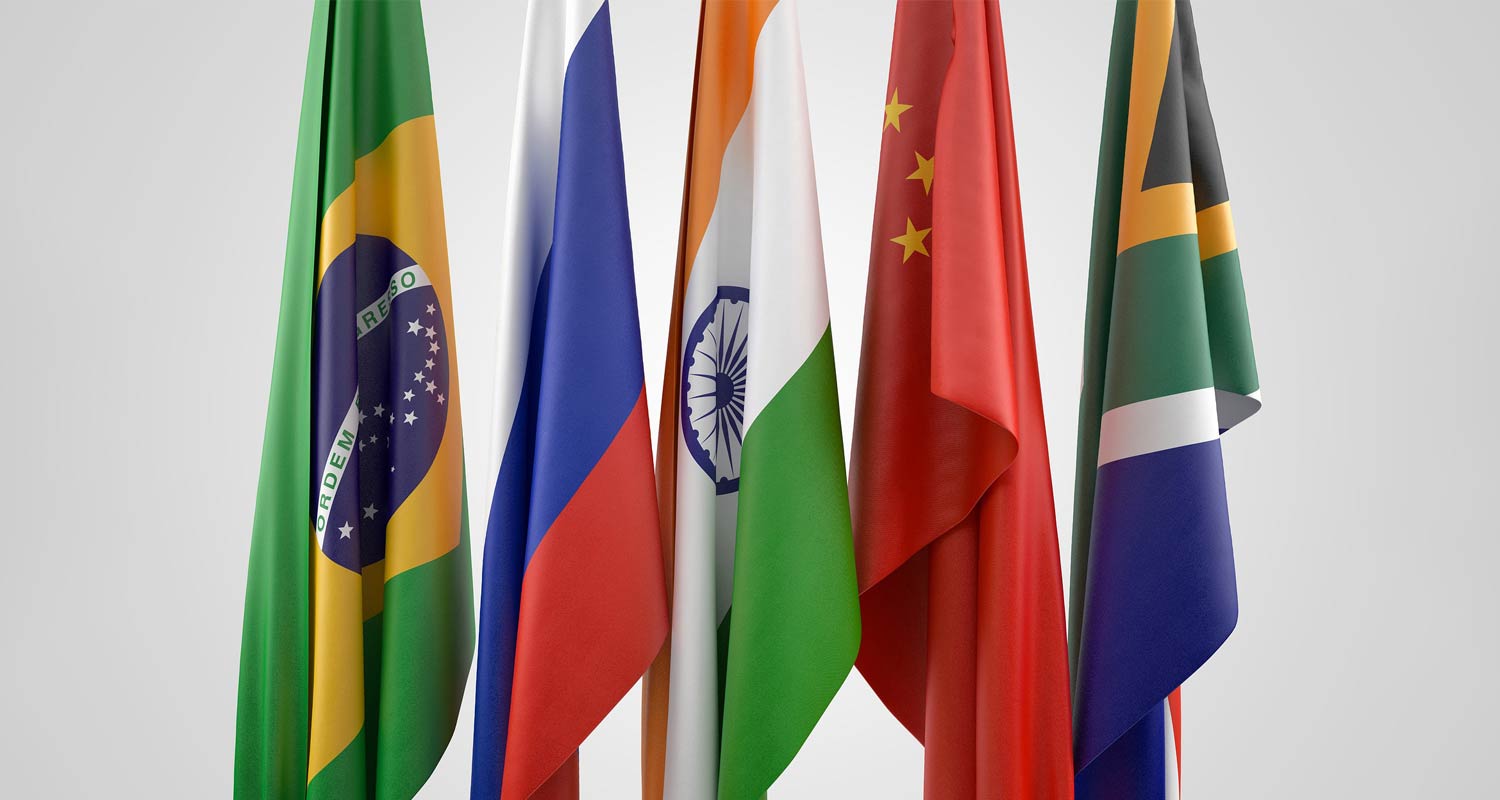
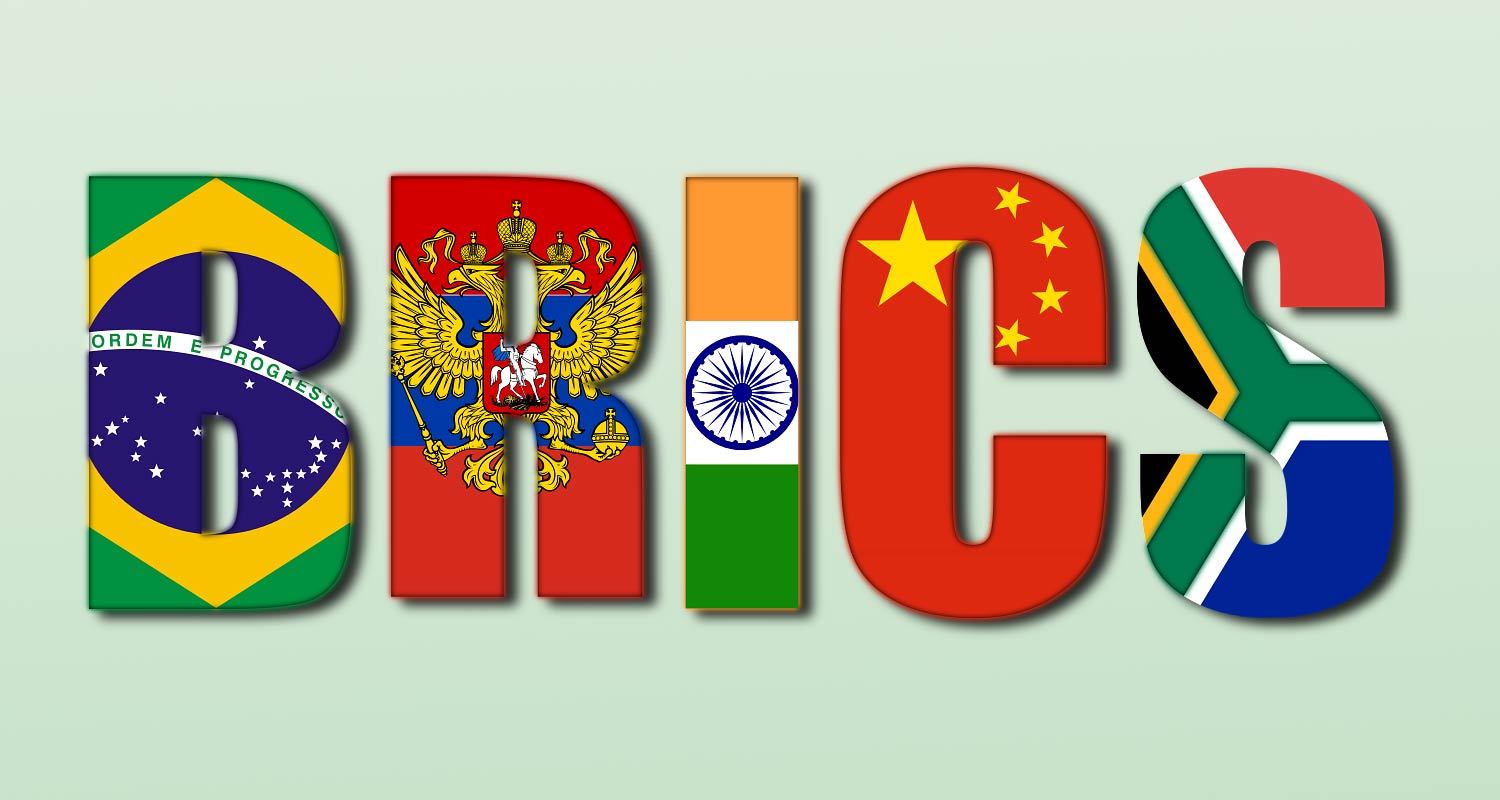
    The Brics bloc — Brazil, Russia, India, China and South Africa — will use an annual leaders’ summit in Johannesburg this week to begin the process of enlisting more members to bolster its global heft, a push driven mainly by Chinese President Xi Jinping but also backed by Russia and South Africa. There will also be talks on how to accelerate a shift away from the dollar, in part by increasing the use of local currencies in trade between members, which is surging.

    The bloc has failed to convert its growing economic might into significant political clout since it began holding summits 15 years ago. But the current splintering of the world order amid rising US-China frictions and the splits over Russia’s invasion of Ukraine provides a fresh opening for it to become a louder voice of the Global South and potentially to challenge the US and its allies.

    bigger Brics would account for almost half of the global population, up from 42% currently

    “We want to make the Brics very strong politically, very strong financially,” said Brazilian President Lula da Silva.

    The summit could see the bloc’s first expansion since South Africa was added in 2010. High on the list of potential candidates are Indonesia and Saudi Arabia, as well as the United Arab Emirates, Algeria and Egypt. But India wants the process to be gradual.

    An expanded group would represent about half of global output by 2040, Bloomberg Economics estimates show, double the share of the G7, a reversal from the turn of this century. A bigger Brics would account for almost half of the global population, up from 42% currently, according to Anil Sooklal, South Africa’s ambassador to the bloc.

    “These countries have risen economically, they have voiced their concerns, they’re now capable of offering alternatives if their voices are not heard,” said Karin Vazquez, a Shanghai-based associate professor of diplomatic practice at India’s OP Jindal Global University.

    Deep divisions in Brics

    To date, deep divisions among members have limited the consensus-driven bloc’s ability to increase its sway at institutions such as the International Monetary Fund, the World Bank or the United Nations Security Council. A Brics development bank has lent only US$32.8-billion in eight years in operation, a tiny fraction of the amount the IMF and World Bank have disbursed over the period. Suggestions that the bloc introduce a common currency haven’t gone anywhere.

    The economies of Brazil, South Africa and Russia have all underperformed and China’s is slowing down.

    A market capitalisation-weighted measure of the five Brics nations’ stocks has risen 81% since 2009, compared with a 379% rally in the S&P 500 Index. Factor in the weakness of their currencies during this time and their dollar returns look much worse.

    Read: The US is wrong about China

    Russian President Vladimir Putin is staying away from this year’s summit because he faces a war-crimes arrest warrant from the International Criminal Court, of which host South Africa is a member. He will participate remotely.

    The gathering will give him another opportunity to present his narrative of the Ukraine invasion directly to leaders from the Global South, many of whom have been sympathetic to his accounts in the past. Brazil, Russia, India, China and South Africa have been cautious about openly taking Russia’s side in the war, but have also been unwilling to ally with the West in opposing it.
    While the European Union sees the Brics as primarily a talk shop – which could be weakened rather than strengthened by expansion – Putin’s ability to use the group as an international platform is a worry, said an EU official who spoke on condition of anonymity because he isn’t authorised to comment publicly.

    The bloc has been a “big disappointment”, said Jim O’Neill, the former Goldman Sachs Group chief economist who coined the acronym Bric in 2001 to highlight their rising global heft. “China and India rarely agree on anything, which is a fundamental problem.’’

    The world’s two most-populous nations have been locked in a border dispute for years. Their army commanders last week agreed to work swiftly toward easing their differences, opening the door for progress in negotiations between Xi and Indian Prime Minister Narendra Modi.

    Read: Biden steps up US tech war with China

    India is wary that expanding Brics will transform the group into a mouthpiece for China, while Brazil is also worried about alienating the West, according to officials familiar with the bloc’s internal negotiations. But they are resigned to admitting new members, even as they push for an agreement on the rules and criteria.

    “Since Brics was founded, China’s become not only more aggressive regionally, or even along the border with India, but also it, too, wants to be the standard bearer for the Global South,” said Katherine Hadda, a former senior US diplomat who now heads US-India policy studies at the Center for Strategic and International Studies in Washington. “India doesn’t want that.”

    The appeal of Brics is that it is led by states of the South and is thus seen as a symbolic way of rejecting Western leadership

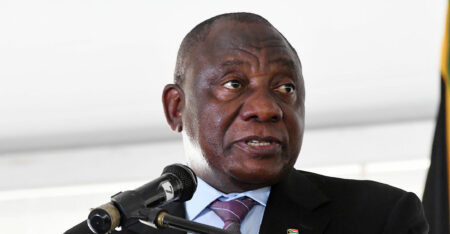
    This week’s meeting hosted by President Cyril Ramaphosa will be the first in-person Brics summit since the global pandemic, and Lula, Xi and Modi have confirmed their attendance. Heads of state from more than 30 African counties, along with others from the Global South, will sit in as observers and more than 20 nations have formally expressed interest in becoming members. The bloc’s five leaders will decide who can join and when, with consensus largely reached on an admission policy, according to Sooklal.

    “The appeal of Brics is that it is led by states of the South and is thus seen as a symbolic way of rejecting Western leadership,” said Robert Schrire, a politics professor at the University of Cape Town. “It is this symbolism, rather than any expectation of economic gains, that drives the desire of those who wish to join the bloc.”  — Simone Preissler Iglesias, S’thembile Cele and Sudhi Ranjan Sen, with Colum Murphy, Anup Roy, Gina Turner, Benjamin Harvey, Eugene Reznik, Iain Marlow, Srinivasan Sivabalan and Scott Johnson, (c) 2023 Bloomberg LP

    Get TechCentral’s free daily newsletter


    Brics Cyril Ramaphosa Lula da Silva Narendra Modi Robert Schrire Vladimir Putin Xi Jinping
    WhatsApp YouTube Follow on Google News Add as preferred source on Google
    Share. Facebook Twitter LinkedIn WhatsApp Telegram Email Copy Link
    Previous ArticleGenetically modified mosquitoes could be key in Africa’s malaria fight
    Next Article India gears up for moon landing

    Related Posts

    Ramaphosa presses ahead with Eskom break-up - Cyril Ramaphosa

    Ramaphosa presses ahead with Eskom break-up

    13 February 2026
    The key technology takeaways from Ramaphosa's 2026 Sona - Cyril Ramaphosa

    The key technology takeaways from Ramaphosa’s 2026 Sona

    13 February 2026
    Eskom unbundling U-turn threatens to undo hard-won electricity gains - Busi Mavuso

    Eskom unbundling U-turn threatens to undo hard-won electricity gains

    9 February 2026
    Company News
    Cell C delivers maiden results with growth momentum, financial flexibility - Jorges Mendes

    Cell C delivers maiden results with growth momentum, financial flexibility

    13 February 2026
    Start-up king joins Paratus Rwanda - Innocent Mutimura

    Start-up king joins Paratus Rwanda

    13 February 2026
    How NEC XON tackled identity risk for a major telco - Michael de Neuilly Rice

    How NEC XON tackled identity risk for a major telco

    11 February 2026
    Opinion
    A million reasons monopolies don't work - Duncan McLeod

    A million reasons monopolies don’t work

    10 February 2026
    Eskom unbundling U-turn threatens to undo hard-won electricity gains - Busi Mavuso

    Eskom unbundling U-turn threatens to undo hard-won electricity gains

    9 February 2026
    South Africa's skills advantage is being overlooked at home - Richard Firth

    South Africa’s skills advantage is being overlooked at home

    29 January 2026

    Subscribe to Updates

    Get the best South African technology news and analysis delivered to your e-mail inbox every morning.

    Latest Posts
    Cell C cleans up its balance sheet but faces tough trading reality

    Cell C cleans up its balance sheet but faces tough trading reality

    13 February 2026
    MVNO business shines in Cell C's first post-listing results - Jorges Mendes

    MVNO business shines in Cell C’s first post-listing results

    13 February 2026
    Ramaphosa presses ahead with Eskom break-up - Cyril Ramaphosa

    Ramaphosa presses ahead with Eskom break-up

    13 February 2026
    The key technology takeaways from Ramaphosa's 2026 Sona - Cyril Ramaphosa

    The key technology takeaways from Ramaphosa’s 2026 Sona

    13 February 2026
    © 2009 - 2026 NewsCentral Media
    • Cookie policy (ZA)
    • TechCentral – privacy and Popia

    Type above and press Enter to search. Press Esc to cancel.

    Manage consent

    TechCentral uses cookies to enhance its offerings. Consenting to these technologies allows us to serve you better. Not consenting or withdrawing consent may adversely affect certain features and functions of the website.

    Functional Always active
    The technical storage or access is strictly necessary for the legitimate purpose of enabling the use of a specific service explicitly requested by the subscriber or user, or for the sole purpose of carrying out the transmission of a communication over an electronic communications network.
    Preferences
    The technical storage or access is necessary for the legitimate purpose of storing preferences that are not requested by the subscriber or user.
    Statistics
    The technical storage or access that is used exclusively for statistical purposes. The technical storage or access that is used exclusively for anonymous statistical purposes. Without a subpoena, voluntary compliance on the part of your Internet Service Provider, or additional records from a third party, information stored or retrieved for this purpose alone cannot usually be used to identify you.
    Marketing
    The technical storage or access is required to create user profiles to send advertising, or to track the user on a website or across several websites for similar marketing purposes.
    • Manage options
    • Manage services
    • Manage {vendor_count} vendors
    • Read more about these purposes
    View preferences
    • {title}
    • {title}
    • {title}