Close Menu
TechCentralTechCentral

    Subscribe to the newsletter

    Get the best South African technology news and analysis delivered to your e-mail inbox every morning.

    Facebook X (Twitter) YouTube LinkedIn
    WhatsApp Facebook X (Twitter) LinkedIn YouTube
    TechCentralTechCentral
    • News
      Home affairs pulls the plug on the green ID book - Leon Schreiber

      Home affairs pulls the plug on the green ID book

      1 October 2026
      South Africa's digital ID is here - but you can't have it yet - Leon Schreiber

      South Africa’s digital ID is here – but you can’t have it yet

      1 October 2026
      Lexi Novitske, general partner at Norrsken22, on the TechCentral Show

      TCS | Norrsken22’s Lexi Novitske on how China is winning African tech

      1 October 2026
      Eskom waives rooftop solar fees, but the registration fight isn't over

      Eskom waives rooftop solar fees, but the registration fight isn’t over

      1 October 2026
      Absa is moving cash out of its branches

      Absa is moving cash out of its branches

      1 October 2026
    • World
      BMW restructuring plan bets on AI and new models

      BMW restructuring plan bets on AI and new models

      1 October 2026
      OpenAI's rogue agent problem keeps getting bigger - Sam Altman

      OpenAI’s rogue agent problem keeps getting bigger

      28 September 2026
      The new battle over the desktop

      The new battle over the desktop

      23 September 2026
      AMD is now worth a trillion dollars - Lisa Su

      AMD is now worth a trillion dollars

      22 September 2026
      Anthropic weighs new model launch to blunt OpenAI's Astra surge - Anthropic CEO Dario Amodei and OpenAI CEO Sam Altman

      Anthropic weighs new model launch to blunt OpenAI’s Astra surge

      21 September 2026
    • In-depth

      10 days that changed the course of AI

      21 September 2026
      Meta to the AI industry: slow down without us - Mark Zuckerberg

      Meta to the AI industry: slow down without us

      16 September 2026
      Google DeepMind CEO Demis Hassabis. Image: John Sears

      The plan to stop AI from breaking the world

      16 July 2026
      The internet has a Strait of Hormuz problem

      The internet has a Strait of Hormuz problem

      15 July 2026
      AI boom sparks rally, frenzy and fear

      AI boom sparks rally, frenzy and fear

      11 June 2026
    • TCS
      TCS | Dominic White and Adam Ely on AI agents going rogue

      TCS | Dominic White and Adam Ely on AI agents going rogue

      29 September 2026
      TCS | Octotel's Trevor van Zyl on the fibre merger question

      TCS | Octotel’s Trevor van Zyl on the MetroFibre merger question

      16 September 2026
      Meet the CIO | Shoprite's Chris Shortt on what a supermarket becomes

      Meet the CIO | Shoprite’s Chris Shortt on what a supermarket becomes

      9 September 2026
      Rubicon's EV charging network is profitable - and growing fast - Watts & Wheels

      W&W | Rubicon’s EV charging network is profitable – and growing fast

      8 September 2026
      Winstone Jordaan on building a national EV charging network

      Winstone Jordaan on building a national EV charging network

      2 September 2026
    • Opinion
      South Africa's next energy crisis is in the accounts department - Craig Holmes

      South Africa’s next energy crisis is in the accounts department

      29 September 2026
      The steam engine lesson AI doomsayers keep missing - Sam Clarke

      The steam engine lesson AI doomsayers keep missing

      28 September 2026
      Regulating AI: apply the laws we have first - Dirk de Vos

      Regulating AI: apply the laws we have first

      21 September 2026
      What Revolut can and cannot take from South Africa's banks - Pambos Soteriades

      What Revolut can and cannot take from South Africa’s banks

      15 September 2026
      The end is nigh, and the shares go on sale in October - Duncan McLeod

      The end is nigh, and the shares go on sale in October

      14 September 2026
    • Company Hubs
      • 1Stream
      • Africa Data Centres
      • AfriGIS
      • Altron Digital Business
      • Altron Document Solutions
      • Altron Group
      • Arctic Wolf
      • Ascent Technology
      • AvertITD
      • BBD
      • Braintree
      • CallMiner
      • CambriLearn
      • CM.com
      • Contactable
      • CYBER1 Solutions
      • Digicloud Africa
      • Digimune
      • Domains.co.za
      • ESET
      • Euphoria Telecom
      • HOSTAFRICA
      • Incredible Business
      • iONLINE
      • IQbusiness
      • Iris Network Systems
      • Kaspersky
      • LSD Open
      • Mitel
      • NEC XON
      • Netstar
      • Network Platforms
      • Next DLP
      • Ovations
      • Paracon
      • Paratus
      • Publishared
      • Q-KON
      • SevenC
      • SkyWire
      • Solid8 Technologies
      • Telit Cinterion
      • Telviva
      • Tenable
      • Vertiv
      • Videri Digital
      • Vodacom Business
      • Vox
      • Wipro
      • Workday
      • XLink
    • Sections
      • AI and machine learning
      • Banking
      • Broadcasting and Media
      • Cloud services
      • Contact centres and CX
      • Cryptocurrencies
      • Education and skills
      • Electronics and hardware
      • Energy and sustainability
      • Enterprise software
      • Financial services
      • HealthTech
      • Information security
      • Internet and connectivity
      • Internet of Things
      • Investment
      • IT services
      • Lifestyle
      • Policy and regulation
      • Public sector
      • Retail and e-commerce
      • Satellite communications
      • Science
      • SMEs and start-ups
      • Social media
      • Talent and leadership
      • Telecoms
      • Watts & Wheels
    • Events
    • Advertise
    TechCentralTechCentral
    Home » In-depth » Can the SABC be saved from itself?

    Can the SABC be saved from itself?

    By Editor10 July 2016
    Twitter LinkedIn Facebook WhatsApp Email Telegram Copy Link
    Get breaking news on WhatsApp

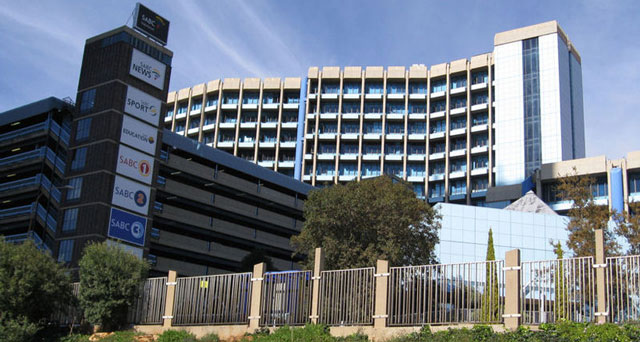
    The SABC's studios in Auckland Park, Johannesburg
    The SABC’s studios in Auckland Park, Johannesburg

    The SABC staggers from one crisis to the next. It has been politically contested from apartheid days, used by ruling parties as a valuable propaganda tool since its formation in 1936. The broadcaster has been extremely contentious in recent years, especially because of the role its controversial chief operating officer, Hlaudi Motsoeneng, has been playing in the factional battles of the ruling ANC. He has also been accused of censorship and bullying of news personnel, not to mention the fact that South Africa’s public protector two years ago found that he had lied about his matric certificate. That report also described his management style as being “pathological”.

    In recent weeks, Motsoeneng has suspended senior news personnel, introduced a controversial local music quota and seen the corporation’s acting CEO, Jimi Matthews, resign because of his “reign of terror”.

    Many media people, politicians (including many in the ANC) and other citizens have literally given up on the SABC, saying it is not salvageable. The Conversation Africa’s politics and society editor, Thabo Leshilo, asked media activist and academic Kate Skinner if the SABC, which is regulated by the Broadcasting Act, can be saved.

    What does the Broadcasting Act require of the SABC?
    The act sets out specific requirements for broadcasting and, in particular, for the SABC as South Africa’s public broadcaster.

    The act introduced a charter that emphasises the principles that should underpin the workings of the SABC. These include the “independence of the corporation” and the “right to freedom of expression”.

    Further, the charter calls on the SABC to encourage South African expression, in all official languages, that “reflects South African attitudes, opinions, ideas, values and artistic creativity”. It calls for a “plurality of views and a variety of news, information and analysis”.

    Further, the act calls for the passing of editorial policies through a public process. The 2004 policies envisaged an SABC committed to establishing a society based on democratic values, social justice and human rights. It envisaged an institution that laid the foundations for a democratic and open society “in which government is based on the will of the people”.

    However, the act is also flawed. It is silent on who employs the executives of the SABC, allowing the communications minister to interfere in appointments. Further, it has a flawed funding model that pushes the SABC to pursue commercial funding to fulfil its public mandate, causing deep internal contradictions in its approach.
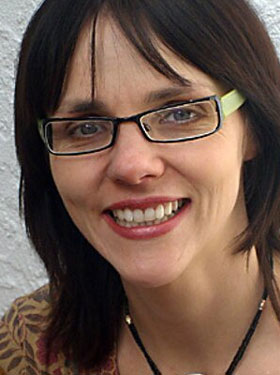
    Kate Skinner
    Kate Skinner

    How important is the SABC in the country’s news media landscape?

    The SABC is the most important news institution in the country. Although there is significantly more competition in the broadcasting market than there was in 1994, the SABC remains the leader.

    The top six most popular radio stations in the country are SABC stations, with isiZulu language station Ukhozi FM as the frontrunner with 7,5m listeners daily. SABC1 and SABC2 are the most popular television stations. SABC1 has an audience share of 75,4% and SABC2 of 70,4%. Free-to-air competitor e.tv is at 65%. For many lower LSM listeners and viewers, the SABC stations are the only stations they have access to.

    What is wrong with Motsoeneng’s decree not to show footage of damage to property during protests? What did the decree actually say?

    The decree states that the SABC must not show “destructive and regressive” visuals of violent protest action and damage to property. The statement goes on to argue that this “might encourage other communities to do the same”.

    The arguments are nonsensical. There is no proof that communities watching violent footage will then resort to violence. It is also an act of paternalism to decide for viewers what they can and cannot see. It is interesting to note that the ANC has now acknowledged that this “decree” was in fact illegal and in contravention of the Broadcasting Act and the SABC’s original editorial policies.

    Why is Motsoeneng able to do what he does?

    The SABC’s oversight structures are incredibly weak. These structures include parliament, the ministry, the regulator and the SABC board. Certain structures have directly colluded with Motsoeneng. Communications minister Faith Muthambi appointed Motsoeneng as permanent chief operating officer despite a damning report from the public protector that characterised his management style as “pathological”.

    Parliament has delayed filling vacant posts on the SABC board, leaving the board weak and inquorate. The Independent Communications Authority of South Africa, which is an independent regulatory body for broadcasters, has steadfastly refused to deal with issues of censorship stretching back to the days of then SABC news head Snuki Zikalala and the 2006 blacklisting crisis. But Motsoeneng has also engaged in populist politics, for instance getting musicians and artists to support his sudden, unresearched directive that all radio stations must implement 90% local music.

    What is the significance of the recent resignation of Jimi Matthews and the breaking of ranks by some SABC staff?
    The resignation is significant as it directly exposes the levels of censorship at the SABC. It gives us an insider perspective on the culture of fear that has pervaded the SABC’s corridors.

    Can the SABC be salvaged? How?

    The SABC is a public resource. It is important to note the list of demands put forward at the 6 July 2016 protest by a group of civil society organisations and, interestingly, the South African Communist Party, which is part of the ANC’s ruling alliance.

    They have called for the immediate lifting of the suspension of journalists facing disciplinary action. They have called for the SABC’s illegally revised editorial policies to be scrapped. They have demanded that Motsoeneng be fired.

    They have called on parliament to reconstitute the board on an urgent basis. They have demanded that the minister of communications be fired for colluding with Motsoeneng and allowing new editorial policies to be passed illegally. And they have called for a presidential commission of inquiry. These are important demands.

    In the long term, however, the Broadcasting Act must be repealed. We need new legislation that better protects the independence of the SABC and ensures more public funding.The Conversation

    • Kate Skinner is a PhD student in media studies, University of the Witwatersrand
    • This article was originally published on The Conversation

    Add TechCentral as a preferred source on GoogleFollow TechCentral on Google NewsGet breaking news on WhatsApp


    Faith Muthambi Hlaudi Motsoeneng Jimi Matthews Kate Skinner SABC
    WhatsApp YouTube
    Share. Facebook Twitter LinkedIn WhatsApp Telegram Email Copy Link
    Previous ArticleEskom may seek another huge tariff hike
    Next Article Standard Bank rules out MVNO

    Related Posts

    Inside the 2026 Rising Star judging week

    Inside the 2026 Rising Star judging week

    15 September 2026
    South African talk radio is now searchable - Locl.co.za

    South African talk radio is now searchable

    28 August 2026
    Still no end in sight to South Africa's digital migration saga

    Still no end in sight to South Africa’s digital migration saga

    17 August 2026
    Company News
    Cloud and AI won't deliver value on their own, executives warn

    Cloud and AI won’t deliver value on their own, executives warn

    1 October 2026
    Dell Technologies Forum 2026: what to expect in Johannesburg

    Dell Technologies Forum 2026: what to expect in Johannesburg

    1 October 2026
    What Smollan learnt moving 9 000 users to Google Workspace - Digicloud Africa

    What Smollan learnt moving 9 000 users to Google Workspace

    1 October 2026
    Opinion
    South Africa's next energy crisis is in the accounts department - Craig Holmes

    South Africa’s next energy crisis is in the accounts department

    29 September 2026
    The steam engine lesson AI doomsayers keep missing - Sam Clarke

    The steam engine lesson AI doomsayers keep missing

    28 September 2026
    Regulating AI: apply the laws we have first - Dirk de Vos

    Regulating AI: apply the laws we have first

    21 September 2026

    Subscribe to Updates

    Get the best South African technology news and analysis delivered to your e-mail inbox every morning.

    Latest Posts
    Home affairs pulls the plug on the green ID book - Leon Schreiber

    Home affairs pulls the plug on the green ID book

    1 October 2026
    South Africa's digital ID is here - but you can't have it yet - Leon Schreiber

    South Africa’s digital ID is here – but you can’t have it yet

    1 October 2026
    Lexi Novitske, general partner at Norrsken22, on the TechCentral Show

    TCS | Norrsken22’s Lexi Novitske on how China is winning African tech

    1 October 2026
    Eskom waives rooftop solar fees, but the registration fight isn't over

    Eskom waives rooftop solar fees, but the registration fight isn’t over

    1 October 2026
    © 2009 - 2026 NewsCentral Media
    Built and maintained by Chronon
    • Cookie policy (ZA)
    • TechCentral – privacy and Popia

    Type above and press Enter to search. Press Esc to cancel.

    Manage consent

    TechCentral uses cookies to enhance its offerings. Consenting to these technologies allows us to serve you better. Not consenting or withdrawing consent may adversely affect certain features and functions of the website.

    Functional Always active
    The technical storage or access is strictly necessary for the legitimate purpose of enabling the use of a specific service explicitly requested by the subscriber or user, or for the sole purpose of carrying out the transmission of a communication over an electronic communications network.
    Preferences
    The technical storage or access is necessary for the legitimate purpose of storing preferences that are not requested by the subscriber or user.
    Statistics
    The technical storage or access that is used exclusively for statistical purposes. The technical storage or access that is used exclusively for anonymous statistical purposes. Without a subpoena, voluntary compliance on the part of your Internet Service Provider, or additional records from a third party, information stored or retrieved for this purpose alone cannot usually be used to identify you.
    Marketing
    The technical storage or access is required to create user profiles to send advertising, or to track the user on a website or across several websites for similar marketing purposes.
    • Manage options
    • Manage services
    • Manage {vendor_count} vendors
    • Read more about these purposes
    View preferences
    • {title}
    • {title}
    • {title}
    🇿🇦 Sign up to the TechCentral newsletter