Close Menu
TechCentralTechCentral

    Subscribe to the newsletter

    Get the best South African technology news and analysis delivered to your e-mail inbox every morning.

    Facebook X (Twitter) YouTube LinkedIn
    WhatsApp Facebook X (Twitter) LinkedIn YouTube
    TechCentralTechCentral
    • News
      Nedbank hires MTN's former tech chief as group CIO - Nikos Angelopoulos

      Nedbank hires MTN’s former tech chief as group CIO

      31 July 2026
      Eskom's diesel bill falls 86% as breakdowns hit eight-year low

      Eskom’s diesel bill falls 86% as breakdowns hit eight-year low

      31 July 2026
      Ramaphosa signs off on taking the grid away from Eskom

      Ramaphosa signs off on taking the grid away from Eskom

      31 July 2026
      Microsoft just had the biggest day in stock market history

      Microsoft just had the biggest day in stock market history

      31 July 2026
      MTN Nigeria's growth engine stalled in second quarter - Karl Toriola

      MTN Nigeria’s growth engine stalled in second quarter

      31 July 2026
    • World
      Meta AI will now tell parents if their teen is in crisis

      Meta AI will now tell parents if their teen is in crisis

      17 July 2026
      IBM shares crash 25% as AI upends software spending - Arvind Krishna

      IBM shares crash 25% as AI upends software spending

      15 July 2026
      Jony Ive's first OpenAI device: an AI smart speaker - Jony Ive and Sam Altman

      Jony Ive’s first OpenAI device: an AI smart speaker

      15 July 2026
      Stripe, Advent in talks to buy PayPal for $53-billion

      Stripe, Advent in talks to buy PayPal for $53-billion

      15 July 2026
      Memory crisis sends smartphone market into steep decline

      Memory crisis sends smartphone market into steep decline

      13 July 2026
    • In-depth
      The plan to stop AI from breaking the world - Google DeepMind CEO Demis Hassabis. Image: John Sears

      The plan to stop AI from breaking the world

      16 July 2026
      The internet has a Strait of Hormuz problem

      The internet has a Strait of Hormuz problem

      15 July 2026
      AI boom sparks rally, frenzy and fear

      AI boom sparks rally, frenzy and fear

      11 June 2026
      Every plug-in hybrid on sale in South Africa, ranked by price - Lamborghini Temerario

      Every plug-in hybrid on sale in South Africa, ranked by price

      7 June 2026
      What Wi-Fi 8 will mean for wireless networks

      What Wi-Fi 8 will mean for wireless networks

      1 June 2026
    • TCS
      TCS+ | Why South African workers must become supervisors of digital labour - Accelera Digital Group Cliff de Wit

      TCS+ | Why South African workers must become supervisors of digital labour

      31 July 2026
      TCS | Rapid deployment rules can't work without municipalities: ACT - Nomvuyiso Batyi

      TCS | Icasa’s rules skip the real bottleneck: ACT

      30 July 2026
      TCS+ | iStore Business on why Apple makes sense for SMEs - Sudesh Pillay and Tamia Nontsikelelo

      TCS+ | iStore Business on why Apple makes sense for SMEs

      30 July 2026
      TCS+ | A smarter approach to cloud for South African businesses - Joel Chacko and Jonathan Oaker

      TCS+ | A smarter approach to cloud for South African businesses

      28 July 2026
      TCS | How Optasia lends billions to people banks can't see - Salvador Anglada

      TCS | How Optasia lends billions to people banks can’t see

      23 July 2026
    • Opinion
      The author, Jannie van Zyl

      Selling vapour is corporate suicide in slow motion

      16 July 2026
      Brazil's online gambling crackdown is a lesson for South Africa

      How Amazon outmanoeuvred Starlink in South Africa

      15 July 2026
      The Popia problem with agentic AI - Herman Haasbroek

      The Popia problem with agentic AI

      14 July 2026
      The author, Fanie van Rooyen

      South Africa can still catch the AI wave – here’s how

      7 July 2026
      The author, Fanie van Rooyen

      The AI utopia South Africa can’t afford

      1 July 2026
    • Company Hubs
      • 1Stream
      • Africa Data Centres
      • AfriGIS
      • Altron Digital Business
      • Altron Document Solutions
      • Altron Group
      • Arctic Wolf
      • Ascent Technology
      • AvertITD
      • BBD
      • Braintree
      • CallMiner
      • CambriLearn
      • CM Telecom
      • Contactable
      • CYBER1 Solutions
      • Digicloud Africa
      • Digimune
      • Domains.co.za
      • ESET
      • Euphoria Telecom
      • HOSTAFRICA
      • Incredible Business
      • iONLINE
      • IQbusiness
      • Iris Network Systems
      • Kaspersky
      • LSD Open
      • Mitel
      • NEC XON
      • Netstar
      • Network Platforms
      • Next DLP
      • Ovations
      • Paracon
      • Paratus
      • Q-KON
      • SevenC
      • SkyWire
      • Solid8 Technologies
      • Telit Cinterion
      • Telviva
      • Tenable
      • Vertiv
      • Videri Digital
      • Vodacom Business
      • Vox
      • Wipro
      • Workday
      • XLink
    • Sections
      • AI and machine learning
      • Banking
      • Broadcasting and Media
      • Cloud services
      • Contact centres and CX
      • Cryptocurrencies
      • Education and skills
      • Electronics and hardware
      • Energy and sustainability
      • Enterprise software
      • Financial services
      • HealthTech
      • Information security
      • Internet and connectivity
      • Internet of Things
      • Investment
      • IT services
      • Lifestyle
      • Policy and regulation
      • Public sector
      • Retail and e-commerce
      • Satellite communications
      • Science
      • SMEs and start-ups
      • Social media
      • Talent and leadership
      • Telecoms
      • Watts & Wheels
    • Events
    • Advertise
    TechCentralTechCentral
    Home » In-depth » Dramatic changes on the cards at Telkom

    Dramatic changes on the cards at Telkom

    By Duncan McLeod8 June 2015
    Twitter LinkedIn Facebook WhatsApp Email Telegram Copy Link
    News Alerts
    WhatsApp
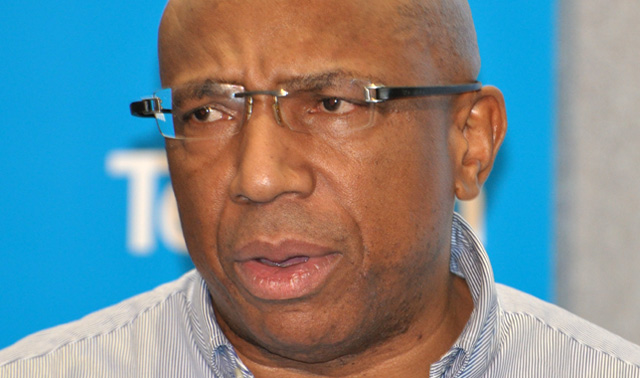
    Telkom CEO Sipho Maseko
    Telkom CEO Sipho Maseko

    A dramatic restructuring of Telkom’s business is on the cards, company executives made clear on Monday. The changes, to be implemented over no more than five years, will lead to fundamental changes in the way Telkom does business.

    The first hint of what is to come was buried in the commentary the company published alongside its 2015 financial results on Monday. And it suggests the planned changes are going to have a big impact on Telkom’s workforce, especially on its field services division, which installs and maintains its infrastructure.

    It’s understood Telkom will begin engaging with staff on the planned changes from Tuesday morning, with meetings happening through Wednesday, too.

    In its results statement, Telkom says its turnaround actions to date have “delivered results”, but it needs to become “more efficient”.

    “We are reviewing our current operating model,” it says. “A major part of this review is looking at a deep functional separation between our wholesale and retail businesses.

    “We foresee an infrastructure business unit which will be accountable for network deployment and network efficiency.”

    However, TechCentral understands that the changes go even further, with a split between Telkom’s retail consumer-facing and enterprise-facing divisions planned, too.

    If the company goes ahead with its plans, it will follow in the footsteps of many other incumbent fixed-line operators around the world that have either voluntarily split their operations or done so under pressure from regulators.

    In the UK, BT Group (formerly British Telecom) hived off its infrastructure division about a decade ago to create Openreach, which services BT and all other licensed telecommunications operators on an equal and transparent basis. Many analysts believe the move helped improve competition for broadband services in the UK market.

    In its statement, Telkom says tellingly that for its proposed new operating model to succeed, it “must have an efficient and high-performing network”. It appears to believe that the best way of achieving this is by setting its wholesale division free to serve the telecoms market more broadly, similar to the Openreach model.

    Telkom isn’t giving away too much yet, saying only that it plans to update the market about its plans — specifically for its wholesale business — sometime in the third quarter.

    The changes look set to have a big impact on Telkom’s workforce, which many analysts say remains too big next to rival firms. The company employs more than 20 000 people, many of them in its field services operation, which looks after last-mile network maintenance, among other things.

    “We must have a highly efficient and cost-effective workforce,” Telkom says. “Within our workforce there are significant opportunities to create a highly skilled and productive team by ensuring that employees have the right skills and capabilities to support the changing business. Much like most telecoms operators globally, we must move towards a leaner and more productive workforce.”

    It says its aim is to achieve a cost-to-revenue ratio of 25% in the next four years. Further outsourcing and layoffs appear to be inevitable, and may even accelerate.

    In an interview with TechCentral, Telkom CEO Sipho Maseko says the wholesale division must transform itself to serve the broader market, not only Telkom. He envisages a future where Telkom is no longer a “vertically integrated operator”.

    We have given ourselves five years to get to this deep functional separation — Sipho Maseko

    The wholesale division’s raison d’être will be providing the services it supplies to Telkom today to 400 other licensed operators on a fair and equitable basis.

    The move will probably be the first step to the eventual full structural separation of the wholesale division, Maseko says. At the very least, the wholesale division will become much more autonomous in the the short term.

    Maseko says Telkom is “shining the light very deeply on the structural costs” in the wholesale business, with a view to making it much more efficient. This will entail a review of headcount, along with taking another look at technologies that are deployed and how best to get to “optimum deployment levels”.

    “We have given ourselves five years to get to this deep functional separation,” Maseko says.

    Over time, the retail, enterprise and wholesale divisions will “morph into unrecognisable businesses” with their own cultures.

    “The consumer business will have to play more in content and other value-added stuff. The enterprise services business will have to be less about connectivity and more of an IT services business. And wholesale will be about building a robust network as efficiently as possible to everyone in the market.”  — © 2015 NewsCentral Media

    Follow TechCentral on Google News Add TechCentral as your preferred source on Google


    British Telecom BT Openreach Sipho Maseko Telkom
    WhatsApp YouTube
    Share. Facebook Twitter LinkedIn WhatsApp Telegram Email Copy Link
    Previous ArticleIrish to build huge SA wind farms
    Next Article Altech adds Warner Bros to Node

    Related Posts

    Fat bonuses at Telkom despite group missing own targets - Serame Taukobong

    Fat bonuses at Telkom despite group missing own targets

    23 July 2026
    Openserve hits back in fibre ISP row

    Openserve hits back in fibre ISP row

    20 July 2026
    Openserve launches its own ISP, rattling wholesale partners

    Openserve launches its own ISP, rattling wholesale partners

    13 July 2026
    Company News
    Domains.co.za launches self-hosted n8n VPS hosting

    Domains.co.za launches self-hosted n8n VPS hosting

    31 July 2026
    Smarter.tech '26 shows why smarter technology begins with context - Obsidian Systems

    Context is the missing piece in enterprise AI: Obsidian

    31 July 2026
    Huawei launches 12 intelligent transport solutions in South Africa - Sam Tang

    Huawei launches 12 intelligent transport solutions in South Africa

    30 July 2026
    Opinion
    The author, Jannie van Zyl

    Selling vapour is corporate suicide in slow motion

    16 July 2026
    Brazil's online gambling crackdown is a lesson for South Africa

    How Amazon outmanoeuvred Starlink in South Africa

    15 July 2026
    The Popia problem with agentic AI - Herman Haasbroek

    The Popia problem with agentic AI

    14 July 2026

    Subscribe to Updates

    Get the best South African technology news and analysis delivered to your e-mail inbox every morning.

    Latest Posts
    Nedbank hires MTN's former tech chief as group CIO - Nikos Angelopoulos

    Nedbank hires MTN’s former tech chief as group CIO

    31 July 2026
    Eskom's diesel bill falls 86% as breakdowns hit eight-year low

    Eskom’s diesel bill falls 86% as breakdowns hit eight-year low

    31 July 2026
    Ramaphosa signs off on taking the grid away from Eskom

    Ramaphosa signs off on taking the grid away from Eskom

    31 July 2026
    TCS+ | Why South African workers must become supervisors of digital labour - Accelera Digital Group Cliff de Wit

    TCS+ | Why South African workers must become supervisors of digital labour

    31 July 2026
    © 2009 - 2026 NewsCentral Media
    Built and maintained by Chronon
    • Cookie policy (ZA)
    • TechCentral – privacy and Popia

    Type above and press Enter to search. Press Esc to cancel.

    Manage consent

    TechCentral uses cookies to enhance its offerings. Consenting to these technologies allows us to serve you better. Not consenting or withdrawing consent may adversely affect certain features and functions of the website.

    Functional Always active
    The technical storage or access is strictly necessary for the legitimate purpose of enabling the use of a specific service explicitly requested by the subscriber or user, or for the sole purpose of carrying out the transmission of a communication over an electronic communications network.
    Preferences
    The technical storage or access is necessary for the legitimate purpose of storing preferences that are not requested by the subscriber or user.
    Statistics
    The technical storage or access that is used exclusively for statistical purposes. The technical storage or access that is used exclusively for anonymous statistical purposes. Without a subpoena, voluntary compliance on the part of your Internet Service Provider, or additional records from a third party, information stored or retrieved for this purpose alone cannot usually be used to identify you.
    Marketing
    The technical storage or access is required to create user profiles to send advertising, or to track the user on a website or across several websites for similar marketing purposes.
    • Manage options
    • Manage services
    • Manage {vendor_count} vendors
    • Read more about these purposes
    View preferences
    • {title}
    • {title}
    • {title}