

Close Menu
TechCentralTechCentral

    Subscribe to the newsletter

    Get the best South African technology news and analysis delivered to your e-mail inbox every morning.

    Facebook X (Twitter) YouTube LinkedIn
    WhatsApp Facebook X (Twitter) LinkedIn YouTube
    TechCentralTechCentral
    • News
      Vuyani Jarana: Mobile coverage masks a deeper broadband failure

      Vuyani Jarana: Mobile coverage masks a deeper broadband failure

      30 January 2026
      SABC Plus to flight Microsoft AI training videos

      SABC Plus to flight Microsoft AI training videos

      30 January 2026
      Fibre ducts

      Fibre industry consolidation in KZN

      30 January 2026
      Watts & Wheels S1E3: 'BYD's Corolla Cross challenger'

      Watts & Wheels S1E3: ‘BYD’s Corolla Cross challenger’

      30 January 2026
      What ordinary South Africans really think of AI

      What ordinary South Africans really think of AI

      30 January 2026
    • World
      Apple acquires audio AI start-up Q.ai

      Apple acquires audio AI start-up Q.ai

      30 January 2026
      SpaceX IPO may be largest in history

      SpaceX IPO may be largest in history

      28 January 2026
      Nvidia throws AI at the weather

      Nvidia throws AI at weather forecasting

      27 January 2026
      Debate erupts over value of in-flight Wi-Fi

      Debate erupts over value of in-flight Wi-Fi

      26 January 2026
      Intel takes another hit - Intel CEO Lip-Bu Tan. Laure Andrillon/Reuters

      Intel takes another hit

      23 January 2026
    • In-depth
      How liberalisation is rewiring South Africa's power sector

      How liberalisation is rewiring South Africa’s power sector

      21 January 2026
      The top-performing South African tech shares of 2025

      The top-performing South African tech shares of 2025

      12 January 2026
      Digital authoritarianism grows as African states normalise internet blackouts

      Digital authoritarianism grows as African states normalise internet blackouts

      19 December 2025
      TechCentral's South African Newsmakers of 2025

      TechCentral’s South African Newsmakers of 2025

      18 December 2025
      Black Friday goes digital in South Africa as online spending surges to record high

      Black Friday goes digital in South Africa as online spending surges to record high

      4 December 2025
    • TCS
      TCS+ | How Cloud On Demand is helping SA businesses succeed in the cloud - Xhenia Rhode, Dion Kalicharan

      TCS+ | Cloud On Demand and Consnet: inside a real-world AWS partner success story

      30 January 2026
      Watts & Wheels S1E3: 'BYD's Corolla Cross challenger'

      Watts & Wheels S1E2: ‘China attacks, BMW digs in, Toyota’s sublime supercar’

      23 January 2026

      TCS+ | Why cybersecurity is becoming a competitive advantage for SA businesses

      20 January 2026
      Watts & Wheels S1E3: 'BYD's Corolla Cross challenger'

      Watts & Wheels: S1E1 – ‘William, Prince of Wheels’

      8 January 2026
      TCS+ | Africa's digital transformation - unlocking AI through cloud and culture - Cliff de Wit Accelera Digital Group

      TCS+ | Cloud without culture won’t deliver AI: Accelera’s Cliff de Wit

      12 December 2025
    • Opinion
      South Africa's skills advantage is being overlooked at home - Richard Firth

      South Africa’s skills advantage is being overlooked at home

      29 January 2026
      Why Elon Musk's Starlink is a 'hard no' for me - Songezo Zibi

      Why Elon Musk’s Starlink is a ‘hard no’ for me

      26 January 2026
      South Africa's new fibre broadband battle - Duncan McLeod

      South Africa’s new fibre broadband battle

      20 January 2026
      AI moves from pilots to production in South African companies - Nazia Pillay SAP

      AI moves from pilots to production in South African companies

      20 January 2026
      South Africa's new fibre broadband battle - Duncan McLeod

      ANC’s attack on Solly Malatsi shows how BEE dogma trumps economic reality

      14 December 2025
    • Company Hubs
      • Africa Data Centres
      • AfriGIS
      • Altron Digital Business
      • Altron Document Solutions
      • Altron Group
      • Arctic Wolf
      • AvertITD
      • Braintree
      • CallMiner
      • CambriLearn
      • CYBER1 Solutions
      • Digicloud Africa
      • Digimune
      • Domains.co.za
      • ESET
      • Euphoria Telecom
      • Incredible Business
      • iONLINE
      • IQbusiness
      • Iris Network Systems
      • LSD Open
      • NEC XON
      • Netstar
      • Network Platforms
      • Next DLP
      • Ovations
      • Paracon
      • Paratus
      • Q-KON
      • SevenC
      • SkyWire
      • Solid8 Technologies
      • Telit Cinterion
      • Tenable
      • Vertiv
      • Videri Digital
      • Vodacom Business
      • Wipro
      • Workday
      • XLink
    • Sections
      • AI and machine learning
      • Banking
      • Broadcasting and Media
      • Cloud services
      • Contact centres and CX
      • Cryptocurrencies
      • Education and skills
      • Electronics and hardware
      • Energy and sustainability
      • Enterprise software
      • Financial services
      • Information security
      • Internet and connectivity
      • Internet of Things
      • Investment
      • IT services
      • Lifestyle
      • Motoring
      • Public sector
      • Retail and e-commerce
      • Satellite communications
      • Science
      • SMEs and start-ups
      • Social media
      • Talent and leadership
      • Telecoms
    • Events
    • Advertise
    TechCentralTechCentral
    Home » Sections » Telecoms » Ericsson, Nokia set to score big from Huawei’s woes

    Ericsson, Nokia set to score big from Huawei’s woes

    By Agency Staff19 June 2019
    Twitter LinkedIn Facebook WhatsApp Email Telegram Copy Link
    News Alerts
    WhatsApp

    Over the past two decades, China’s Huawei Technologies has come to dominate the global telecommunications equipment market, winning contracts with a mix of sophisticated technology and attractive prices. Its rise squeezed Europe’s Nokia and Ericsson, which responded by cutting jobs and making acquisitions. Now, with Huawei at the centre of a US-China trade war, the tide is turning.

    Nokia and Ericsson — fierce rivals themselves — have recently wrested notable long-term deals from Huawei to build 5G wireless networks, to enable everything from autonomous cars to robot surgery. Analysts say more could come their way as Huawei grapples with a US export ban and restrictions from other governments concerned that its equipment could enable Chinese espionage.

    “Huawei will, for the foreseeable future, face a broader cloud of suspicion,” said John Butler, an analyst at Bloomberg Intelligence in New York. “Nokia and Ericsson are well positioned to benefit.”

    Huawei will, for the foreseeable future, face a broader cloud of suspicion. Nokia and Ericsson are well positioned to benefit

    In May, the European companies both won 5G contracts from SoftBank Group’s Japanese telecoms unit, replacing Huawei and Chinese peer ZTE. Ericsson signed a similar pact in March with Denmark’s biggest phone company, TDC, which had worked with Huawei since 2013 to modernise and manage its network.

    Other carriers, expecting government curbs on Huawei, have started removing its equipment from sensitive parts of their systems. BT Group is taking Huawei out of its network core, and Vodafone Group has suspended core equipment purchases from Huawei for its European networks. Deutsche Telekom, which has Huawei throughout its 4G system, is re-evaluating its purchasing strategy.

    As dozens of phone companies — including those in Canada, Germany and France — plan to choose 5G suppliers in the coming months, Cisco Systems and Samsung Electronics are also vying for deals. But the key beneficiaries of Huawei’s difficulties are likely to be the two Europeans, which compete directly with the Chinese company in supplying radio-access network equipment.

    Security concerns

    Since last year, the Trump administration has pushed allies to bar Huawei from 5G, citing risks about state spying — allegations the company has denied. The move in May to block Huawei’s access to US suppliers escalated the campaign. The company’s founder, Ren Zhengfei, now predicts the US sanctions will cut its revenue by US$30-billion over the coming two years.

    Outside the US, security concerns have led Australia, Japan and Taiwan to bar Huawei from 5G systems. The Chinese company also risks losing meaningful work in Europe and emerging markets where countries could follow with their own limits, according to Bloomberg Intelligence.

    Publicly, executives from Nokia and Ericsson have been careful not to come off as critical of Huawei. Both manufacture in China and sell gear to Chinese phone carriers, and Nokia has a big research and development presence there. Nokia says it has already been forced to shift some of its supply chain away from China to reduce the impact of tariffs imposed by the Trump administration.
    Image: Holger Ellgaard

    Instead of piling on Huawei, the European carriers have trumpeted their 5G successes, each using slightly different metrics. Ericsson claims it has the most publicly announced 5G contracts — 21 — while Nokia says it has raked in more commercial 5G deals than any other vendor (42). Huawei says it has signed 46 5G contracts. A spokesman for Huawei declined to comment further about its position relative to rivals.

    Ericsson is “first with 5G”, after building high-speed networks for companies such as AT&T in the US, Swisscom in Switzerland and Sweden’s Telstra, said chief technology officer Erik Ekudden. “You see that in some markets that we are attracting more customers.”

    Nokia is winning 5G deals “quite handsomely”, CEO Rajeev Suri told Bloomberg TV on 10 June.

    While Suri said more carriers are likely to swap out Huawei gear in countries that have announced restrictions, the situation is less clear in Europe. “We don’t know yet the impact of specific operator plans,” he said in an interview. “We also don’t know where this geopolitical thing will end up.”

    We don’t know yet the impact of specific operator plans. We also don’t know where this geopolitical thing will end up

    Nokia and Ericsson are Europe’s final survivors of a merciless winnowing of more than half a dozen telecoms equipment providers. Bloated costs, a cyclical marketplace, cash-strapped customers and the relentless rise of Huawei — aided by access to generous Chinese state financing — helped push the likes of Canada’s Nortel Networks and Germany’s Siemens out of the industry.

    Nokia paid some $2-billion in 2013 to buy Siemens out of a joint venture established to compete against Ericsson and Huawei. Then in 2015, it spent another almost $18-billion acquiring Alcatel-Lucent to broaden its product offering after pushing through more than 25 000 job cuts in the preceding three years. Still, Huawei’s share of the $33-billion of sales in the global mobile infrastructure market surged to 31% in 2018 from 13% in 2010, IHS Markit data shows.

    Huawei, despite its troubles, remains a potent rival. Many phone companies in Europe deem its base stations, switches and routers technologically superior. Fully excluding Huawei and ZTE from 5G would raise radio-access network costs for European phone companies by 40%, or €55-billion, the GSMA industry group predicts in an unpublished report seen by Bloomberg.

    Perilous

    Bengt Nordstrom, CEO of telecoms consultancy Northstream, says the situation is perilous for everyone in the industry, as vendors’ budgets could be hit if Huawei faces greater restrictions. “Many component suppliers are already in a tough situation,” Nordstrom said. “They need to spend a lot of money on research, and that means they need access to the entire global market.”

    For carriers, swapping vendors isn’t as simple as flipping a switch. It takes about two years to plan and implement such a technology shift and install the new equipment, Nordstrom said.
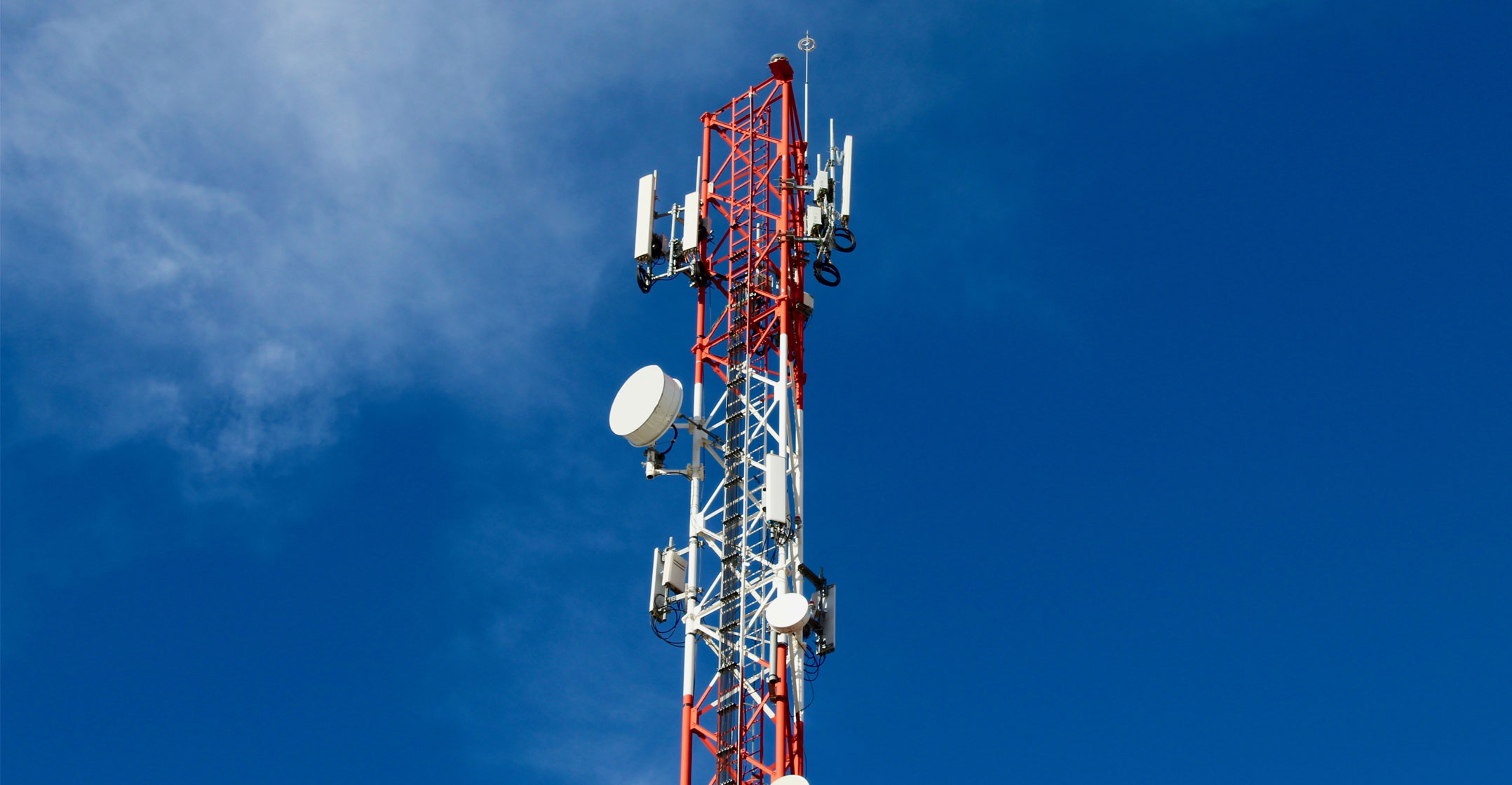
    Both Nokia and Ericsson are working to make it easier for carriers to switch. Nokia has developed what it calls a “thin layer” of its 4G technology to connect to a new 5G system, allowing a carrier to avoid a wholesale swap of another supplier’s equipment. Ericsson also has a solution to allow a carrier to swap out only a portion of existing infrastructure, and says it can make some areas work side-by-side with Ericsson’s 5G gear.

    Nokia and Ericsson can agree on one thing: claims of Huawei’s technological superiority are overblown. They note that they’re involved in the latest networks in the US, where carriers are rolling out 5G faster than the Europeans.

    “We compete quite favourably with Huawei,” Suri said, “with or without the current security concerns.” — Reported by Stefan Nicola and Niclas Rolander, with assistance from Caroline Hyde, Kati Pohjanpalo and Angelina Rascouet, (c) 2019 Bloomberg LP



    Ericsson Huawei Nokia top
    WhatsApp YouTube Follow on Google News Add as preferred source on Google
    Share. Facebook Twitter LinkedIn WhatsApp Telegram Email Copy Link
    Previous ArticleTime is fast running out to save Eskom from bankruptcy
    Next Article Facebook triggers fresh political fury over crypto project

    Related Posts

    Huawei turns 25 in South Africa, celebrates with major device discounts

    Huawei turns 25 in South Africa, celebrates with major device discounts

    30 January 2026
    China races to crack EUV as chip war with the West intensifies

    China races to crack EUV lithography as chip war with the West intensifies

    18 December 2025
    MTN Zambia launches world's first 4G cloud smartphone solution - Huawei

    MTN Zambia launches world’s first 4G cloud smartphone solution

    17 December 2025
    Company News
    Huawei turns 25 in South Africa, celebrates with major device discounts

    Huawei turns 25 in South Africa, celebrates with major device discounts

    30 January 2026
    Phishing has not disappeared, but it has grown up - KnowBe4

    Phishing has not disappeared, but it has grown up

    30 January 2026
    Smartphone affordability: South Africa's new economic divide - PayJoy

    Smartphone affordability: South Africa’s new economic divide

    29 January 2026
    Opinion
    South Africa's skills advantage is being overlooked at home - Richard Firth

    South Africa’s skills advantage is being overlooked at home

    29 January 2026
    Why Elon Musk's Starlink is a 'hard no' for me - Songezo Zibi

    Why Elon Musk’s Starlink is a ‘hard no’ for me

    26 January 2026
    South Africa's new fibre broadband battle - Duncan McLeod

    South Africa’s new fibre broadband battle

    20 January 2026

    Subscribe to Updates

    Get the best South African technology news and analysis delivered to your e-mail inbox every morning.

    Latest Posts
    Vuyani Jarana: Mobile coverage masks a deeper broadband failure

    Vuyani Jarana: Mobile coverage masks a deeper broadband failure

    30 January 2026
    TCS+ | How Cloud On Demand is helping SA businesses succeed in the cloud - Xhenia Rhode, Dion Kalicharan

    TCS+ | Cloud On Demand and Consnet: inside a real-world AWS partner success story

    30 January 2026
    Huawei turns 25 in South Africa, celebrates with major device discounts

    Huawei turns 25 in South Africa, celebrates with major device discounts

    30 January 2026
    SABC Plus to flight Microsoft AI training videos

    SABC Plus to flight Microsoft AI training videos

    30 January 2026
    © 2009 - 2026 NewsCentral Media
    • Cookie policy (ZA)
    • TechCentral – privacy and Popia

    Type above and press Enter to search. Press Esc to cancel.

    Manage consent

    TechCentral uses cookies to enhance its offerings. Consenting to these technologies allows us to serve you better. Not consenting or withdrawing consent may adversely affect certain features and functions of the website.

    Functional Always active
    The technical storage or access is strictly necessary for the legitimate purpose of enabling the use of a specific service explicitly requested by the subscriber or user, or for the sole purpose of carrying out the transmission of a communication over an electronic communications network.
    Preferences
    The technical storage or access is necessary for the legitimate purpose of storing preferences that are not requested by the subscriber or user.
    Statistics
    The technical storage or access that is used exclusively for statistical purposes. The technical storage or access that is used exclusively for anonymous statistical purposes. Without a subpoena, voluntary compliance on the part of your Internet Service Provider, or additional records from a third party, information stored or retrieved for this purpose alone cannot usually be used to identify you.
    Marketing
    The technical storage or access is required to create user profiles to send advertising, or to track the user on a website or across several websites for similar marketing purposes.
    • Manage options
    • Manage services
    • Manage {vendor_count} vendors
    • Read more about these purposes
    View preferences
    • {title}
    • {title}
    • {title}