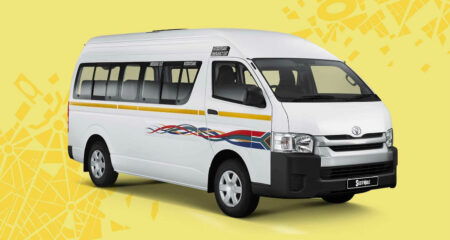
GoMetro, the company behind South Africa’s first electric minibus taxi, plans to begin operating its eKamva vehicles on routes serving Century City in Cape Town from October this year.
Speaking to Cape Talk’s Lester Kiewit on Monday, GoMetro founder and CEO Justin Coetzee said the company has spent the past two years refining the vehicle for South African conditions and working with the Century City property owners’ association to identify the routes best suited to electrification.
“We’ve identified the routes that we will start operating with about 15 associations that all use Century City to provide access to more than 25 000 people who work and play and learn at Century City,” Coetzee said.
The company’s goal is to make Century City a fully electric taxi hub within three to four years, with vehicles tested on different routes and with different associations over the coming months before a broader roll-out.
GoMetro announced the eKamva in October 2024 but had not at that stage committed to a specific launch date or identified operating routes.
Coetzee said the vehicle delivers a range of between 180km and 220km on a single charge. Operational data gathered at Century City over the past year shows that local taxi routes typically involve about 120km in the morning and a similar distance in the afternoon, with a three- to four-hour rest period in between — a gap that aligns well with the eKamva’s one-hour fast-charging time.
Financing
On financing, Coetzee said GoMetro is engaging with the national department of transport’s taxi recapitalisation programme to explore an enhanced recap amount for operators switching to electric vehicles. The company continues to sell the vehicle on a split basis, with traditional financing for the chassis and a subscription model for the battery, similar to an airtime contract, that bundles energy and battery costs into a single monthly payment.
Coetzee said savings of 50-70% on energy costs are achievable depending on the mix of solar, home and rank charging used, while maintenance costs are significantly lower given the vehicle has only eight moving parts compared to about 2 000 in a conventional diesel taxi.
Read: South Africa’s first electric minibus taxi to hit the road
He cautioned, however, that long-distance routes remain beyond the technology’s current capability. “This isn’t a long-distance taxi. Technology must still improve before we can see that use case.” — (c) 2026 NewsCentral Media
Get breaking news from TechCentral on WhatsApp. Sign up here.