Close Menu
TechCentralTechCentral

    Subscribe to the newsletter

    Get the best South African technology news and analysis delivered to your e-mail inbox every morning.

    Facebook X (Twitter) YouTube LinkedIn
    WhatsApp Facebook X (Twitter) LinkedIn YouTube
    TechCentralTechCentral
    • News
      Vuyani Jarana: Mobile coverage masks a deeper broadband failure

      Vuyani Jarana: Mobile coverage masks a deeper broadband failure

      30 January 2026
      SABC Plus to flight Microsoft AI training videos

      SABC Plus to flight Microsoft AI training videos

      30 January 2026
      Fibre ducts

      Fibre industry consolidation in KZN

      30 January 2026
      Watts & Wheels S1E3: 'BYD's Corolla Cross challenger'

      Watts & Wheels S1E3: ‘BYD’s Corolla Cross challenger’

      30 January 2026
      What ordinary South Africans really think of AI

      What ordinary South Africans really think of AI

      30 January 2026
    • World
      Apple acquires audio AI start-up Q.ai

      Apple acquires audio AI start-up Q.ai

      30 January 2026
      SpaceX IPO may be largest in history

      SpaceX IPO may be largest in history

      28 January 2026
      Nvidia throws AI at the weather

      Nvidia throws AI at weather forecasting

      27 January 2026
      Debate erupts over value of in-flight Wi-Fi

      Debate erupts over value of in-flight Wi-Fi

      26 January 2026
      Intel takes another hit - Intel CEO Lip-Bu Tan. Laure Andrillon/Reuters

      Intel takes another hit

      23 January 2026
    • In-depth
      How liberalisation is rewiring South Africa's power sector

      How liberalisation is rewiring South Africa’s power sector

      21 January 2026
      The top-performing South African tech shares of 2025

      The top-performing South African tech shares of 2025

      12 January 2026
      Digital authoritarianism grows as African states normalise internet blackouts

      Digital authoritarianism grows as African states normalise internet blackouts

      19 December 2025
      TechCentral's South African Newsmakers of 2025

      TechCentral’s South African Newsmakers of 2025

      18 December 2025
      Black Friday goes digital in South Africa as online spending surges to record high

      Black Friday goes digital in South Africa as online spending surges to record high

      4 December 2025
    • TCS
      TCS+ | How Cloud On Demand is helping SA businesses succeed in the cloud - Xhenia Rhode, Dion Kalicharan

      TCS+ | Cloud On Demand and Consnet: inside a real-world AWS partner success story

      30 January 2026
      Watts & Wheels S1E3: 'BYD's Corolla Cross challenger'

      Watts & Wheels S1E2: ‘China attacks, BMW digs in, Toyota’s sublime supercar’

      23 January 2026

      TCS+ | Why cybersecurity is becoming a competitive advantage for SA businesses

      20 January 2026
      Watts & Wheels S1E3: 'BYD's Corolla Cross challenger'

      Watts & Wheels: S1E1 – ‘William, Prince of Wheels’

      8 January 2026
      TCS+ | Africa's digital transformation - unlocking AI through cloud and culture - Cliff de Wit Accelera Digital Group

      TCS+ | Cloud without culture won’t deliver AI: Accelera’s Cliff de Wit

      12 December 2025
    • Opinion
      South Africa's skills advantage is being overlooked at home - Richard Firth

      South Africa’s skills advantage is being overlooked at home

      29 January 2026
      Why Elon Musk's Starlink is a 'hard no' for me - Songezo Zibi

      Why Elon Musk’s Starlink is a ‘hard no’ for me

      26 January 2026
      South Africa's new fibre broadband battle - Duncan McLeod

      South Africa’s new fibre broadband battle

      20 January 2026
      AI moves from pilots to production in South African companies - Nazia Pillay SAP

      AI moves from pilots to production in South African companies

      20 January 2026
      South Africa's new fibre broadband battle - Duncan McLeod

      ANC’s attack on Solly Malatsi shows how BEE dogma trumps economic reality

      14 December 2025
    • Company Hubs
      • Africa Data Centres
      • AfriGIS
      • Altron Digital Business
      • Altron Document Solutions
      • Altron Group
      • Arctic Wolf
      • AvertITD
      • Braintree
      • CallMiner
      • CambriLearn
      • CYBER1 Solutions
      • Digicloud Africa
      • Digimune
      • Domains.co.za
      • ESET
      • Euphoria Telecom
      • Incredible Business
      • iONLINE
      • IQbusiness
      • Iris Network Systems
      • LSD Open
      • NEC XON
      • Netstar
      • Network Platforms
      • Next DLP
      • Ovations
      • Paracon
      • Paratus
      • Q-KON
      • SevenC
      • SkyWire
      • Solid8 Technologies
      • Telit Cinterion
      • Tenable
      • Vertiv
      • Videri Digital
      • Vodacom Business
      • Wipro
      • Workday
      • XLink
    • Sections
      • AI and machine learning
      • Banking
      • Broadcasting and Media
      • Cloud services
      • Contact centres and CX
      • Cryptocurrencies
      • Education and skills
      • Electronics and hardware
      • Energy and sustainability
      • Enterprise software
      • Financial services
      • Information security
      • Internet and connectivity
      • Internet of Things
      • Investment
      • IT services
      • Lifestyle
      • Motoring
      • Public sector
      • Retail and e-commerce
      • Satellite communications
      • Science
      • SMEs and start-ups
      • Social media
      • Talent and leadership
      • Telecoms
    • Events
    • Advertise
    TechCentralTechCentral
    Home » In-depth » Google just debuted an iPhone killer

    Google just debuted an iPhone killer

    By Agency Staff4 October 2016
    Twitter LinkedIn Facebook WhatsApp Email Telegram Copy Link
    News Alerts
    WhatsApp

    google-pixel-640

    Google is embarking on a wholesale revamp of its mobile phone strategy, debuting a pair of slick and powerful handsets that for the first time will go head-to-head with Apple’s iconic iPhone.

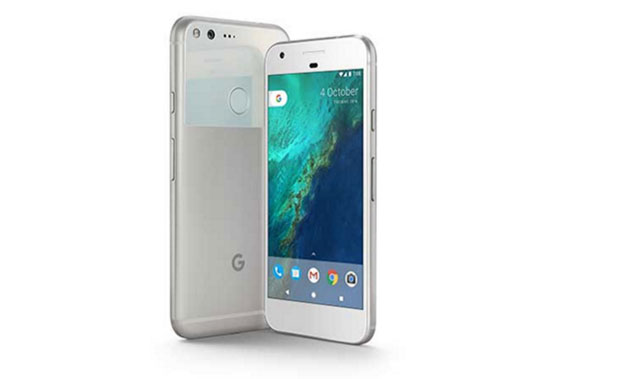
    The company on Tuesday unveiled the Pixel and larger Pixel XL, the first phones that were conceptualised, designed, engineered and tested in-house.

    The Pixel handsets feature a Siri-like virtual assistant, flashy camera features and are the first to boast Android’s new Nougat 7.1 operating system.

    Their debut signals Google’s push into the US$400bn smartphone hardware business and shows that the company is willing to risk alienating partners like Samsung Electronics and LG Electronics that sell Android-based phones.

    “Google is now the seller of record of this phone,” said Rick Osterloh, chief of the company’s new hardware division. He notes that the company is now managing inventory, building relationships with carriers, sourcing components, making supply chain deals and managing distribution. Google is even making accessories, including cases and cables.

    Until now, Google had satisfied itself with dipping a toe into the smartphone hardware business with the six-year-old Nexus programme, a co-branding effort that outsourced the vast majority of development to other smartphone makers.

    While well regarded, Nexus handsets were mostly a way for Google to experiment. But along the way, executives began to see the benefit of the Apple approach: a unified portfolio of consumer electronics products — phones, tablets, watches, computers — that lock users into its services.

    Getting into the smartphone hardware business is a big, risky financial and operational commitment. But Google needed its own handset to ensure distribution for its Web services, and more complex offerings like virtual and augmented reality.

    So, in the summer of 2015, CEO Sundar Pichai approved the Pixel project; development began last autumn (South African spring). “The difference with this device is that we started from the beginning,” says Dave Burke, who runs Android engineering. By contrast, Google’s contributions to Nexus phones typically didn’t happen until they were 90% done.

    Custom silicon

    When Osterloh, 44, came on board in mid-April, he brought Google’s hardware groups into one division, shutting projects he didn’t see contributing to Google’s future. Now the engineers and designers from Google Glass, Chromecast and Pixel all work together.

    Keeping them separate, he says, made it “hard to drive toward the goal of portfolio strategy and focus”. Reflecting long-held ambitions to build an Apple-style supply chain, the hardware division now has a supply management team, drawing on the expertise of the Nest smart home unit acquired by Google nearly three years ago.

    Google declined to say how much it’s spending on the effort. However, Jason Bremner, a former Qualcomm executive who works on Google’s hardware products, put it in context. “Part of being the seller of record means that inventory, that supply chain risk — you know, hundreds of millions of dollars on the line on any given day — that’s on Google now,” he said.

    Now that Google is designing phones itself, the company can at long last put together a product roadmap going out several years.

    For example, last month Burke was able to see a photo taken by a Google handset that won’t debut until next fall. That “would have never happened with Nexus”, he says.

    Going forward, more and more of the phones’ guts will be developed in-house. Burke says the company will eventually be able to ship its own custom “silicon”, a buzzword for customised processors that make devices work better.
    google-pixel-640

    It’s a very different setup from Osterloh’s previous Google gig, when he ran the Motorola division. “While we were part of Google, we were very arm’s-length,” he says.

    Now his team gets early access to the company’s advances in machine learning and innovations from the Assistant group.

    The Pixel phones will also be the first to run the next version of Android, Nougat 7.1, complete with Google tie-ins like pro camera effects, instant chat support, and a service that automatically frees up phone storage via the cloud.

    Still, Google has deliberately built a firewall between the hardware and Android divisions so other phone makers’ proprietary technology doesn’t leak.

    Hiroshi Lockheimer, who runs the Android unit and is a longtime Osterloh pal, says his group will treat the hardware team like any customer.

    “Samsung is a very important partner, as is LG, Huawei and so on,” he says. “Rick is an important partner. Samsung tells us confidential information about their product line, their plans. We won’t tell LG that, and vice versa. That continues. Everyone is treated the same, including Rick’s team.”

    Osterloh show

    When Osterloh demonstrated the Pixel phones at Google’s Mountain View, California, headquarters recently, it was immediately clear the craftsmanship is light years ahead of the flimsy US$1 500 Google Glass headsets and plastic Chromecast media players of yore.

    With their metal frames and precisely honed bezels and edges, the Pixels (which come in silver, black and limited-edition blue) have more in common with the elegant gear from Nest.

    The phones feature cameras that can snap photos quicker than the blink of an eye, app speeds once reserved for laptops and battery life that bests last year’s non-Google made Nexus phones.

    Osterloh proudly showed how one can twist the phone mid-air to activate the selfie camera. “That’s pretty cool,” he says.

    Also notable is a fingerprint scanner that doubles as a trackpad (other Android phone makers will get to enable this, too) and software-enhanced gyroscopes that reduce shakiness in recorded video, stabilisation that Osterloh calls “out of this world good”.

    The new phones are made up of off-the-shelf components from several suppliers, including a Snapdragon processor, and are assembled in Taiwan by HTC.

    But there is still custom work inside this first version, including wireless modem technology that has evolved from earlier experiments with Nexus.

    The Pixel also has chipsets optimised by Google that makes photo-taking and touchscreen response times much faster than any Android device yet built, Burke says.

    The Google Assistant was developed separately from Android and offers suggestions based on previous queries. For example, it can list San Francisco landmarks after being asked earlier about the local weather.

    While Google has contracted HTC to assemble the Pixel phones, Osterloh says the approach is no different than Apple’s partnership with iPhone builder Foxconn.

    Flip the Pixel over and you’ll see “Made by Google”, another tip of the hat to Apple, which has long made much of the fact that its phones are “designed by Apple in California”. Osterloh says Google will never say the Pixel is co-engineered with anyone else. He proudly proclaims, “It’s ours.”  — (c) 2016 Bloomberg LP



    Apple Google Google Pixel Google Pixel XL LG LG Electronics Pixel Pixel XL Qualcomm Samsung Sundar Pichai
    WhatsApp YouTube Follow on Google News Add as preferred source on Google
    Share. Facebook Twitter LinkedIn WhatsApp Telegram Email Copy Link
    Previous ArticleMeet Google’s new Pixel smartphones
    Next Article Gov’t playing Russian Roulette with ICT sector

    Related Posts

    What ordinary South Africans really think of AI

    What ordinary South Africans really think of AI

    30 January 2026
    Apple acquires audio AI start-up Q.ai

    Apple acquires audio AI start-up Q.ai

    30 January 2026
    Chip shortage will get worse, Samsung warns

    Chip shortage will get worse, Samsung warns

    29 January 2026
    Company News
    Huawei turns 25 in South Africa, celebrates with major device discounts

    Huawei turns 25 in South Africa, celebrates with major device discounts

    30 January 2026
    Phishing has not disappeared, but it has grown up - KnowBe4

    Phishing has not disappeared, but it has grown up

    30 January 2026
    Smartphone affordability: South Africa's new economic divide - PayJoy

    Smartphone affordability: South Africa’s new economic divide

    29 January 2026
    Opinion
    South Africa's skills advantage is being overlooked at home - Richard Firth

    South Africa’s skills advantage is being overlooked at home

    29 January 2026
    Why Elon Musk's Starlink is a 'hard no' for me - Songezo Zibi

    Why Elon Musk’s Starlink is a ‘hard no’ for me

    26 January 2026
    South Africa's new fibre broadband battle - Duncan McLeod

    South Africa’s new fibre broadband battle

    20 January 2026

    Subscribe to Updates

    Get the best South African technology news and analysis delivered to your e-mail inbox every morning.

    Latest Posts
    Vuyani Jarana: Mobile coverage masks a deeper broadband failure

    Vuyani Jarana: Mobile coverage masks a deeper broadband failure

    30 January 2026
    TCS+ | How Cloud On Demand is helping SA businesses succeed in the cloud - Xhenia Rhode, Dion Kalicharan

    TCS+ | Cloud On Demand and Consnet: inside a real-world AWS partner success story

    30 January 2026
    Huawei turns 25 in South Africa, celebrates with major device discounts

    Huawei turns 25 in South Africa, celebrates with major device discounts

    30 January 2026
    SABC Plus to flight Microsoft AI training videos

    SABC Plus to flight Microsoft AI training videos

    30 January 2026
    © 2009 - 2026 NewsCentral Media
    • Cookie policy (ZA)
    • TechCentral – privacy and Popia

    Type above and press Enter to search. Press Esc to cancel.

    Manage consent

    TechCentral uses cookies to enhance its offerings. Consenting to these technologies allows us to serve you better. Not consenting or withdrawing consent may adversely affect certain features and functions of the website.

    Functional Always active
    The technical storage or access is strictly necessary for the legitimate purpose of enabling the use of a specific service explicitly requested by the subscriber or user, or for the sole purpose of carrying out the transmission of a communication over an electronic communications network.
    Preferences
    The technical storage or access is necessary for the legitimate purpose of storing preferences that are not requested by the subscriber or user.
    Statistics
    The technical storage or access that is used exclusively for statistical purposes. The technical storage or access that is used exclusively for anonymous statistical purposes. Without a subpoena, voluntary compliance on the part of your Internet Service Provider, or additional records from a third party, information stored or retrieved for this purpose alone cannot usually be used to identify you.
    Marketing
    The technical storage or access is required to create user profiles to send advertising, or to track the user on a website or across several websites for similar marketing purposes.
    • Manage options
    • Manage services
    • Manage {vendor_count} vendors
    • Read more about these purposes
    View preferences
    • {title}
    • {title}
    • {title}