
Close Menu
TechCentralTechCentral

    Subscribe to the newsletter

    Get the best South African technology news and analysis delivered to your e-mail inbox every morning.

    Facebook X (Twitter) YouTube LinkedIn
    WhatsApp Facebook X (Twitter) LinkedIn YouTube
    TechCentralTechCentral
    • News
      Big Microsoft 365 price increases coming next year

      Big Microsoft price increases coming next year

      5 December 2025
      Vodacom to take control of Safaricom in R36-billion deal - Shameel Joosub

      Vodacom to take control of Safaricom in R36-billion deal

      4 December 2025
      Black Friday goes digital in South Africa as online spending surges to record high

      Black Friday goes digital in South Africa as online spending surges to record high

      4 December 2025
      BYD takes direct aim at Toyota with launch of sub-R500 000 Sealion 5 PHEV

      BYD takes direct aim at Toyota with launch of sub-R500 000 Sealion 5 PHEV

      4 December 2025
      'Get it now': Takealot in new instant deliveries pilot

      ‘Get it now’: Takealot in new instant deliveries pilot

      4 December 2025
    • World
      Amazon and Google launch multi-cloud service for faster connectivity

      Amazon and Google launch multi-cloud service for faster connectivity

      1 December 2025
      Google makes final court plea to stop US breakup

      Google makes final court plea to stop US breakup

      21 November 2025
      Bezos unveils monster rocket: New Glenn 9x4 set to dwarf Saturn V

      Bezos unveils monster rocket: New Glenn 9×4 set to dwarf Saturn V

      21 November 2025
      Tech shares turbocharged by Nvidia's stellar earnings

      Tech shares turbocharged by stellar Nvidia earnings

      20 November 2025
      Config file blamed for Cloudflare meltdown that disrupted the web

      Config file blamed for Cloudflare meltdown that disrupted the web

      19 November 2025
    • In-depth
      Jensen Huang Nvidia

      So, will China really win the AI race?

      14 November 2025
      Valve's Linux console takes aim at Microsoft's gaming empire

      Valve’s Linux console takes aim at Microsoft’s gaming empire

      13 November 2025
      iOCO's extraordinary comeback plan - Rhys Summerton

      iOCO’s extraordinary comeback plan

      28 October 2025
      Why smart glasses keep failing - no, it's not the tech - Mark Zuckerberg

      Why smart glasses keep failing – it’s not the tech

      19 October 2025
      BYD to blanket South Africa with megawatt-scale EV charging network - Stella Li

      BYD to blanket South Africa with megawatt-scale EV charging network

      16 October 2025
    • TCS
      TCS+ | How Cloud on Demand helps partners thrive in the AWS ecosystem - Odwa Ndyaluvane and Xenia Rhode

      TCS+ | How Cloud On Demand helps partners thrive in the AWS ecosystem

      4 December 2025
      TCS | MTN Group CEO Ralph Mupita on competition, AI and the future of mobile

      TCS | Ralph Mupita on competition, AI and the future of mobile

      28 November 2025
      TCS | Dominic Cull on fixing South Africa's ICT policy bottlenecks

      TCS | Dominic Cull on fixing South Africa’s ICT policy bottlenecks

      21 November 2025
      TCS | BMW CEO Peter van Binsbergen on the future of South Africa's automotive industry

      TCS | BMW CEO Peter van Binsbergen on the future of South Africa’s automotive industry

      6 November 2025
      TCS | Why Altron is building an AI factory - Bongani Andy Mabaso

      TCS | Why Altron is building an AI factory in Johannesburg

      28 October 2025
    • Opinion
      Your data, your hardware: the DIY AI revolution is coming - Duncan McLeod

      Your data, your hardware: the DIY AI revolution is coming

      20 November 2025
      Zero Carbon Charge founder Joubert Roux

      The energy revolution South Africa can’t afford to miss

      20 November 2025
      It's time for a new approach to government IT spend in South Africa - Richard Firth

      It’s time for a new approach to government IT spend in South Africa

      19 November 2025
      How South Africa's broken Rica system fuels murder and mayhem - Farhad Khan

      How South Africa’s broken Rica system fuels murder and mayhem

      10 November 2025
      South Africa's AI data centre boom risks overloading a fragile grid - Paul Colmer

      South Africa’s AI data centre boom risks overloading a fragile grid

      30 October 2025
    • Company Hubs
      • Africa Data Centres
      • AfriGIS
      • Altron Digital Business
      • Altron Document Solutions
      • Altron Group
      • Arctic Wolf
      • AvertITD
      • Braintree
      • CallMiner
      • CambriLearn
      • CYBER1 Solutions
      • Digicloud Africa
      • Digimune
      • Domains.co.za
      • ESET
      • Euphoria Telecom
      • Incredible Business
      • iONLINE
      • IQbusiness
      • Iris Network Systems
      • LSD Open
      • NEC XON
      • Netstar
      • Network Platforms
      • Next DLP
      • Ovations
      • Paracon
      • Paratus
      • Q-KON
      • SevenC
      • SkyWire
      • Solid8 Technologies
      • Telit Cinterion
      • Tenable
      • Vertiv
      • Videri Digital
      • Vodacom Business
      • Wipro
      • Workday
      • XLink
    • Sections
      • AI and machine learning
      • Banking
      • Broadcasting and Media
      • Cloud services
      • Contact centres and CX
      • Cryptocurrencies
      • Education and skills
      • Electronics and hardware
      • Energy and sustainability
      • Enterprise software
      • Financial services
      • Information security
      • Internet and connectivity
      • Internet of Things
      • Investment
      • IT services
      • Lifestyle
      • Motoring
      • Public sector
      • Retail and e-commerce
      • Satellite communications
      • Science
      • SMEs and start-ups
      • Social media
      • Talent and leadership
      • Telecoms
    • Events
    • Advertise
    TechCentralTechCentral
    Home » In-depth » How Microsoft turned consumers against Skype

    How Microsoft turned consumers against Skype

    By Agency Staff10 May 2018
    Twitter LinkedIn Facebook WhatsApp Email Telegram Copy Link
    News Alerts
    WhatsApp

    It’s relatively easy these days to find critics of Skype, the popular online calling service that Microsoft acquired in 2011 for US$8.5bn. Former devotees routinely gripe on social media that the software has become too difficult to use. On the Apple App Store and Google Play Store, negative reviews of the smartphone app are piling up, citing everything from poor call quality to gluttonous battery demand.

    In March, tech investor and commentator Om Malik summarised the negativity by tweeting that Skype was “a turd of the highest quality” and directing his ire at its owner. “Way to ruin Skype and its experience. I was forced to use it today, but never again.”

    Microsoft says the criticism is overblown and reflects, in part, people’s grumpiness with software updates. There are also other factors undermining users’ affection for an Internet tool that 15 years ago introduced the idea of making calls online, radically resetting the telecommunications landscape in the process.

    It is like Tim Tebow trying to be a baseball player. The product is so confusing, kludgey and unusable

    Since acquiring Skype from private equity investors, Microsoft has refocused the online calling service on the corporate market, a change that has made Skype less intuitive and harder to use, prompting many Skypers to defect to similar services operated by Apple, Google, Facebook and Snap.

    The company hasn’t updated the number of Skype users since 2016, when it put the total at 300m. Some analysts suspect the numbers are flat at best, and two former employees describe a general sense of panic that they’re actually falling. The ex-Microsofters, who requested anonymity to discuss confidential statistics, say that as late as 2017 they never heard a figure higher than 300m discussed internally.

    CEO Satya Nadella has repeatedly said he wants the company’s products to be widely used and loved. By turning Skype into a key part of its lucrative Office suite for corporate customers, Microsoft is threatening what made it appealing to regular folks in the first place. “It is like Tim Tebow trying to be a baseball player,” Malik says. “The product is so confusing, kludgey and unusable.”

    Founded in 2003 by a pair of Nordic entrepreneurs, Skype freed tens of millions of people from the tyranny of the phone companies by offering cheap overseas calls. Most chatted free, and Skype made money charging for prepaid calls to regular phones. The company has cycled through various owners, including eBay. By 2011, the company was controlled by a Silver Lake-led consortium of investors and shopping itself to potential acquirers including Google and Microsoft even as it prepared for an initial public offering.

    Steve Ballmer

    Keen to reduce Microsoft’s reliance on PCs, former CEO Steve Ballmer saw in Skype an Internet brand that was so popular it had become a verb. Having erred previously by acquiring number-two players to save money, Ballmer decided to buy the leading incumbent and pay a 40% premium over what Skype valued itself at the time.

    “It was the biggest asset in the space at the time with the most recognised brand,” says Lori Wright, who joined the Skype team as GM last year from video-conference rival BlueJeans. “It was an opportunistic way for Microsoft to enter into something that was going to be significant.”

    After the acquisition, Microsoft executive and former Skype chief financial officer Bill Koefoed was routinely reminded of Skype’s popularity as a way to make cheap, or free, international calls. He recalls identifying himself to immigration officers on business trips overseas and constantly hearing variations of: I use Skype to call my grandmother! “Skype was such an iconic brand,” he says.
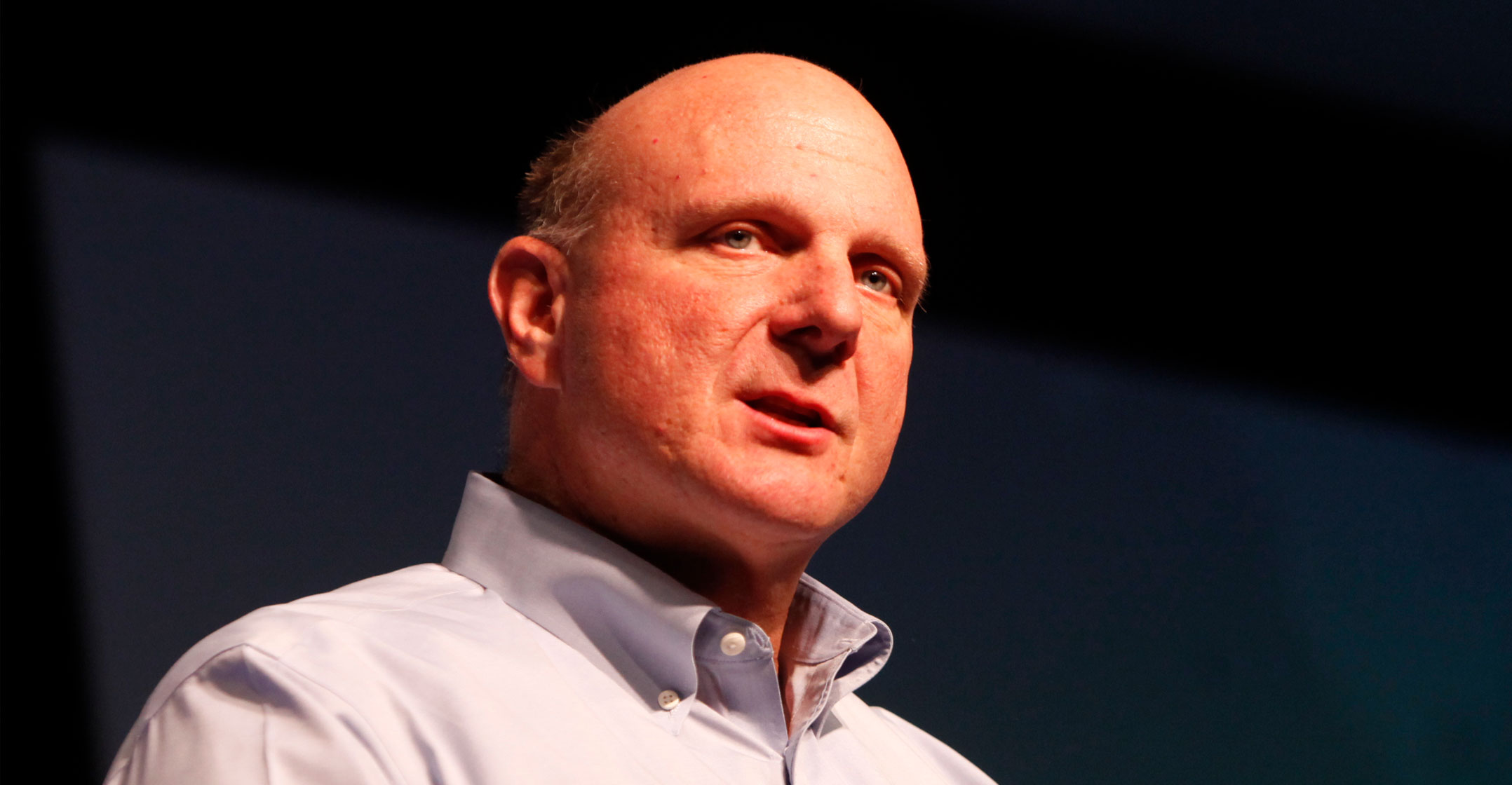
    Former Microsoft CEO Steve Ballmer. Image: MicrosoftPDC

    Focusing on corporations was a reasonable strategy and one shared by Skype’s prior management. Originally Ballmer and company pledged to let Skype operate independently from Lync, Microsoft’s nascent Internet phone service for corporations. But two years later the company began merging the two into Skype for Business and folded that into Office.

    Today, Microsoft is using Skype for Business to help sell subscriptions to its cloud-based Office 365 and steal customers from Cisco. Microsoft has essentially turned Skype into a replacement for a corporate telephone system — with a few modern features borrowed from instant messaging, artificial intelligence and social networking. Teams, the company’s year-old version of Slack, is being merged with Skype for Business. LinkedIn, another acquisition, will provide work bios of the people Skypers are about to call. Drawing on Microsoft’s pioneering work in AI, Skype can now translate calls into 12 languages.

    As proof that the strategy is working, Microsoft points to a roster of blue-chip customers. Among them is General Electric, which says it rolled out Skype for Business to 220 000 employees late last year and is logging 5.5m meeting minutes a day. Accenture and some of the largest banks are also big users, according to Office 365 marketing vice president Ron Markezich. In a Forrester survey of 6 259 information workers, 28% said they used Skype for Business for conferencing, compared to 21% for Cisco’s products.

    There was a demographic that loved Skype for what it was; it was clean and simple. That’s no longer the case

    Atkins, a UK engineering-design company that’s part of SNC Lavalin Group, says its 18 500 workers use Skype for telephone service, conferences and sharing projects — to the tune of 10m minutes a month. “We did a full competitor analysis but we trusted Microsoft’s vision,” says Atkins collaboration manager Nick Ledger, who says he likes how Skype is integrated with Office. “Very rarely do we have any problems.”

    But Microsoft has paid a price for prioritising corporations over consumers. The former seek robust security, search and the ability to host town halls; the latter ease-of-use and decent call quality. Inevitably, the complexity of the corporate software crowds out the simplicity consumers prefer. While the company maintains two separate apps, the underlying technology is the same and it’s built with workers in mind.

    Skype has tried to be all things to all people, “and almost all those things are executed better elsewhere”, says Matthew Culnane, a user experience and content strategist at the UK’s Open University.

    It doesn’t help that Microsoft keeps overhauling the app. A redesign last summer sent ratings plunging. In a scorching Twitter commentary, security journalist Brian Krebs said finding basic buttons was a PITA (pain in the ass) and that the recent update was “probably the worst so far”. The tweet — and retweets — got the attention of Skype’s social network team. “Brian, we’re sorry to hear this,” a representative replied. “Would love to hear more feedback and see if there’s anything we can help with.”

    FaceTime

    “There was a demographic that loved Skype for what it was; it was clean and simple,” says Carolina Milanesi, an analyst at Creative Strategies. “That’s no longer the case.” Milanesi once paid for a Skype subscription for her mother in Italy. Then her mom got an iPad and now they talk on Apple FaceTime. Millions do the same, despite the fact that Skype apps are a download away on iPhone and Android smartphones and tablets.

    Microsoft’s focus on the corporate market may also have blinded it to the rise of WhatsApp, Facebook Messenger and Tencent’s WeChat. Microsoft killed off Windows Live Messenger five years ago, right when WhatsApp was amassing hundreds of millions of users around the globe. The instant messaging service now has 1.5bn users and has started adding key Skype features. Meanwhile, upstarts like Discord, a free voice and text chat app for gamers, are gaining users.

    People get frustrated that it doesn’t work like dial-tone and say ‘I am just going to switch to the next app or service’, only to find out that the next service has the same issue

    People who have remained loyal to Skype despite all the alternatives complain most about service quality — calls that don’t connect, connections that drop every other word, address books that disappear after software updates. Business customers have similar issues, too, according to Forrester analyst Nick Barber. “It’s not uncommon for me to talk to companies that have Skype for Business, yet they are still looking at other options because it’s not working for them,” he said. “It’s usually around the call quality and consistency both with audio and video.”

    Microsoft says it takes quality seriously and tracks dropped calls to ascertain what went wrong. Wright says sometimes the customer’s network is at fault, not Skype. She argues that most companies are struggling to perfect the technology. “People get frustrated that it doesn’t work like dial-tone and say ‘I am just going to switch to the next app or service’, only to find out that the next service has the same issue,” she says. “We are making rapid progress.”

    Downloads of Skype’s Android app reached a billion in October, although Microsoft doesn’t say how often people log on. Ratings are starting to recover from the initial nosedive as customers become accustomed to the changes. “It’s a really radical redesign, so we thought there was going to be a pretty negative reaction; we were braced for that,” Wright says. “What we are seeing now is they don’t hate it anymore.”  — Reported by Dina Bass and Nate Lanxon, (c) 2018 Bloomberg LP



    Microsoft Om Malik Satya Nadella Skype Steve Ballmer top
    Subscribe to TechCentral Subscribe to TechCentral
    Share. Facebook Twitter LinkedIn WhatsApp Telegram Email Copy Link
    Previous ArticleFree-to-air television in SA at risk, e.tv says
    Next Article Uganda wants to tax WhatsApp, Facebook users

    Related Posts

    Big Microsoft 365 price increases coming next year

    Big Microsoft price increases coming next year

    5 December 2025
    Unlock smarter computing with your surface Copilot+ PC

    Unlock smarter computing with your Surface Copilot+ PC

    4 December 2025
    Businesses boost efficiency as Altron helps teams embed Copilot into daily operations - Altron Digital Business

    Businesses boost efficiency as Altron helps teams embed Copilot into daily operations

    27 November 2025
    Company News
    AI is not a technology problem - iqbusiness

    AI is not a technology problem – iqbusiness

    5 December 2025
    Telcos are sitting on a data gold mine - but few know what do with it - Phillip du Plessis

    Telcos are sitting on a data gold mine – but few know what do with it

    4 December 2025
    Unlock smarter computing with your surface Copilot+ PC

    Unlock smarter computing with your Surface Copilot+ PC

    4 December 2025
    Opinion
    Your data, your hardware: the DIY AI revolution is coming - Duncan McLeod

    Your data, your hardware: the DIY AI revolution is coming

    20 November 2025
    Zero Carbon Charge founder Joubert Roux

    The energy revolution South Africa can’t afford to miss

    20 November 2025
    It's time for a new approach to government IT spend in South Africa - Richard Firth

    It’s time for a new approach to government IT spend in South Africa

    19 November 2025

    Subscribe to Updates

    Get the best South African technology news and analysis delivered to your e-mail inbox every morning.

    Latest Posts
    Big Microsoft 365 price increases coming next year

    Big Microsoft price increases coming next year

    5 December 2025
    AI is not a technology problem - iqbusiness

    AI is not a technology problem – iqbusiness

    5 December 2025
    Vodacom to take control of Safaricom in R36-billion deal - Shameel Joosub

    Vodacom to take control of Safaricom in R36-billion deal

    4 December 2025
    Black Friday goes digital in South Africa as online spending surges to record high

    Black Friday goes digital in South Africa as online spending surges to record high

    4 December 2025
    © 2009 - 2025 NewsCentral Media
    • Cookie policy (ZA)
    • TechCentral – privacy and Popia

    Type above and press Enter to search. Press Esc to cancel.

    Manage consent

    TechCentral uses cookies to enhance its offerings. Consenting to these technologies allows us to serve you better. Not consenting or withdrawing consent may adversely affect certain features and functions of the website.

    Functional Always active
    The technical storage or access is strictly necessary for the legitimate purpose of enabling the use of a specific service explicitly requested by the subscriber or user, or for the sole purpose of carrying out the transmission of a communication over an electronic communications network.
    Preferences
    The technical storage or access is necessary for the legitimate purpose of storing preferences that are not requested by the subscriber or user.
    Statistics
    The technical storage or access that is used exclusively for statistical purposes. The technical storage or access that is used exclusively for anonymous statistical purposes. Without a subpoena, voluntary compliance on the part of your Internet Service Provider, or additional records from a third party, information stored or retrieved for this purpose alone cannot usually be used to identify you.
    Marketing
    The technical storage or access is required to create user profiles to send advertising, or to track the user on a website or across several websites for similar marketing purposes.
    • Manage options
    • Manage services
    • Manage {vendor_count} vendors
    • Read more about these purposes
    View preferences
    • {title}
    • {title}
    • {title}