Close Menu
TechCentralTechCentral

    Subscribe to the newsletter

    Get the best South African technology news and analysis delivered to your e-mail inbox every morning.

    Facebook X (Twitter) YouTube LinkedIn
    WhatsApp Facebook X (Twitter) LinkedIn YouTube
    TechCentralTechCentral
    • News
      Vuyani Jarana: Mobile coverage masks a deeper broadband failure

      Vuyani Jarana: Mobile coverage masks a deeper broadband failure

      30 January 2026
      SABC Plus to flight Microsoft AI training videos

      SABC Plus to flight Microsoft AI training videos

      30 January 2026
      Fibre ducts

      Fibre industry consolidation in KZN

      30 January 2026
      Watts & Wheels S1E3: 'BYD's Corolla Cross challenger'

      Watts & Wheels S1E3: ‘BYD’s Corolla Cross challenger’

      30 January 2026
      What ordinary South Africans really think of AI

      What ordinary South Africans really think of AI

      30 January 2026
    • World
      Apple acquires audio AI start-up Q.ai

      Apple acquires audio AI start-up Q.ai

      30 January 2026
      SpaceX IPO may be largest in history

      SpaceX IPO may be largest in history

      28 January 2026
      Nvidia throws AI at the weather

      Nvidia throws AI at weather forecasting

      27 January 2026
      Debate erupts over value of in-flight Wi-Fi

      Debate erupts over value of in-flight Wi-Fi

      26 January 2026
      Intel takes another hit - Intel CEO Lip-Bu Tan. Laure Andrillon/Reuters

      Intel takes another hit

      23 January 2026
    • In-depth
      How liberalisation is rewiring South Africa's power sector

      How liberalisation is rewiring South Africa’s power sector

      21 January 2026
      The top-performing South African tech shares of 2025

      The top-performing South African tech shares of 2025

      12 January 2026
      Digital authoritarianism grows as African states normalise internet blackouts

      Digital authoritarianism grows as African states normalise internet blackouts

      19 December 2025
      TechCentral's South African Newsmakers of 2025

      TechCentral’s South African Newsmakers of 2025

      18 December 2025
      Black Friday goes digital in South Africa as online spending surges to record high

      Black Friday goes digital in South Africa as online spending surges to record high

      4 December 2025
    • TCS
      TCS+ | How Cloud On Demand is helping SA businesses succeed in the cloud - Xhenia Rhode, Dion Kalicharan

      TCS+ | Cloud On Demand and Consnet: inside a real-world AWS partner success story

      30 January 2026
      Watts & Wheels S1E3: 'BYD's Corolla Cross challenger'

      Watts & Wheels S1E2: ‘China attacks, BMW digs in, Toyota’s sublime supercar’

      23 January 2026

      TCS+ | Why cybersecurity is becoming a competitive advantage for SA businesses

      20 January 2026
      Watts & Wheels S1E3: 'BYD's Corolla Cross challenger'

      Watts & Wheels: S1E1 – ‘William, Prince of Wheels’

      8 January 2026
      TCS+ | Africa's digital transformation - unlocking AI through cloud and culture - Cliff de Wit Accelera Digital Group

      TCS+ | Cloud without culture won’t deliver AI: Accelera’s Cliff de Wit

      12 December 2025
    • Opinion
      South Africa's skills advantage is being overlooked at home - Richard Firth

      South Africa’s skills advantage is being overlooked at home

      29 January 2026
      Why Elon Musk's Starlink is a 'hard no' for me - Songezo Zibi

      Why Elon Musk’s Starlink is a ‘hard no’ for me

      26 January 2026
      South Africa's new fibre broadband battle - Duncan McLeod

      South Africa’s new fibre broadband battle

      20 January 2026
      AI moves from pilots to production in South African companies - Nazia Pillay SAP

      AI moves from pilots to production in South African companies

      20 January 2026
      South Africa's new fibre broadband battle - Duncan McLeod

      ANC’s attack on Solly Malatsi shows how BEE dogma trumps economic reality

      14 December 2025
    • Company Hubs
      • Africa Data Centres
      • AfriGIS
      • Altron Digital Business
      • Altron Document Solutions
      • Altron Group
      • Arctic Wolf
      • AvertITD
      • Braintree
      • CallMiner
      • CambriLearn
      • CYBER1 Solutions
      • Digicloud Africa
      • Digimune
      • Domains.co.za
      • ESET
      • Euphoria Telecom
      • Incredible Business
      • iONLINE
      • IQbusiness
      • Iris Network Systems
      • LSD Open
      • NEC XON
      • Netstar
      • Network Platforms
      • Next DLP
      • Ovations
      • Paracon
      • Paratus
      • Q-KON
      • SevenC
      • SkyWire
      • Solid8 Technologies
      • Telit Cinterion
      • Tenable
      • Vertiv
      • Videri Digital
      • Vodacom Business
      • Wipro
      • Workday
      • XLink
    • Sections
      • AI and machine learning
      • Banking
      • Broadcasting and Media
      • Cloud services
      • Contact centres and CX
      • Cryptocurrencies
      • Education and skills
      • Electronics and hardware
      • Energy and sustainability
      • Enterprise software
      • Financial services
      • Information security
      • Internet and connectivity
      • Internet of Things
      • Investment
      • IT services
      • Lifestyle
      • Motoring
      • Public sector
      • Retail and e-commerce
      • Satellite communications
      • Science
      • SMEs and start-ups
      • Social media
      • Talent and leadership
      • Telecoms
    • Events
    • Advertise
    TechCentralTechCentral
    Home » In-depth » Inside Kenya’s brutal mobile price war

    Inside Kenya’s brutal mobile price war

    By Editor19 January 2011
    Twitter LinkedIn Facebook WhatsApp Email Telegram Copy Link
    News Alerts
    WhatsApp
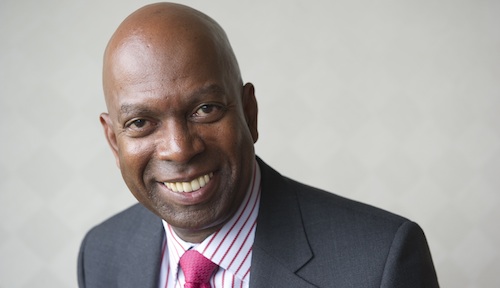
    Safaricom CEO Bob Collymore

    South Africans will be amazed to learn that Kenyans pay Ksh4/minute, or about 34c/minute, to make a mobile phone call — and that’s one of the most expensive rates on offer in the East African nation.

    In some cases, prices have fallen to just Ksh1, or about 8,5c/minute. On Safaricom, the biggest mobile operator, on-network calls are just Ksh3/minute, or less than 30c/minute.

    A price war has erupted in Kenya, with Bharti Airtel — a new entrant in the market after it acquired Zain from Kuwait’s Mobile Telecommunications Co last year — slashing prices by more than 80% in the past six months.

    Now other operators are worried that Airtel, which is a tiny player next to Safaricom, could damage the market.

    Safaricom CEO Bob Collymore says Airtel is using Kenya, where its market share is relatively inconsequential, as a test bed for how slashing prices to below cost will allow it to grab market share from bigger rivals.

    Airtel acquired Zain’s African assets in 2010 for US$10,7bn, giving it access to important markets like Kenya, Nigeria and Ghana.

    Last August, Airtel cut the price of calls from Ksh6 to Ksh3, prompting Safaricom, which is part owned by the Kenyan government and by the UK’s Vodafone, to respond with price cuts of its own. On-net calls between Safaricom customers have fallen to Ksh3/minute while calls to other operators cost Ksh4.

    Even those prices — which Collymore says are still sufficient to guarantee Safaricom a reasonable profit margin — would have SA consumers salivating. But then, earlier this month, Airtel cut its prices again, slashing the cost of an on-net call from Ksh3 to just Ksh1.

    To put that in context, SA prepaid users pay up to R2,85/minute, or more than 33 times the Airtel Kenya rate. Even on special packages, where SA prepaid users can pay rates of as little as R1,50/minute, the Airtel tariffs are still less than 15% of the local rate.

    In general, tariffs in Kenya are 20% of the equivalent rates charged by Vodacom, MTN and Cell C in SA, and often even a lot less than that.

    The Kenyan market has four mobile operators. Safaricom dominates with about 77% market share, with Yu (owned by India’s Essar), Orange (formerly Telkom Kenya and now owned 51% by France Telecom) and Bharti Airtel sharing a minority share of the market.

    There are about 23m active Sim cards in a market of about 40m people. Collymore estimates that penetration has reached 100% of the adult population when measured using active Sim cards. However, about 30% of Kenyan cellphone users carry two or more Sims to take advantage of special tariffs at certain times of the day.

    The average revenue per user (Arpu) in Kenya is just over US$5, significantly lower than SA, where operators typically enjoy prepaid Arpu of well over R100/month. Airtime can be bought in units of as little as Ksh5 (42c).

    Though consumers love the low prices, Collymore warns that the price cuts are getting out of hand. “They can’t do this profitably,” he says of Airtel’s new on-network tariffs.

    Collymore says research shows that it costs Ksh1,72/minute to terminate an on-network call in Kenya.

    “Airtel is using Kenya as the test bed [for Africa],” he says. “Because the company has insignificant market share in Kenya, if they damage their business here it doesn’t matter. They can just pack up and go home.”

    He says Airtel is much more cautious about slashing rates in countries like Nigeria where it has a larger market share to defend.

    He warns Airtel’s actions in Kenya could damage the market, reducing government tax receipts and ultimately harming consumers as operators stop investing in infrastructure because they are unable to do so profitably.

    “If we all had to shift down to those price levels we simply wouldn’t invest anymore in voice,” Collymore says. “We’d have to retrench staff and outsource work to Egypt or India.”

    Airtel claims its price cuts are working, claiming recently that it had gained 2m subscribers and boosted call volumes significantly. But Collymore disputes this, saying the Indian-owned company has simply been giving away free Sim cards.

    He expects the Kenyan government will eventually intervene when it realises its tax receipts are threatened.

    “I think government will step in and put a floor on it,” he says. “Either it’ll do so through a crude tax mechanism, or it’ll change legislation to put a floor on prices.”

    That would be astonishing if it happened. In SA, some politicians and even consumers have grumbled about the need for price caps on call tariffs; in Kenya prices have fallen so far that a floor on prices may be considered.

    As the price war drags on, Collymore says Safaricom has a number of ways of fending off the competition. One is its highly popular M-Pesa mobile payments platform now used by 14m Kenyans. Another is its third-generation mobile data network, the only one in Kenya.

    Like everywhere else, demand for data in Kenya is booming and Safaricom is already testing a next-generation broadband network using long-term evolution.  — Duncan McLeod, TechCentral

    • Subscribe to our free daily newsletter
    • Follow us on Twitter or on Facebook


    Bharti Airtel Bob Collymore Cell C MTN Orange Kenya Safaricom Telkom Kenya Vodacom Yu
    WhatsApp YouTube Follow on Google News Add as preferred source on Google
    Share. Facebook Twitter LinkedIn WhatsApp Telegram Email Copy Link
    Previous ArticleTelkom prevails in R1,7bn tender claim
    Next Article Round one to Telkom in competition case

    Related Posts

    Mobile operators face tougher rules on data and billing

    Mobile operators face tougher rules on data and billing

    26 January 2026

    TCS+ | Why cybersecurity is becoming a competitive advantage for SA businesses

    20 January 2026
    South Africa's telecoms sector enters a new growth phase

    South Africa’s telecoms sector enters a new growth phase

    19 January 2026
    Company News
    Huawei turns 25 in South Africa, celebrates with major device discounts

    Huawei turns 25 in South Africa, celebrates with major device discounts

    30 January 2026
    Phishing has not disappeared, but it has grown up - KnowBe4

    Phishing has not disappeared, but it has grown up

    30 January 2026
    Smartphone affordability: South Africa's new economic divide - PayJoy

    Smartphone affordability: South Africa’s new economic divide

    29 January 2026
    Opinion
    South Africa's skills advantage is being overlooked at home - Richard Firth

    South Africa’s skills advantage is being overlooked at home

    29 January 2026
    Why Elon Musk's Starlink is a 'hard no' for me - Songezo Zibi

    Why Elon Musk’s Starlink is a ‘hard no’ for me

    26 January 2026
    South Africa's new fibre broadband battle - Duncan McLeod

    South Africa’s new fibre broadband battle

    20 January 2026

    Subscribe to Updates

    Get the best South African technology news and analysis delivered to your e-mail inbox every morning.

    Latest Posts
    Vuyani Jarana: Mobile coverage masks a deeper broadband failure

    Vuyani Jarana: Mobile coverage masks a deeper broadband failure

    30 January 2026
    TCS+ | How Cloud On Demand is helping SA businesses succeed in the cloud - Xhenia Rhode, Dion Kalicharan

    TCS+ | Cloud On Demand and Consnet: inside a real-world AWS partner success story

    30 January 2026
    Huawei turns 25 in South Africa, celebrates with major device discounts

    Huawei turns 25 in South Africa, celebrates with major device discounts

    30 January 2026
    SABC Plus to flight Microsoft AI training videos

    SABC Plus to flight Microsoft AI training videos

    30 January 2026
    © 2009 - 2026 NewsCentral Media
    • Cookie policy (ZA)
    • TechCentral – privacy and Popia

    Type above and press Enter to search. Press Esc to cancel.

    Manage consent

    TechCentral uses cookies to enhance its offerings. Consenting to these technologies allows us to serve you better. Not consenting or withdrawing consent may adversely affect certain features and functions of the website.

    Functional Always active
    The technical storage or access is strictly necessary for the legitimate purpose of enabling the use of a specific service explicitly requested by the subscriber or user, or for the sole purpose of carrying out the transmission of a communication over an electronic communications network.
    Preferences
    The technical storage or access is necessary for the legitimate purpose of storing preferences that are not requested by the subscriber or user.
    Statistics
    The technical storage or access that is used exclusively for statistical purposes. The technical storage or access that is used exclusively for anonymous statistical purposes. Without a subpoena, voluntary compliance on the part of your Internet Service Provider, or additional records from a third party, information stored or retrieved for this purpose alone cannot usually be used to identify you.
    Marketing
    The technical storage or access is required to create user profiles to send advertising, or to track the user on a website or across several websites for similar marketing purposes.
    • Manage options
    • Manage services
    • Manage {vendor_count} vendors
    • Read more about these purposes
    View preferences
    • {title}
    • {title}
    • {title}