

Close Menu
TechCentralTechCentral

    Subscribe to the newsletter

    Get the best South African technology news and analysis delivered to your e-mail inbox every morning.

    Facebook X (Twitter) YouTube LinkedIn
    WhatsApp Facebook X (Twitter) LinkedIn YouTube
    TechCentralTechCentral
    • News
      Starlink considers building its own phone - Elon Musk

      Starlink considers building its own phone

      5 February 2026
      South Africa is losing its film industry - one delay at a time

      South Africa is losing its film industry – one delay at a time

      5 February 2026
      Crypto markets reel as bitcoin slides

      Crypto markets reel as bitcoin slides

      5 February 2026
      Smartphone market hit by deepening memory crisis

      Smartphone market hit by deepening memory crisis

      5 February 2026
      MTN Group in talks to buy out IHS Towers

      MTN Group in talks to buy out IHS Towers

      5 February 2026
    • World
      AI won't replace software, says Nvidia CEO amid market rout - Jensen Huang

      AI won’t replace software, says Nvidia CEO amid market rout

      4 February 2026
      Apple acquires audio AI start-up Q.ai

      Apple acquires audio AI start-up Q.ai

      30 January 2026
      SpaceX IPO may be largest in history

      SpaceX IPO may be largest in history

      28 January 2026
      Nvidia throws AI at the weather

      Nvidia throws AI at weather forecasting

      27 January 2026
      Debate erupts over value of in-flight Wi-Fi

      Debate erupts over value of in-flight Wi-Fi

      26 January 2026
    • In-depth
      How liberalisation is rewiring South Africa's power sector

      How liberalisation is rewiring South Africa’s power sector

      21 January 2026
      The top-performing South African tech shares of 2025

      The top-performing South African tech shares of 2025

      12 January 2026
      Digital authoritarianism grows as African states normalise internet blackouts

      Digital authoritarianism grows as African states normalise internet blackouts

      19 December 2025
      TechCentral's South African Newsmakers of 2025

      TechCentral’s South African Newsmakers of 2025

      18 December 2025
      Black Friday goes digital in South Africa as online spending surges to record high

      Black Friday goes digital in South Africa as online spending surges to record high

      4 December 2025
    • TCS
      TCS+ | How Cloud On Demand is helping SA businesses succeed in the cloud - Xhenia Rhode, Dion Kalicharan

      TCS+ | Cloud On Demand and Consnet: inside a real-world AWS partner success story

      30 January 2026
      Watts & Wheels S1E3: 'BYD's Corolla Cross challenger'

      Watts & Wheels S1E3: ‘BYD’s Corolla Cross challenger’

      30 January 2026
      Watts & Wheels S1E3: 'BYD's Corolla Cross challenger'

      Watts & Wheels S1E2: ‘China attacks, BMW digs in, Toyota’s sublime supercar’

      23 January 2026

      TCS+ | Why cybersecurity is becoming a competitive advantage for SA businesses

      20 January 2026
      Watts & Wheels S1E3: 'BYD's Corolla Cross challenger'

      Watts & Wheels: S1E1 – ‘William, Prince of Wheels’

      8 January 2026
    • Opinion
      South Africa's skills advantage is being overlooked at home - Richard Firth

      South Africa’s skills advantage is being overlooked at home

      29 January 2026
      Why Elon Musk's Starlink is a 'hard no' for me - Songezo Zibi

      Why Elon Musk’s Starlink is a ‘hard no’ for me

      26 January 2026
      South Africa's new fibre broadband battle - Duncan McLeod

      South Africa’s new fibre broadband battle

      20 January 2026
      AI moves from pilots to production in South African companies - Nazia Pillay SAP

      AI moves from pilots to production in South African companies

      20 January 2026
      South Africa's new fibre broadband battle - Duncan McLeod

      ANC’s attack on Solly Malatsi shows how BEE dogma trumps economic reality

      14 December 2025
    • Company Hubs
      • Africa Data Centres
      • AfriGIS
      • Altron Digital Business
      • Altron Document Solutions
      • Altron Group
      • Arctic Wolf
      • AvertITD
      • Braintree
      • CallMiner
      • CambriLearn
      • CYBER1 Solutions
      • Digicloud Africa
      • Digimune
      • Domains.co.za
      • ESET
      • Euphoria Telecom
      • Incredible Business
      • iONLINE
      • IQbusiness
      • Iris Network Systems
      • LSD Open
      • NEC XON
      • Netstar
      • Network Platforms
      • Next DLP
      • Ovations
      • Paracon
      • Paratus
      • Q-KON
      • SevenC
      • SkyWire
      • Solid8 Technologies
      • Telit Cinterion
      • Tenable
      • Vertiv
      • Videri Digital
      • Vodacom Business
      • Wipro
      • Workday
      • XLink
    • Sections
      • AI and machine learning
      • Banking
      • Broadcasting and Media
      • Cloud services
      • Contact centres and CX
      • Cryptocurrencies
      • Education and skills
      • Electronics and hardware
      • Energy and sustainability
      • Enterprise software
      • Financial services
      • Information security
      • Internet and connectivity
      • Internet of Things
      • Investment
      • IT services
      • Lifestyle
      • Motoring
      • Public sector
      • Retail and e-commerce
      • Satellite communications
      • Science
      • SMEs and start-ups
      • Social media
      • Talent and leadership
      • Telecoms
    • Events
    • Advertise
    TechCentralTechCentral
    Home » In-depth » What Intel’s IoT bombshell says about its future

    What Intel’s IoT bombshell says about its future

    By James Francis6 July 2017
    Twitter LinkedIn Facebook WhatsApp Email Telegram Copy Link
    News Alerts
    WhatsApp
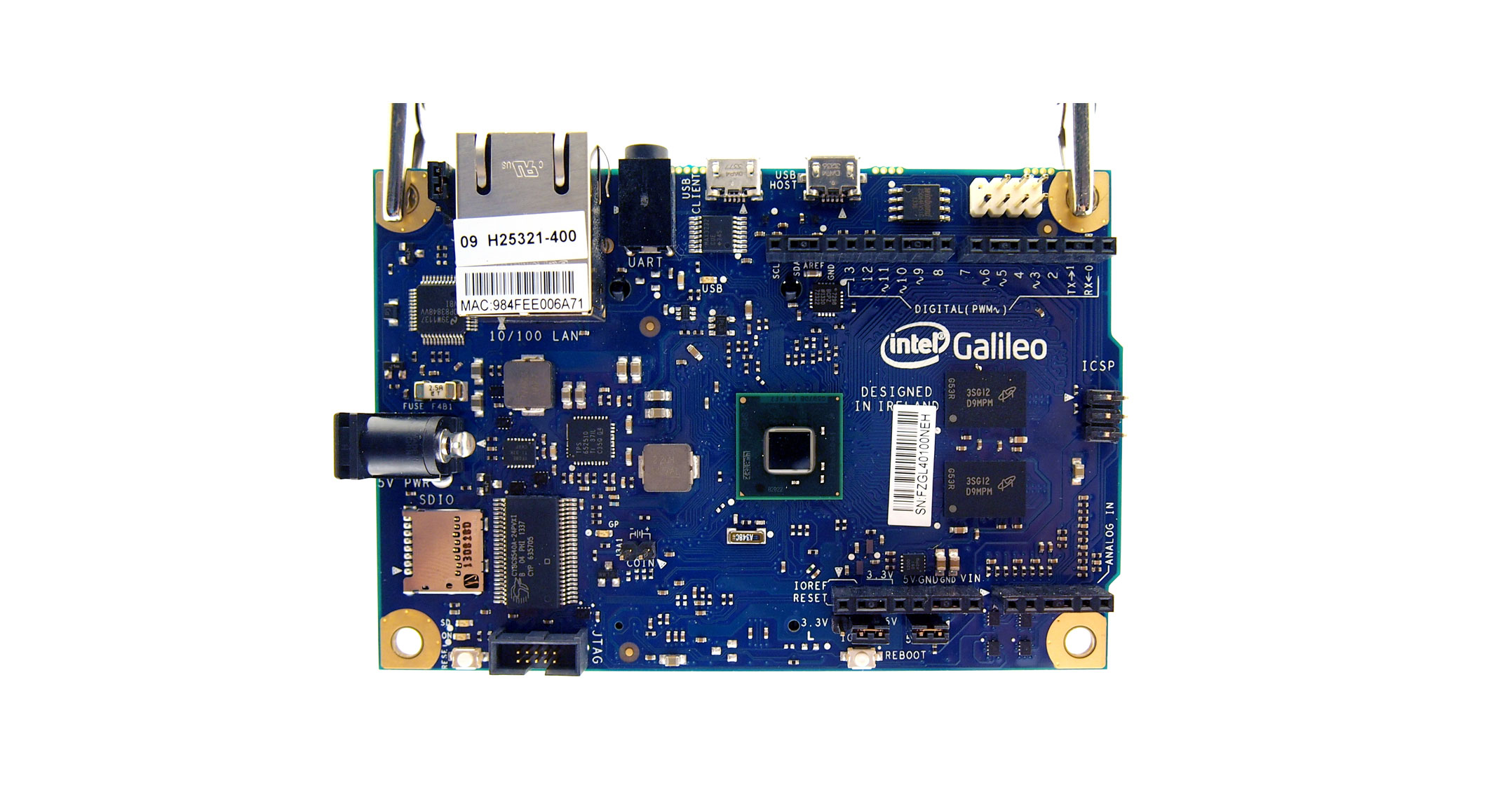
    Intel’s Galileo board

    About a week ago, a rather important event happened in the Internet-of-things (IoT) space. You may have missed it, perhaps because the dry technicalities of IoT is not all that appealing. Intel has quietly discontinued its three SBC boards, the Joule, Edison and Galileo.

    SBCs, or single-board computers, are underappreciated marvels. The most popular example is the Raspberry Pi, a credit card-sized computer with enough features to be a standalone system. Give it power, storage (as little as a microSD card), a screen and input device and you have a full-fledged computer.

    Developers use SBCs for a variety of projects, ranging from home-built 3D printers to automation at industrial sites. My printer works wirelessly, through the Pi I taped to the back of it. The appeal lies not only in the diminutive size and elegantly small energy footprint. Most SBCs are Linux friendly, so building custom applications or improving on existing open-source systems is convenient and easy.

    It does not even need to be technical: I run a media centre on a Raspberry Pi 2, using software I downloaded and installed with just a few clicks. SBCs are also largely behind the Kodi media boxes flooding the market, often running Android as the operating system.

    SBCs are perfect for the IoT space: they are cheap, easy to develop for and reliable. So, why would Intel kill off its SBC boards? Is it giving up on IoT? Not quite, but it could be read as an admittance that its IoT strategy has not been working too well.

    This is notable, since the chip maker has been investing in several futuristic platforms, including spatial awareness for autonomous drones, eye tracking and augmented reality. It is staking much of its future on being the hardware-software nexus for many of tomorrow’s devices not bound to desktops and laptops, Intel’s stalwart revenue streams.

    Hardware

    To summarise the hardware, Edison was to be the platform for wearable manufacturers to use, Galileo went after the famous Raspberry Pi’s low-cost computing territory (and was even certified as compatible with Arduino, the other SBC alpha dog), while Joule aimed to be an IoT edge device, namely for smart devices that operate on the outer reaches of networks.

    These had been released between 2014 and 2016. They represented the presence of x86 chips in the IoT market, x86 being Intel’s chip architecture. The competition is ARM, the chip maker that has already taken most of the mobile market, much to the chagrin of Intel, which failed to dominate beyond desktop PCs. When ARM and Microsoft mooted a Windows Server version for ARM chips, Intel threatened legal action. It has also responded to ARM by developing several new devices and services, some based on ARM technology. Intel clearly wants a seat at this table.
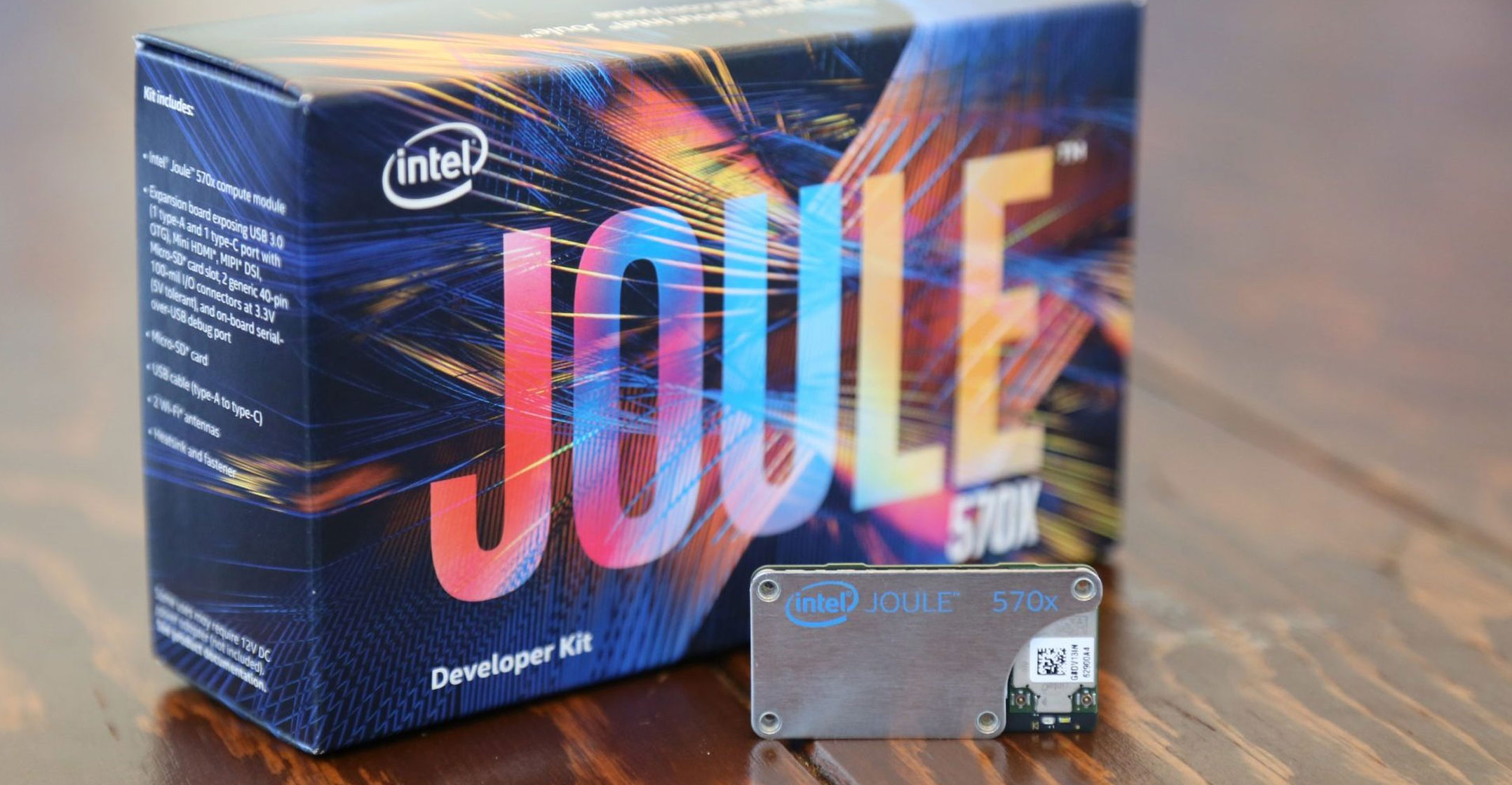
    So, why kill its SBC devices? Intel is not commenting on the move, so that leaves the market to speculate.

    According to local IoT specialist IoT.nxt, which I reached out to for comment, a long track record and a commitment to keep components on the market for years are key to viability. Intel never quite came to the party in those areas. Price also dogged it: though some manufacturers of IoT edge and wearables tech found the Intel boards attractive, their prices were not economical in this highly competitive field where every advantage counts.

    There are exceptions, such as Amazon using Intel chips to power its Echo devices. But generally speaking — and certainly at the bleeding edge of IoT and smart device development — Intel is struggling to create a presence.

    It’s a ‘back to the drawing board’ moment of Intel’s IoT, driven by new leadership and no sparing the rod for underperforming products

    One reason for this, and perhaps the Internet’s favourite theory for the discontinuation, is that Intel didn’t really support the ecosystems for Joule, Galileo and Edison. It produced a lot of documentation, but other support fell short. Consequently, community interest lagged, which is what makes or breaks SBCs. The Pi and Arduino, the two most popular SBC families, can boast colossal communities and close collaboration with the hardware makers. Intel appears to have organised a party it never showed up to.

    Some also note that Intel’s SBCs might have contradicted its business model, where it releases new designs and licences those to third parties. To take on the SBC kings, Intel would have to compete far more directly, but this may run counter to its partner relationships.

    It may also be a classic case of a large organisation lacking the agility to fight a far more close-quarters bout. Both the Pi and Arduino, as well as many of the other SBCs, come from very humble beginnings, not the vast resources that Intel can throw at it.

    Uncompetitive products

    The culls could come from a much simpler place: Intel is simply getting rid of uncompetitive products. It also discontinued other products in the announcement, arguably all due to poor returns.

    But the most likely reason is a shake-up of its IoT strategy. Late last year, it hired Tom Lantzsch, a veteran from ARM, to oversee its IoT division. There is little doubt his new approach included the discarding of old IoT systems.

    It’s a “back to the drawing board” moment of Intel’s IoT, driven by new leadership and no sparing the rod for underperforming products. As the chipset giant seeks to position itself in a world where the new products are not readily using its innovations, Intel needs to crack through to mobile and IoT devices. For the Intel of old, this is an acute problem — not least because Samsung is taking its crown as the world’s largest chip manufacturer. Perhaps there will be an announcement later this year, laying out the new IoT strategy under Lantzsch.

    But right now, we’re seeing the bodies hit the floor as it starts cutting the dead wood. Hopefully it will get the rest right as well. That’s important: this is the battle for Intel’s future.

    • James Francis is a freelance writer whose work has appeared in several local and international publications



    ARM Intel Raspberry Pi top
    WhatsApp YouTube Follow on Google News Add as preferred source on Google
    Share. Facebook Twitter LinkedIn WhatsApp Telegram Email Copy Link
    Previous ArticleHow technology is transforming SA tourism
    Next Article Minister to meet broadcasters on digital TV

    Related Posts

    Smartphone market hit by deepening memory crisis

    Smartphone market hit by deepening memory crisis

    5 February 2026
    Intel takes another hit - Intel CEO Lip-Bu Tan. Laure Andrillon/Reuters

    Intel takes another hit

    23 January 2026
    AI is eating the world's memory - and we're all going to pay the price

    AI is eating the world’s memory – and we’re all going to pay the price

    22 January 2026
    Company News
    Vox Kiwi Wireless: fibre-like broadband for South African homes

    Vox Kiwi Wireless: fibre-like broadband for South African homes

    5 February 2026
    NEC XON achieves an African first with full Fortinet accreditation - Ian Kruger

    NEC XON achieves an African first with full Fortinet accreditation

    5 February 2026
    Clickatell: Agentic AI turns automation into consequence

    Clickatell: Agentic AI turns automation into consequence

    5 February 2026
    Opinion
    South Africa's skills advantage is being overlooked at home - Richard Firth

    South Africa’s skills advantage is being overlooked at home

    29 January 2026
    Why Elon Musk's Starlink is a 'hard no' for me - Songezo Zibi

    Why Elon Musk’s Starlink is a ‘hard no’ for me

    26 January 2026
    South Africa's new fibre broadband battle - Duncan McLeod

    South Africa’s new fibre broadband battle

    20 January 2026

    Subscribe to Updates

    Get the best South African technology news and analysis delivered to your e-mail inbox every morning.

    Latest Posts
    Starlink considers building its own phone - Elon Musk

    Starlink considers building its own phone

    5 February 2026
    Vox Kiwi Wireless: fibre-like broadband for South African homes

    Vox Kiwi Wireless: fibre-like broadband for South African homes

    5 February 2026
    South Africa is losing its film industry - one delay at a time

    South Africa is losing its film industry – one delay at a time

    5 February 2026
    Crypto markets reel as bitcoin slides

    Crypto markets reel as bitcoin slides

    5 February 2026
    © 2009 - 2026 NewsCentral Media
    • Cookie policy (ZA)
    • TechCentral – privacy and Popia

    Type above and press Enter to search. Press Esc to cancel.

    Manage consent

    TechCentral uses cookies to enhance its offerings. Consenting to these technologies allows us to serve you better. Not consenting or withdrawing consent may adversely affect certain features and functions of the website.

    Functional Always active
    The technical storage or access is strictly necessary for the legitimate purpose of enabling the use of a specific service explicitly requested by the subscriber or user, or for the sole purpose of carrying out the transmission of a communication over an electronic communications network.
    Preferences
    The technical storage or access is necessary for the legitimate purpose of storing preferences that are not requested by the subscriber or user.
    Statistics
    The technical storage or access that is used exclusively for statistical purposes. The technical storage or access that is used exclusively for anonymous statistical purposes. Without a subpoena, voluntary compliance on the part of your Internet Service Provider, or additional records from a third party, information stored or retrieved for this purpose alone cannot usually be used to identify you.
    Marketing
    The technical storage or access is required to create user profiles to send advertising, or to track the user on a website or across several websites for similar marketing purposes.
    • Manage options
    • Manage services
    • Manage {vendor_count} vendors
    • Read more about these purposes
    View preferences
    • {title}
    • {title}
    • {title}