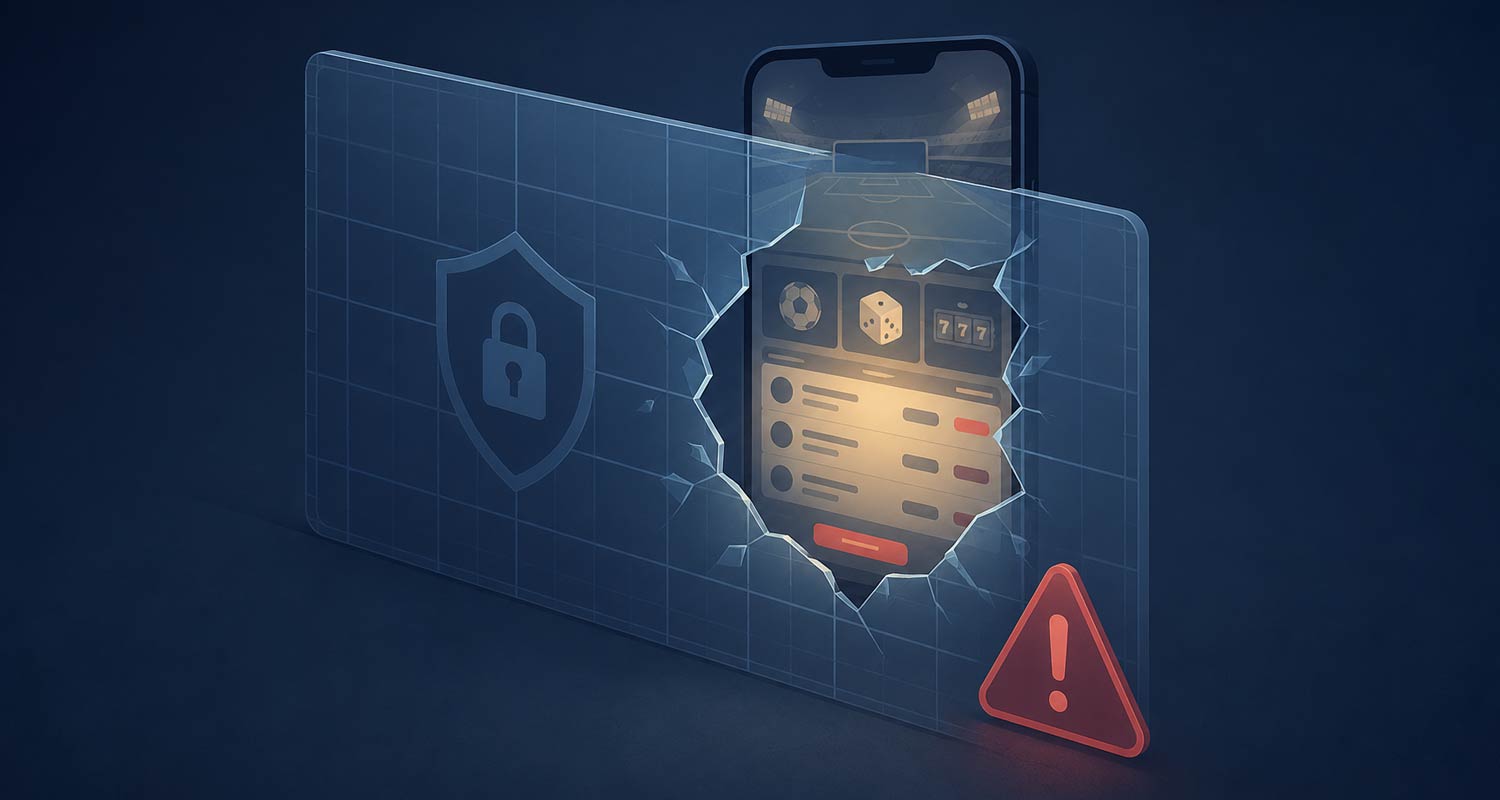
South Africa’s internet industry has pushed back against a government agency’s plan to have illegal offshore gambling sites blocked, warning that website blocking is technically leaky, prone to collateral damage and constitutionally fraught unless it is anchored in law and ordered by a court.
The Internet Service Providers’ Association (Ispa) set out its objections in a position paper published on Thursday. The paper follows a formal request by the National Gambling Board (NGB) for the department of communications & digital technologies to implement internet blocking to help curb illegal offshore online gambling platforms targeting South Africans.
Ispa said it accepts that access providers may be obliged to block some forms of illegal content, but it is adamant that any such regime must rest on a well-considered legal footing.
“Ispa’s position is that any disruption of internet services to South Africans should be done only as part of a clear legislative framework that balances the right to communicate against the potential harm of problematic content,” said Ispa chair Sasha Booth-Beharilal.
The harm the NGB wants to address is under increasing scrutiny. At a “gambling and student wellbeing” symposium hosted by Stellenbosch University in June, researchers put the scale of the problem in stark terms: South Africans wager an estimated R1.5-trillion/year, and at that rate it would take just seven days of betting to spend the equivalent of the country’s entire R54-billion national student funding budget.
Targeting young people
Speakers warned that digital betting, now a tap away on any smartphone, was reshaping student life. Higher education & training deputy minister Nomusa Dube-Ncube said gambling platforms were actively targeting young people and that financial losses were pushing some students to divert money meant for tuition, accommodation and food.
Lungile Dukwana, acting head of the NGB, told the same gathering that economic pressure was among the reasons young people turned to betting, and pointed to a partnership with the National Student Financial Aid Scheme (Nsfas) aimed at protecting students and safeguarding public funds.
But Ispa has now warned that the tool does not do what regulators hope. Its paper walks through the three main technical approaches and finds each wanting:
- The simplest, domain-name blocking, interferes with domain name system (DNS) requests that translate web addresses into numbers. It has the least impact on ISP networks but, Ispa noted, “is also relatively easy for technically proficient users to circumvent”.
- IP address blocking goes a layer deeper but “almost always has unintended consequences such as blocking unrelated innocent websites using the same address”. Ispa cited a recent Open Observatory of Network Interference report showing that a European court-ordered block of a handful of shared IP addresses inadvertently took down more than half a million unrelated sites. Like domain blocking, it is easily sidestepped with a virtual private network.
- The third option, packet inspection, requires ISPs to examine every packet of data a user generates. This is “typically used only by autocratic governments in countries where citizens do not have the same rights enjoyed by South Africans”, the paper said, and is costly, degrades network performance and can still be bypassed using VPNs.

Five conditions
Rather than reject blocking outright, Ispa sets five conditions it says any regime must meet:
- Blocking should be ordered by a court or a judge, not an administrative or regulatory body, and be set out in legislation subject to oversight and judicial review.
- Blocking obligations should be publicly disclosed so citizens know how their rights are being limited.
- Measures should be time-limited and periodically reviewed.
- Orders should not dictate the technical method or force ISPs to install new equipment.
- Costs should be fairly allocated, with providers able to levy an administrative fee capped at their actual cost.
“Regulators are often quick to conclude that requiring ISPs to disrupt the services they provide to their customers will be a silver bullet to solve their problems. International experiences indicate otherwise,” Booth-Beharilal said. “While there are some, limited circumstances where there may be a need for specific content to be blocked, such steps often have unintended consequences.”
Ispa said it looked forward to working with policymakers on a legal framework that respects citizens’ rights. Its position paper is available on its website. — © 2026 NewsCentral Media
- Subscribe to TechCentral’s daily newsletter
- Get breaking news alerts on WhatsApp