Close Menu
TechCentralTechCentral

    Subscribe to the newsletter

    Get the best South African technology news and analysis delivered to your e-mail inbox every morning.

    Facebook X (Twitter) YouTube LinkedIn
    WhatsApp Facebook X (Twitter) LinkedIn YouTube
    TechCentralTechCentral
    • News
      Cell C cleans up its balance sheet but faces tough trading reality

      Cell C cleans up its balance sheet but faces tough trading reality

      13 February 2026
      MVNO business shines in Cell C's first post-listing results - Jorges Mendes

      MVNO business shines in Cell C’s first post-listing results

      13 February 2026
      Ramaphosa presses ahead with Eskom break-up - Cyril Ramaphosa

      Ramaphosa presses ahead with Eskom break-up

      13 February 2026
      The key technology takeaways from Ramaphosa's 2026 Sona - Cyril Ramaphosa

      The key technology takeaways from Ramaphosa’s 2026 Sona

      13 February 2026
      Toyota SA CEO: NEV inaction will cost South Africa its motoring industry - Andrew Kirby

      Toyota SA CEO: NEV inaction will cost South Africa its motoring industry

      12 February 2026
    • World
      Russia bans WhatsApp

      Russia bans WhatsApp

      12 February 2026
      EU regulators take aim at WhatsApp

      EU regulators take aim at WhatsApp

      9 February 2026
      Musk hits brakes on Mars mission

      Musk hits brakes on Mars mission

      9 February 2026
      Crypto firm accidentally sends R700-billion in bitcoin to its users

      Crypto firm accidentally sends R700-billion in bitcoin to its users

      8 February 2026
      AI won't replace software, says Nvidia CEO amid market rout - Jensen Huang

      AI won’t replace software, says Nvidia CEO amid market rout

      4 February 2026
    • In-depth
      How liberalisation is rewiring South Africa's power sector

      How liberalisation is rewiring South Africa’s power sector

      21 January 2026
      The top-performing South African tech shares of 2025

      The top-performing South African tech shares of 2025

      12 January 2026
      Digital authoritarianism grows as African states normalise internet blackouts

      Digital authoritarianism grows as African states normalise internet blackouts

      19 December 2025
      TechCentral's South African Newsmakers of 2025

      TechCentral’s South African Newsmakers of 2025

      18 December 2025
      Black Friday goes digital in South Africa as online spending surges to record high

      Black Friday goes digital in South Africa as online spending surges to record high

      4 December 2025
    • TCS
      Watts & Wheels S1E4: 'We drive an electric Uber'

      Watts & Wheels S1E4: ‘We drive an electric Uber’

      10 February 2026
      TCS+ | How Cloud On Demand is helping SA businesses succeed in the cloud - Xhenia Rhode, Dion Kalicharan

      TCS+ | Cloud On Demand and Consnet: inside a real-world AWS partner success story

      30 January 2026
      Watts & Wheels S1E4: 'We drive an electric Uber'

      Watts & Wheels S1E3: ‘BYD’s Corolla Cross challenger’

      30 January 2026
      Watts & Wheels S1E4: 'We drive an electric Uber'

      Watts & Wheels S1E2: ‘China attacks, BMW digs in, Toyota’s sublime supercar’

      23 January 2026

      TCS+ | Why cybersecurity is becoming a competitive advantage for SA businesses

      20 January 2026
    • Opinion
      A million reasons monopolies don't work - Duncan McLeod

      A million reasons monopolies don’t work

      10 February 2026
      Eskom unbundling U-turn threatens to undo hard-won electricity gains - Busi Mavuso

      Eskom unbundling U-turn threatens to undo hard-won electricity gains

      9 February 2026
      South Africa's skills advantage is being overlooked at home - Richard Firth

      South Africa’s skills advantage is being overlooked at home

      29 January 2026
      Why Elon Musk's Starlink is a 'hard no' for me - Songezo Zibi

      Why Elon Musk’s Starlink is a ‘hard no’ for me

      26 January 2026
      A million reasons monopolies don't work - Duncan McLeod

      South Africa’s new fibre broadband battle

      20 January 2026
    • Company Hubs
      • Africa Data Centres
      • AfriGIS
      • Altron Digital Business
      • Altron Document Solutions
      • Altron Group
      • Arctic Wolf
      • AvertITD
      • Braintree
      • CallMiner
      • CambriLearn
      • CYBER1 Solutions
      • Digicloud Africa
      • Digimune
      • Domains.co.za
      • ESET
      • Euphoria Telecom
      • Incredible Business
      • iONLINE
      • IQbusiness
      • Iris Network Systems
      • LSD Open
      • Mitel
      • NEC XON
      • Netstar
      • Network Platforms
      • Next DLP
      • Ovations
      • Paracon
      • Paratus
      • Q-KON
      • SevenC
      • SkyWire
      • Solid8 Technologies
      • Telit Cinterion
      • Tenable
      • Vertiv
      • Videri Digital
      • Vodacom Business
      • Wipro
      • Workday
      • XLink
    • Sections
      • AI and machine learning
      • Banking
      • Broadcasting and Media
      • Cloud services
      • Contact centres and CX
      • Cryptocurrencies
      • Education and skills
      • Electronics and hardware
      • Energy and sustainability
      • Enterprise software
      • Financial services
      • Information security
      • Internet and connectivity
      • Internet of Things
      • Investment
      • IT services
      • Lifestyle
      • Motoring
      • Public sector
      • Retail and e-commerce
      • Satellite communications
      • Science
      • SMEs and start-ups
      • Social media
      • Talent and leadership
      • Telecoms
    • Events
    • Advertise
    TechCentralTechCentral
    Home » Sections » Energy and sustainability » It’s time to terminate Eskom’s distribution monopoly

    It’s time to terminate Eskom’s distribution monopoly

    The electricity crisis is a barrier to growth, destroys investor confidence and handicaps almost every economic activity.
    By David Richard Walwyn2 June 2023
    Twitter LinkedIn Facebook WhatsApp Email Telegram Copy Link
    News Alerts
    WhatsApp

    Rolling blackouts are costing South Africa dearly. The electricity crisis is a barrier to growth, destroys investor confidence and handicaps almost every economic activity. It has raised input costs for producers and retailers and has triggered a new round of inflation and interest rate increases.

    Any solution will obviously incur cost because it will require the adoption of new technologies, such as large-scale grid-connected solar farms that are linked to battery energy storage. But these technologies are expensive. A solar farm consisting of 50MW of photovoltaic panels with 240MWh of storage capacity will cost R2.6-billion. Batteries are the biggest outlay, accounting for about 40% of the total cost.

    A photovoltaic panel converts solar energy to electricity, which can be used to charge a bank of batteries or supply consumers directly. The batteries then supply the stored energy into the grid over peak periods.

    South Africa has kept alive an increasingly inefficient and dysfunctional state-owned utility

    Combining solar with storage makes it more expensive than coal – which still accounts for 80% of South Africa’s electricity generation – when comparing units of energy produced. But this technology is affordable relative to the options consumers are already adopting in significant volumes – diesel generators or small-scale batteries coupled to inverters – as long as it is at large scale and is used for peak power only.

    South Africa can solve much of its energy crisis by building new facilities consisting of battery storage with photovoltaic panels. However, the new technology cannot be used without reform of the wholesale energy market.

    Much of the media’s attention to the energy crisis has been focused on generation capacity, or lack thereof. But there is another equally important contributor: the failure by the government to unbundle Eskom and create a market operator and a transmission system operator as independent entities.

    Stalled

    A market operator is an energy “stock exchange”. It facilitates contracts between the energy producers, the transmission system and the distributors. Many countries in the world have already restructured their electricity supply industry to establish such a market and introduce greater competition among the power producers.

    The UK, Canada, the US and many countries in the European Union have undertaken market reforms like this, with positive outcomes.

    South Africa indicated an intention to follow such an approach in 1998. But it has never acted on this policy. Instead, it has kept alive an increasingly inefficient and dysfunctional state-owned utility. As a result, the country has a shortage of generation capacity, a shortage of connection and transmission capacity, and a growing environmental disaster.

    Analysis of the usage data from the Eskom portal suggests that rolling power blackouts have led to changes in the country’s energy landscape.

    On the supply side, customers are increasingly using alternative energy sources. Consumers who require stable energy supply have made alternative plans, in most cases shifting to the use of diesel generators. Figures of diesel consumption are not available, but, based on the electricity shortfall and using the data for April 2023, the additional diesel usage, excluding Eskom and the independent power producers, was about 660 million litres per month, which is almost the same as the amount used by the entire transport sector.
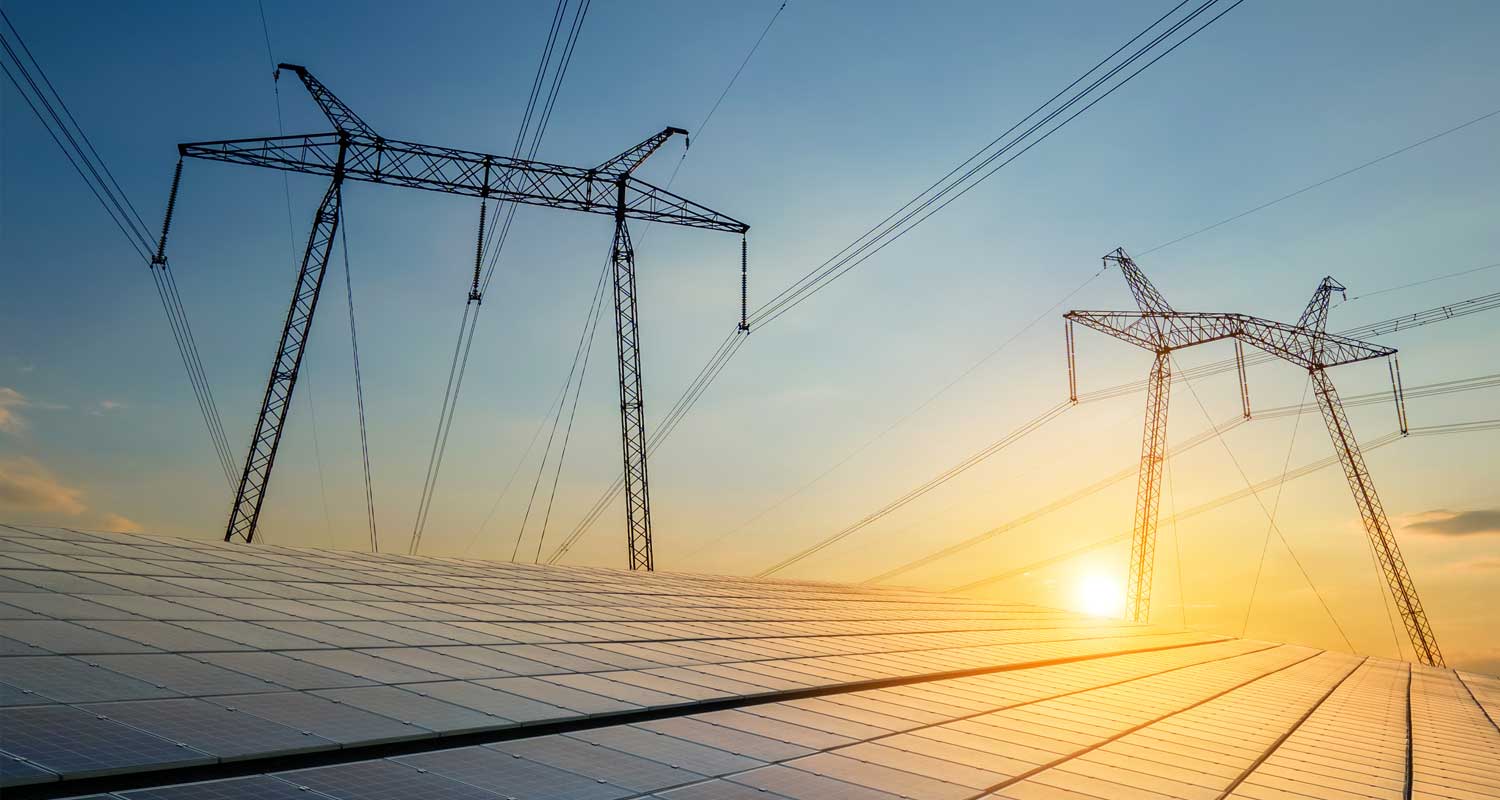
    On the demand side, the blackouts have led to shifts in the use of grid electricity at a different time of the day/night cycle. This has been driven mainly by the use of lithium batteries. Eskom is already reporting that there is an added demand of 1.4GW to recharge battery storage, or about 5% additional load on the grid.

    The cost of a battery-plus-inverter system to meet the needs of an average household under stage-4 load shedding – which is about six hours of outages every 24 hours – is about R100 000 to R150 000. At current interest rates, and assuming an average energy consumption of 15kWh/day and an Eskom rate of R2.75/kWh, the net cost will be R6.10/kWh. This makes it more expensive than diesel.

    Backup power from an 8kVA diesel generator, using the same set of assumptions, will cost about R5.20/kWh, including diesel and capital charges.

    The installation of 1.4GW of battery capacity nationally confirms that there is already a market for the purchase of energy at higher cost. Energy security is a necessity for many businesses, especially those operating cold storage or essential equipment.

    In a recently published article, I set out what the landscape might look like if South Africa implemented a plan to balance renewable energy capacity and time-of-use tariffs and ended Eskom’s monopoly. Customers could pay different rates depending on the time of day when they used electricity.

    Peak power problem

    For the article, I used a simple model for the South African energy grid and considered the optimal configuration for a photovoltaic/battery storage facility which could provide peak power of 6GW, which is about 20% of the total demand.

    It concluded that the grid would need an installed photovoltaic capacity of 18GW, coupled with a storage system rated at 3.7GW/10.4 GWh. The facility would pay for itself if a time-of-use tariff of R3.50/kWh, almost double the present tariff excluding network charges, could be levied.

    But this would require ending Eskom’s distribution monopoly and the establishment of the market operator. Different tariffs would be the result of competition between different players.

    The analysis suggests that it would be possible to solve the peak power problem in three steps. Firstly, unbundle Eskom and establish the market operator, secondly use the bailout funds to build connection capacity, and thirdly, use the market operator to build large-scale photovoltaic/battery capacity. Market reform has been on the policy agenda for nearly 25 years. But little real progress has been made. South Africa should stop going around in circles. It needs to take a straight line in the fast lane.The Conversation

    • The author, David Richard Walwyn, is professor of technology management, University of Pretoria
    • This article is republished from The Conversation under a Creative Commons licence
    Get TechCentral’s daily newsletter


    David Richard Walwyn Eskom
    WhatsApp YouTube Follow on Google News Add as preferred source on Google
    Share. Facebook Twitter LinkedIn WhatsApp Telegram Email Copy Link
    Previous ArticlePrime Mobile? Amazon in talks to launch an MVNO
    Next Article New GM at Waspa

    Related Posts

    Nersa blunder triggers sharper electricity tariff increases

    Nersa blunder triggers sharper electricity tariff increases

    9 February 2026
    Eskom unbundling U-turn threatens to undo hard-won electricity gains - Busi Mavuso

    Eskom unbundling U-turn threatens to undo hard-won electricity gains

    9 February 2026
    Eskom lifts load reduction for 140 000 customers

    Eskom lifts load reduction for 140 000 customers

    8 February 2026
    Company News
    Cell C delivers maiden results with growth momentum, financial flexibility - Jorges Mendes

    Cell C delivers maiden results with growth momentum, financial flexibility

    13 February 2026
    Start-up king joins Paratus Rwanda - Innocent Mutimura

    Start-up king joins Paratus Rwanda

    13 February 2026
    How NEC XON tackled identity risk for a major telco - Michael de Neuilly Rice

    How NEC XON tackled identity risk for a major telco

    11 February 2026
    Opinion
    A million reasons monopolies don't work - Duncan McLeod

    A million reasons monopolies don’t work

    10 February 2026
    Eskom unbundling U-turn threatens to undo hard-won electricity gains - Busi Mavuso

    Eskom unbundling U-turn threatens to undo hard-won electricity gains

    9 February 2026
    South Africa's skills advantage is being overlooked at home - Richard Firth

    South Africa’s skills advantage is being overlooked at home

    29 January 2026

    Subscribe to Updates

    Get the best South African technology news and analysis delivered to your e-mail inbox every morning.

    Latest Posts
    Cell C cleans up its balance sheet but faces tough trading reality

    Cell C cleans up its balance sheet but faces tough trading reality

    13 February 2026
    MVNO business shines in Cell C's first post-listing results - Jorges Mendes

    MVNO business shines in Cell C’s first post-listing results

    13 February 2026
    Ramaphosa presses ahead with Eskom break-up - Cyril Ramaphosa

    Ramaphosa presses ahead with Eskom break-up

    13 February 2026
    The key technology takeaways from Ramaphosa's 2026 Sona - Cyril Ramaphosa

    The key technology takeaways from Ramaphosa’s 2026 Sona

    13 February 2026
    © 2009 - 2026 NewsCentral Media
    • Cookie policy (ZA)
    • TechCentral – privacy and Popia

    Type above and press Enter to search. Press Esc to cancel.

    Manage consent

    TechCentral uses cookies to enhance its offerings. Consenting to these technologies allows us to serve you better. Not consenting or withdrawing consent may adversely affect certain features and functions of the website.

    Functional Always active
    The technical storage or access is strictly necessary for the legitimate purpose of enabling the use of a specific service explicitly requested by the subscriber or user, or for the sole purpose of carrying out the transmission of a communication over an electronic communications network.
    Preferences
    The technical storage or access is necessary for the legitimate purpose of storing preferences that are not requested by the subscriber or user.
    Statistics
    The technical storage or access that is used exclusively for statistical purposes. The technical storage or access that is used exclusively for anonymous statistical purposes. Without a subpoena, voluntary compliance on the part of your Internet Service Provider, or additional records from a third party, information stored or retrieved for this purpose alone cannot usually be used to identify you.
    Marketing
    The technical storage or access is required to create user profiles to send advertising, or to track the user on a website or across several websites for similar marketing purposes.
    • Manage options
    • Manage services
    • Manage {vendor_count} vendors
    • Read more about these purposes
    View preferences
    • {title}
    • {title}
    • {title}