Close Menu
TechCentralTechCentral

    Subscribe to the newsletter

    Get the best South African technology news and analysis delivered to your e-mail inbox every morning.

    Facebook X (Twitter) YouTube LinkedIn
    WhatsApp Facebook X (Twitter) LinkedIn YouTube
    TechCentralTechCentral
    • News
      The lesson Seacom learnt from its massive 2024 outage - Richard Schumacher

      The lessons Seacom learnt from its massive 2024 outage

      14 May 2026
      US, China to coordinate on AI threats

      US, China to coordinate on AI threats

      14 May 2026
      Telkom recovering after Cape storms disrupt network

      Telkom recovering after Cape storms disrupt network

      14 May 2026
      Major new security feature coming to WhatsApp

      Major new security feature coming to WhatsApp

      14 May 2026
      Starlink wait set to drag on as Icasa flags legal hurdle

      Starlink wait set to drag on as Icasa flags legal hurdle

      13 May 2026
    • World
      Pop star sues Samsung for $15-million - Dua Lipa

      Pop star sues Samsung for $15-million

      11 May 2026
      OpenAI's new audio APIs aim for conversational voice agents

      OpenAI’s new audio APIs aim for conversational voice agents

      8 May 2026
      'It was my idea': Musk claims paternity of OpenAI - Elon Musk

      ‘It was my idea’: Musk claims paternity of OpenAI

      29 April 2026
      Pivotal week for US tech stocks

      Pivotal week for US tech stocks

      28 April 2026
      Sam Altman denies betraying Elon Musk. Shelby Tauber/Reuters

      Worries over OpenAI’s growth as Anthropic gains ground

      28 April 2026
    • In-depth
      Alfa's electric rebel - Alfa Romeo Junior Elettrica Veloce

      Alfa’s electric rebel

      29 April 2026
      Africa switches on as Europe dims the lights

      Africa switches on as Europe dims the lights

      9 April 2026
      The biggest untapped EV market on Earth is hiding in plain sight

      The biggest untapped EV market on Earth is hiding in plain sight

      1 April 2026
      Datatec is firing on all cylinders - Jens Montanana

      The R16-billion tech giant hiding in plain sight

      26 March 2026
      The last generation of coders

      The last generation of coders

      18 February 2026
    • TCS
      TCS+ | The Up&Up Group on the hidden cost of AI - Jason Harrison

      TCS+ | The Up&Up Group on the hidden cost of AI

      13 May 2026
      Michael Rossouw

      TCS+ | The retirement decision most South Africans get wrong

      6 May 2026
      TCS | The Cape Town start-up listening for TB with AI - Braden van Breda

      TCS | The Cape Town start-up listening for TB with AI

      4 May 2026

      TCS+ | ‘The ISP for ISPs’: Vox’s shift to wholesale aggregator

      20 April 2026
      TCS | Werner Lindemann on how AI is rewriting the infosec rulebook

      TCS | Werner Lindemann on how AI is rewriting the infosec rulebook

      15 April 2026
    • Opinion
      Free calls, dead voice and Shameel Joosub's Spanish ghost - Duncan McLeod

      Free calls, dead voice and Shameel Joosub’s Spanish ghost

      22 April 2026
      The conflict of interest at the heart of PayShap's slow adoption - Cheslyn Jacobs

      The conflict of interest at the heart of PayShap’s slow adoption

      26 March 2026
      South Africa's energy future hinges on getting wheeling right - Aishah Gire

      South Africa’s energy future hinges on getting wheeling right

      10 March 2026
      Free calls, dead voice and Shameel Joosub's Spanish ghost - Duncan McLeod

      Apple just dropped a bomb on the Windows world

      5 March 2026
      R230-million in the bag for Endeavor's third Harvest Fund - Alison Collier

      VC’s centre of gravity is shifting – and South Africa is in the frame

      3 March 2026
    • Company Hubs
      • 1Stream
      • Africa Data Centres
      • AfriGIS
      • Altron Digital Business
      • Altron Document Solutions
      • Altron Group
      • Arctic Wolf
      • Ascent Technology
      • AvertITD
      • BBD
      • Braintree
      • CallMiner
      • CambriLearn
      • CM Telecom
      • Contactable
      • CYBER1 Solutions
      • Digicloud Africa
      • Digimune
      • Domains.co.za
      • ESET
      • Euphoria Telecom
      • HOSTAFRICA
      • Incredible Business
      • iONLINE
      • IQbusiness
      • Iris Network Systems
      • Kaspersky
      • LSD Open
      • Mitel
      • NEC XON
      • Netstar
      • Network Platforms
      • Next DLP
      • Ovations
      • Paracon
      • Paratus
      • Q-KON
      • SevenC
      • SkyWire
      • Solid8 Technologies
      • Telit Cinterion
      • Telviva
      • Tenable
      • Vertiv
      • Videri Digital
      • Vodacom Business
      • Wipro
      • Workday
      • XLink
    • Sections
      • AI and machine learning
      • Banking
      • Broadcasting and Media
      • Cloud services
      • Contact centres and CX
      • Cryptocurrencies
      • Education and skills
      • Electronics and hardware
      • Energy and sustainability
      • Enterprise software
      • Financial services
      • HealthTech
      • Information security
      • Internet and connectivity
      • Internet of Things
      • Investment
      • IT services
      • Lifestyle
      • Motoring
      • Policy and regulation
      • Public sector
      • Retail and e-commerce
      • Satellite communications
      • Science
      • SMEs and start-ups
      • Social media
      • Talent and leadership
      • Telecoms
    • Events
    • Advertise
    TechCentralTechCentral
    Home » In-depth » Just how much trouble is Eskom in?

    Just how much trouble is Eskom in?

    By Chris Yelland16 November 2015
    Twitter LinkedIn Facebook WhatsApp Email Telegram Copy Link
    News Alerts
    WhatsApp

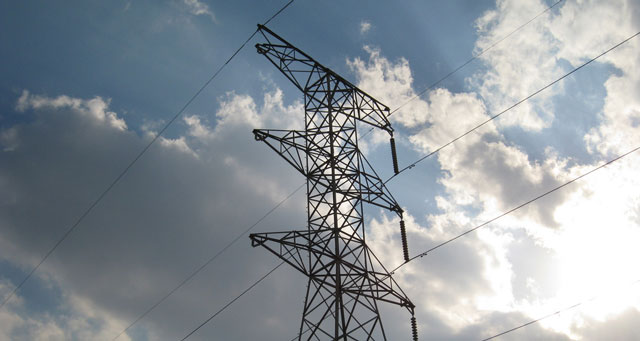
    eskom-640

    An energy sector leader recently observed that the electricity crisis in South Africa is maturing (perhaps like cheese) from generation capacity problems to issues of electricity prices, tariffs, the price elasticity of demand, and the capacity of Eskom to finance its generation, transmission and distribution activities.

    Amid the onset of regular load shedding in late 2014, a so-called “war room” was established, comprising representatives from various government departments and Eskom, and headed nominally by Deputy President Cyril Ramaphosa.

    This was not a creature of statute, but a temporary structure intended to focus on five core short-term issues that had been identified, and to complete its work in a timeframe of six months or so.

    While it may appear that the war room interventions and new leadership at Eskom have stabilised the generation capacity crisis, South Africans should take little comfort that load shedding has stopped when electricity demand in 2015 is some 5% less than in 2014, and about 10% lower than it was in 2007.

    The further 5% drop in demand in 2015 has indeed provided welcome space for Eskom to keep planned maintenance levels at about 5GW without the need for load shedding in recent months. However, recovery from the generation maintenance backlog is a long haul.

    The reality is that Eskom’s generation plant availability has not yet improved to where it should be (that is, 80% or more), but has reduced further since 2013 and 2014, and has remained flat in 2015 at about 72%, despite statements to the contrary by public enterprises minister Lynne Brown based on information fed to her by Eskom.

    While plant availability in 2015 has further declined, the decline in electricity demand has been greater still, thus staving off load shedding, at least for the time being.

    However, the recent application by Eskom to the National Energy Regulator (Nersa) to claw back variances in revenue and costs for the first year (2013/2014) of the multi-year price determination period from 1 April 2013 to 31 March 2018 (MYPD3), clearly illustrates the problem.

    The decline in energy sales volumes and the increase in operating costs from those projected for the 2013/2014 financial year in MYPD3, has resulted in a claim by Eskom for an additional R22,8bn to be recovered via the tariffs in 2016/2017 from the paying customers of electricity. This is made up of an R11,7bn claim from reduced sales volumes, and an R11,1bn claim from increased operating costs dominated by higher than projected diesel costs of some R8bn in 2013/2014.

    In August 2013, Eskom claimed a claw-back of R18,4bn (and was granted R7,8bn by Nersa) for the full three-year MYPD2 period (2010/2011, 2011/2012 and 2012/2013). This has now risen to a claim of R22,8bn for the single 2013/2014 financial year, and is expected to rise still further for 2014/2015 and 2015/2016 based on known further reductions in electricity demand and rising costs in these years.

    Claw-backs via the tariffs will add significantly to the electricity price trajectory, over and above the 8% per annum granted by Nersa over the five-year MYPD3 period. A compounding problem arises from the elasticity of electricity demand in the face of steeply rising electricity prices significantly above the inflation rate, which further reduces electricity sales volumes and increases claw-back claims, in a vicious circle.

    Feeding this cycle of reducing electricity demand and rising prices is a complex global and local environment: slowing growth in China; global overcapacity in the production of steel, aluminium and other raw materials; weak international demand for South African commodities such as coal, iron ore, platinum, copper, ferrochrome, ferrosilicon and ferromanganese; and low commodity prices.

    The state of the South African economy is indicated by low GDP growth, rising levels of unemployment and labour unrest. This is exacerbated by the negative global commodity cycle, with deep-level mining in South Africa reaching end-of-life, poor productivity and competitiveness, and cheap steel imports from China putting paid to the local steel industry.

    Clearly South Africa’s energy intensive minerals smelting and beneficiation operations which rely on cheap and abundant electricity, such as the steel, aluminium, zinc, platinum, copper, ferrochrome, ferrosilicon and ferromanganese industries, are under significant threat.

    The local and global environment, combined with rapidly rising electricity prices, thus provide the perfect storm for reduced industrial electricity demand and rising electricity prices in South Africa. This is further evidenced by a reducing energy intensity in South Africa as the economy struggles to adjust structurally to steeply rising electricity prices sustained over several years.

    In this toxic environment, the alternatives to traditional grid electricity begin to show themselves. Though relatively small individually, collectively the growing range of alternatives begin to add up to make a significant further impact on reducing demand for Eskom’s conventional grid electricity.

    These alternatives progressively change the way in which energy and electricity is generated, transmitted, distributed and used — from a monopoly national generation utility, to a broad mix of Eskom, municipal and independent power producers, using a variety of primary energy sources, including coal, diesel, gas, nuclear, hydro, solar, wind and biomass.

    Industries and businesses that relied exclusively on grid energy would start supplementing or displacing grid electricity with alternative energy sources such as cogeneration, waste coal, gas, heat and biomass recovery, and solar PV.

    It would see industrial, commercial and domestic energy efficiency initiatives as well as active industrial and commercial energy and demand management.

    There would also be a shift from the incessant marketing by Eskom for consumers to use less of its product, to switching to alternative domestic energy sources such as solar water heating, solar PV and cooking with gas.

    Massive further expenditure is needed in the years ahead to bring the Medupi, Kusile and Ingula projects to completion, to upgrade the transmission grid, to address the electricity distribution maintenance backlog, to upgrade an aging fleet of coal-fired power stations for environmental compliance, and to replace those stations reaching end of life.

    With constrained supply and declining sales volumes, rising electricity prices reaching the limits of affordability, and the tipping point to grid defection in sight, Eskom’s future ability to finance its own generation, transmission and distribution activities comes into question.

    Speaking at the recent South African International Renewable Energy Conference in Cape Town, Tobias Bischoff-Niemz, chief engineer for energy research and development at the Council for Scientific and Industrial Research, said South Africa was uniquely at risk of grid defection. At the same conference, Barry MacColl, GM of Eskom’s research, testing and consulting business, acknowledged that significant grid defection could seriously undermine Eskom’s business model, and “would be the end of the power company as we know it”.

    After a year, the war room has surely identified the various issues, options and costs involved, and what now remains is decisive leadership and hard political, economic and business decisions that will cost real money, but will reap significant benefits if the right decisions and choices are made in the national interest.  — Fin24

    • Chris Yelland is the MD of EE Publishers

    Follow TechCentral on Google News Add TechCentral as your preferred source on Google


    Chris Yelland Cyril Ramaphosa Eskom Lynne Brown Nersa
    WhatsApp YouTube
    Share. Facebook Twitter LinkedIn WhatsApp Telegram Email Copy Link
    Previous ArticleMobile lifts Telkom, but fixed voice slumps
    Next Article We will meet power demand 100%: Eskom

    Related Posts

    Eskom battles widespread outages as storm batters the Cape

    Eskom battles widespread outages as storm batters the Cape

    11 May 2026
    South Africa headed to the polls in November

    South Africa headed to the polls in November

    30 April 2026
    SA stretches fuel tax relief as oil prices surge

    SA stretches fuel tax relief as oil prices surge

    29 April 2026
    Company News
    7 key digital platforms to market your business online - Domains.co.za

    7 key digital platforms to market your business online

    14 May 2026
    In crypto, trust is the new currency - Binance South Africa's Sam Mkhize

    In crypto, trust is the new currency

    13 May 2026
    Don't miss the Telviva Tech Insights webinar

    Don’t miss the Telviva Tech Insights webinar

    13 May 2026
    Opinion
    Free calls, dead voice and Shameel Joosub's Spanish ghost - Duncan McLeod

    Free calls, dead voice and Shameel Joosub’s Spanish ghost

    22 April 2026
    The conflict of interest at the heart of PayShap's slow adoption - Cheslyn Jacobs

    The conflict of interest at the heart of PayShap’s slow adoption

    26 March 2026
    South Africa's energy future hinges on getting wheeling right - Aishah Gire

    South Africa’s energy future hinges on getting wheeling right

    10 March 2026

    Subscribe to Updates

    Get the best South African technology news and analysis delivered to your e-mail inbox every morning.

    Latest Posts
    The lesson Seacom learnt from its massive 2024 outage - Richard Schumacher

    The lessons Seacom learnt from its massive 2024 outage

    14 May 2026
    US, China to coordinate on AI threats

    US, China to coordinate on AI threats

    14 May 2026
    Telkom recovering after Cape storms disrupt network

    Telkom recovering after Cape storms disrupt network

    14 May 2026
    7 key digital platforms to market your business online - Domains.co.za

    7 key digital platforms to market your business online

    14 May 2026
    © 2009 - 2026 NewsCentral Media
    • Cookie policy (ZA)
    • TechCentral – privacy and Popia

    Type above and press Enter to search. Press Esc to cancel.

    Manage consent

    TechCentral uses cookies to enhance its offerings. Consenting to these technologies allows us to serve you better. Not consenting or withdrawing consent may adversely affect certain features and functions of the website.

    Functional Always active
    The technical storage or access is strictly necessary for the legitimate purpose of enabling the use of a specific service explicitly requested by the subscriber or user, or for the sole purpose of carrying out the transmission of a communication over an electronic communications network.
    Preferences
    The technical storage or access is necessary for the legitimate purpose of storing preferences that are not requested by the subscriber or user.
    Statistics
    The technical storage or access that is used exclusively for statistical purposes. The technical storage or access that is used exclusively for anonymous statistical purposes. Without a subpoena, voluntary compliance on the part of your Internet Service Provider, or additional records from a third party, information stored or retrieved for this purpose alone cannot usually be used to identify you.
    Marketing
    The technical storage or access is required to create user profiles to send advertising, or to track the user on a website or across several websites for similar marketing purposes.
    • Manage options
    • Manage services
    • Manage {vendor_count} vendors
    • Read more about these purposes
    View preferences
    • {title}
    • {title}
    • {title}