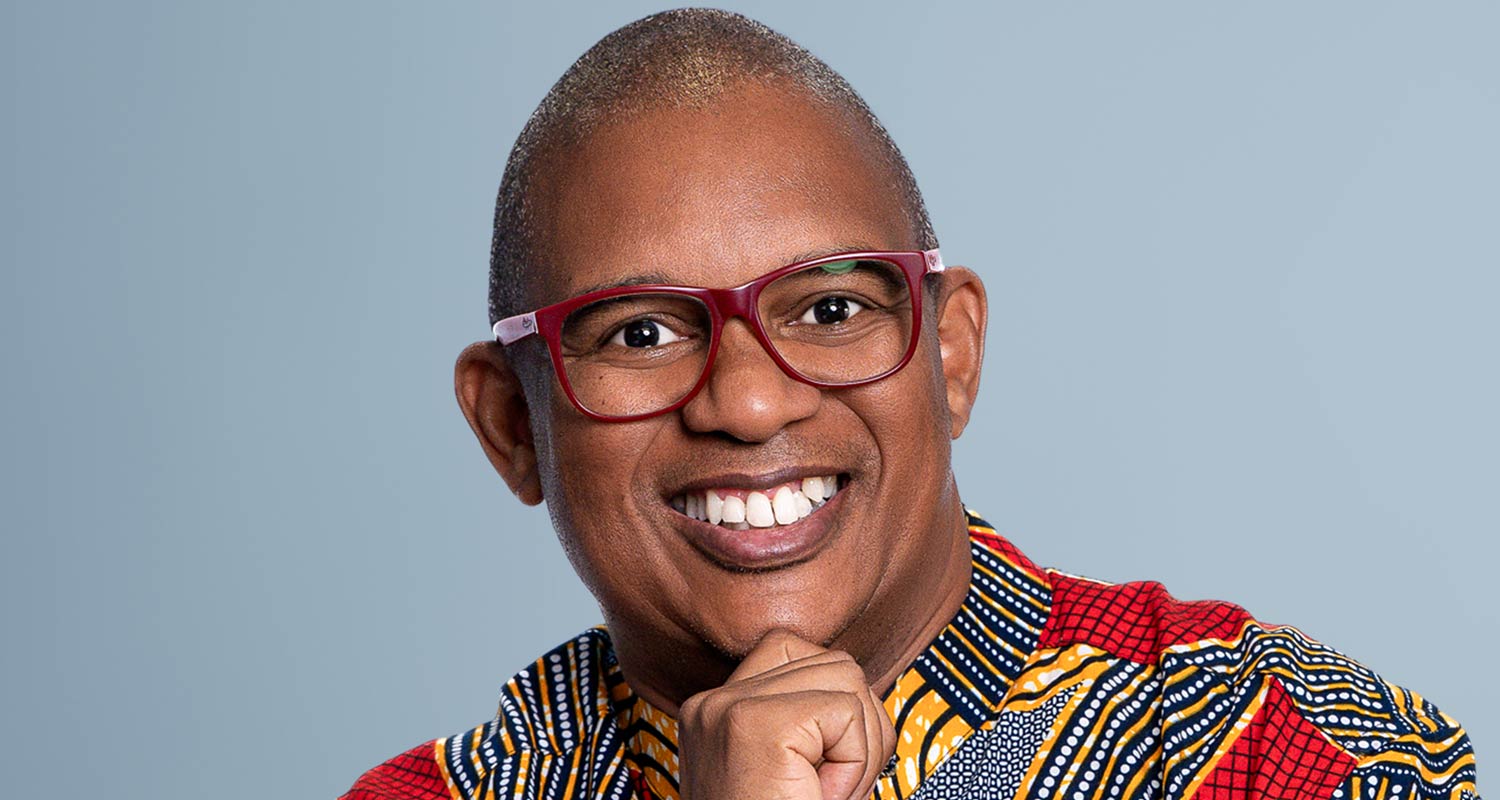
About 30 people have been affected by a restructuring of Lesaka Technologies’ merchant division, and the dual-listed fintech will not rule out further job losses as it folds four acquired businesses into one.
“It would be foolish to say there won’t be,” Lesaka Southern Africa CEO Lincoln Mali told TechCentral when asked whether more cuts were coming. “But again, it would be foolish to put a number on it when we’re still doing the work.”
The division is the group’s largest, at US$509.3-million of Lesaka Technologies’ $721.6-million in FY2026 revenue, and it is the one part of the business going backwards. Lesaka is listed in New York and Johannesburg.
Merchant segment adjusted earnings before interest, tax, depreciation and amortisation (Ebitda) fell 33% to $7.4-million in the fourth quarter, and divisional revenue was down 10% over the year.
The rest of the group has turned a corner, and Mali said the restructuring in the merchant business has been anticipated and will work its way through the system in the second half of the current financial year.
Lesaka posted its first full-year profit since the company was created in 2022, with net income of $2.8-million against a $91-million loss in FY2025, net revenue up 20% and group adjusted Ebitda up 41%.
The merchant division is being rebuilt out of the former Adumo, GAAP, Connect and Kazang businesses. Mali said Lesaka had signalled early in the last financial year that the integration would soften the division’s numbers, and that its forward guidance accounts for it. “Pulling all of those together is a mammoth task, because you have to relook at common systems, common platforms, different billing systems.”
Airtime sales under pressure
Growth will not return quickly. “It will not be the first quarter. There might be some changes that you see in the second quarter, but we think that in third and fourth quarter you’ll start to see the growth coming through,” he said, referring to the financial year that began in July.
The division’s problem is mix rather than demand. Mali said the active merchant base grew 12% even as average revenue per merchant fell, and that acquiring, which he described as the division’s most profitable line, lifted net revenue 21%. Software, the fastest-growing line, was up 34%.
The pressure is elsewhere. Alternative digital products — airtime, data and similar prepaid lines — fell about 25% after the mobile networks changed their commission structures. The cash take rate was down 10% as larger formal merchants digitised, leaving growth concentrated in spaza shops and wholesalers. Lending revenue grew just 3%, which Mali attributed to deliberate caution. Supplier payments, where a merchant settles distributors through Lesaka, was among the fastest-growing lines but carries thin margins.
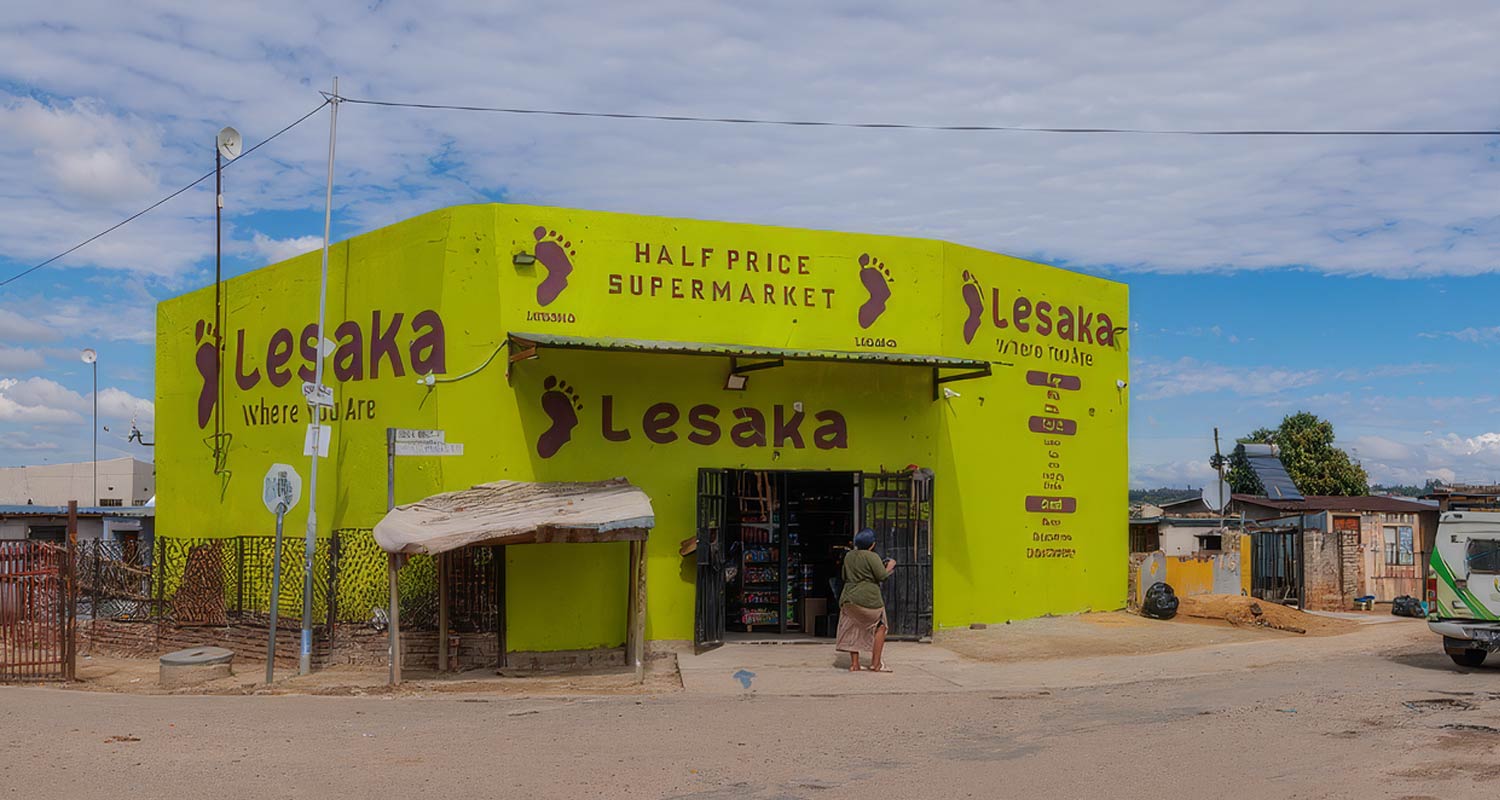 The commission squeeze comes as MTN South Africa CEO Ferdi Moolman told TechCentral that he wants to strip intermediaries out of airtime distribution and hold the customer relationship directly, singling out the banks. Mali put a figure on the exposure to airtime sales at Lesaka: they account for roughly 5% of merchant division net revenue and less than 3% of group net revenue.
Mali’s answer is not price. It is selling more products to merchants Lesaka already has – what he calls layering. A restaurant running a GAAP point-of-sale system is a candidate for acquiring, then for lending when it refurbishes. A petrol station that starts with a cash vault can be sold acquiring, lending and prepaid products on top. Layering, he said, is what will drive average revenue per user and make customers stickier.
Alongside that sit three operational changes: new relationships with wholesalers and distributors, where Mali concedes competitors have been stronger; cost reduction across the merged cost base; and a rebuilt sales force with incentives that reward selling a second and third product rather than the one line a salesperson inherited.
Bank Zero by December
A new leadership team has been installed under Akash Dowra, with new heads of product, technology, and the corporate and community segments.
Which points at the thing Lesaka is still waiting for. The layering strategy runs out of road at the products Lesaka cannot yet sell, and the biggest of those is a bank account.
Mali expects the R1.1-billion Bank Zero acquisition to close by the end of this calendar year, well inside the 31 January 2027 long-stop date the parties agreed in June after approvals ran long. Prudential Authority and exchange control consents are the outstanding items. Lesaka has folded the deal into its FY2027 guidance of R7-billion to R7.7-billion in net revenue, having previously excluded it – in itself a signal of how firmly the group now expects it to close.
The asset has grown while regulators scrutinise the transaction. Bank Zero’s deposit base was around R400-million when the deal was announced and is now around R700-million, Mali said. The bank was loss-making at announcement; he expects it to reach break-even on a standalone basis by December, helped by deposits won through alliance banking.
Bank Zero is also set to replace African Bank as the sponsoring bank behind Lesaka’s 2.1 million consumer customers. “So, at the back of a card of our client will be Bank Zero,” Mali said.
Under its African Bank arrangement, Lesaka earns nothing on the float sitting in those 2.1 million accounts. Owning the bank changes that.
‘Material benefit’
Also, Lesaka lends to merchants and consumers off money it borrows from banks. With a bank inside the group, that lending can be funded from deposits instead.
“That is a material benefit for us, and would change our balance sheet materially,” Mali said. He also pointed to reduced leakage from routing services through third parties, and to greater optionality on which bank sponsors Lesaka in future.
Bank Zero also brings products Lesaka does not have: fuller banking for both merchants and consumers, plus forex and cross-border payments. Licences covering lending, alliance banking and forex have been applied for.

Bank Zero will keep its own retail proposition rather than being absorbed. Its no-frills, zero-fee offering continues for the business owners and digital-first customers it already has, Mali said, while Lesaka’s consumer division stays focused on lower-income customers reached through its own distribution. Its third constituency is fintechs and telecoms operators wanting a sponsor bank, a market Mali argues is thinly served. – © 2026 NewsCentral Media