
Close Menu
TechCentralTechCentral

    Subscribe to the newsletter

    Get the best South African technology news and analysis delivered to your e-mail inbox every morning.

    Facebook X (Twitter) YouTube LinkedIn
    WhatsApp Facebook X (Twitter) LinkedIn YouTube
    TechCentralTechCentral
    • News
      Telecoms industry drags home affairs minister to court - Nomvuyiso Batyi

      Telecoms industry drags home affairs minister to court

      27 January 2026
      Amazon brings image-based shopping to South Africa - Robert Koen

      Amazon brings image-based shopping to South Africa

      27 January 2026
      South African cloud market set to top R100-billion by 2029 - BMIT

      South African cloud market set to top R100-billion by 2029

      27 January 2026
      Outa warns homeowners against rushing to register rooftop solar

      Outa warns homeowners against rushing to register rooftop solar

      27 January 2026
      DStv cuts decoder prices and adds cost-sharing feature

      DStv cuts decoder prices and adds cost-sharing feature

      27 January 2026
    • World
      Nvidia throws AI at the weather

      Nvidia throws AI at weather forecasting

      27 January 2026
      Debate erupts over value of in-flight Wi-Fi

      Debate erupts over value of in-flight Wi-Fi

      26 January 2026
      Intel takes another hit - Intel CEO Lip-Bu Tan. Laure Andrillon/Reuters

      Intel takes another hit

      23 January 2026
      ByteDance clinches US TikTok deal

      ByteDance clinches US TikTok deal

      23 January 2026
      New details emerge about Apple's big Siri overhaul

      New details emerge about Apple’s big Siri overhaul

      22 January 2026
    • In-depth
      How liberalisation is rewiring South Africa's power sector

      How liberalisation is rewiring South Africa’s power sector

      21 January 2026
      The top-performing South African tech shares of 2025

      The top-performing South African tech shares of 2025

      12 January 2026
      Digital authoritarianism grows as African states normalise internet blackouts

      Digital authoritarianism grows as African states normalise internet blackouts

      19 December 2025
      TechCentral's South African Newsmakers of 2025

      TechCentral’s South African Newsmakers of 2025

      18 December 2025
      Black Friday goes digital in South Africa as online spending surges to record high

      Black Friday goes digital in South Africa as online spending surges to record high

      4 December 2025
    • TCS
      Watts & Wheels S1E2: 'China attacks, BMW digs in, Toyota's sublime supercar'

      Watts & Wheels S1E2: ‘China attacks, BMW digs in, Toyota’s sublime supercar’

      23 January 2026

      TCS+ | Why cybersecurity is becoming a competitive advantage for SA businesses

      20 January 2026
      Watts & Wheels S1E2: 'China attacks, BMW digs in, Toyota's sublime supercar'

      Watts & Wheels: S1E1 – ‘William, Prince of Wheels’

      8 January 2026
      TCS+ | Africa's digital transformation - unlocking AI through cloud and culture - Cliff de Wit Accelera Digital Group

      TCS+ | Cloud without culture won’t deliver AI: Accelera’s Cliff de Wit

      12 December 2025
      TCS+ | How Cloud on Demand helps partners thrive in the AWS ecosystem - Odwa Ndyaluvane and Xenia Rhode

      TCS+ | How Cloud On Demand helps partners thrive in the AWS ecosystem

      4 December 2025
    • Opinion
      Why Elon Musk's Starlink is a 'hard no' for me - Songezo Zibi

      Why Elon Musk’s Starlink is a ‘hard no’ for me

      26 January 2026
      South Africa's new fibre broadband battle - Duncan McLeod

      South Africa’s new fibre broadband battle

      20 January 2026
      AI moves from pilots to production in South African companies - Nazia Pillay SAP

      AI moves from pilots to production in South African companies

      20 January 2026
      South Africa's new fibre broadband battle - Duncan McLeod

      ANC’s attack on Solly Malatsi shows how BEE dogma trumps economic reality

      14 December 2025
      South Africa's new fibre broadband battle - Duncan McLeod

      Netflix, Warner Bros deal raises fresh headaches for MultiChoice

      5 December 2025
    • Company Hubs
      • Africa Data Centres
      • AfriGIS
      • Altron Digital Business
      • Altron Document Solutions
      • Altron Group
      • Arctic Wolf
      • AvertITD
      • Braintree
      • CallMiner
      • CambriLearn
      • CYBER1 Solutions
      • Digicloud Africa
      • Digimune
      • Domains.co.za
      • ESET
      • Euphoria Telecom
      • Incredible Business
      • iONLINE
      • IQbusiness
      • Iris Network Systems
      • LSD Open
      • NEC XON
      • Netstar
      • Network Platforms
      • Next DLP
      • Ovations
      • Paracon
      • Paratus
      • Q-KON
      • SevenC
      • SkyWire
      • Solid8 Technologies
      • Telit Cinterion
      • Tenable
      • Vertiv
      • Videri Digital
      • Vodacom Business
      • Wipro
      • Workday
      • XLink
    • Sections
      • AI and machine learning
      • Banking
      • Broadcasting and Media
      • Cloud services
      • Contact centres and CX
      • Cryptocurrencies
      • Education and skills
      • Electronics and hardware
      • Energy and sustainability
      • Enterprise software
      • Financial services
      • Information security
      • Internet and connectivity
      • Internet of Things
      • Investment
      • IT services
      • Lifestyle
      • Motoring
      • Public sector
      • Retail and e-commerce
      • Satellite communications
      • Science
      • SMEs and start-ups
      • Social media
      • Talent and leadership
      • Telecoms
    • Events
    • Advertise
    TechCentralTechCentral
    Home » Sections » Energy and sustainability » Load shedding is already worse than last year: CSIR

    Load shedding is already worse than last year: CSIR

    By Tebogo Tshwane13 August 2020
    Twitter LinkedIn Facebook WhatsApp Email Telegram Copy Link
    News Alerts
    WhatsApp

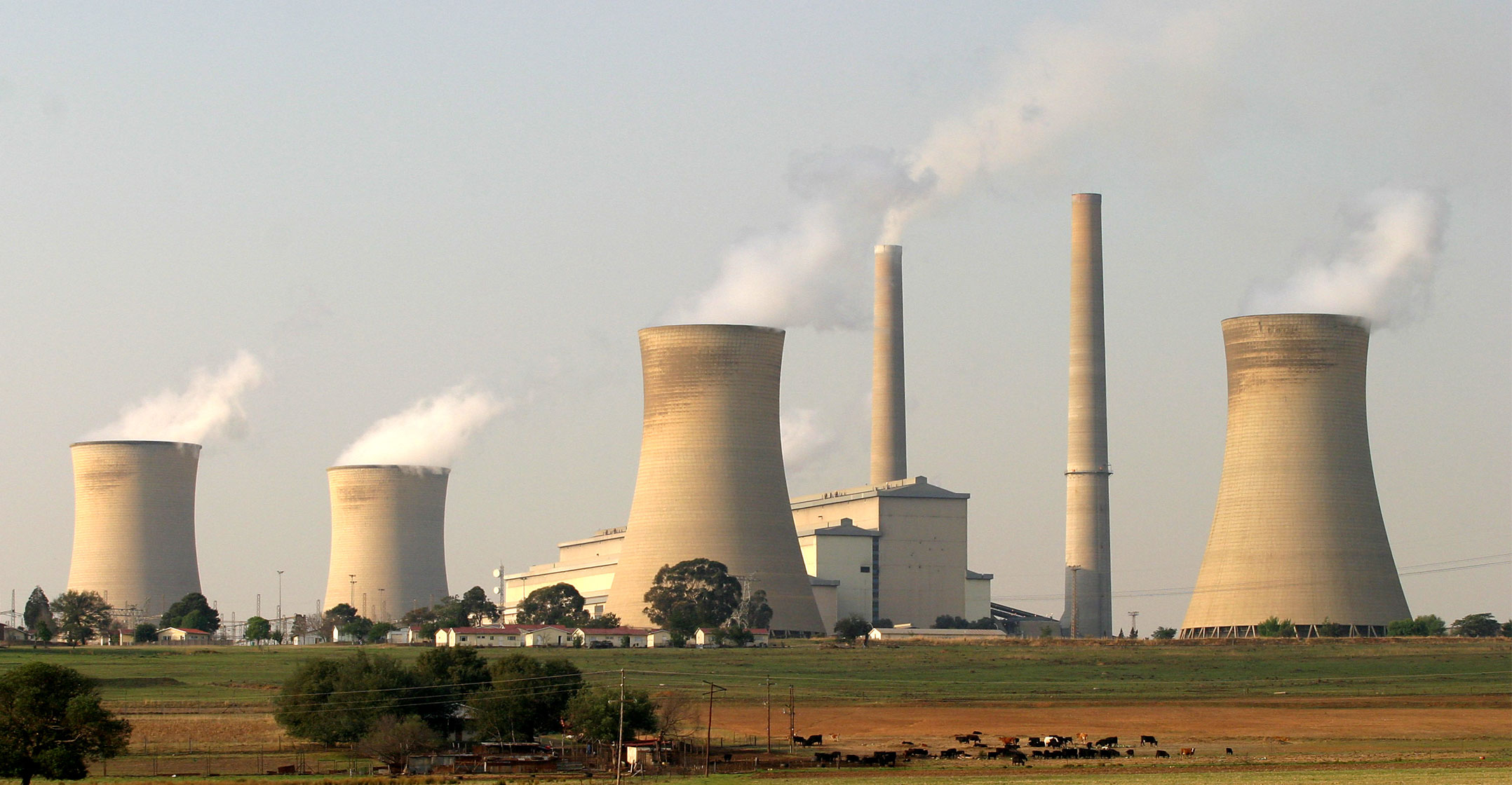
    South Africa could experience load shedding for the next two to three years if urgent steps are not taken to mitigate against energy shortages.

    This is according to research presented by Jarrad Wright and Joanne Calitz of the CSIR on Tuesday in a joint webinar with GreenCape.

    The presentation, “Addressing South Africa’s electricity crisis and getting ready for the next decade … and now Covid-19” — is built on work done at the beginning of 2020 tracing the impact of load shedding in 2019, which saw a record 1 352GWh of energy shed, meaning 530 hours of outages. This translated into losses of R60-billion to R120-billion to the economy.

    An urgent response is necessary to ensure short-term adequacy and set South Africa on a path toward long-term adequacy in the 2020s

    The CSIR says load shedding experienced in 2020 has already overtaken 2019 levels, with 1 383GWh being shed – that’s 661 hours of outages – so far this year.

    “An urgent response is necessary to ensure short-term adequacy and set South Africa on a path toward long-term adequacy in the 2020s … this is now even more urgent as a planned post-Covid-19 economic recovery takes shape,” the presentation states.

    Under lockdown, Eskom experienced a significant drop in demand from consumers as most industries went offline, with peak demand dropping from an expected 33.4GW to 30.7GW while minimum demand dropped to 13.8GW.

    Despite this, the country moved between stage-1 and stage-2 load shedding over seven consecutive days as opposed to the three days of stage 1 that Eskom had envisaged in its “winter plan”.

    Unreliable

    Speaking to the Cape Town Press Club on Tuesday, Eskom CEO André de Ruyter said this was a reflection of the unreliable and unpredictable generation fleet which has had major maintenance deferred over the past years.

    Eskom has launched an energy reliability project to improve its energy availability factor, which is the utility’s capacity to generate electricity, to between 70% and 74% from 2020 to 2023.

    De Ruyter said that while the reliability maintenance programme is completed, the country still faces a residual risk of load shedding until September 2021.

    As the country moved up the various Covid-19 lockdown levels to level 3, where the majority of economic activity is permitted, demand has returned to normal, increasing pressure on the grid.
    The CSIR’s latest projection, however, shows a lower energy availability factor and demand forecast than that forecast by Eskom as well as the department of mineral resources and energy’s integrated resource plan (IRP) 2019.

    Coming off a base of 67% in 2019, Wright said that to date in 2020, the energy availability factor seemed to be “tracking the lower bound” scenario at 66% as opposed to the increase envisaged in the IRP.

    In the updated CSIR scenario, Wright said South Africa could experience varying capacity shortages of between 6GW and 8GW until 2025 and significant energy shortages that could see between 1 700GWh and 4 500GWh being shed in 2020 to 2022, and only reducing in 2023 when new capacity is assumed to come online.

    Wright and Calitz have provided three key intertwined steps to deal with the energy shortages.

    We really need to fast-track some of those processes more than they are already being fast-tracked at the moment

    The first solution is the “customer response at scale”, which Wright said is the only reasonable solution to fill the short-term capacity and energy gap expected until 2022. This measure involves immediately allowing customers from residential to industrial customers to generate their own electricity through “enabling regulations” or by providing incentives programmes.

    “By no means do we say you go off-grid – it’s just self-supply options to supplement existing grid capacity that you already have,” said Wright. The impact would be reduced load shedding as the supply could come online quickly starting from 2020, he said.

    More speed, please

    The second step involves accelerating the department of mineral resources & energy’s risk mitigation power purchase programme launched to reduce the immediate and medium-term electricity supply constraints.

    The third step is an immediate focus on implementing the IRP and allowing for appropriate lead times and procurement.

    “Similar to step two, that capacity is only expected to be online from 2023 onward but is actually required in 2022,” said Wright. “So, we really need to fast-track some of those processes more than they are already being fast-tracked at the moment.”

    • This article was originally published by Moneyweb and is used here with permission

    Andre de Ruyter CSIR Eskom Jarrad Wright Joanne Calitz top
    WhatsApp YouTube Follow on Google News Add as preferred source on Google
    Share. Facebook Twitter LinkedIn WhatsApp Telegram Email Copy Link
    Previous ArticleLockdown caused record GDP contraction, new data suggests
    Next Article Epic Games sues Apple, Google after Fortnite pulled from app stores

    Related Posts

    Outa warns homeowners against rushing to register rooftop solar

    Outa warns homeowners against rushing to register rooftop solar

    27 January 2026
    How liberalisation is rewiring South Africa's power sector

    How liberalisation is rewiring South Africa’s power sector

    21 January 2026
    No risk of load shedding after Koeberg output scaled back

    No risk of load shedding after Koeberg output scaled back

    21 January 2026
    Company News
    Arctic Wolf expands leading Security Operations Warranty to South Africa

    Arctic Wolf expands leading Security Operations Warranty to South Africa

    27 January 2026
    The changing state of fintech - from disruption to infrastructure - BBD Software

    The changing state of fintech – from disruption to infrastructure

    27 January 2026
    Iris vPoller: a new edge in network visibility for service providers

    Iris vPoller: a new edge in network visibility for service providers

    26 January 2026
    Opinion
    Why Elon Musk's Starlink is a 'hard no' for me - Songezo Zibi

    Why Elon Musk’s Starlink is a ‘hard no’ for me

    26 January 2026
    South Africa's new fibre broadband battle - Duncan McLeod

    South Africa’s new fibre broadband battle

    20 January 2026
    AI moves from pilots to production in South African companies - Nazia Pillay SAP

    AI moves from pilots to production in South African companies

    20 January 2026

    Subscribe to Updates

    Get the best South African technology news and analysis delivered to your e-mail inbox every morning.

    Latest Posts
    Telecoms industry drags home affairs minister to court - Nomvuyiso Batyi

    Telecoms industry drags home affairs minister to court

    27 January 2026
    Amazon brings image-based shopping to South Africa - Robert Koen

    Amazon brings image-based shopping to South Africa

    27 January 2026
    South African cloud market set to top R100-billion by 2029 - BMIT

    South African cloud market set to top R100-billion by 2029

    27 January 2026
    Arctic Wolf expands leading Security Operations Warranty to South Africa

    Arctic Wolf expands leading Security Operations Warranty to South Africa

    27 January 2026
    © 2009 - 2026 NewsCentral Media
    • Cookie policy (ZA)
    • TechCentral – privacy and Popia

    Type above and press Enter to search. Press Esc to cancel.

    Manage consent

    TechCentral uses cookies to enhance its offerings. Consenting to these technologies allows us to serve you better. Not consenting or withdrawing consent may adversely affect certain features and functions of the website.

    Functional Always active
    The technical storage or access is strictly necessary for the legitimate purpose of enabling the use of a specific service explicitly requested by the subscriber or user, or for the sole purpose of carrying out the transmission of a communication over an electronic communications network.
    Preferences
    The technical storage or access is necessary for the legitimate purpose of storing preferences that are not requested by the subscriber or user.
    Statistics
    The technical storage or access that is used exclusively for statistical purposes. The technical storage or access that is used exclusively for anonymous statistical purposes. Without a subpoena, voluntary compliance on the part of your Internet Service Provider, or additional records from a third party, information stored or retrieved for this purpose alone cannot usually be used to identify you.
    Marketing
    The technical storage or access is required to create user profiles to send advertising, or to track the user on a website or across several websites for similar marketing purposes.
    • Manage options
    • Manage services
    • Manage {vendor_count} vendors
    • Read more about these purposes
    View preferences
    • {title}
    • {title}
    • {title}