Close Menu
TechCentralTechCentral

    Subscribe to the newsletter

    Get the best South African technology news and analysis delivered to your e-mail inbox every morning.

    Facebook X (Twitter) YouTube LinkedIn
    WhatsApp Facebook X (Twitter) LinkedIn YouTube
    TechCentralTechCentral
    • News
      Another windfall for Datatec shareholders - Jens Montanana

      Another windfall for Datatec shareholders

      19 June 2026
      WhatsApp starts charging South Africans - for the extras

      WhatsApp starts charging South Africans – for the extras

      19 June 2026
      AI agents are coming to your Visa card

      AI agents are coming to your Visa card

      19 June 2026
      Naspers signals core earnings surge ahead of results

      Naspers signals core earnings surge ahead of results

      19 June 2026
      Home affairs bookings get a security overhaul

      Home affairs bookings get a security overhaul

      19 June 2026
    • World
      Google on the hook for what its AI tells users, court rules

      Google on the hook for what its AI tells users, court rules

      15 June 2026
      How Russians juggle VPNs to outwit the Kremlin

      How Russians juggle VPNs to outwit the Kremlin

      15 June 2026
      Amazon CEO flagged Anthropic AI risks to Washington - Andy Jassy

      Amazon CEO flagged Anthropic AI risks to Washington

      14 June 2026
      Trouble at Xbox

      Trouble at Xbox

      11 June 2026
      Meta declares war on Israeli spyware firm

      Meta declares war on Israeli spyware firm

      8 June 2026
    • In-depth
      AI boom sparks rally, frenzy and fear

      AI boom sparks rally, frenzy and fear

      11 June 2026
      Every plug-in hybrid on sale in South Africa, ranked by price - Lamborghini Temerario

      Every plug-in hybrid on sale in South Africa, ranked by price

      7 June 2026
      What Wi-Fi 8 will mean for wireless networks

      What Wi-Fi 8 will mean for wireless networks

      1 June 2026
      Alfa's electric rebel - Alfa Romeo Junior Elettrica Veloce

      Alfa’s electric rebel

      29 April 2026
      Africa switches on as Europe dims the lights

      Africa switches on as Europe dims the lights

      9 April 2026
    • TCS
      Watts & Wheels S1E6: 'A flawless Alfa and a bakkie that divides'

      Watts & Wheels S1E6: ‘A flawless Alfa and a bakkie that divides’

      17 June 2026
      Watts & Wheels S1E6: 'A flawless Alfa and a bakkie that divides'

      Watts & Wheels S1E5: ‘A Bentley of the bush and a car that swims’

      8 June 2026
      TCS | Charge's R1.8-billion bet on an off-grid EV future - Charge chairman Joubert Roux

      TCS | Charge’s R1.8-billion bet on an off-grid EV future

      18 May 2026
      TCS+ | The Up&Up Group on the hidden cost of AI - Jason Harrison

      TCS+ | The Up&Up Group on the hidden cost of AI

      13 May 2026
      Michael Rossouw

      TCS+ | The retirement decision most South Africans get wrong

      6 May 2026
    • Opinion
      Finish the job Mandela started - Farzam Ehsani

      Finish the job Mandela started

      18 June 2026
      The author, Fanie van Rooyen

      The US just showed it can switch off our AI

      17 June 2026
      The clock is ticking on South African banks' biggest advantage - Pambos Soteriades

      The clock is ticking on South African banks’ biggest advantage

      9 June 2026

      Clashing judgments leave South Africa’s crypto law unsettled

      2 June 2026
      The clock is ticking on South African banks' biggest advantage - Pambos Soteriades

      The trap inside South Africa’s banking MVNO boom

      1 June 2026
    • Company Hubs
      • 1Stream
      • Africa Data Centres
      • AfriGIS
      • Altron Digital Business
      • Altron Document Solutions
      • Altron Group
      • Arctic Wolf
      • Ascent Technology
      • AvertITD
      • BBD
      • Braintree
      • CallMiner
      • CambriLearn
      • CM Telecom
      • Contactable
      • CYBER1 Solutions
      • Digicloud Africa
      • Digimune
      • Domains.co.za
      • ESET
      • Euphoria Telecom
      • HOSTAFRICA
      • Incredible Business
      • iONLINE
      • IQbusiness
      • Iris Network Systems
      • Kaspersky
      • LSD Open
      • Mitel
      • NEC XON
      • Netstar
      • Network Platforms
      • Next DLP
      • Ovations
      • Paracon
      • Paratus
      • Q-KON
      • SevenC
      • SkyWire
      • Solid8 Technologies
      • Telit Cinterion
      • Telviva
      • Tenable
      • Vertiv
      • Videri Digital
      • Vodacom Business
      • Wipro
      • Workday
      • XLink
    • Sections
      • AI and machine learning
      • Banking
      • Broadcasting and Media
      • Cloud services
      • Contact centres and CX
      • Cryptocurrencies
      • Education and skills
      • Electronics and hardware
      • Energy and sustainability
      • Enterprise software
      • Financial services
      • HealthTech
      • Information security
      • Internet and connectivity
      • Internet of Things
      • Investment
      • IT services
      • Lifestyle
      • Motoring
      • Policy and regulation
      • Public sector
      • Retail and e-commerce
      • Satellite communications
      • Science
      • SMEs and start-ups
      • Social media
      • Talent and leadership
      • Telecoms
    • Events
    • Advertise
    TechCentralTechCentral
    Home » In-depth » Mobile payments: what’s taken so long?

    Mobile payments: what’s taken so long?

    By The Conversation27 October 2014
    Twitter LinkedIn Facebook WhatsApp Email Telegram Copy Link
    News Alerts
    WhatsApp

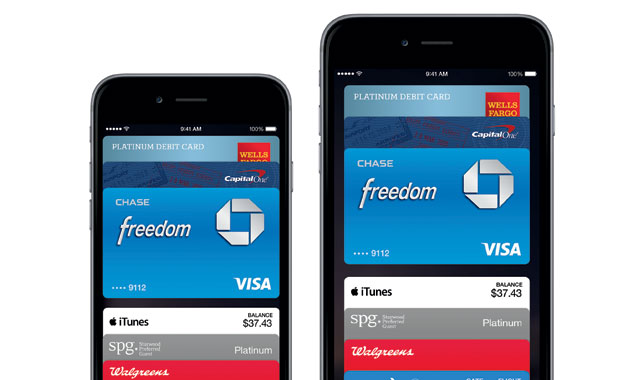
    Apple-Pay-640

    Apple Pay has been launched to much fanfare. People with the iPhone 6 or 6 Plus are now able to make credit card payments at certain shops and restaurants in the US. But Apple Pay isn’t the first of its kind and the technology it uses has actually been around for the past 15 years. So why has it taken so long to enter the mainstream?

    My colleague Filipe Santos, professor of entrepreneurship at Insead, studied the market in North America, Europe and Asia between June 2006 and June 2011, conducting 65 interviews with 40 informants. We found that, if it wasn’t for the egos of the different companies involved in making mobile payments systems work, it would already be a lot more widespread.

    The mobile payment industry is a perfect example of titans from different industries clashing over how to deliver a new concept. It is often the case that firms from distinct industries struggle to reach an agreement when launching a new market. This is due to their history of dominance in their own industry and lack of joint collaboration experience.

    So, in the case of mobile payments, you had the giants of the banking industry on one hand and the network operators on the other. Their inability to reach an agreement led to a weak compromise on how the mobile market would function, with many unresolved issues in how it would be managed.

    This creates a vicious cycle where other players hold off investments in the necessary market infrastructure: implementing point-of-sale devices, rolling out payment technology enabled phones. When the infrastructure falls behind, the disagreeing parties in turn lose any incentive to work on an agreement because the market is not taking off. The result: despite mobile payments technology being readily available since 2000, and despite strong demand for it, the market has been very slow to materialise.

    The interviews we conducted across industries, including banking and network operators, revealed just how difficult it was for the differing industries to see eye to eye.
    One financial consultant said: “The financial industry is in a defensive position against this proposal. Until now, they owned their customer and whatever payments the customer was making.

    “They have a lot to lose from sharing their card payment business with other players because cards are not just a source of revenue, but also a way to create loyalty and an opportunity to cross-sell products and services. So banks are not excited about opening their business to mobile network operators.”

    And an associate director of mobile payments at a US bank said: “Who would you trust with your digital money, your bank or your wireless carrier, which keeps charging you every time you go over your monthly plan?”

    Referring to the banking sector, a senior sales associate at a US mobile operator added: “They either don’t need us or don’t need this market. Because if they needed it, we would be talking right now.”

    It has been recognised since the early 2000s that near-field communication (NFC) was the preferred choice of technology to get the mobile payment industry rolling.

    But mobile operators needed access to bank accounts, while banks, in turn, needed mobile operators because the user’s bank information and the payment software needed to be integrated into the mobile service of the user. But wrangling over who dealt with — and essentially owned — the consumer resulted in it being delayed for a number of years.

    Eventually, a technology development known as single wire protocol (SWP) emerged and the first Nokia SWP phone was announced in April 2009. But Nokia shelved the phone in February 2010 without ever launching it.

    Google was the first player to introduce the NFC payment system, Google Wallet, in 2011. So far, the adoption of Google Wallet has been limited as the point-of-sale devices and software have not yet reached mass adoption among merchants.

    Now that Apple has joined the fray, the fact that two big technology players are backing the payments system on their devices will certainly help with more widespread adoption. One interesting difference between Apple Pay and Google Wallet, though, is that Apple won’t have any access to information about what users buy or how much they paid. Google, on the other hand, “sees” every transaction that a user makes.

    Overall, it has taken nearly 15 years after the first discussions on mobile payments began for the key players to agree on the market architecture due to disagreements over who would control the customer relationship. This disagreement then extended to the responsibility for securing the transaction, but the companies eventually lost interest. Our data shows that the longer the players from distinct industries disagree about the market architecture, the more likely they are to turn their attention to investing in alternative architectures within their own industry. This further inhibited a joint market from emerging at both global and local levels.The Conversation

    Whether Apple Pay is finally the service that cracks the mobile payment industry and brings the cross-industry squabbling to an end — while at the same time paving the way for the emergence of a technology touted for years as the next big thing — remains to be seen.

    So far, one thing that Apple has done right is to use its reputation as a top technology firm and platform provider to strike deals with the industry leaders in banking and mobile communications to finally get them to co-operate. When a company like Apple gets behind a technology, nobody wants to miss the boat.

    • Pinar Ozcan Pinar Ozcan is assistant professor of strategic management at Warwick Business School and visiting scholar at London Business School. She specialises in strategy, entrepreneurship and the emergence of new technology markets
    • This article was originally published on The Conversation

    Follow TechCentral on Google News Add TechCentral as your preferred source on Google


    Apple Apple Pay Google Google Wallet
    WhatsApp YouTube
    Share. Facebook Twitter LinkedIn WhatsApp Telegram Email Copy Link
    Previous ArticleAG questions R500m schools IT tender
    Next Article E-tolls killing business: DA

    Related Posts

    Cook warns of unavoidable Apple price hikes - Tim Cook

    Cook warns of unavoidable Apple price hikes

    18 June 2026
    SpaceX vaults past Amazon and Microsoft's market value

    SpaceX vaults past Amazon and Microsoft in market value

    17 June 2026
    Google on the hook for what its AI tells users, court rules

    Google on the hook for what its AI tells users, court rules

    15 June 2026
    Company News
    Moving past the pilot: inside the CloudZA and AWS closed-door AI executive roundtable

    CloudZA and AWS chart the road from AI pilots to production

    19 June 2026
    The role of edge infrastructure in South Africa's AI leap - OADC Open Access Data Centres

    The role of edge infrastructure in South Africa’s AI leap

    19 June 2026
    BBD's new FinOps white paper: your road map to kill cloud waste

    BBD’s new FinOps white paper: your road map to kill cloud waste

    19 June 2026
    Opinion
    Finish the job Mandela started - Farzam Ehsani

    Finish the job Mandela started

    18 June 2026
    The author, Fanie van Rooyen

    The US just showed it can switch off our AI

    17 June 2026
    The clock is ticking on South African banks' biggest advantage - Pambos Soteriades

    The clock is ticking on South African banks’ biggest advantage

    9 June 2026

    Subscribe to Updates

    Get the best South African technology news and analysis delivered to your e-mail inbox every morning.

    Latest Posts
    Another windfall for Datatec shareholders - Jens Montanana

    Another windfall for Datatec shareholders

    19 June 2026
    WhatsApp starts charging South Africans - for the extras

    WhatsApp starts charging South Africans – for the extras

    19 June 2026
    AI agents are coming to your Visa card

    AI agents are coming to your Visa card

    19 June 2026
    Naspers signals core earnings surge ahead of results

    Naspers signals core earnings surge ahead of results

    19 June 2026
    © 2009 - 2026 NewsCentral Media
    • Cookie policy (ZA)
    • TechCentral – privacy and Popia

    Type above and press Enter to search. Press Esc to cancel.

    Manage consent

    TechCentral uses cookies to enhance its offerings. Consenting to these technologies allows us to serve you better. Not consenting or withdrawing consent may adversely affect certain features and functions of the website.

    Functional Always active
    The technical storage or access is strictly necessary for the legitimate purpose of enabling the use of a specific service explicitly requested by the subscriber or user, or for the sole purpose of carrying out the transmission of a communication over an electronic communications network.
    Preferences
    The technical storage or access is necessary for the legitimate purpose of storing preferences that are not requested by the subscriber or user.
    Statistics
    The technical storage or access that is used exclusively for statistical purposes. The technical storage or access that is used exclusively for anonymous statistical purposes. Without a subpoena, voluntary compliance on the part of your Internet Service Provider, or additional records from a third party, information stored or retrieved for this purpose alone cannot usually be used to identify you.
    Marketing
    The technical storage or access is required to create user profiles to send advertising, or to track the user on a website or across several websites for similar marketing purposes.
    • Manage options
    • Manage services
    • Manage {vendor_count} vendors
    • Read more about these purposes
    View preferences
    • {title}
    • {title}
    • {title}