


Close Menu
TechCentralTechCentral

    Subscribe to the newsletter

    Get the best South African technology news and analysis delivered to your e-mail inbox every morning.

    Facebook X (Twitter) YouTube LinkedIn
    WhatsApp Facebook X (Twitter) LinkedIn YouTube
    TechCentralTechCentral
    • News
      Big Microsoft 365 price increases coming next year

      Big Microsoft price increases coming next year

      5 December 2025
      Vodacom to take control of Safaricom in R36-billion deal - Shameel Joosub

      Vodacom to take control of Safaricom in R36-billion deal

      4 December 2025
      Black Friday goes digital in South Africa as online spending surges to record high

      Black Friday goes digital in South Africa as online spending surges to record high

      4 December 2025
      BYD takes direct aim at Toyota with launch of sub-R500 000 Sealion 5 PHEV

      BYD takes direct aim at Toyota with launch of sub-R500 000 Sealion 5 PHEV

      4 December 2025
      'Get it now': Takealot in new instant deliveries pilot

      ‘Get it now’: Takealot in new instant deliveries pilot

      4 December 2025
    • World
      Amazon and Google launch multi-cloud service for faster connectivity

      Amazon and Google launch multi-cloud service for faster connectivity

      1 December 2025
      Google makes final court plea to stop US breakup

      Google makes final court plea to stop US breakup

      21 November 2025
      Bezos unveils monster rocket: New Glenn 9x4 set to dwarf Saturn V

      Bezos unveils monster rocket: New Glenn 9×4 set to dwarf Saturn V

      21 November 2025
      Tech shares turbocharged by Nvidia's stellar earnings

      Tech shares turbocharged by stellar Nvidia earnings

      20 November 2025
      Config file blamed for Cloudflare meltdown that disrupted the web

      Config file blamed for Cloudflare meltdown that disrupted the web

      19 November 2025
    • In-depth
      Jensen Huang Nvidia

      So, will China really win the AI race?

      14 November 2025
      Valve's Linux console takes aim at Microsoft's gaming empire

      Valve’s Linux console takes aim at Microsoft’s gaming empire

      13 November 2025
      iOCO's extraordinary comeback plan - Rhys Summerton

      iOCO’s extraordinary comeback plan

      28 October 2025
      Why smart glasses keep failing - no, it's not the tech - Mark Zuckerberg

      Why smart glasses keep failing – it’s not the tech

      19 October 2025
      BYD to blanket South Africa with megawatt-scale EV charging network - Stella Li

      BYD to blanket South Africa with megawatt-scale EV charging network

      16 October 2025
    • TCS
      TCS+ | How Cloud on Demand helps partners thrive in the AWS ecosystem - Odwa Ndyaluvane and Xenia Rhode

      TCS+ | How Cloud On Demand helps partners thrive in the AWS ecosystem

      4 December 2025
      TCS | MTN Group CEO Ralph Mupita on competition, AI and the future of mobile

      TCS | Ralph Mupita on competition, AI and the future of mobile

      28 November 2025
      TCS | Dominic Cull on fixing South Africa's ICT policy bottlenecks

      TCS | Dominic Cull on fixing South Africa’s ICT policy bottlenecks

      21 November 2025
      TCS | BMW CEO Peter van Binsbergen on the future of South Africa's automotive industry

      TCS | BMW CEO Peter van Binsbergen on the future of South Africa’s automotive industry

      6 November 2025
      TCS | Why Altron is building an AI factory - Bongani Andy Mabaso

      TCS | Why Altron is building an AI factory in Johannesburg

      28 October 2025
    • Opinion
      Your data, your hardware: the DIY AI revolution is coming - Duncan McLeod

      Your data, your hardware: the DIY AI revolution is coming

      20 November 2025
      Zero Carbon Charge founder Joubert Roux

      The energy revolution South Africa can’t afford to miss

      20 November 2025
      It's time for a new approach to government IT spend in South Africa - Richard Firth

      It’s time for a new approach to government IT spend in South Africa

      19 November 2025
      How South Africa's broken Rica system fuels murder and mayhem - Farhad Khan

      How South Africa’s broken Rica system fuels murder and mayhem

      10 November 2025
      South Africa's AI data centre boom risks overloading a fragile grid - Paul Colmer

      South Africa’s AI data centre boom risks overloading a fragile grid

      30 October 2025
    • Company Hubs
      • Africa Data Centres
      • AfriGIS
      • Altron Digital Business
      • Altron Document Solutions
      • Altron Group
      • Arctic Wolf
      • AvertITD
      • Braintree
      • CallMiner
      • CambriLearn
      • CYBER1 Solutions
      • Digicloud Africa
      • Digimune
      • Domains.co.za
      • ESET
      • Euphoria Telecom
      • Incredible Business
      • iONLINE
      • IQbusiness
      • Iris Network Systems
      • LSD Open
      • NEC XON
      • Netstar
      • Network Platforms
      • Next DLP
      • Ovations
      • Paracon
      • Paratus
      • Q-KON
      • SevenC
      • SkyWire
      • Solid8 Technologies
      • Telit Cinterion
      • Tenable
      • Vertiv
      • Videri Digital
      • Vodacom Business
      • Wipro
      • Workday
      • XLink
    • Sections
      • AI and machine learning
      • Banking
      • Broadcasting and Media
      • Cloud services
      • Contact centres and CX
      • Cryptocurrencies
      • Education and skills
      • Electronics and hardware
      • Energy and sustainability
      • Enterprise software
      • Financial services
      • Information security
      • Internet and connectivity
      • Internet of Things
      • Investment
      • IT services
      • Lifestyle
      • Motoring
      • Public sector
      • Retail and e-commerce
      • Satellite communications
      • Science
      • SMEs and start-ups
      • Social media
      • Talent and leadership
      • Telecoms
    • Events
    • Advertise
    TechCentralTechCentral
    Home » Sections » Information security » Passwords are dying – here’s the tech that’s replacing them

    Passwords are dying – here’s the tech that’s replacing them

    Passkeys promise to replace passwords with faster, safer logins using biometrics and encryption.
    By The Conversation24 October 2025
    Twitter LinkedIn Facebook WhatsApp Email Telegram Copy Link
    News Alerts
    WhatsApp

    Passwords are dying - here's the tech that's replacing them - passkeysPasswords are the keys to our digital lives – think how many times you log in to websites and other systems. But just like physical keys, they can be lost, duplicated and stolen.

    Many alternatives have been proposed in recent years, including passkeys. These offer a significant improvement in terms of user friendliness and potential for widespread use.

    But what exactly are they – and how do they differ from passwords?

    Each passkey is unique for every service you use; even if the key for a site could be stolen, it can’t be used elsewhere

    In simple terms, a password is a secret word or phrase that you use to prove who you are to computer systems and/or online. If you have an account on a website or subscribe to a service provider, you likely have many.

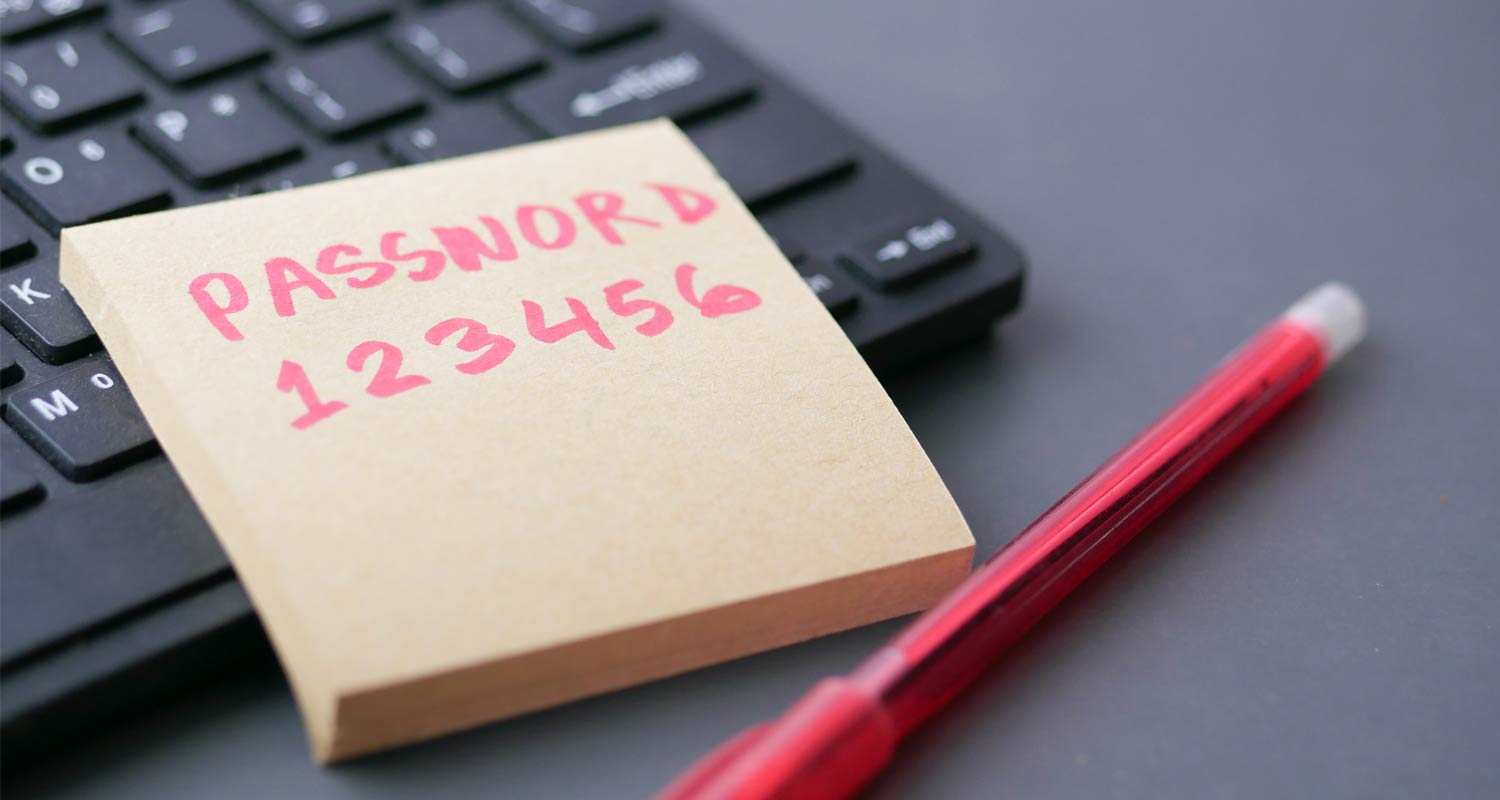
    Passwords themselves are fine; it is the way we implement and use them that makes them vulnerable. For example, weak password habits are everywhere. A CyberNews report from earlier this year identified 94% of 19 billion leaked password were re-used. It also identified several similarities in passwords, including strings of numbers such as “123456”, people’s names, cities, popular brands and swearwords.

    And when a breach occurs, stolen passwords can spread quickly. This leads to accounts being taken over, identity theft and/or phishing attacks. In one experiment, hackers were trying to use leaked credentials within an hour.

    Public-key cryptography

    Passwords are also vulnerable to phishing, which is when scammers trick you into typing your password (or other information) into a fake account login page. Phishing e-mails continue to grow in number and consequence with one report indicating more than three billion phishing e-mails sent per day globally.

    A good password is unique (that is, never re-used) and complex (imagine a sequence of letters, numbers and symbols such as “e8bh!kXVhccACAP$48yb”). It can also be a unique combination of multiple words to create a phrase or memorable sequence.

    This could be difficult to remember, although creating a story that uses the contents of the password might help. For example, say your password was “CrocApplePurseBike”. You could remember it by thinking of the Crocodile that packed its Apple into a Purse before riding a Bike.

    Read: Passwords are on the way out – good riddance to them

    Passkeys first started to emerge about four years ago. They use a mathematical process called public-key cryptography to create a unique set of information that is split into two parts – or keys.

    One key is public and can be shared with websites; the other is a private key that is stored securely on your device. To sign into an account, the website sends a random challenge (such as a number) and your device uses the private key to “approve” the login request. This approval is usually called “signing” the request and applies a mathematical process to the challenge.
    No, no, no, no, no!

    Your device won’t just do this automatically; you will typically be required to approve the request. For many mobile devices this will require your face or fingerprint to be used to authorise the response to be sent.

    Finally, the website checks the signature via the public key it already has. If it confirms the challenge, you are in.

    Passkeys are stronger than passwords by design. It doesn’t matter if the public key is stolen, because it cannot be used on its own. Your private keys are safely protected by your device’s security, with most using face or finger-based biometrics to unlock (it is best to avoid relying on a Pin).

    Another plus is that passkeys are resistant to phishing; there isn’t a password to send in response to a phishing e-mail.

    Each passkey is also unique for every service you use; even if the key for a site could be stolen, it cannot be used elsewhere.

    Another plus is that passkeys are resistant to phishing. From a user perspective, there isn’t a password to send in response to a phishing e-mail. A request to log in on a site has to come from the registered device combined with the approval of the user.

    Passkeys are also more convenient than passwords. You don’t have to look for the password you used when you registered – the passkeys are already linked to your device and are only a finger/face verification away.

    There are, however, some issues with passkeys. For one, while many browsers, operating systems and websites are embracing passkeys, this isn’t universal. And some early implementations suffered with compatibility between devices (such as between Microsoft and Apple devices).

    As users move to newer devices and manufacturers improve integration, these issues should disappear.

    A clear winner

    From a security point of view, passkeys are the clear winner. They offer stronger protection, can resist phishing and are easier to use. But until passkeys are everywhere, passwords will still play a supporting role.

    Implementing passkeys on a website requires effort from the company concerned. With a vast number of sites requiring users to create accounts, the process of migrating them all to passkeys is going to take decades. Many will never adopt the practice unless other factors force their hand.

    Read: South Africans are still using terrible passwords

    For now, it’s crucial that we continue to focus on password hygiene by using strong, unique passwords and enabling multifactor authentication wherever possible. If you do nothing else after reading this article, at least change any re-used passwords.The Conversation

    • The authors are Paul Haskell-Dowland, is professor of cybersecurity practice, Edith Cowan University, and Ismini Vasileiou, associate professor, School of Computer Science and Informatics, De Montfort University
    • This article is republished from The Conversation under a Creative Commons licence. Read the original article


    passkey passkeys what is a passkey
    Subscribe to TechCentral Subscribe to TechCentral
    Share. Facebook Twitter LinkedIn WhatsApp Telegram Email Copy Link
    Previous ArticleTrump pardons convicted Binance founder CZ Zhao 
    Next Article Streamline, simplify, secure: Obsidian leads the shift from Opsgenie to Jira

    Related Posts

    Passwords are dying - here's the tech that's replacing them - passkeys

    Bookmarks | Will passkeys ever replace passwords?

    18 November 2024
    Company News
    AI is not a technology problem - iqbusiness

    AI is not a technology problem – iqbusiness

    5 December 2025
    Telcos are sitting on a data gold mine - but few know what do with it - Phillip du Plessis

    Telcos are sitting on a data gold mine – but few know what do with it

    4 December 2025
    Unlock smarter computing with your surface Copilot+ PC

    Unlock smarter computing with your Surface Copilot+ PC

    4 December 2025
    Opinion
    Your data, your hardware: the DIY AI revolution is coming - Duncan McLeod

    Your data, your hardware: the DIY AI revolution is coming

    20 November 2025
    Zero Carbon Charge founder Joubert Roux

    The energy revolution South Africa can’t afford to miss

    20 November 2025
    It's time for a new approach to government IT spend in South Africa - Richard Firth

    It’s time for a new approach to government IT spend in South Africa

    19 November 2025

    Subscribe to Updates

    Get the best South African technology news and analysis delivered to your e-mail inbox every morning.

    Latest Posts
    Big Microsoft 365 price increases coming next year

    Big Microsoft price increases coming next year

    5 December 2025
    AI is not a technology problem - iqbusiness

    AI is not a technology problem – iqbusiness

    5 December 2025
    Vodacom to take control of Safaricom in R36-billion deal - Shameel Joosub

    Vodacom to take control of Safaricom in R36-billion deal

    4 December 2025
    Black Friday goes digital in South Africa as online spending surges to record high

    Black Friday goes digital in South Africa as online spending surges to record high

    4 December 2025
    © 2009 - 2025 NewsCentral Media
    • Cookie policy (ZA)
    • TechCentral – privacy and Popia

    Type above and press Enter to search. Press Esc to cancel.

    Manage consent

    TechCentral uses cookies to enhance its offerings. Consenting to these technologies allows us to serve you better. Not consenting or withdrawing consent may adversely affect certain features and functions of the website.

    Functional Always active
    The technical storage or access is strictly necessary for the legitimate purpose of enabling the use of a specific service explicitly requested by the subscriber or user, or for the sole purpose of carrying out the transmission of a communication over an electronic communications network.
    Preferences
    The technical storage or access is necessary for the legitimate purpose of storing preferences that are not requested by the subscriber or user.
    Statistics
    The technical storage or access that is used exclusively for statistical purposes. The technical storage or access that is used exclusively for anonymous statistical purposes. Without a subpoena, voluntary compliance on the part of your Internet Service Provider, or additional records from a third party, information stored or retrieved for this purpose alone cannot usually be used to identify you.
    Marketing
    The technical storage or access is required to create user profiles to send advertising, or to track the user on a website or across several websites for similar marketing purposes.
    • Manage options
    • Manage services
    • Manage {vendor_count} vendors
    • Read more about these purposes
    View preferences
    • {title}
    • {title}
    • {title}