 President Cyril Ramaphosa said last week that government is working on so-called “digital nomad” visas to attract highly skilled individuals to the country. Workers in the IT sector, such as programmers and software architects, are typically the target of such visas.
But how is South Africa placed in terms of digital skills, and which programmers are most in demand in 2024?
According to Deon Stroebel, chief commercial officer at LSD Open, an enterprise Linux and open-source software specialist, South Africa has a “huge opportunity to create a very strong skills capability that could be provided to the world, similar to how organisations are using India’s skills, and what’s happening in the Czech Republic and Egypt”. But, he said, South Africa lacks skilled people in the newer coding methodologies – and this is a problem.
“LSD Open focuses on ‘cloud native’, which means all the platforms we help our customers move to use containerisation. It is hard to find developers that have the skill to develop in microservices effectively. This problem is compounded when it comes to data streaming and integration with technologies like [Apache] Kafka, which most enterprises are adopting fast. Even service mesh frameworks that have been around for five or more years have almost no skills in the market. And this is all before we get to artificial intelligence and machine learning, which is more complicated,” he said.
Stroebel said the level of skills training in South Africa is inadequate, so LSD Open has started to take on young people and train them in-house rather than relying on external educational institutions.
Linux skills
“This is something I have been very vocal about for a long time: youngsters coming out of university do not have the skills they need to get into the workforce and still need two or more years of training. We prefer to have students that are hungry to learn and who have completed skills certificates in the fields we require, especially Linux skills. Linux skills are some of the most in demand around the world right now, simply because Linux is the basis for everything related to the modernisation that organisations are so focused on.
“South Africa sits with an incredible unemployment rate. South Africans are extremely hard working and are able to learn anything – we are a driven people. I feel that the government should run skills programmes from the very basics. I would not limit that to coding, as AI is already causing major changes in coding jobs around the world.
“I would focus on basic IT administration skills like Linux, databases, networking and coding. From there, people could specialise in technologies that are in demand. I also think government should work with local businesses to take on more of these skilled workers and give them tax rebates or some other benefits. This should really be provided at very low cost, if not free by government, as the barrier to entry is too high for the majority of people.”
Read: The IT skills in demand in South Africa
Sethu Komani, chief commercial officer at WeThinkCode, also believes South Africa has the potential to develop a strong base of digital skills, although it lags behind other Brics countries like India that have systematically built up a formidable digital sector.
“Despite making several tech skills a priority in the gazetted critical skills list, we’ve failed to come up with a practical implementation strategy to increase the number of people trained adequately to meet industry demand. It’s estimated that annually South Africa spends about R8.5-billion to source tech skills from elsewhere in the world.”
 Komani said to bridge this divide, South Africa must concentrate on bolstering fundamental coding skills, which serve as the foundation for more advanced technologies such as AI and machine learning.
“Neglecting to broaden access to these basic tech skills risks exacerbating the digital divide. It is imperative to recognise that tech development cannot thrive in isolation; addressing challenges such as education disparities, economic inequality and infrastructure limitations is crucial to realising the full potential of digital transformation.
She said: “While our average senior developer salary stands at $60 000 annually, notably lower than the upwards of $120 000 earned by counterparts in countries like the US, the global tech skills shortage compounds the issue. The bargaining power of experienced developers only amplifies this challenge, making the rand less appealing to foreign talent.”
However, South Africa does possess a compelling offering: lifestyle. Due to the favourable exchange rate, remote developers may find their earnings stretch further, affording them a higher quality of life than their salaries might predict.
“A 2023 fact sheet on the throughput of TVET colleges showed that in 2019 the TVETs recruited, collectively across the country, 3 598 students into their ICT programmes. Of these recruits, only 3.9% (139 students) graduated within the prescribed three-year period. Additionally, universities deliver about 2 900 computer science graduates every year nationally, which is not enough to fill the estimated 44 000 unfilled, entry-level digital jobs. The data overwhelmingly points to a widespread deficit in supply,” Komani said.
“I don’t think it’s because we don’t have enough existing training facilities in place. If you look at the TVET infrastructure, they have over 300 campuses nationally, which, coupled with the relevant curriculum, could unlock supply.”
AI’s impact
But a significant investment in education has not consistently translated into workforce readiness and economic growth, and collaboration between industry and public institutions is vital to cultivate a skilled workforce, she emphasised.
Philip Joubert, co-founder of OfferZen, a talent marketplace for software engineers, told TechCentral that each big new development in software and hardware increases the number of people who use these technologies – and the number of people needed to create software for them.
“For example, after the iPhone was released, millions of people started using smartphones and buying apps. So, suddenly there was a market for mobile apps and tens of thousands of people started making them.
Read: There’s more to the skills crisis than emigration
“AI is likely going to have a similar impact. AI makes it much easier and faster to write code, so it’s going to become much cheaper to solve problems with software. Usually when the price goes down, the demand goes up and that’s exactly what I’m expecting with AI. We’re going to see a massive increase in the amount of software created over the next few years,” Joubert said.
“We’re going to need a lot more tech talent over the coming decade, and we’re going to need to compete globally in order to attract and retain this talent. But South African software engineering salaries are very competitive if you consider the low cost of living relative to most of Europe and America. It’s one of the best countries in the world to be a software engineer.
 “However, it’s even more lucrative if you can live in South Africa and do remote work for an international company. Fewer than 10% of local South African software engineers work for international companies, but international talent moving to South Africa would have a far easier time securing work from the country they came from. We are very well positioned to attract tech workers from other African countries – Kenya, Nigeria and Zimbabwe have a lot of smart software developers.”
Languages in demand
Languages such as Cobol, Delphi and Pascal are now considered “legacy” tools that only a tiny fraction of developers use in 2024, so it no longer makes career sense to learn them.
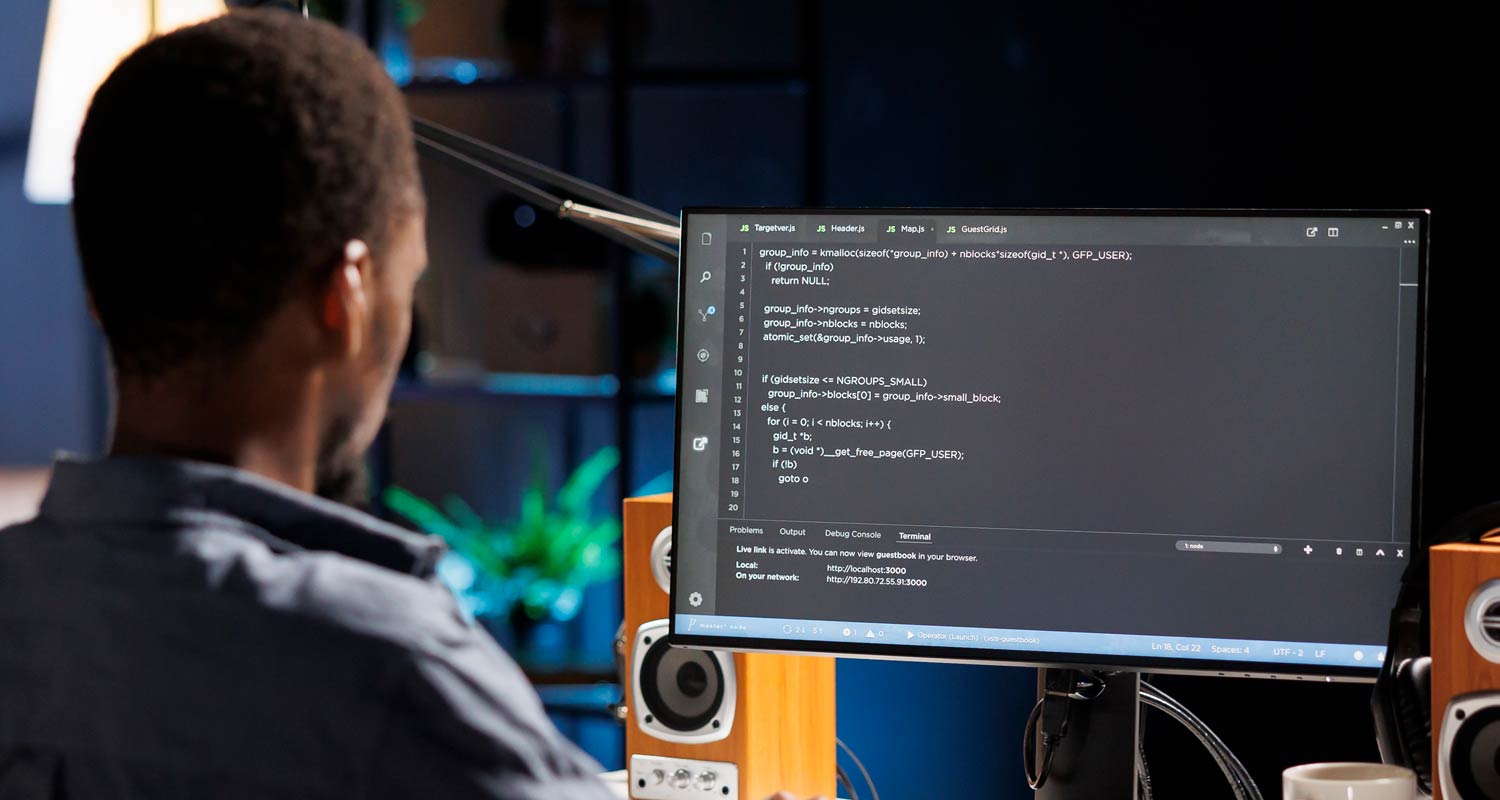
The most used languages in South Africa are JavaScript, C#, TypeScript, Python and Java, and there is no lack of training facilities focused on these.
“Remember, you can learn to code for free online, and most companies don’t require you to have any formal training,” said Joubert. “It really is just a matter of having the desire to want to code – the limitation is the number of people who want to study software engineering. Fortunately, I think we’re making the right moves, with coding becoming a required subject in some schools, and schools adopting AI tools like Mindjoy. Early exposure is one of the best things we can do to get more people interested in a tech career.”
Joubert also said government needs to focus on minimising the rate at which tech workers emigrate by ensuring personal safety and a stable energy supply, among other things.
“Compensation and career growth opportunities are directly linked to the strength of the tech ecosystem. Investors, entrepreneurs and tech workers are obviously the central players in building tech ecosystems, but there’s a lot the government can do to help build a strong tech ecosystem.
“Our tech ecosystem would get make stronger if we regulated less. Our exchange laws make it very difficult for foreign investors to take money out of South Africa. As a result, these investors are reluctant to put money into the country in the first place, and it’s nearly impossible to raise capital from an international VC as a South African company. Local start-ups have to go through a lengthy and expensive process to set up a complex holding structure to get around exchange controls,” he said.
Read: South Africa plans to offer ‘digital nomad’ visas
“The Competition Commission is creating a hostile environment by targeting our most successful companies. For instance, Takealot is in their crosshairs at the very moment Amazon, the sixth-largest company in the world, is launching in South Africa.
“And South African labour laws make it hard for companies to get rid of underperforming employees – at least compared to the US. As a result, tech companies are slower to hire and scale up.” — © 2024 NewsCentral Media