
Close Menu
TechCentralTechCentral

    Subscribe to the newsletter

    Get the best South African technology news and analysis delivered to your e-mail inbox every morning.

    Facebook X (Twitter) YouTube LinkedIn
    WhatsApp Facebook X (Twitter) LinkedIn YouTube
    TechCentralTechCentral
    • News
      Haier plants its flag in South Africa

      Haier plants its flag in South Africa

      2 February 2026
      Microsoft's winning formula is starting to fray - Satya Nadella

      Microsoft’s winning formula may be starting to fray

      2 February 2026
      Meet the CIO | Inside the JSE's tech engine with CIO Tebalo Tsoaeli

      Meet the CIO | Inside the JSE’s tech engine with CIO Tebalo Tsoaeli

      2 February 2026
      Crypto has gone mainstream - will South African regulators catch up in 2026? - Marius Reitz

      Crypto has gone mainstream – will South African regulators catch up in 2026?

      2 February 2026
      Sixty60 smashes 100 million orders

      Shoprite keeps Sixty60 momentum as group sales rise 7.2%

      2 February 2026
    • World
      Apple acquires audio AI start-up Q.ai

      Apple acquires audio AI start-up Q.ai

      30 January 2026
      SpaceX IPO may be largest in history

      SpaceX IPO may be largest in history

      28 January 2026
      Nvidia throws AI at the weather

      Nvidia throws AI at weather forecasting

      27 January 2026
      Debate erupts over value of in-flight Wi-Fi

      Debate erupts over value of in-flight Wi-Fi

      26 January 2026
      Intel takes another hit - Intel CEO Lip-Bu Tan. Laure Andrillon/Reuters

      Intel takes another hit

      23 January 2026
    • In-depth
      How liberalisation is rewiring South Africa's power sector

      How liberalisation is rewiring South Africa’s power sector

      21 January 2026
      The top-performing South African tech shares of 2025

      The top-performing South African tech shares of 2025

      12 January 2026
      Digital authoritarianism grows as African states normalise internet blackouts

      Digital authoritarianism grows as African states normalise internet blackouts

      19 December 2025
      TechCentral's South African Newsmakers of 2025

      TechCentral’s South African Newsmakers of 2025

      18 December 2025
      Black Friday goes digital in South Africa as online spending surges to record high

      Black Friday goes digital in South Africa as online spending surges to record high

      4 December 2025
    • TCS
      TCS+ | How Cloud On Demand is helping SA businesses succeed in the cloud - Xhenia Rhode, Dion Kalicharan

      TCS+ | Cloud On Demand and Consnet: inside a real-world AWS partner success story

      30 January 2026
      Watts & Wheels S1E3: 'BYD's Corolla Cross challenger'

      Watts & Wheels S1E3: ‘BYD’s Corolla Cross challenger’

      30 January 2026
      Watts & Wheels S1E3: 'BYD's Corolla Cross challenger'

      Watts & Wheels S1E2: ‘China attacks, BMW digs in, Toyota’s sublime supercar’

      23 January 2026

      TCS+ | Why cybersecurity is becoming a competitive advantage for SA businesses

      20 January 2026
      Watts & Wheels S1E3: 'BYD's Corolla Cross challenger'

      Watts & Wheels: S1E1 – ‘William, Prince of Wheels’

      8 January 2026
    • Opinion
      South Africa's skills advantage is being overlooked at home - Richard Firth

      South Africa’s skills advantage is being overlooked at home

      29 January 2026
      Why Elon Musk's Starlink is a 'hard no' for me - Songezo Zibi

      Why Elon Musk’s Starlink is a ‘hard no’ for me

      26 January 2026
      South Africa's new fibre broadband battle - Duncan McLeod

      South Africa’s new fibre broadband battle

      20 January 2026
      AI moves from pilots to production in South African companies - Nazia Pillay SAP

      AI moves from pilots to production in South African companies

      20 January 2026
      South Africa's new fibre broadband battle - Duncan McLeod

      ANC’s attack on Solly Malatsi shows how BEE dogma trumps economic reality

      14 December 2025
    • Company Hubs
      • Africa Data Centres
      • AfriGIS
      • Altron Digital Business
      • Altron Document Solutions
      • Altron Group
      • Arctic Wolf
      • AvertITD
      • Braintree
      • CallMiner
      • CambriLearn
      • CYBER1 Solutions
      • Digicloud Africa
      • Digimune
      • Domains.co.za
      • ESET
      • Euphoria Telecom
      • Incredible Business
      • iONLINE
      • IQbusiness
      • Iris Network Systems
      • LSD Open
      • NEC XON
      • Netstar
      • Network Platforms
      • Next DLP
      • Ovations
      • Paracon
      • Paratus
      • Q-KON
      • SevenC
      • SkyWire
      • Solid8 Technologies
      • Telit Cinterion
      • Tenable
      • Vertiv
      • Videri Digital
      • Vodacom Business
      • Wipro
      • Workday
      • XLink
    • Sections
      • AI and machine learning
      • Banking
      • Broadcasting and Media
      • Cloud services
      • Contact centres and CX
      • Cryptocurrencies
      • Education and skills
      • Electronics and hardware
      • Energy and sustainability
      • Enterprise software
      • Financial services
      • Information security
      • Internet and connectivity
      • Internet of Things
      • Investment
      • IT services
      • Lifestyle
      • Motoring
      • Public sector
      • Retail and e-commerce
      • Satellite communications
      • Science
      • SMEs and start-ups
      • Social media
      • Talent and leadership
      • Telecoms
    • Events
    • Advertise
    TechCentralTechCentral
    Home » Sections » Russia just made the orbiting space junk crisis much worse

    Russia just made the orbiting space junk crisis much worse

    By Todd Shields18 November 2021
    Twitter LinkedIn Facebook WhatsApp Email Telegram Copy Link
    News Alerts
    WhatsApp

    The Russian missile test that shattered a dead satellite this week highlights a growing threat of space debris just as companies such as SpaceX and Boeing make plans to launch as many as 65 000 commercial spacecraft into orbit in coming years.

    The anti-satellite weapon smashed a Russian orbiter into at least 1 500 pieces, forming a belt of debris hurtling around the Earth at speeds up to 27 000km/h. It forced ground control to awaken the sleeping crew of the International Space Station and ask them to close hatches and scramble into docked spacecraft for safety.

    It also added to the amount of junk speeding through space thanks to failed satellites, discarded rocket boosters and weapons tests. This just as technology entrepreneurs and defence companies have announced plans to deploy constellations of satellites, adding to about 4 550 from all countries currently in orbit.

    We are seeing more and more satellites getting damaged by orbital debris hits

    The Russian anti-satellite test “just makes everything worse”, said Brian Weeden, director of programme planning for Secure World Foundation, a group that works for sustainable use of space.

    “It’s not like the movie Gravity where one thing happens and everything goes ‘boom’,” Weeden said. Instead there is “a tipping point, where it starts to accelerate” and the orbital environment deteriorates over decades.

    Low-Earth orbit is an area of major concern because because that’s where companies want to locate small observation and communications satellites. These include Elon Musk’s SpaceX, which has more than 1 700 Starlink satellites already orbiting and plans is asking regulators for permission to add 30 000 more to provide broadband Internet from space.

    Slew of applications

    The US Federal Communications Commission is reviewing a slew of applications from SpaceX and other companies rushing to take advantage of lower launch costs and growing appetite for data. Low orbits offer minimal lag time for data to bounce between a user on the ground and the spacecraft. Boeing, Amazon.com’s Kuiper Systems and Astra Space were among companies submitting recent applications at the FCC for more than 35 000 satellites.

    Already in some low-Earth orbits, the number of new objects and fragments generated from collisions exceeds those removed by natural atmospheric drag, the FCC said last year as it adopted rules to ease the threat from orbital debris. The agency regulates satellites because the spacecraft use wireless frequencies.

    Other regions have sufficient densities of orbital debris to lead some analysts to conclude that they are close to or have already reached a “runaway” status, where the debris population will grow indefinitely, the FCC said.

    With huge orbiting fleets, dramatic increases in space collisions, and new space debris, are expected within just a few years

    “We’re at a time of transformative change in the human use of space,” said Jonathan McDowell, an astronomer at the Centre for Astrophysics Harvard & Smithsonian research institute. “We are seeing more and more satellites getting damaged by orbital debris hits. Occasionally satellites get destroyed.”

    There are about 4 550 operating satellites in orbit, with 3 790 in low-Earth orbit, according to a 1 September tally by the Union of Concerned Scientists.

    Satellite operator Viasat has warned of dangers from large constellations, saying failure risk of at least some satellites is high when thousands are in orbit.

    Took shelter

    With huge orbiting fleets, “dramatic increases in space collisions, and new space debris, are expected within just a few years”, Jim Bridenstine, a Viasat board member and former Nasa administrator, told lawmakers at a US senate hearing last month.

    More than 27 000 pieces of orbital debris are tracked by the US department of defence, according to Nasa. Near-Earth orbits hold much more debris that’s too small to be tracked, but large enough to threaten human spaceflight and robotic missions.

    Those aboard the International Space Station took shelter for three passes of the debris field caused by the strike on the Russian satellite, Cosmos 1408, Nasa said in a 15 November statement.

    Roughly a week before Monday’s missile strike by Russia, Nasa moved the ISS to avoid a close encounter with debris remaining from a test by China that destroyed a weather satellite in 2007. The station has conducted 29 debris avoidance manoeuvres since 1999, including three in 2020, Nasa said in a 26 May posting online.
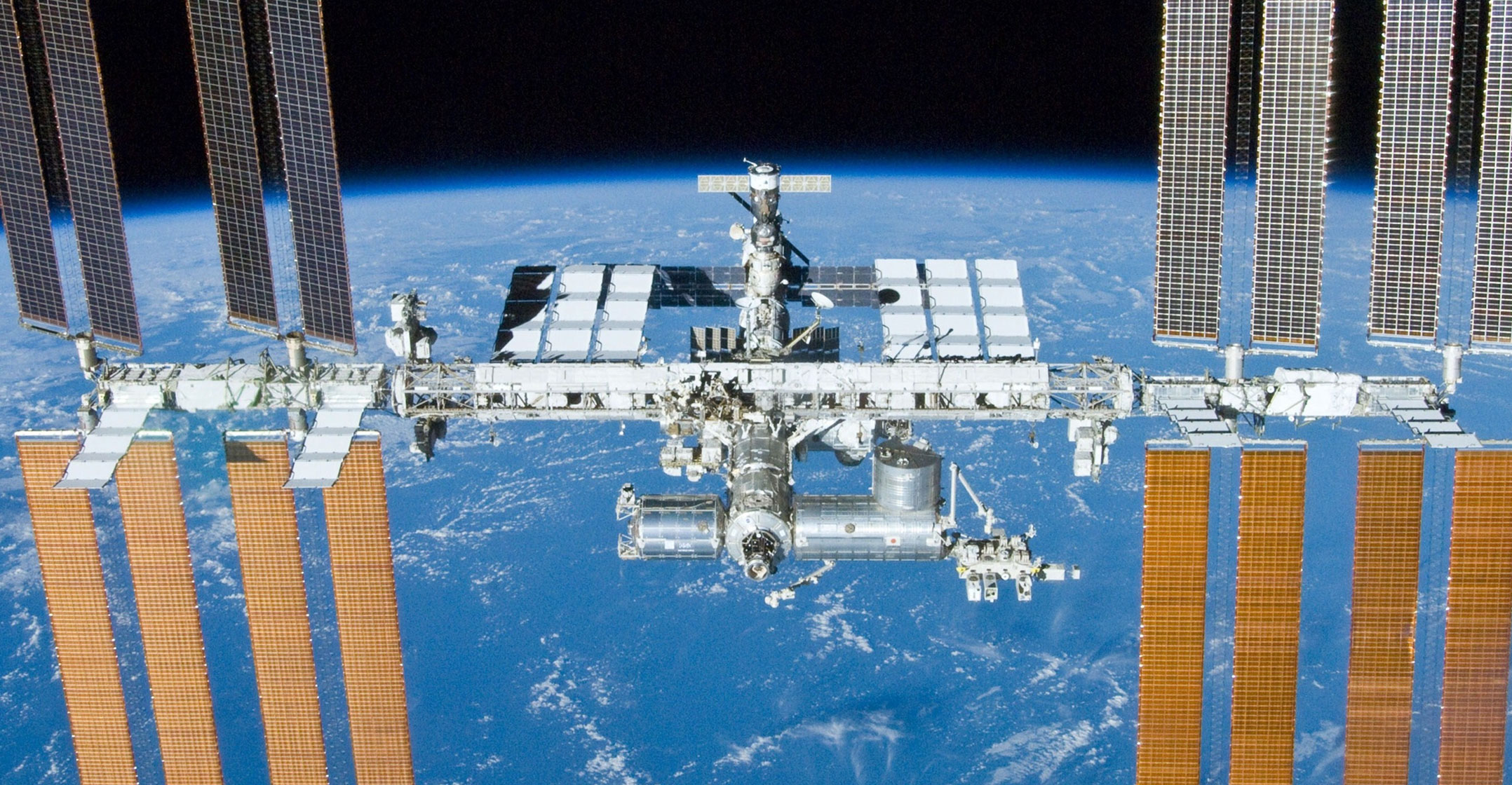
    The International Space Station

    Nasa has a set of longstanding guidelines for debris avoidance. Manoeuvres are usually small and use the station’s Russian thrusters, or the propulsion systems on one of the docked spacecraft that carry passengers from Earth.

    The Cosmos debris could cause problems for Musk’s SpaceX, astronomers said.

    “There’s a real risk in the coming weeks that you could lose some of the Starlinks because they get in the way of this debris,” said McDowell.

    SpaceX didn’t return e-mailed queries requesting comment. A Boeing representative also declined to comment on the risk to its fleet.

    Nations are struggling with ways to reduce space debris, with techniques such as using magnetic plates to capture satellites, or using harpoons and nets, at the test stage, said McDowell. He suggested focusing on removing the largest pieces that may eventually cause the greatest number of fragments.

    “At some point we have to start to clean this up,” he said.  — (c) 2021 Bloomberg LP


    Amazon Brian Weeden Elon Musk International Space Station ISS Project Kuiper Secure World Foundation SpaceX Starlink
    WhatsApp YouTube Follow on Google News Add as preferred source on Google
    Share. Facebook Twitter LinkedIn WhatsApp Telegram Email Copy Link
    Previous ArticleBlack Friday contingency plans for Massmart as strike looms
    Next Article Fire Eskom ‘mischief makers’: Gordhan

    Related Posts

    Starlink updates privacy policy to allow consumer data to train AI

    Privacy alarm as SpaceX opens Starlink user data to AI models

    2 February 2026
    A single Musk super-company may be taking shape - Elon Musk

    A single Musk super-company may be taking shape

    30 January 2026
    Tesla abandons traditional EV growth for a high-stakes AI future

    Tesla abandons traditional EV growth for a high-stakes AI future

    29 January 2026
    Company News
    Breaking silos with SAS: Agile insurance in an uncertain world

    Breaking silos with SAS: agile insurance in an uncertain world

    2 February 2026
    Stellar year expected for Digicloud Africa and its reseller partners - Gregory MacLennan

    Stellar year expected for Digicloud Africa and its reseller partners

    2 February 2026
    How to subscribe to South Africa's best tech podcasts - TechCentral

    How to subscribe to South Africa’s best tech podcasts

    2 February 2026
    Opinion
    South Africa's skills advantage is being overlooked at home - Richard Firth

    South Africa’s skills advantage is being overlooked at home

    29 January 2026
    Why Elon Musk's Starlink is a 'hard no' for me - Songezo Zibi

    Why Elon Musk’s Starlink is a ‘hard no’ for me

    26 January 2026
    South Africa's new fibre broadband battle - Duncan McLeod

    South Africa’s new fibre broadband battle

    20 January 2026

    Subscribe to Updates

    Get the best South African technology news and analysis delivered to your e-mail inbox every morning.

    Latest Posts
    Haier plants its flag in South Africa

    Haier plants its flag in South Africa

    2 February 2026
    Microsoft's winning formula is starting to fray - Satya Nadella

    Microsoft’s winning formula may be starting to fray

    2 February 2026
    Meet the CIO | Inside the JSE's tech engine with CIO Tebalo Tsoaeli

    Meet the CIO | Inside the JSE’s tech engine with CIO Tebalo Tsoaeli

    2 February 2026
    Crypto has gone mainstream - will South African regulators catch up in 2026? - Marius Reitz

    Crypto has gone mainstream – will South African regulators catch up in 2026?

    2 February 2026
    © 2009 - 2026 NewsCentral Media
    • Cookie policy (ZA)
    • TechCentral – privacy and Popia

    Type above and press Enter to search. Press Esc to cancel.

    Manage consent

    TechCentral uses cookies to enhance its offerings. Consenting to these technologies allows us to serve you better. Not consenting or withdrawing consent may adversely affect certain features and functions of the website.

    Functional Always active
    The technical storage or access is strictly necessary for the legitimate purpose of enabling the use of a specific service explicitly requested by the subscriber or user, or for the sole purpose of carrying out the transmission of a communication over an electronic communications network.
    Preferences
    The technical storage or access is necessary for the legitimate purpose of storing preferences that are not requested by the subscriber or user.
    Statistics
    The technical storage or access that is used exclusively for statistical purposes. The technical storage or access that is used exclusively for anonymous statistical purposes. Without a subpoena, voluntary compliance on the part of your Internet Service Provider, or additional records from a third party, information stored or retrieved for this purpose alone cannot usually be used to identify you.
    Marketing
    The technical storage or access is required to create user profiles to send advertising, or to track the user on a website or across several websites for similar marketing purposes.
    • Manage options
    • Manage services
    • Manage {vendor_count} vendors
    • Read more about these purposes
    View preferences
    • {title}
    • {title}
    • {title}