Close Menu
TechCentralTechCentral

    Subscribe to the newsletter

    Get the best South African technology news and analysis delivered to your e-mail inbox every morning.

    Facebook X (Twitter) YouTube LinkedIn
    WhatsApp Facebook X (Twitter) LinkedIn YouTube
    TechCentralTechCentral
    • News
      SA finally has a broadband map - and it reveals where the gaps are

      SA finally has a broadband map – and it reveals where the gaps are

      31 March 2026
      Bookmakers want banks to cut off offshore online gambling sites

      Bookmakers want banks to cut off offshore online gambling sites

      31 March 2026
      Government steps in as fuel shock hits

      Government steps in as fuel shock hits

      31 March 2026
      Uber commits R5-billion to South Africa amid licensing woes - Deepesh Thomas

      Uber commits R5-billion to South Africa amid licensing woes

      31 March 2026
      'It's done for my industry': the SA director betting everything on AI film - Donovan Marsh

      The SA director betting everything on AI filmmaking

      31 March 2026
    • World

      Apple plans to open Siri to rival AI services

      27 March 2026
      It's official: ads are coming to ChatGPT

      It’s official: ads are coming to ChatGPT

      23 March 2026
      Mystery Chinese AI model revealed to be Xiaomi's

      Mystery Chinese AI model revealed to be Xiaomi’s

      19 March 2026
      A mystery AI model has developers buzzing

      A mystery AI model has developers buzzing

      18 March 2026
      Samsung's trifold gamble ends in retreat

      Samsung’s trifold gamble ends in retreat

      17 March 2026
    • In-depth
      The R18-billion tech giant hiding in plain sight - Jens Montanana

      The R16-billion tech giant hiding in plain sight

      26 March 2026
      The last generation of coders

      The last generation of coders

      18 February 2026
      Sentech is in dire straits

      Sentech is in dire straits

      10 February 2026
      How liberalisation is rewiring South Africa's power sector

      How liberalisation is rewiring South Africa’s power sector

      21 January 2026
      The top-performing South African tech shares of 2025

      The top-performing South African tech shares of 2025

      12 January 2026
    • TCS
      Anoosh Rooplal

      TCS | Anoosh Rooplal on the Post Office’s last stand

      27 March 2026
      Meet the CIO | HealthBridge CTO Anton Fatti on the future of digital health

      Meet the CIO | Healthbridge CTO Anton Fatti on the future of digital health

      23 March 2026
      TCS+ | Arctic Wolf unpacks the evolving threat landscape for SA businesses - Clare Loveridge and Jason Oehley

      TCS+ | Arctic Wolf unpacks the evolving threat landscape for SA businesses

      19 March 2026
      TCS+ | Vox Kiwi: a wireless solution promising a fibre-like experience - Theo van Zyl

      TCS+ | Vox Kiwi: a wireless solution promising a fibre-like experience

      13 March 2026
      TCS+ | Flipping the narrative on AI in the Global South - Josefin Rosén

      TCS+ | Flipping the narrative on AI in the Global South

      13 March 2026
    • Opinion
      The conflict of interest at the heart of PayShap's slow adoption - Cheslyn Jacobs

      The conflict of interest at the heart of PayShap’s slow adoption

      26 March 2026
      South Africa's energy future hinges on getting wheeling right - Aishah Gire

      South Africa’s energy future hinges on getting wheeling right

      10 March 2026
      Hold the doom: the case for a South African comeback - Duncan McLeod

      Apple just dropped a bomb on the Windows world

      5 March 2026
      VC's centre of gravity is shifting - and South Africa is in the frame - Alison Collier

      VC’s centre of gravity is shifting – and South Africa is in the frame

      3 March 2026
      Hold the doom: the case for a South African comeback - Duncan McLeod

      Hold the doom: the case for a South African comeback

      26 February 2026
    • Company Hubs
      • 1Stream
      • Africa Data Centres
      • AfriGIS
      • Altron Digital Business
      • Altron Document Solutions
      • Altron Group
      • Arctic Wolf
      • Ascent Technology
      • AvertITD
      • Braintree
      • CallMiner
      • CambriLearn
      • CYBER1 Solutions
      • Digicloud Africa
      • Digimune
      • Domains.co.za
      • ESET
      • Euphoria Telecom
      • HOSTAFRICA
      • Incredible Business
      • iONLINE
      • IQbusiness
      • Iris Network Systems
      • LSD Open
      • Mitel
      • NEC XON
      • Netstar
      • Network Platforms
      • Next DLP
      • Ovations
      • Paracon
      • Paratus
      • Q-KON
      • SevenC
      • SkyWire
      • Solid8 Technologies
      • Telit Cinterion
      • Telviva
      • Tenable
      • Vertiv
      • Videri Digital
      • Vodacom Business
      • Wipro
      • Workday
      • XLink
    • Sections
      • AI and machine learning
      • Banking
      • Broadcasting and Media
      • Cloud services
      • Contact centres and CX
      • Cryptocurrencies
      • Education and skills
      • Electronics and hardware
      • Energy and sustainability
      • Enterprise software
      • Financial services
      • HealthTech
      • Information security
      • Internet and connectivity
      • Internet of Things
      • Investment
      • IT services
      • Lifestyle
      • Motoring
      • Policy and regulation
      • Public sector
      • Retail and e-commerce
      • Satellite communications
      • Science
      • SMEs and start-ups
      • Social media
      • Talent and leadership
      • Telecoms
    • Events
    • Advertise
    TechCentralTechCentral
    Home » Opinion » Andries Brink » SA needs an independent, hi-tech central bank

    SA needs an independent, hi-tech central bank

    By Andries Brink12 September 2018
    Twitter LinkedIn Facebook WhatsApp Email Telegram Copy Link
    News Alerts
    WhatsApp

    Lower costs and better access to investment are fundamental for growth and jobs. Those advantages become reality when you apply the appropriate technologies. But technology can be risky, and everyone prefers a stable hand to help guide the process.

    The South African Reserve Bank knows this, which is why it pioneered Project Khokha to drive consensus and adoption of blockchain systems in South Africa’s financial sector. It is a highly proactive action, similar to other astute emerging markets such as Dubai and Singapore.

    Blockchain or distributed ledger systems are fairly new. Setting aside all the buzz around cryptocurrencies, at its root a blockchain system is a fantastic trust authority that is based on a transparent smart contract. Many different systems maintain a ledger independently from each other, so a transaction can be vetted automatically by simply comparing ledgers. In other words, no cooking the books because, as has been famously quipped, a computer can’t take an envelope!

    What is so special about this?

    Project Khokha is a highly proactive action, similar to other astute emerging markets such as Dubai and Singapore

    Blockchain is a new way to enforce trust. It disintermediates the middlemen and instead uses a ledger replicated between many different machines to underwrite something’s veracity. This increases the speed of agreement between parties and, when designed properly, drastically reduces the costs involved. Through smart contracts, it can protect lenders and borrowers alike, creating an optimised environment for entrepreneurship. It also combats corruption and disables patronage networks.

    But that isn’t the story here. The real headline belongs to the Reserve Bank’s proactive attitude. Through Project Khokha, it is helping guide South Africa into a hi-tech future that benefits everyone. It creates the stability that others can build upon, leading to more innovation and job creation. This has long been the crucial role of the Bank: it maintains the course so that others can flourish on the stability it provides.

    It’s no wonder that the World Economic Forum recognised South African banks as the second most sound globally. Despite significant body blows in recent years, the South African economy has maintained much of its resilience and remains attractive to investors. That is not by accident — it has everything to do with sound policy and vision from the Reserve Bank.

    Regulation

    South Africa has some of the best industry self-regulation bodies. Basa, Pasa and numerous subcommittees continue to do excellent work, unhindered by external influence. In the capital markets, the JSE and Strate are solid institutions that facilitate efficient trade and capital flow.

    But it’s a culture that can only thrive if the Reserve Bank remains politically agnostic. In recent months, calls for nationalising the Bank have grown. There is a view that a central bank controlled by the government is the best way to create gains for South Africa’s people. But both theory and real-world examples don’t agree. The Bank’s track record proves that a non-public-sector entity can take on those roles to the benefit of all.

    Recently, some have jumped on the Bank’s shortcomings as a reason for wanting to end its independence. Indeed, the Bank doesn’t have a spotless record. Other than more recent examples such as African Bank and VBS, it also stumbled on the Tier II banking shutdown and the 1998 mini-crisis. But no institution is perfect.
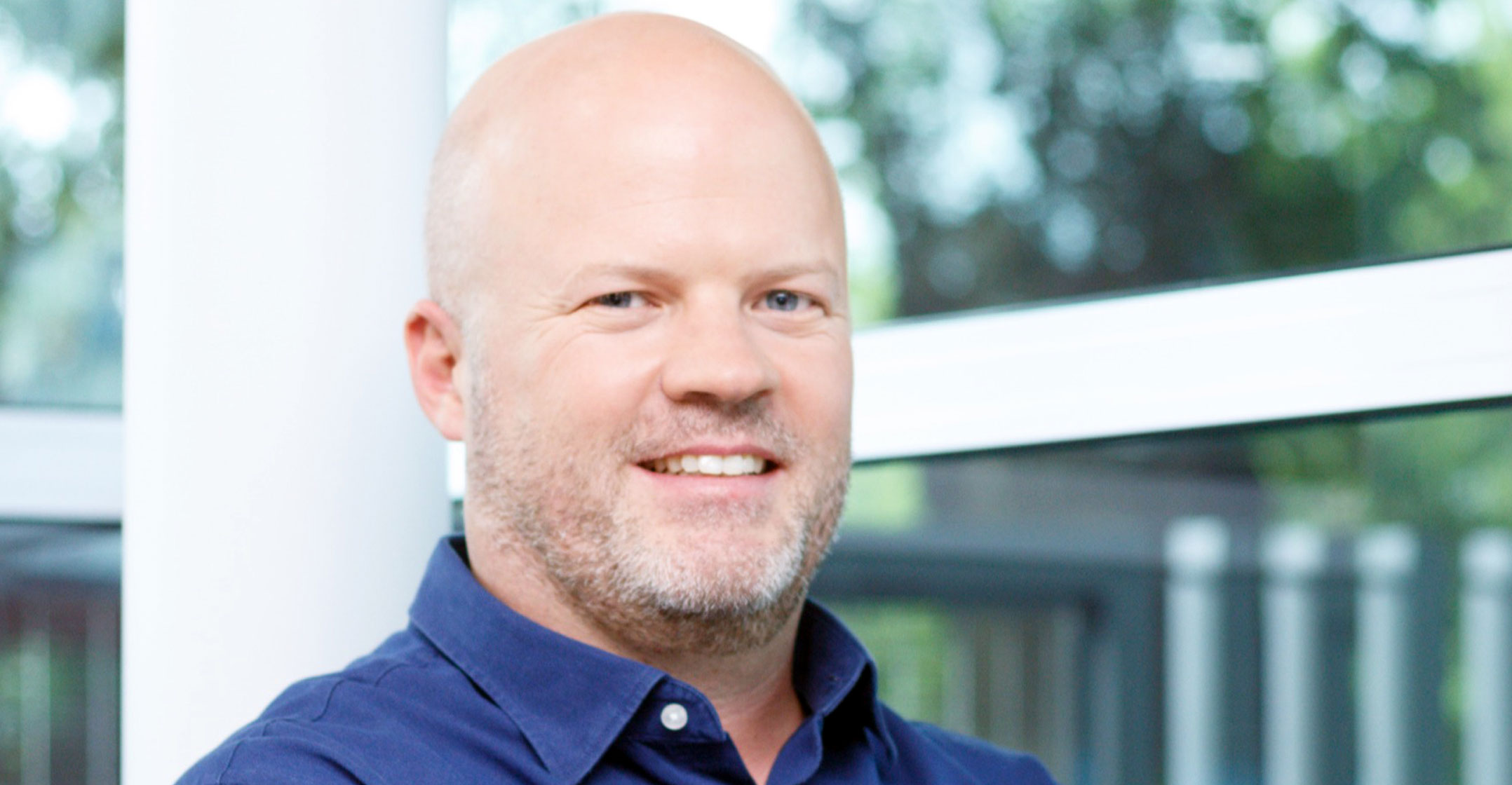
    The author, Andries Brink, argues that by supporting blockchain technologies, the Reserve Bank is saying it supports self-regulation by consensus

    It’s impossible to regulate comprehensively to avoid utmost greed, such as at African Bank, and graft as we saw at VBS. There is also no proof that nationalised banks are any more effective at preventing such extreme abuses. The Reserve Bank is actually very effective. Consider how decisively it acted with African Bank, managing to turn it around in just two years. There are banks in developed countries that still haven’t quite recovered from the 2009 crisis. We really undervalue the effectiveness and stability we get from the Reserve Bank.

    By supporting blockchain technologies, the Bank is saying it supports self-regulation by consensus, based on transparent contracts as a hi-tech addition to normal bank regulation. It’s demonstrating it is willing and able to move with the times while remaining solid in the execution of core responsibilities.

    A state-run Reserve Bank will result in the opposite: Venezuela

    Technology is creating positive change. In the wake of the Tier II crisis, new challenger banks used technology to fill the vacuum and upset incumbents. Those challengers became Capitec and Discovery and now include Bidvest and Sasfin. They were able to take risks in good faith, knowing that the right policies and support were in place.

    Such support doesn’t materialise out of thin air. They require an institution of vision and drive to back them, as the Bank is doing. Blockchain is just one example: the world is changing fast through numerous digital technologies and the countries that can’t adapt will become the paupers of the 21st century. A technologically progressive and visionary Reserve Bank holds the keys to South Africa’s future.

    This is not possible if the Bank isn’t independent of politics.

    South Africa to remain self-regulated and properly regulated by independent and excellent institutions such as the Bank is an economic imperative. Those uncomfortable about all the tax-funded bailouts of rogue banks should support an independent Bank because it stands for innovation, trust and value. A state-run Reserve Bank will result in the opposite: Venezuela.

    • Andries Brink is CEO of Andile Solutions

    Follow TechCentral on Google News Add TechCentral as your preferred source on Google


    Andries Brink Reserve Bank
    WhatsApp YouTube
    Share. Facebook Twitter LinkedIn WhatsApp Telegram Email Copy Link
    Previous ArticleNigerian authorities have overreached: MTN
    Next Article Anger as EU votes in favour of new online copyright rules

    Related Posts

    The conflict of interest at the heart of PayShap's slow adoption - Cheslyn Jacobs

    The conflict of interest at the heart of PayShap’s slow adoption

    26 March 2026
    War kills rate cut hopes as Reserve Bank warns of inflation spike - Lesetja Kganyago

    War kills rate cut hopes as Reserve Bank warns of inflation spike

    26 March 2026
    Perfect storm for South African tech buyers

    Perfect storm for South African tech buyers

    23 March 2026
    Company News
    How consumers can identify a true QLED TV

    How consumers can identify a true QLED TV

    30 March 2026
    Kaspersky, Afripol team up to combat African cybercrime

    Kaspersky, Afripol team up to combat African cybercrime

    30 March 2026
    Modernise infrastructure with next-gen compute using HPE VM Essentials - Riaan Swart Tarsus Distribution

    Modernise infrastructure with next-gen compute using HPE VM Essentials

    30 March 2026
    Opinion
    The conflict of interest at the heart of PayShap's slow adoption - Cheslyn Jacobs

    The conflict of interest at the heart of PayShap’s slow adoption

    26 March 2026
    South Africa's energy future hinges on getting wheeling right - Aishah Gire

    South Africa’s energy future hinges on getting wheeling right

    10 March 2026
    Hold the doom: the case for a South African comeback - Duncan McLeod

    Apple just dropped a bomb on the Windows world

    5 March 2026

    Subscribe to Updates

    Get the best South African technology news and analysis delivered to your e-mail inbox every morning.

    Latest Posts
    SA finally has a broadband map - and it reveals where the gaps are

    SA finally has a broadband map – and it reveals where the gaps are

    31 March 2026
    Bookmakers want banks to cut off offshore online gambling sites

    Bookmakers want banks to cut off offshore online gambling sites

    31 March 2026
    Government steps in as fuel shock hits

    Government steps in as fuel shock hits

    31 March 2026
    Uber commits R5-billion to South Africa amid licensing woes - Deepesh Thomas

    Uber commits R5-billion to South Africa amid licensing woes

    31 March 2026
    © 2009 - 2026 NewsCentral Media
    • Cookie policy (ZA)
    • TechCentral – privacy and Popia

    Type above and press Enter to search. Press Esc to cancel.

    Manage consent

    TechCentral uses cookies to enhance its offerings. Consenting to these technologies allows us to serve you better. Not consenting or withdrawing consent may adversely affect certain features and functions of the website.

    Functional Always active
    The technical storage or access is strictly necessary for the legitimate purpose of enabling the use of a specific service explicitly requested by the subscriber or user, or for the sole purpose of carrying out the transmission of a communication over an electronic communications network.
    Preferences
    The technical storage or access is necessary for the legitimate purpose of storing preferences that are not requested by the subscriber or user.
    Statistics
    The technical storage or access that is used exclusively for statistical purposes. The technical storage or access that is used exclusively for anonymous statistical purposes. Without a subpoena, voluntary compliance on the part of your Internet Service Provider, or additional records from a third party, information stored or retrieved for this purpose alone cannot usually be used to identify you.
    Marketing
    The technical storage or access is required to create user profiles to send advertising, or to track the user on a website or across several websites for similar marketing purposes.
    • Manage options
    • Manage services
    • Manage {vendor_count} vendors
    • Read more about these purposes
    View preferences
    • {title}
    • {title}
    • {title}