
Samsung has taken the wraps off its latest Galaxy foldable smartphones as competition in the category intensifies, with Apple widely expected to enter the market in September.
Samsung has dominated the foldable smartphone market since introducing the first Galaxy Fold, giving the company years of experience refining the category before rivals, including Apple, arrive with competing products. Reports suggest Apple’s first foldable iPhone will adopt a wider, book-style design rather than Samsung’s taller format.
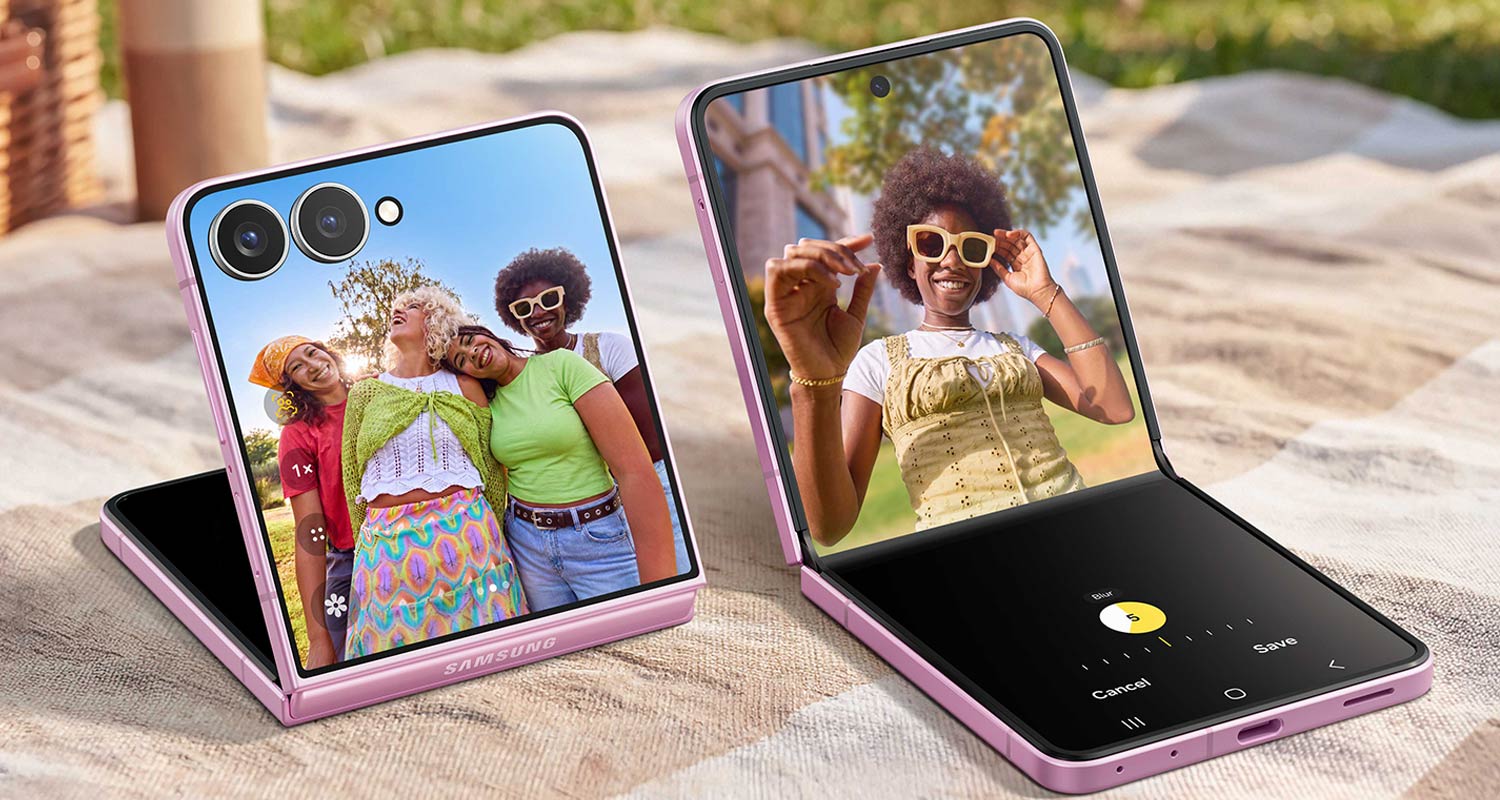
Samsung unveiled three new devices on 22 July: the Galaxy Z Fold8 Ultra (a continuation of the current form factor of the Fold series), the Galaxy Z Fold8 (a new, shorter, book-style form factor) and the Galaxy Z Flip8, alongside a new Galaxy Watch Ultra and the Galaxy Watch9.
The flagship Z Fold8 Ultra opens to an 8-inch main display with a 6.5-inch cover screen, measuring 4.1mm thick unfolded (8.9mm closed) and weighing 215g. It is powered by Qualcomm’s Snapdragon 8 Elite Gen 5 chip with up to 16GB of RAM and 1TB of storage, and carries a 200-megapixel main camera alongside 50-megapixel ultra-wide and 10-megapixel 3x telephoto lenses. A 5 000mAh dual battery charges to 67% in about half an hour with a 45W adapter (sold separately), and the device ships with Android 17 and One UI 9, Wi-Fi 7 support and IP48 water resistance.
The Fold8 is the more interested product at this year’s launch, with a shorter design style that is rumoured to be similar to the folding iPhone Apple is expected to announce in September.
‘More mainstream’
Asked directly whether the resemblance between Samsung’s book-style fold and Apple’s rumoured design was coincidental, Justin Hume, vice president of mobile experience at Samsung South Africa, pointed out that Apple’s foldable has not been released and remains “rumoured”.
Zahir Cajee, mobile experience leader for product and commercial at Samsung South Africa, said the Fold8 Ultra’s design is not in response to a competitor, and that the company views the book-style foldable format as becoming “more mainstream”. Samsung Display is an established supplier of OLED panels to Apple for its iPhones. Asked about the overlap, Cajee did not confirm whether that relationship extends to foldable displays.
Samsung said hinge durability has been improved through a new magnet-based hinge mechanism and 22 layers of titanium, including titanium integrated into the display layer itself, which the company said reduces the visibility of the crease without eliminating it entirely.
Hume predicted that surging memory costs would push device prices up by around 30% across the industry soon, citing Apple’s recent price increases for its MacBook notebook computers and iPads.
Cajee said 97-98% of high-end devices are bought on contract in South Africa, with device financing schemes helping to widen access to the category.
He said Samsung’s Knox platform underpins device-financing arrangements by allowing partner financiers and networks to lock a device remotely if repayments are missed, which he said has helped lower the risk profile for lenders extending credit on higher-priced devices.
Read: Samsung sees no respite as memory shortage set to worsen
Still, launch pricing for the new phones, which clearly shows the upward trend in pricing due to the memory chip shortage, is as follows:
- Galaxy Z Fold8 Ultra 1TB: R60 999
- Galaxy Z Fold8 Ultra 512GB: R50 999
- Galaxy Z Fold8 512GB: R45 999
- Galaxy Z Fold8 256GB: R40 999
- Galaxy Z Flip8 256GB: R26 999
On the sales mix, Cajee said the foldable form factor is expected to account for roughly 70-75% of combined fold-and-flip sales in South Africa, with the Z Fold8 Ultra expected to make up 60-65% of fold sales specifically. — (c) 2026 NewsCentral Media
- Subscribe to TechCentral’s daily newsletter
- Get breaking news alerts on WhatsApp