Close Menu
TechCentralTechCentral

    Subscribe to the newsletter

    Get the best South African technology news and analysis delivered to your e-mail inbox every morning.

    Facebook X (Twitter) YouTube LinkedIn
    WhatsApp Facebook X (Twitter) LinkedIn YouTube
    TechCentralTechCentral
    • News
      The case for unbundling SuperSport

      The case for unbundling SuperSport

      14 April 2026
      ACT abandons home affairs identity fees lawsuit - Nomvuyiso Batyi

      ACT abandons home affairs identity fees lawsuit

      14 April 2026
      AI literacy goes mainstream in South Africa's jobs market

      AI literacy goes mainstream in South Africa’s jobs market

      14 April 2026
      Anthropic tightens the screws on OpenAI

      Anthropic tightens the screws on OpenAI

      14 April 2026
      Telkom launches prepaid fibre for businesses

      Telkom launches prepaid fibre for businesses

      14 April 2026
    • World
      Google poised to lose ad crown to Meta

      Google poised to lose ad crown to Meta

      14 April 2026
      Grand Theft Data - hackers hit Rockstar Games - Grand Theft Auto

      Grand Theft Data – hackers hit Rockstar Games

      14 April 2026
      UK PM Keir Starmer declares war on doomscrolling

      UK PM Keir Starmer declares war on doomscrolling

      13 April 2026
      Big Tech is going nuclear

      Big Tech is going nuclear

      10 April 2026
      Software rout deepens as AI fears grip investors

      Software rout deepens as AI fears grip investors

      10 April 2026
    • In-depth
      Africa switches on as Europe dims the lights

      Africa switches on as Europe dims the lights

      9 April 2026
      The biggest untapped EV market on Earth is hiding in plain sight

      The biggest untapped EV market on Earth is hiding in plain sight

      1 April 2026
      The R18-billion tech giant hiding in plain sight - Jens Montanana

      The R16-billion tech giant hiding in plain sight

      26 March 2026
      The last generation of coders

      The last generation of coders

      18 February 2026
      Sentech is in dire straits

      Sentech is in dire straits

      10 February 2026
    • TCS
      TCS+ | Vodacom Business moves to crack the SME tech gap - Andrew Fulton, Sannesh Beharie

      TCS+ | Vodacom Business moves to crack the SME tech gap

      7 April 2026
      TCS | MTN's Divysh Joshi on the strategy behind Pi - Divyesh Joshi

      TCS | MTN’s Divyesh Joshi on the strategy behind Pi

      1 April 2026
      Anoosh Rooplal

      TCS | Anoosh Rooplal on the Post Office’s last stand

      27 March 2026
      Meet the CIO | HealthBridge CTO Anton Fatti on the future of digital health

      Meet the CIO | Healthbridge CTO Anton Fatti on the future of digital health

      23 March 2026
      TCS+ | Arctic Wolf unpacks the evolving threat landscape for SA businesses - Clare Loveridge and Jason Oehley

      TCS+ | Arctic Wolf unpacks the evolving threat landscape for SA businesses

      19 March 2026
    • Opinion
      The conflict of interest at the heart of PayShap's slow adoption - Cheslyn Jacobs

      The conflict of interest at the heart of PayShap’s slow adoption

      26 March 2026
      South Africa's energy future hinges on getting wheeling right - Aishah Gire

      South Africa’s energy future hinges on getting wheeling right

      10 March 2026
      Hold the doom: the case for a South African comeback - Duncan McLeod

      Apple just dropped a bomb on the Windows world

      5 March 2026
      R230-million in the bag for Endeavor's third Harvest Fund - Alison Collier

      VC’s centre of gravity is shifting – and South Africa is in the frame

      3 March 2026
      Hold the doom: the case for a South African comeback - Duncan McLeod

      Hold the doom: the case for a South African comeback

      26 February 2026
    • Company Hubs
      • 1Stream
      • Africa Data Centres
      • AfriGIS
      • Altron Digital Business
      • Altron Document Solutions
      • Altron Group
      • Arctic Wolf
      • Ascent Technology
      • AvertITD
      • BBD
      • Braintree
      • CallMiner
      • CambriLearn
      • CYBER1 Solutions
      • Digicloud Africa
      • Digimune
      • Domains.co.za
      • ESET
      • Euphoria Telecom
      • HOSTAFRICA
      • Incredible Business
      • iONLINE
      • IQbusiness
      • Iris Network Systems
      • Kaspersky
      • LSD Open
      • Mitel
      • NEC XON
      • Netstar
      • Network Platforms
      • Next DLP
      • Ovations
      • Paracon
      • Paratus
      • Q-KON
      • SevenC
      • SkyWire
      • Solid8 Technologies
      • Telit Cinterion
      • Telviva
      • Tenable
      • Vertiv
      • Videri Digital
      • Vodacom Business
      • Wipro
      • Workday
      • XLink
    • Sections
      • AI and machine learning
      • Banking
      • Broadcasting and Media
      • Cloud services
      • Contact centres and CX
      • Cryptocurrencies
      • Education and skills
      • Electronics and hardware
      • Energy and sustainability
      • Enterprise software
      • Financial services
      • HealthTech
      • Information security
      • Internet and connectivity
      • Internet of Things
      • Investment
      • IT services
      • Lifestyle
      • Motoring
      • Policy and regulation
      • Public sector
      • Retail and e-commerce
      • Satellite communications
      • Science
      • SMEs and start-ups
      • Social media
      • Talent and leadership
      • Telecoms
    • Events
    • Advertise
    TechCentralTechCentral
    Home » Opinion » Alistair Fairweather » Smart watches not as dumb as they sound

    Smart watches not as dumb as they sound

    By Alistair Fairweather2 September 2013
    Twitter LinkedIn Facebook WhatsApp Email Telegram Copy Link
    News Alerts
    WhatsApp

    Alistair-Fairweather-180-profileA slew of surveys have shown that many young people do not bother with wristwatches, using their cellphones to keep time instead. When Mintel, an industry analyst, surveyed Britons in 2010, it found 28% of 15 to 24-year-olds had no use for a wristwatch.

    Another survey, by YouGov, found that almost 60% of 16- to 34-year-olds use a cellphone as their primary timepiece. But this conventional wisdom seems to be contradicted by the performance of the global timepiece industry. After a predictable dip during the recession, both revenues and profits are growing strongly. Analysts predict it will grow from US$30bn in sales in 2013 to around $46bn by 2017.

    Yet these aggregate figures conceal a fascinating trend: most of this growth is coming from luxury mechanical watches. Brands like Rolex, Omega and Breitling are flourishing. The average amount paid for these timepieces is now at $2 500 — a level last seen before the recession hit.

    The fastest growing market for these pricey watches? China. This spending spree reflects the changing attitude to wristwatches. Many of the people buying them are affluent professionals in their mid to late thirties — many of whom abandoned the wristwatch decades ago.

    In a digital world, these intricate mechanical devices have become interesting and cool again. They are now primarily status symbols, not timepieces. So where do smart watches fit into this already competitive market? They lack the fashion appeal of luxury mechanical watches, and they will be far more expensive than cheap digital watches. Why would anyone bother?

    That question has already been answered, conclusively, by the Pebble watch. This nifty little device has an e-paper screen (similar to Amazon’s Kindle) that makes it readable in bright sunlight and also uses very little power. But what makes it special is that it interfaces with both iPhones and Android devices via Bluetooth.

    Ever missed a vital SMS or meeting reminder because your phone was in your bag or pocket? With the Pebble, those reminders appear right on your wrist, where they’re much harder to miss. Why take your phone out of your pocket to see who’s calling you? Just look down at your Pebble.

    You can also track a run or bike ride (the Pebble has a built in accelerometer that acts as a pedometer) and control the music playing on your phone without taking it out of your pocket. It’s also water resistant enough to withstand a swim or a shower.

    The team behind Pebble raised their starting capital in an interesting way. They used Kickstarter, a crowd funding service that allows ordinary people to invest small amounts of money in worthy or interesting projects. The appeal of the Pebble was so strong that it raised over $10m — 100 times its original target.

    The development teams at Apple and Samsung have no doubt been watching Pebble’s success with great interest. Given their enormous marketing and engineering clout, it’s likely that they will succeed in taking smart watch technology to the next level and push them into the mainstream.

    One area in which Apple will have an advantage is voice recognition. A smart watch capable of relaying spoken commands to your phone would be incredibly useful. Apple’s current voice recognition technology, Siri, is not good enough to make it a default choice.

    But an iWatch might be just the occasion to raise Siri’s game. Smartwatches, if they do succeed, will add a whole new dimension to the already booming mobile computing market. We think of smartphones as omnipresent in our lives, but they spend large stretches of time in pockets and bags.

    A smart watch will be the first truly wearable computer that most people encounter. When you wear something on your body it becomes part of your life in a way that a phone — however smart — simply cannot be. Smart watches will be able to track your pulse and warn you when you’re stressed, to wake you up in the morning by vibrating on your wrist, to tell you how many calories you’ve burnt in a day and how many glasses of water you’ve drunk.

    Sounds like science fiction, right?

    Except all of the functions described above are already available in the burgeoning market for wearable fitness devices. Brands like FitBit and Nike’s FuelBand are already helping millions of people to track their daily physical activity and diet.
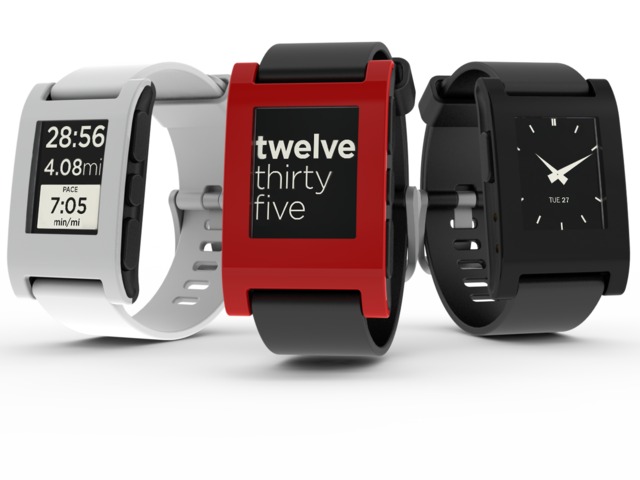
    The Pebble smartwatch
    The Pebble smart watch

    Google is currently exploring another avenue for wearable computing with its Glass device. In the same way that smart watches resemble traditional wristwatches, Google Glass piggybacks on a tried and tested form factor: eyeglasses.

    Why look down at a watch when you can simply look straight ahead at the tiny screen projected in front of you? And these devices are only the warning shots of a revolution that will transform computing. Wearability will be as important a trend as cellphones or personal computers. I predict that within 20 years the wearable computing market will be as big as the cellphone market is today.

    But while our shirts may eventually have 4G connectivity and our shoes be GPS enabled, plenty of people will still have a soft spot for the good old mechanical wristwatch.  — (c) 2013 Mail & Guardian

    • Alistair Fairweather is Mail & Guardian chief technology officer
    • Visit the Mail & Guardian Online, the smart news source

    Follow TechCentral on Google News Add TechCentral as your preferred source on Google


    Alistair Fairweather Apple Fitbit FuelBand Kickstarter Nike Nike FuelBand Pebble Samsung Samsung Electronics
    WhatsApp YouTube
    Share. Facebook Twitter LinkedIn WhatsApp Telegram Email Copy Link
    Previous ArticleSpectrum policy by March: Carrim
    Next Article Telkom to cut wholesale broadband fees

    Related Posts

    Microsoft is sacrificing Edge on the altar of Copilot

    Microsoft is sacrificing Edge on the altar of Copilot

    10 April 2026
    Why Apple is sitting pretty - AI hype be damned

    Why Apple is sitting pretty – AI hype be damned

    8 April 2026
    Amazon in talks to buy satellite operator Globalstar

    Amazon in talks to buy satellite operator Globalstar

    2 April 2026
    Company News
    The hidden risk in South Africa's payment infrastructure - AfriGIS

    The hidden risk in South Africa’s payment infrastructure

    14 April 2026
    Metacom - the backbone of a billion meals - Hungry Lion

    Metacom – the backbone of a billion meals

    14 April 2026
    Vox bets on hybrid connectivity

    Vox bets on hybrid connectivity

    14 April 2026
    Opinion
    The conflict of interest at the heart of PayShap's slow adoption - Cheslyn Jacobs

    The conflict of interest at the heart of PayShap’s slow adoption

    26 March 2026
    South Africa's energy future hinges on getting wheeling right - Aishah Gire

    South Africa’s energy future hinges on getting wheeling right

    10 March 2026
    Hold the doom: the case for a South African comeback - Duncan McLeod

    Apple just dropped a bomb on the Windows world

    5 March 2026

    Subscribe to Updates

    Get the best South African technology news and analysis delivered to your e-mail inbox every morning.

    Latest Posts
    The case for unbundling SuperSport

    The case for unbundling SuperSport

    14 April 2026
    ACT abandons home affairs identity fees lawsuit - Nomvuyiso Batyi

    ACT abandons home affairs identity fees lawsuit

    14 April 2026
    AI literacy goes mainstream in South Africa's jobs market

    AI literacy goes mainstream in South Africa’s jobs market

    14 April 2026
    The hidden risk in South Africa's payment infrastructure - AfriGIS

    The hidden risk in South Africa’s payment infrastructure

    14 April 2026
    © 2009 - 2026 NewsCentral Media
    • Cookie policy (ZA)
    • TechCentral – privacy and Popia

    Type above and press Enter to search. Press Esc to cancel.

    Manage consent

    TechCentral uses cookies to enhance its offerings. Consenting to these technologies allows us to serve you better. Not consenting or withdrawing consent may adversely affect certain features and functions of the website.

    Functional Always active
    The technical storage or access is strictly necessary for the legitimate purpose of enabling the use of a specific service explicitly requested by the subscriber or user, or for the sole purpose of carrying out the transmission of a communication over an electronic communications network.
    Preferences
    The technical storage or access is necessary for the legitimate purpose of storing preferences that are not requested by the subscriber or user.
    Statistics
    The technical storage or access that is used exclusively for statistical purposes. The technical storage or access that is used exclusively for anonymous statistical purposes. Without a subpoena, voluntary compliance on the part of your Internet Service Provider, or additional records from a third party, information stored or retrieved for this purpose alone cannot usually be used to identify you.
    Marketing
    The technical storage or access is required to create user profiles to send advertising, or to track the user on a website or across several websites for similar marketing purposes.
    • Manage options
    • Manage services
    • Manage {vendor_count} vendors
    • Read more about these purposes
    View preferences
    • {title}
    • {title}
    • {title}