
Close Menu
TechCentralTechCentral

    Subscribe to the newsletter

    Get the best South African technology news and analysis delivered to your e-mail inbox every morning.

    Facebook X (Twitter) YouTube LinkedIn
    WhatsApp Facebook X (Twitter) LinkedIn YouTube
    TechCentralTechCentral
    • News
      Anthropic eyes $200-billion in revenue by 2028

      Anthropic eyes $200-billion in revenue by 2028

      15 August 2026
      Workday

      Silver Lake said to be in talks to buy Workday

      15 August 2026
      Icasa retracts collusion claim against mobile operators

      Icasa retracts collusion claim against mobile operators

      14 August 2026
      South Africa's next broadband war may be won by a bank - Capitec

      South Africa’s next broadband war may be won by a bank

      14 August 2026
      Bank robberies, ATM bombings collapse as criminals go digital

      Bank robberies, ATM bombings collapse as criminals go digital

      14 August 2026
    • World
      Russia building its own Starlink - and faster than expected - Vadym Skibitskyi

      Russia building its own Starlink – and faster than expected

      11 August 2026
      Meta AI will now tell parents if their teen is in crisis

      Meta AI will now tell parents if their teen is in crisis

      17 July 2026
      IBM shares crash 25% as AI upends software spending - Arvind Krishna

      IBM shares crash 25% as AI upends software spending

      15 July 2026
      Jony Ive's first OpenAI device: an AI smart speaker - Jony Ive and Sam Altman

      Jony Ive’s first OpenAI device: an AI smart speaker

      15 July 2026
      Stripe, Advent in talks to buy PayPal for $53-billion

      Stripe, Advent in talks to buy PayPal for $53-billion

      15 July 2026
    • In-depth
      Google DeepMind CEO Demis Hassabis. Image: John Sears

      The plan to stop AI from breaking the world

      16 July 2026
      The internet has a Strait of Hormuz problem

      The internet has a Strait of Hormuz problem

      15 July 2026
      AI boom sparks rally, frenzy and fear

      AI boom sparks rally, frenzy and fear

      11 June 2026
      Every plug-in hybrid on sale in South Africa, ranked by price - Lamborghini Temerario

      Every plug-in hybrid on sale in South Africa, ranked by price

      7 June 2026
      What Wi-Fi 8 will mean for wireless networks

      What Wi-Fi 8 will mean for wireless networks

      1 June 2026
    • TCS
      Meet the CIO | Discovery's Derek Wilcocks on AI, guardrails and growth

      Meet the CIO | Derek Wilcocks on how AI personalised Vitality

      13 August 2026
      TCS | Money just became native to the internet - Steven Boykey Sidley

      TCS | Money just became native to the internet – Steven Boykey Sidley

      12 August 2026
      TCS+ | Specops' Darren James on continuous trust in an AI world

      TCS+ | Specops’ Darren James on continuous trust in an AI world

      7 August 2026
      TCS+ | How AI is turning hardware into a subscription service - Shane van der Merwe Merchant West

      TCS+ | How AI is turning hardware into a subscription service

      6 August 2026
      TCS+ | Why South African workers must become supervisors of digital labour - Accelera Digital Group Cliff de Wit

      TCS+ | Why South African workers must become supervisors of digital labour

      31 July 2026
    • Opinion
      The author, Jannie van Zyl

      Selling vapour is corporate suicide in slow motion

      16 July 2026
      Brazil's online gambling crackdown is a lesson for South Africa

      How Amazon outmanoeuvred Starlink in South Africa

      15 July 2026
      The Popia problem with agentic AI - Herman Haasbroek

      The Popia problem with agentic AI

      14 July 2026
      The author, Fanie van Rooyen

      South Africa can still catch the AI wave – here’s how

      7 July 2026
      The author, Fanie van Rooyen

      The AI utopia South Africa can’t afford

      1 July 2026
    • Company Hubs
      • 1Stream
      • Africa Data Centres
      • AfriGIS
      • Altron Digital Business
      • Altron Document Solutions
      • Altron Group
      • Arctic Wolf
      • Ascent Technology
      • AvertITD
      • BBD
      • Braintree
      • CallMiner
      • CambriLearn
      • CM Telecom
      • Contactable
      • CYBER1 Solutions
      • Digicloud Africa
      • Digimune
      • Domains.co.za
      • ESET
      • Euphoria Telecom
      • HOSTAFRICA
      • Incredible Business
      • iONLINE
      • IQbusiness
      • Iris Network Systems
      • Kaspersky
      • LSD Open
      • Mitel
      • NEC XON
      • Netstar
      • Network Platforms
      • Next DLP
      • Ovations
      • Paracon
      • Paratus
      • Q-KON
      • SevenC
      • SkyWire
      • Solid8 Technologies
      • Telit Cinterion
      • Telviva
      • Tenable
      • Vertiv
      • Videri Digital
      • Vodacom Business
      • Vox
      • Wipro
      • Workday
      • XLink
    • Sections
      • AI and machine learning
      • Banking
      • Broadcasting and Media
      • Cloud services
      • Contact centres and CX
      • Cryptocurrencies
      • Education and skills
      • Electronics and hardware
      • Energy and sustainability
      • Enterprise software
      • Financial services
      • HealthTech
      • Information security
      • Internet and connectivity
      • Internet of Things
      • Investment
      • IT services
      • Lifestyle
      • Policy and regulation
      • Public sector
      • Retail and e-commerce
      • Satellite communications
      • Science
      • SMEs and start-ups
      • Social media
      • Talent and leadership
      • Telecoms
      • Watts & Wheels
    • Events
    • Advertise
    TechCentralTechCentral
    Home » World » Space junk is our new ‘tragedy of the commons’

    Space junk is our new ‘tragedy of the commons’

    By Agency Staff19 April 2021
    Twitter LinkedIn Facebook WhatsApp Email Telegram Copy Link
    News Alerts
    WhatsApp

    It’s getting crowded up there, and awfully dangerous. By up there, I mean space — and not the far-off areas that concern astronomers and science fiction, but the closer orbits where we humans keep putting our satellites.

    As those objects crash or break down, their flotsam and jetsam creates belts of debris, shooting into other satellites, rockets and space vehicles. Some orbits could eventually become unusable. That would be a disaster, disrupting much of modern life. It could even start a war.

    It’s hardly the first time that we, Homo sapiens, treat a shared resource irresponsibly. What scholars call the “tragedy of the commons” is what results when we ruin something because we all profit from exploiting it and can’t exclude others from doing the same. Classic examples include overgrazing public lands, overfishing the oceans and polluting the atmosphere.

    If space has so far received less attention than our forests, seas or air, it’s because we’ve had less time to junk it up

    If space has so far received less attention than our forests, seas or air, it’s because we’ve had less time to junk it up. But we’re catching up fast. We’ve launched thousands of satellites into space and keep adding more — one private company, SpaceX, has put up more than a thousand just in the past year.

    These objects collide, malfunction and misbehave in other ways. As a result, about 28 000 fragments of junk are zipping around up there, and that count includes only the shrapnel we can track. Statistical models suggests that almost a million objects the size of hand grenades are orbiting the Earth, and many, many millions of things the size of bullets. Owing to their astronomical speeds, even those small pellets can take out an astronaut, a satellite or even the International Space Station.

    Armadas

    Besides wreaking physical damage, these armadas of satellites and their associated junk create other problems. Their electromagnetic radiation increasingly causes radio frequency interference. The debris also scatters light, so that scientists with their telescopes can no longer peer through these clouds of man-made dust and into deep space.

    Even more ominously, space is nowadays also the fifth domain of warfare — alongside land, sea, air and cyberspace. The US, Russia and China in particular, but also other ambitious powers from India to France, are arming themselves to take out each other’s satellites offensively, preemptively or defensively. The new weaponry includes everything from physical missiles to lasers, electronic jamming and cyberattacks.

    The problem is that it’ll become increasingly harder for adversaries to tell why their own satellites suddenly went down or fell silent. It could be ordinary “space weather”, the naturally occurring storms of charged solar particles. It could be a collision with debris. Or it could be hostile action. The uncertainty could lead to mistaken retaliations and war.
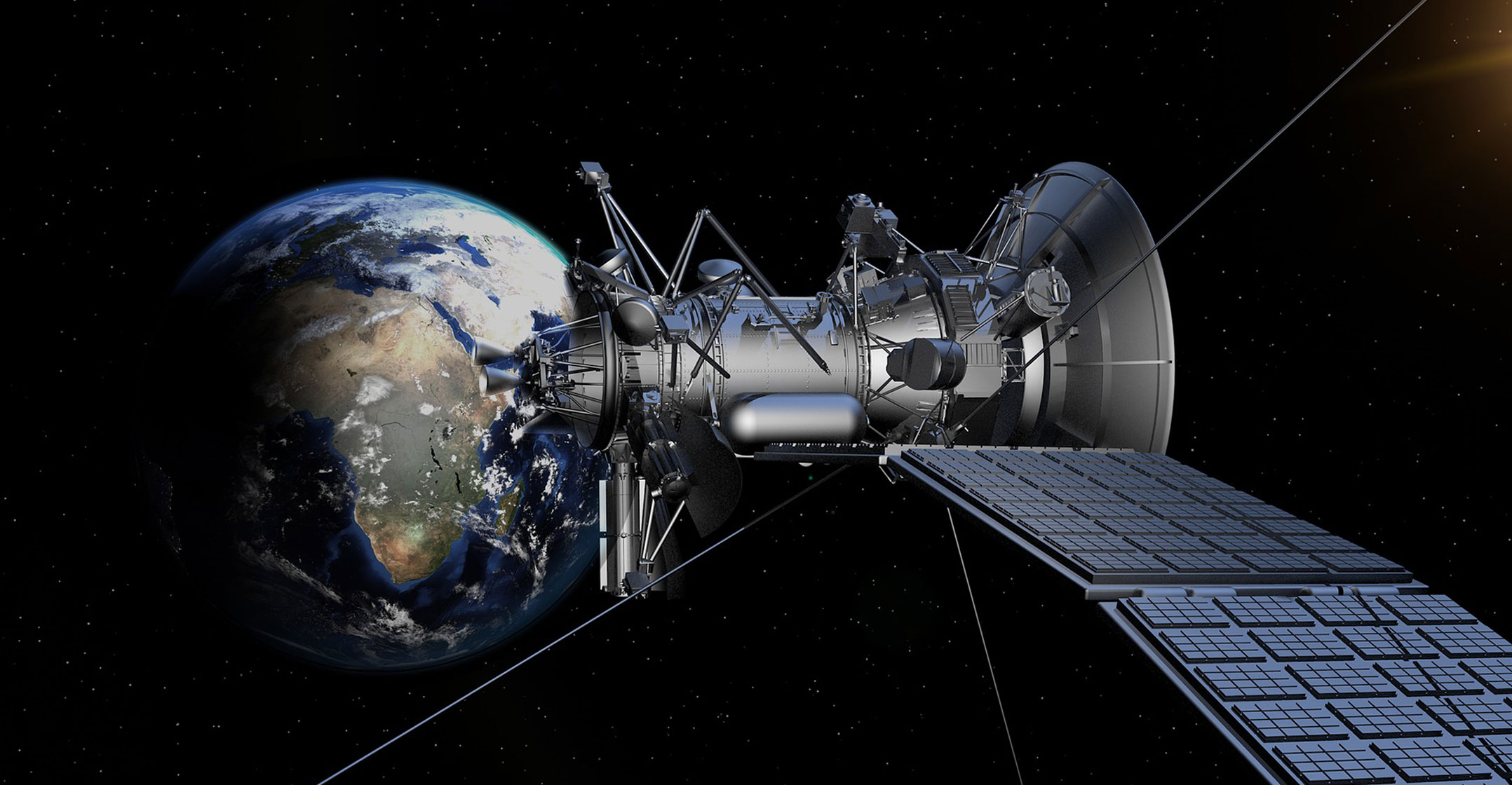
    If any of these bad scenarios ever takes place, modernity as we know it would be put on pause. Satellite technology is nowadays baked into almost all our other information systems, not only the GPS navigation in our phones and cars but also our Internet connections, telecommunications and more.

    Once we grasp the problem as being a tragedy of the commons, both its daunting scale and its only possible solution become clear. As with overfishing, overgrazing or pollution, the incentives are skewed against cooperation. Why should any nation or firm stop cluttering up space — or even bear the cost and risk of starting to clean it up — if that lets others pull ahead?

    And yet cooperation is the only way forward. That’s why treaties and regimes exist in multilateral forums, above all the United Nations and its agencies, to regulate the oceans and other commons. Even space in theory has its international talking shops, including the UN’s Committee on the Peaceful Uses of Outer Space. But it doesn’t deal with military uses of the orbits, and is largely toothless otherwise.

    This means that the major powers must elevate space governance to the level of other threats to humanity, from climate change to nuclear proliferation. They should publicly label the problem a tragedy of the commons and signal their readiness to begin negotiations, regardless of other conflicts they have with one another. The US is the obvious nation to take the lead. China, Russia and others should reciprocate. Space, like the planet it surrounds, is Earth’s commons. It mustn’t turn into tragedy.  — By Andreas Kluth, (c) 2021 Bloomberg LP

    Follow TechCentral on Google News Add TechCentral as your preferred source on Google


    SpaceX top
    WhatsApp YouTube
    Share. Facebook Twitter LinkedIn WhatsApp Telegram Email Copy Link
    Previous ArticleMTN to list next month in Rwanda
    Next Article Bitcoin slumps 14%

    Related Posts

    Anthropic eyes $200-billion in revenue by 2028

    Anthropic eyes $200-billion in revenue by 2028

    15 August 2026
    TCS | Herotel CEO Van Zyl Botha on beating Starlink to South Africa

    TCS | Herotel CEO Van Zyl Botha on beating Starlink to South Africa

    14 August 2026
    South Africa targets 2030 for its first satellite launch from home soil

    South Africa targets 2030 for its first satellite launch from home soil

    13 August 2026
    Company News
    Kaspersky on how to secure a supply chain you do not control

    Kaspersky on how to secure a supply chain you do not control

    13 August 2026
    Build or buy software? AI is rewriting the answer - BBD Software

    Build or buy software? AI is rewriting the answer

    12 August 2026
    Max zoom meets max speed with the new 5G Huawei Pura 90s series

    Max Zoom meets Max Speed with the 5G Huawei Pura 90s series

    11 August 2026
    Opinion
    The author, Jannie van Zyl

    Selling vapour is corporate suicide in slow motion

    16 July 2026
    Brazil's online gambling crackdown is a lesson for South Africa

    How Amazon outmanoeuvred Starlink in South Africa

    15 July 2026
    The Popia problem with agentic AI - Herman Haasbroek

    The Popia problem with agentic AI

    14 July 2026

    Subscribe to Updates

    Get the best South African technology news and analysis delivered to your e-mail inbox every morning.

    Latest Posts
    Anthropic eyes $200-billion in revenue by 2028

    Anthropic eyes $200-billion in revenue by 2028

    15 August 2026
    Workday

    Silver Lake said to be in talks to buy Workday

    15 August 2026
    Icasa retracts collusion claim against mobile operators

    Icasa retracts collusion claim against mobile operators

    14 August 2026
    South Africa's next broadband war may be won by a bank - Capitec

    South Africa’s next broadband war may be won by a bank

    14 August 2026
    © 2009 - 2026 NewsCentral Media
    Built and maintained by Chronon
    • Cookie policy (ZA)
    • TechCentral – privacy and Popia

    Type above and press Enter to search. Press Esc to cancel.

    Manage consent

    TechCentral uses cookies to enhance its offerings. Consenting to these technologies allows us to serve you better. Not consenting or withdrawing consent may adversely affect certain features and functions of the website.

    Functional Always active
    The technical storage or access is strictly necessary for the legitimate purpose of enabling the use of a specific service explicitly requested by the subscriber or user, or for the sole purpose of carrying out the transmission of a communication over an electronic communications network.
    Preferences
    The technical storage or access is necessary for the legitimate purpose of storing preferences that are not requested by the subscriber or user.
    Statistics
    The technical storage or access that is used exclusively for statistical purposes. The technical storage or access that is used exclusively for anonymous statistical purposes. Without a subpoena, voluntary compliance on the part of your Internet Service Provider, or additional records from a third party, information stored or retrieved for this purpose alone cannot usually be used to identify you.
    Marketing
    The technical storage or access is required to create user profiles to send advertising, or to track the user on a website or across several websites for similar marketing purposes.
    • Manage options
    • Manage services
    • Manage {vendor_count} vendors
    • Read more about these purposes
    View preferences
    • {title}
    • {title}
    • {title}