

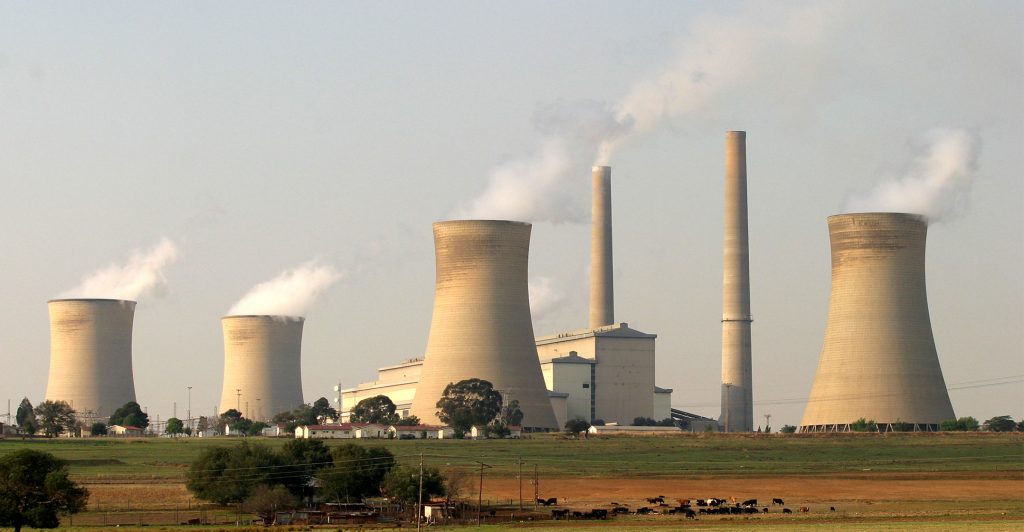
The pressure on Eskom to curb emissions is yet another reason why the utility has become the biggest headache for President Cyril Ramaphosa.
The pressure on Eskom to curb emissions is yet another reason why the utility has become the biggest headache for President Cyril Ramaphosa.
South Africa has laid out a timeline for the restructuring of Eskom and pledged that creditors of the state-owned electricity company won’t suffer losses, according to a fund manager.

A meltdown at some of South Africa’s biggest state companies is intensifying, placing the nation’s finances at risk and frustrating President Cyril Ramaphosa’s efforts to attract new investment and resuscitate a moribund economy.
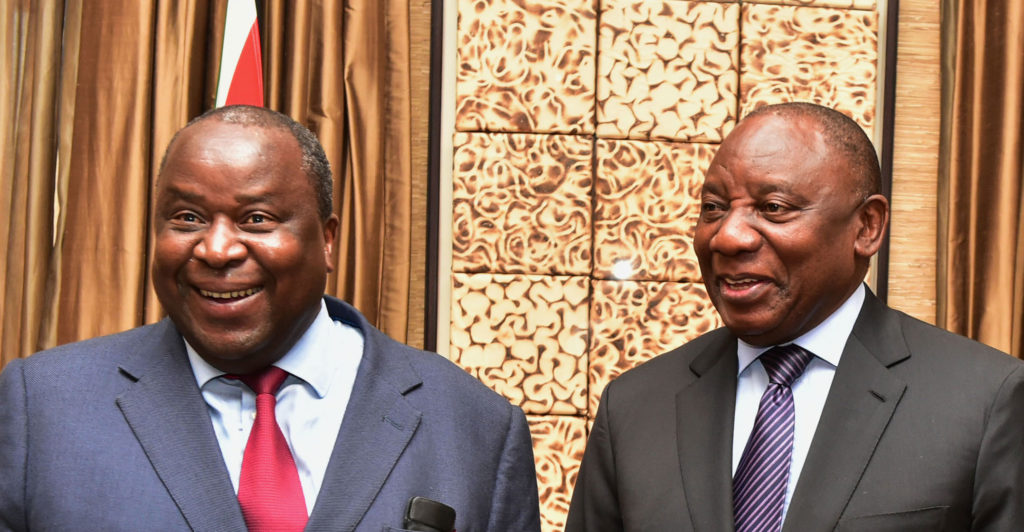
President Cyril Ramaphosa said government will soon give the embattled state power utility “a significant portion” of the R230-billion it needs over the next decade to remain solvent.
South Africa simply has to rescue the nation’s distressed power utility. Even though it can’t afford to.
Government is considering a R3.2-billion guarantee for the country’s cash-strapped national broadcaster to help it raise money from lenders, according to a report.
Eskom, the beleaguered South African power utility, should quit coal-fired generation over the next 20 years and focus instead on transmission and regional grids, according to Greenpeace Africa.
Government is being sued for failing to crack down on some of the world’s worst air pollution emitted by power plants operated by Eskom and refineries owned by Sasol.
South Africa has no option but to increase financial support for Eskom even while pushing for reforms at the stricken state-owned power utility, according to national treasury director-general Dondo Mogajane.
While President Cyril Ramaphosa says power utility Eskom is considered too big to fail, S&P Global Ratings has a different view: it could be too big to support.