Close Menu
TechCentralTechCentral

    Subscribe to the newsletter

    Get the best South African technology news and analysis delivered to your e-mail inbox every morning.

    Facebook X (Twitter) YouTube LinkedIn
    WhatsApp Facebook X (Twitter) LinkedIn YouTube
    TechCentralTechCentral
    • News
      Vuyani Jarana: Mobile coverage masks a deeper broadband failure

      Vuyani Jarana: Mobile coverage masks a deeper broadband failure

      30 January 2026
      SABC Plus to flight Microsoft AI training videos

      SABC Plus to flight Microsoft AI training videos

      30 January 2026
      Fibre ducts

      Fibre industry consolidation in KZN

      30 January 2026
      Watts & Wheels S1E3: 'BYD's Corolla Cross challenger'

      Watts & Wheels S1E3: ‘BYD’s Corolla Cross challenger’

      30 January 2026
      What ordinary South Africans really think of AI

      What ordinary South Africans really think of AI

      30 January 2026
    • World
      Apple acquires audio AI start-up Q.ai

      Apple acquires audio AI start-up Q.ai

      30 January 2026
      SpaceX IPO may be largest in history

      SpaceX IPO may be largest in history

      28 January 2026
      Nvidia throws AI at the weather

      Nvidia throws AI at weather forecasting

      27 January 2026
      Debate erupts over value of in-flight Wi-Fi

      Debate erupts over value of in-flight Wi-Fi

      26 January 2026
      Intel takes another hit - Intel CEO Lip-Bu Tan. Laure Andrillon/Reuters

      Intel takes another hit

      23 January 2026
    • In-depth
      How liberalisation is rewiring South Africa's power sector

      How liberalisation is rewiring South Africa’s power sector

      21 January 2026
      The top-performing South African tech shares of 2025

      The top-performing South African tech shares of 2025

      12 January 2026
      Digital authoritarianism grows as African states normalise internet blackouts

      Digital authoritarianism grows as African states normalise internet blackouts

      19 December 2025
      TechCentral's South African Newsmakers of 2025

      TechCentral’s South African Newsmakers of 2025

      18 December 2025
      Black Friday goes digital in South Africa as online spending surges to record high

      Black Friday goes digital in South Africa as online spending surges to record high

      4 December 2025
    • TCS
      TCS+ | How Cloud On Demand is helping SA businesses succeed in the cloud - Xhenia Rhode, Dion Kalicharan

      TCS+ | Cloud On Demand and Consnet: inside a real-world AWS partner success story

      30 January 2026
      Watts & Wheels S1E3: 'BYD's Corolla Cross challenger'

      Watts & Wheels S1E2: ‘China attacks, BMW digs in, Toyota’s sublime supercar’

      23 January 2026

      TCS+ | Why cybersecurity is becoming a competitive advantage for SA businesses

      20 January 2026
      Watts & Wheels S1E3: 'BYD's Corolla Cross challenger'

      Watts & Wheels: S1E1 – ‘William, Prince of Wheels’

      8 January 2026
      TCS+ | Africa's digital transformation - unlocking AI through cloud and culture - Cliff de Wit Accelera Digital Group

      TCS+ | Cloud without culture won’t deliver AI: Accelera’s Cliff de Wit

      12 December 2025
    • Opinion
      South Africa's skills advantage is being overlooked at home - Richard Firth

      South Africa’s skills advantage is being overlooked at home

      29 January 2026
      Why Elon Musk's Starlink is a 'hard no' for me - Songezo Zibi

      Why Elon Musk’s Starlink is a ‘hard no’ for me

      26 January 2026
      South Africa's new fibre broadband battle - Duncan McLeod

      South Africa’s new fibre broadband battle

      20 January 2026
      AI moves from pilots to production in South African companies - Nazia Pillay SAP

      AI moves from pilots to production in South African companies

      20 January 2026
      South Africa's new fibre broadband battle - Duncan McLeod

      ANC’s attack on Solly Malatsi shows how BEE dogma trumps economic reality

      14 December 2025
    • Company Hubs
      • Africa Data Centres
      • AfriGIS
      • Altron Digital Business
      • Altron Document Solutions
      • Altron Group
      • Arctic Wolf
      • AvertITD
      • Braintree
      • CallMiner
      • CambriLearn
      • CYBER1 Solutions
      • Digicloud Africa
      • Digimune
      • Domains.co.za
      • ESET
      • Euphoria Telecom
      • Incredible Business
      • iONLINE
      • IQbusiness
      • Iris Network Systems
      • LSD Open
      • NEC XON
      • Netstar
      • Network Platforms
      • Next DLP
      • Ovations
      • Paracon
      • Paratus
      • Q-KON
      • SevenC
      • SkyWire
      • Solid8 Technologies
      • Telit Cinterion
      • Tenable
      • Vertiv
      • Videri Digital
      • Vodacom Business
      • Wipro
      • Workday
      • XLink
    • Sections
      • AI and machine learning
      • Banking
      • Broadcasting and Media
      • Cloud services
      • Contact centres and CX
      • Cryptocurrencies
      • Education and skills
      • Electronics and hardware
      • Energy and sustainability
      • Enterprise software
      • Financial services
      • Information security
      • Internet and connectivity
      • Internet of Things
      • Investment
      • IT services
      • Lifestyle
      • Motoring
      • Public sector
      • Retail and e-commerce
      • Satellite communications
      • Science
      • SMEs and start-ups
      • Social media
      • Talent and leadership
      • Telecoms
    • Events
    • Advertise
    TechCentralTechCentral
    Home » Sections » Telecoms » Tech giants’ dreams for Africa wither with Internet shutdowns

    Tech giants’ dreams for Africa wither with Internet shutdowns

    By Agency Staff11 March 2021
    Twitter LinkedIn Facebook WhatsApp Email Telegram Copy Link
    News Alerts
    WhatsApp
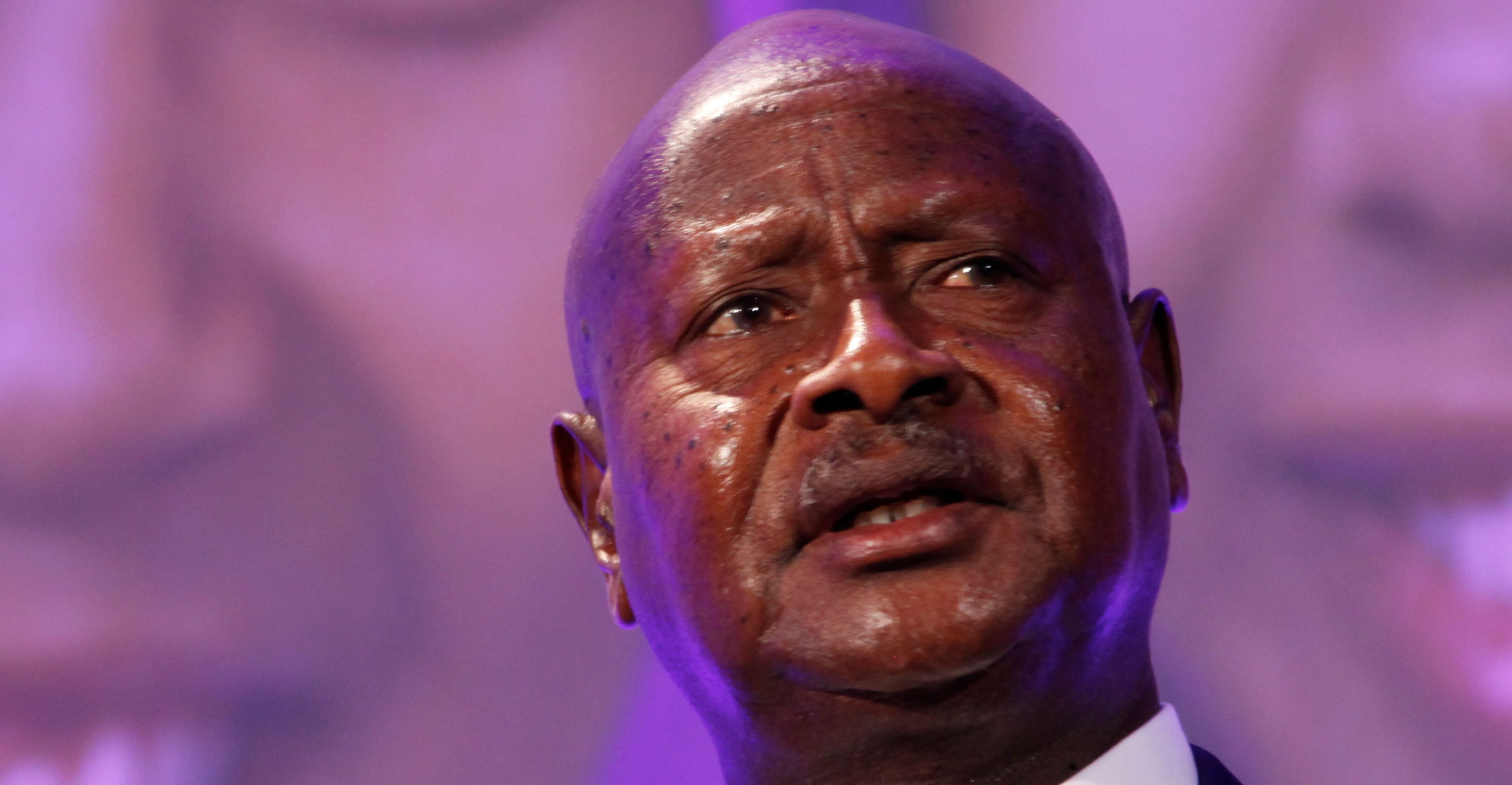
    Unplugged … Uganda’s Yuweri Museveni

    Uganda’s shutdown of social media services in January, right before a disputed election handed President Yoweri Museveni a sixth term, dealt a devastating blow to rice trader Elizabeth Nagunda: Her sales slowed to a near halt.

    “Before I would advertise, market my products on Facebook, WhatsApp, and even get customer orders” via those platforms, she said in an interview in Kampala, the capital. “I can’t run any more adverts online. Even if I do, there are no people to view them.”

    Facebook and Google are spending billions trying to get more people online in Africa, but the Internet giants are now facing a backlash from governments worried about social media platforms being used to remove them from power.

    Governments in sub-Saharan Africa are increasingly ordering Internet service providers to shut their gateways or throttle data traffic

    These platforms, including Twitter, gave opposition politicians access to previously unreachable audiences and have been used to organise protests — most notably during the Arab Spring that toppled leaders from Tunisia to Egypt.

    Now governments in sub-Saharan Africa are increasingly ordering Internet service providers to shut their gateways or throttle data traffic when confronted with dissent or the threat of electoral defeat.

    Facebook, Twitter and other companies have pushed back, condemning the disruptions and blocking accounts they allege are being used to undermine democracy — actions that further raised the authorities’ ire and led to several outright bans on their services. Access Now and the #KeepItOn Coalition, which campaign for an end to Internet shutdowns, documented 20 intentional disruptions in a dozen African nations last year.

    Worst violators

    Ethiopia was among the worst violators of online freedom in 2020, imposing at least four outages in a bid to contain ethnic unrest and restrict the flow of information during a conflict in its northern Tigray region.

    More curbs have been introduced in 2021. The latest was in Senegal, where the government imposed an outage earlier this month after the arrest of an opposition leader triggered the most violent demonstrations in years.

    “Not only do Internet shutdowns interfere with the rights to access information, freedom of expression and other fundamental freedoms, they are used in attempts to hide egregious human rights violations,” Access Now said in a report published on 3 March.

    Tech executives have long preached about offering their services to the estimated three billion people who remain offline, about 700 million of them in Africa. Facebook founder Mark Zuckerberg has argued that connectivity is a basic human right.

    Early endeavours to get more people online seemed more fanciful than serious. Facebook tried to build a gigantic drone to provide high-altitude connectivity but grounded the Aquila project in 2018 after only two test flights, the first of which ended in what was described as a “structural failure”. Google — using a project called Loon — attempted something similar with helium-filled balloons sailing into the stratosphere, scrapping it in 2021 after the unit failed to develop a viable business model.

    Now the tech companies are taking the opposite approach, driven in part by a desire to win over a vast swathe of new users. Facebook and some of the world’s largest telecommunications carriers are spending about R15-billion building a subsea Internet cable that will connect Europe to the Middle East and 16 African countries. Google has announced its own subsea cable connecting Europe to Africa, using a route down the west coast.

    For now, companies have limited scope to counter Internet shutdowns. Social media platforms are also trapped between attempting to be seen to counter misinformation and working with local governments to provide Internet access.

    Telecoms companies say they’ll lose their operating licences if they ignore government orders to halt or restrict Internet access

    Telecoms companies say they’ll lose their operating licences if they ignore government orders to halt or restrict Internet access. Even so, they’ve faced accusations that they are overly accommodating towards repressive regimes and complicit in denying people access to an essential public good.

    “Companies should definitely be taking a tougher stance,” said Nic Cheeseman, a professor of democracy at the University of Birmingham. “If a company wants to depict itself as being about freedom of information — as most telecoms companies do — then they must defend media freedom, even in cases where it might hurt their business interests to do so.”

    ‘Compliant’

    MTN Group, Africa’s largest wireless carrier by sales, responded to queries by referring to a statement published on its website that states: “Our response to digital human rights is underpinned by a sound policy and due-diligence framework. Our approach is consistent with internationally recognised principles, while ensuring that MTN remains compliant with the terms of our various jurisdictional legal obligations and licence conditions.”

    Rival Vodacom Group said it seeks to balance its responsibility to respect its customers’ right to privacy and freedom of expression against its legal obligation to respond to the authorities’ lawful demands, while safeguarding its employees. Airtel Africa and Orange, which also have wireless operations on the continent, declined to comment.

    Shutdowns “are hugely harmful, and undermine the public conversation and the rights of people to make their voices heard”, Twitter said in an e-mailed response. “The long-term result of this could be an Internet that is less open, less free and less empowering for all.”

    “Even temporary disruptions of Internet services have tremendous, negative human rights, economic and social consequences,” Facebook said in a written response to questions.

    It’s questionable whether governments derive any benefit from trying to stop their citizens from communicating: Research published in 2019 by Jan Rydzak, an associate director at Stanford University’s Global Digital Policy Incubator, showed social media curbs tended to fuel rather than reduce violence; and Internet shutdowns in Algeria and Sudan did nothing to quell protests — and may in fact have stoked outrage and accelerated their leaders’ downfalls.

    Besides stifling democracy and free speech in the world’s poorest continent, the disruptions have had far-reaching economic consequences, hindering business activity, curbing tax revenue and deterring foreign investment. Top10VPN, a UK-based digital privacy and security research group, estimates that shutdowns cost the sub-Saharan African region an estimated US$237.4-million last year.

    The absence of a vibrant, independent mainstream media in many African nations makes a lack of access to online content all the more problematic

    In Ethiopia, the communications blackout prevented accurate reporting on the conflict in Tigray and fettered aid agencies trying to help tens of thousands of displaced people. Phone connections have been restored to major towns and cities, but data services remain suspended.

    The absence of a vibrant, independent mainstream media in many African nations makes a lack of access to online content all the more problematic.

    “News about us and news about the values that we stand for does not feature on local radio or local TV,” Bobi Wine, a Ugandan pop star-turned-politician who alleges that the vote he lost to Museveni was rigged, said in an interview with Johannesburg radio station 702. “Social media is our only platform to express ourselves and communicate the raw reality of what is happening in Uganda.”  — Reported by Loni Prinsloo and Michael Cohen, (c) 2021 Bloomberg LP



    Airtel Africa Facebook Google Loon MTN Orange Project Loon top Twitter Vodacom Yuweri Museveni
    WhatsApp YouTube Follow on Google News Add as preferred source on Google
    Share. Facebook Twitter LinkedIn WhatsApp Telegram Email Copy Link
    Previous ArticleDrama at UK’s BT Group as South African chairman Du Plessis quits
    Next Article Huge Group sets out just why it’s pursuing Adapt IT

    Related Posts

    What ordinary South Africans really think of AI

    What ordinary South Africans really think of AI

    30 January 2026
    Meta, TikTok, YouTube to stand trial on youth addiction claims

    Meta, TikTok, YouTube to stand trial on youth addiction claims

    27 January 2026
    WhatsApp boosts defences for high-risk users

    WhatsApp boosts defences for high-risk users

    27 January 2026
    Company News
    Huawei turns 25 in South Africa, celebrates with major device discounts

    Huawei turns 25 in South Africa, celebrates with major device discounts

    30 January 2026
    Phishing has not disappeared, but it has grown up - KnowBe4

    Phishing has not disappeared, but it has grown up

    30 January 2026
    Smartphone affordability: South Africa's new economic divide - PayJoy

    Smartphone affordability: South Africa’s new economic divide

    29 January 2026
    Opinion
    South Africa's skills advantage is being overlooked at home - Richard Firth

    South Africa’s skills advantage is being overlooked at home

    29 January 2026
    Why Elon Musk's Starlink is a 'hard no' for me - Songezo Zibi

    Why Elon Musk’s Starlink is a ‘hard no’ for me

    26 January 2026
    South Africa's new fibre broadband battle - Duncan McLeod

    South Africa’s new fibre broadband battle

    20 January 2026

    Subscribe to Updates

    Get the best South African technology news and analysis delivered to your e-mail inbox every morning.

    Latest Posts
    Vuyani Jarana: Mobile coverage masks a deeper broadband failure

    Vuyani Jarana: Mobile coverage masks a deeper broadband failure

    30 January 2026
    TCS+ | How Cloud On Demand is helping SA businesses succeed in the cloud - Xhenia Rhode, Dion Kalicharan

    TCS+ | Cloud On Demand and Consnet: inside a real-world AWS partner success story

    30 January 2026
    Huawei turns 25 in South Africa, celebrates with major device discounts

    Huawei turns 25 in South Africa, celebrates with major device discounts

    30 January 2026
    SABC Plus to flight Microsoft AI training videos

    SABC Plus to flight Microsoft AI training videos

    30 January 2026
    © 2009 - 2026 NewsCentral Media
    • Cookie policy (ZA)
    • TechCentral – privacy and Popia

    Type above and press Enter to search. Press Esc to cancel.

    Manage consent

    TechCentral uses cookies to enhance its offerings. Consenting to these technologies allows us to serve you better. Not consenting or withdrawing consent may adversely affect certain features and functions of the website.

    Functional Always active
    The technical storage or access is strictly necessary for the legitimate purpose of enabling the use of a specific service explicitly requested by the subscriber or user, or for the sole purpose of carrying out the transmission of a communication over an electronic communications network.
    Preferences
    The technical storage or access is necessary for the legitimate purpose of storing preferences that are not requested by the subscriber or user.
    Statistics
    The technical storage or access that is used exclusively for statistical purposes. The technical storage or access that is used exclusively for anonymous statistical purposes. Without a subpoena, voluntary compliance on the part of your Internet Service Provider, or additional records from a third party, information stored or retrieved for this purpose alone cannot usually be used to identify you.
    Marketing
    The technical storage or access is required to create user profiles to send advertising, or to track the user on a website or across several websites for similar marketing purposes.
    • Manage options
    • Manage services
    • Manage {vendor_count} vendors
    • Read more about these purposes
    View preferences
    • {title}
    • {title}
    • {title}