


Close Menu
TechCentralTechCentral

    Subscribe to the newsletter

    Get the best South African technology news and analysis delivered to your e-mail inbox every morning.

    Facebook X (Twitter) YouTube LinkedIn
    WhatsApp Facebook X (Twitter) LinkedIn YouTube
    TechCentralTechCentral
    • News
      Big Microsoft 365 price increases coming next year

      Big Microsoft price increases coming next year

      5 December 2025
      Vodacom to take control of Safaricom in R36-billion deal - Shameel Joosub

      Vodacom to take control of Safaricom in R36-billion deal

      4 December 2025
      Black Friday goes digital in South Africa as online spending surges to record high

      Black Friday goes digital in South Africa as online spending surges to record high

      4 December 2025
      BYD takes direct aim at Toyota with launch of sub-R500 000 Sealion 5 PHEV

      BYD takes direct aim at Toyota with launch of sub-R500 000 Sealion 5 PHEV

      4 December 2025
      'Get it now': Takealot in new instant deliveries pilot

      ‘Get it now’: Takealot in new instant deliveries pilot

      4 December 2025
    • World
      Amazon and Google launch multi-cloud service for faster connectivity

      Amazon and Google launch multi-cloud service for faster connectivity

      1 December 2025
      Google makes final court plea to stop US breakup

      Google makes final court plea to stop US breakup

      21 November 2025
      Bezos unveils monster rocket: New Glenn 9x4 set to dwarf Saturn V

      Bezos unveils monster rocket: New Glenn 9×4 set to dwarf Saturn V

      21 November 2025
      Tech shares turbocharged by Nvidia's stellar earnings

      Tech shares turbocharged by stellar Nvidia earnings

      20 November 2025
      Config file blamed for Cloudflare meltdown that disrupted the web

      Config file blamed for Cloudflare meltdown that disrupted the web

      19 November 2025
    • In-depth
      Jensen Huang Nvidia

      So, will China really win the AI race?

      14 November 2025
      Valve's Linux console takes aim at Microsoft's gaming empire

      Valve’s Linux console takes aim at Microsoft’s gaming empire

      13 November 2025
      iOCO's extraordinary comeback plan - Rhys Summerton

      iOCO’s extraordinary comeback plan

      28 October 2025
      Why smart glasses keep failing - no, it's not the tech - Mark Zuckerberg

      Why smart glasses keep failing – it’s not the tech

      19 October 2025
      BYD to blanket South Africa with megawatt-scale EV charging network - Stella Li

      BYD to blanket South Africa with megawatt-scale EV charging network

      16 October 2025
    • TCS
      TCS+ | How Cloud on Demand helps partners thrive in the AWS ecosystem - Odwa Ndyaluvane and Xenia Rhode

      TCS+ | How Cloud On Demand helps partners thrive in the AWS ecosystem

      4 December 2025
      TCS | MTN Group CEO Ralph Mupita on competition, AI and the future of mobile

      TCS | Ralph Mupita on competition, AI and the future of mobile

      28 November 2025
      TCS | Dominic Cull on fixing South Africa's ICT policy bottlenecks

      TCS | Dominic Cull on fixing South Africa’s ICT policy bottlenecks

      21 November 2025
      TCS | BMW CEO Peter van Binsbergen on the future of South Africa's automotive industry

      TCS | BMW CEO Peter van Binsbergen on the future of South Africa’s automotive industry

      6 November 2025
      TCS | Why Altron is building an AI factory - Bongani Andy Mabaso

      TCS | Why Altron is building an AI factory in Johannesburg

      28 October 2025
    • Opinion
      Your data, your hardware: the DIY AI revolution is coming - Duncan McLeod

      Your data, your hardware: the DIY AI revolution is coming

      20 November 2025
      Zero Carbon Charge founder Joubert Roux

      The energy revolution South Africa can’t afford to miss

      20 November 2025
      It's time for a new approach to government IT spend in South Africa - Richard Firth

      It’s time for a new approach to government IT spend in South Africa

      19 November 2025
      How South Africa's broken Rica system fuels murder and mayhem - Farhad Khan

      How South Africa’s broken Rica system fuels murder and mayhem

      10 November 2025
      South Africa's AI data centre boom risks overloading a fragile grid - Paul Colmer

      South Africa’s AI data centre boom risks overloading a fragile grid

      30 October 2025
    • Company Hubs
      • Africa Data Centres
      • AfriGIS
      • Altron Digital Business
      • Altron Document Solutions
      • Altron Group
      • Arctic Wolf
      • AvertITD
      • Braintree
      • CallMiner
      • CambriLearn
      • CYBER1 Solutions
      • Digicloud Africa
      • Digimune
      • Domains.co.za
      • ESET
      • Euphoria Telecom
      • Incredible Business
      • iONLINE
      • IQbusiness
      • Iris Network Systems
      • LSD Open
      • NEC XON
      • Netstar
      • Network Platforms
      • Next DLP
      • Ovations
      • Paracon
      • Paratus
      • Q-KON
      • SevenC
      • SkyWire
      • Solid8 Technologies
      • Telit Cinterion
      • Tenable
      • Vertiv
      • Videri Digital
      • Vodacom Business
      • Wipro
      • Workday
      • XLink
    • Sections
      • AI and machine learning
      • Banking
      • Broadcasting and Media
      • Cloud services
      • Contact centres and CX
      • Cryptocurrencies
      • Education and skills
      • Electronics and hardware
      • Energy and sustainability
      • Enterprise software
      • Financial services
      • Information security
      • Internet and connectivity
      • Internet of Things
      • Investment
      • IT services
      • Lifestyle
      • Motoring
      • Public sector
      • Retail and e-commerce
      • Satellite communications
      • Science
      • SMEs and start-ups
      • Social media
      • Talent and leadership
      • Telecoms
    • Events
    • Advertise
    TechCentralTechCentral
    Home » Sections » Telecoms » Tackling telecoms vandalism in South Africa – a call for a unified response

    Tackling telecoms vandalism in South Africa – a call for a unified response

    Promoted | MAST recently hosted a round table to address the urgent issue of crime affecting telecoms infrastructure.
    By MAST8 November 2024
    Twitter LinkedIn Facebook WhatsApp Email Telegram Copy Link
    News Alerts
    WhatsApp

    Tackling telecoms vandalism in South Africa - a call for a unified response - MAST Services AfricaSouth Africa’s telecommunications infrastructure faces mounting threats from theft and vandalism, putting telecoms sites in increasingly vulnerable positions.

    As highlighted in recent security studies and white papers, these crimes disrupt network availability and have a ripple effect across society, hindering economic growth and impacting essential services.

    Both rural and urban areas feel the repercussions, as disruptions to communications networks affect the socioeconomic fabric, creating obstacles for everything from local business operations to emergency services and daily connectivity needs.

    There are increasingly organised crime networks that resemble South Africa’s construction mafia

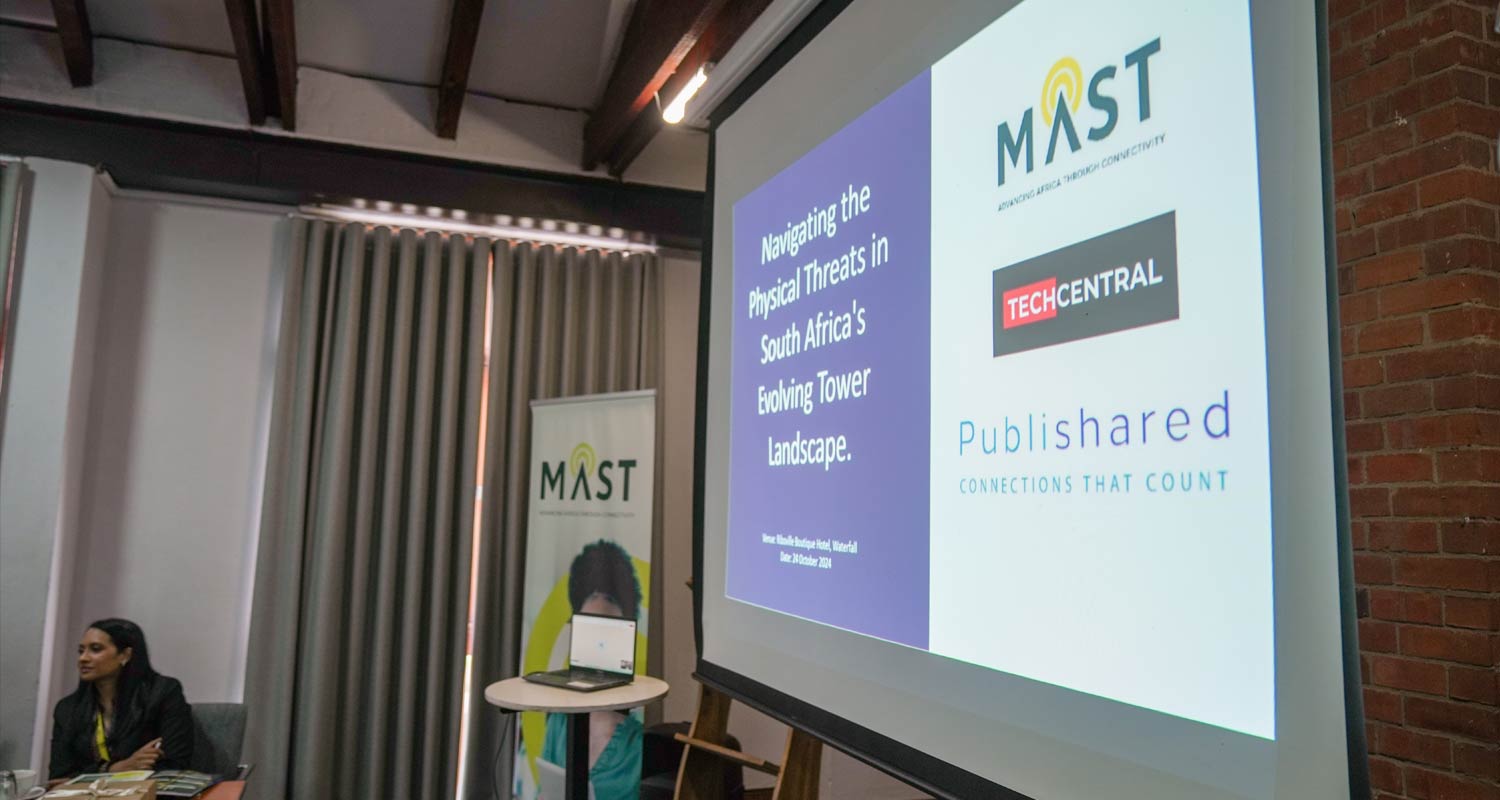
    Recognising the urgency of these challenges, MAST, in partnership with TechCentral, recently hosted a round-table discussion bringing together key stakeholders to unpack the rising physical security threats facing South Africa’s telecoms towers.

    Participants gathered to explore insights, share experiences and examine potential solutions, with the goal of fostering discussion that could strengthen the industry’s approach to security through shared understanding and appropriate strategic partnerships.

    Identifying perpetrators of theft and vandalism

    Participants shared perspectives on the main drivers of theft and vandalism at tower sites, identifying several distinct groups:

    • Organised crime and syndicates: Industry representatives pointed to increasingly organised crime networks that resemble South Africa’s construction mafia. These syndicates operate in various regions, targeting specific high-value items like batteries for cross-border trade or reselling items like cables to local and regional markets. Notably, the cross-border demand for these items often sees them transported to neighbouring countries like Mozambique and Zimbabwe, amplifying challenges in containment and recovery.
    • Opportunistic local criminals and youth-driven theft: Some incidents were attributed to local criminals and youth involvement, driven by factors such as unemployment and substance abuse. Although these groups were noted as less organised, they are unpredictable and can contribute to sporadic incidents.
    • Value chain contributors: Concerns were raised about broader ecosystem players, such as scrap metal dealers, who purchase stolen materials and indirectly fuel the crime cycle. Additionally, some subcontractors may play a role by providing intelligence or, if terminated, may become perpetrators themselves. The round table highlighted that these dynamics make it essential to view security through a comprehensive ecosystem lens rather than isolated incidents.

    The discussion also highlighted the fluidity of crime, with hotspots shifting as security measures are implemented.  Areas with nearby cross-border access, such as Kwa-Zulu Natal, Mpumalanga and Limpopo, were identified as particularly vulnerable. Participants stressed the need for dynamic strategies to address these challenges.

    Collaboration as a solution

    Recognising the challenges as shared, participants largely agreed that no single entity could tackle the problem alone. However, opinions varied on the feasibility and practicality of collaboration.

    While many agreed that physical security should not be treated as a competitive differentiator, some industry players are seen to leverage it indirectly due to competitive pressures. This is particularly true where downtime due to theft or vandalism impacts network availability and customer satisfaction.

    Success stories from past collaborations, such as efforts following the 2021 riots, demonstrated that the industry could effectively mobilise in times of crisis. However, participants expressed the view that current efforts remain largely reactive rather than proactive, and a structured framework for collaboration would allow for sustainable, long-term improvements.

    Many expressed a desire to create an industry model where tower sites are jointly protected. By sharing in security investments and response efforts, co-located mobile network operators (MNOs) could better distribute risks and resources, allowing for a unified approach to securing critical infrastructure.

    Practical approaches to information sharing

    The conversation around practical collaboration highlighted that information-sharing practices need careful management, especially given strict competition regulations.

    Participants explored creating a dedicated framework that would allow them to share critical security intelligence without compromising competitive positioning. The concept of establishing an independent security information body, like the role of Sabric in the banking industry, was discussed as a potential solution. Such a body could aggregate, anonymise and analyse security data from multiple operators, producing shared insights without revealing sensitive business information. This could provide towercos, co-locating MNOs and law enforcement valuable intelligence while adhering to competition guidelines.

    Another suggestion was to share high-level data, such as crime hotspots or regional incident trends, with private security firms and law enforcement to improve regional preparedness and response capabilities.

    Role of public authorities

    The group reviewed current collaborations with public authorities, like MTN’s partnership with the Gauteng Police Board and Telkom’s work with the South African Police Service, which have shown promise in mitigating infrastructure crimes.

    The SAPS’s support varies regionally, but participants noted its effectiveness in certain areas where local police are well-informed on the impact of these crimes. However, gaps exist, particularly at the prosecution level, where participants called for more severe penalties for crimes targeting critical infrastructure. Participants stressed the importance of diligent follow-up on reported cases and advocated for expanding collaboration and stronger partnerships with the National Prosecuting Authority (NPA) to ensure successful prosecution and appropriate sentencing.
    Enhanced cross-border cooperation, especially with authorities in Mozambique and Zimbabwe, was also recommended. By strengthening international cooperation, participants believe they can reduce cross-border transport and the sale of stolen goods, which fuels the crime cycle.

    Immediate next steps and recommendations

    The discussion concluded with participants sharing ideas on several key steps to drive collaboration forward:

    • Ecosystem approach: The discussion emphasised the need to move beyond site hardening and address the broader ecosystem, including intelligence sharing on syndicates and crime hotspots.
    • Redefining tower company roles: Participants called for towercos to assume a more proactive role in security, potentially through risk-sharing models, coordinated response teams, or becoming the first line of defence.
    • Comric as a framework: Leveraging the Communication Risk Information Centre (Comric) to facilitate structured information sharing and collaboration, potentially modelled on Sabric’s successful approach in the banking industry
    • Developing a pilot for collaborative security: Participants recommended starting with a small-scale collaboration pilot, focusing on high-impact areas with a loose structure that could avoid bureaucratic delays. This pilot would allow stakeholders to test collaborative measures, such as coordinated security responses, shared intelligence gathering and response team support across co-located sites.
    • Community engagement and education: Recognising the socioeconomic context of the crimes, attendees highlighted the need to communicate the broader impact of infrastructure damage on local communities. By reframing the narrative to emphasise the societal and economic losses these crimes cause, MNOs and tower companies could mobilise local support and foster community partnerships to help deter criminal activity.
    • Expanding key stakeholder involvement: To sustain momentum, participants agreed that future discussions should include additional stakeholders such as the Competition Commission, community leaders and private security firms. This broader group could then work collectively to build a sustainable intelligence-sharing framework and crime prevention framework.

    The round-table discussion created a valuable dialogue on the critical issue of physical security threats to telecoms infrastructure. Participants acknowledged the shared responsibility for addressing these challenges and underscored the importance of proactive collaboration, structured intelligence-sharing and strategic partnerships with law enforcement. By engaging with a broader range of stakeholders, and implementing pilot initiatives, the group expressed optimism about evolving industry practices and working together to secure South Africa’s telecoms infrastructure.

    MAST and TechCentral thank all those who participated in the round-table discussion.

    • Read more articles by MAST on TechCentral
    • This promoted content was paid for by the party concerned


    MAST MAST Services MAST Services Africa
    Subscribe to TechCentral Subscribe to TechCentral
    Share. Facebook Twitter LinkedIn WhatsApp Telegram Email Copy Link
    Previous ArticleIntegrating AI and ITSM – a paradigm shift in IT service delivery
    Next Article Bookmarks | Apple’s M4 Mac mini is getting rave reviews 
    Company News
    AI is not a technology problem - iqbusiness

    AI is not a technology problem – iqbusiness

    5 December 2025
    Telcos are sitting on a data gold mine - but few know what do with it - Phillip du Plessis

    Telcos are sitting on a data gold mine – but few know what do with it

    4 December 2025
    Unlock smarter computing with your surface Copilot+ PC

    Unlock smarter computing with your Surface Copilot+ PC

    4 December 2025
    Opinion
    Your data, your hardware: the DIY AI revolution is coming - Duncan McLeod

    Your data, your hardware: the DIY AI revolution is coming

    20 November 2025
    Zero Carbon Charge founder Joubert Roux

    The energy revolution South Africa can’t afford to miss

    20 November 2025
    It's time for a new approach to government IT spend in South Africa - Richard Firth

    It’s time for a new approach to government IT spend in South Africa

    19 November 2025

    Subscribe to Updates

    Get the best South African technology news and analysis delivered to your e-mail inbox every morning.

    Latest Posts
    Big Microsoft 365 price increases coming next year

    Big Microsoft price increases coming next year

    5 December 2025
    AI is not a technology problem - iqbusiness

    AI is not a technology problem – iqbusiness

    5 December 2025
    Vodacom to take control of Safaricom in R36-billion deal - Shameel Joosub

    Vodacom to take control of Safaricom in R36-billion deal

    4 December 2025
    Black Friday goes digital in South Africa as online spending surges to record high

    Black Friday goes digital in South Africa as online spending surges to record high

    4 December 2025
    © 2009 - 2025 NewsCentral Media
    • Cookie policy (ZA)
    • TechCentral – privacy and Popia

    Type above and press Enter to search. Press Esc to cancel.

    Manage consent

    TechCentral uses cookies to enhance its offerings. Consenting to these technologies allows us to serve you better. Not consenting or withdrawing consent may adversely affect certain features and functions of the website.

    Functional Always active
    The technical storage or access is strictly necessary for the legitimate purpose of enabling the use of a specific service explicitly requested by the subscriber or user, or for the sole purpose of carrying out the transmission of a communication over an electronic communications network.
    Preferences
    The technical storage or access is necessary for the legitimate purpose of storing preferences that are not requested by the subscriber or user.
    Statistics
    The technical storage or access that is used exclusively for statistical purposes. The technical storage or access that is used exclusively for anonymous statistical purposes. Without a subpoena, voluntary compliance on the part of your Internet Service Provider, or additional records from a third party, information stored or retrieved for this purpose alone cannot usually be used to identify you.
    Marketing
    The technical storage or access is required to create user profiles to send advertising, or to track the user on a website or across several websites for similar marketing purposes.
    • Manage options
    • Manage services
    • Manage {vendor_count} vendors
    • Read more about these purposes
    View preferences
    • {title}
    • {title}
    • {title}