Close Menu
TechCentralTechCentral

    Subscribe to the newsletter

    Get the best South African technology news and analysis delivered to your e-mail inbox every morning.

    Facebook X (Twitter) YouTube LinkedIn
    WhatsApp Facebook X (Twitter) LinkedIn YouTube
    TechCentralTechCentral
    • News
      Africa's most popular phones have a tracking problem

      Africa’s most popular phones have a tracking problem

      24 July 2026
      Vodacom taps UJ, AWS to build its AI talent pipeline - Vodacom Group CEO Shameel Joosub

      Vodacom taps UJ, AWS to build its AI talent pipeline

      24 July 2026
      Intel is back in the game - Intel CEO Lip-Bu Tan. Laure Andrillon/Reuters

      Intel is back in the game

      24 July 2026
      Fat bonuses at Telkom despite group missing own targets - Serame Taukobong

      Fat bonuses at Telkom despite group missing own targets

      23 July 2026
      Massive changes coming to Amazon Prime Video - Jeff Bezos

      Massive changes coming to Amazon Prime Video

      23 July 2026
    • World
      Meta AI will now tell parents if their teen is in crisis

      Meta AI will now tell parents if their teen is in crisis

      17 July 2026
      IBM shares crash 25% as AI upends software spending - Arvind Krishna

      IBM shares crash 25% as AI upends software spending

      15 July 2026
      Jony Ive's first OpenAI device: an AI smart speaker - Jony Ive and Sam Altman

      Jony Ive’s first OpenAI device: an AI smart speaker

      15 July 2026
      Stripe, Advent in talks to buy PayPal for $53-billion

      Stripe, Advent in talks to buy PayPal for $53-billion

      15 July 2026
      Memory crisis sends smartphone market into steep decline

      Memory crisis sends smartphone market into steep decline

      13 July 2026
    • In-depth
      The plan to stop AI from breaking the world - Google DeepMind CEO Demis Hassabis. Image: John Sears

      The plan to stop AI from breaking the world

      16 July 2026
      The internet has a Strait of Hormuz problem

      The internet has a Strait of Hormuz problem

      15 July 2026
      AI boom sparks rally, frenzy and fear

      AI boom sparks rally, frenzy and fear

      11 June 2026
      Every plug-in hybrid on sale in South Africa, ranked by price - Lamborghini Temerario

      Every plug-in hybrid on sale in South Africa, ranked by price

      7 June 2026
      What Wi-Fi 8 will mean for wireless networks

      What Wi-Fi 8 will mean for wireless networks

      1 June 2026
    • TCS
      TCS | How Optasia lends billions to people banks can't see - Salvador Anglada

      TCS | How Optasia lends billions to people banks can’t see

      23 July 2026
      The rands-and-cents case for electric trucks - William Kelly Watts & Wheels with Wills

      The rands-and-cents case for electric trucks

      20 July 2026
      Watts & Wheels S1E7: 'Ferrari's EV breaks the internet'

      Watts & Wheels S1E7: ‘Ferrari’s EV breaks the internet’

      8 July 2026
      TCS | Pick n Pay's Enrico Ferigolli on Penny, the AI that shops for you

      TCS | Pick n Pay’s Enrico Ferigolli on Penny, the AI that shops for you

      2 July 2026
      TCS+ | How Tracker is turning vehicle data into business strategy - Silvia Schollenberger

      TCS+ | How Tracker is turning vehicle data into business strategy

      1 July 2026
    • Opinion
      Selling vapour is corporate suicide in slow motion - Jannie van Zyl

      Selling vapour is corporate suicide in slow motion

      16 July 2026
      Brazil's online gambling crackdown is a lesson for South Africa

      How Amazon outmanoeuvred Starlink in South Africa

      15 July 2026
      The Popia problem with agentic AI - Herman Haasbroek

      The Popia problem with agentic AI

      14 July 2026
      The author, Fanie van Rooyen

      South Africa can still catch the AI wave – here’s how

      7 July 2026
      The author, Fanie van Rooyen

      The AI utopia South Africa can’t afford

      1 July 2026
    • Company Hubs
      • 1Stream
      • Africa Data Centres
      • AfriGIS
      • Altron Digital Business
      • Altron Document Solutions
      • Altron Group
      • Arctic Wolf
      • Ascent Technology
      • AvertITD
      • BBD
      • Braintree
      • CallMiner
      • CambriLearn
      • CM Telecom
      • Contactable
      • CYBER1 Solutions
      • Digicloud Africa
      • Digimune
      • Domains.co.za
      • ESET
      • Euphoria Telecom
      • HOSTAFRICA
      • Incredible Business
      • iONLINE
      • IQbusiness
      • Iris Network Systems
      • Kaspersky
      • LSD Open
      • Mitel
      • NEC XON
      • Netstar
      • Network Platforms
      • Next DLP
      • Ovations
      • Paracon
      • Paratus
      • Q-KON
      • SevenC
      • SkyWire
      • Solid8 Technologies
      • Telit Cinterion
      • Telviva
      • Tenable
      • Vertiv
      • Videri Digital
      • Vodacom Business
      • Vox
      • Wipro
      • Workday
      • XLink
    • Sections
      • AI and machine learning
      • Banking
      • Broadcasting and Media
      • Cloud services
      • Contact centres and CX
      • Cryptocurrencies
      • Education and skills
      • Electronics and hardware
      • Energy and sustainability
      • Enterprise software
      • Financial services
      • HealthTech
      • Information security
      • Internet and connectivity
      • Internet of Things
      • Investment
      • IT services
      • Lifestyle
      • Policy and regulation
      • Public sector
      • Retail and e-commerce
      • Satellite communications
      • Science
      • SMEs and start-ups
      • Social media
      • Talent and leadership
      • Telecoms
      • Watts & Wheels
    • Events
    • Advertise
    TechCentralTechCentral
    Home » Sections » Energy and sustainability » The end of load shedding hasn’t fixed South Africa’s power problem

    The end of load shedding hasn’t fixed South Africa’s power problem

    Solving energy supply at the production level has not solved power availability problems at municipal level, new data shows.
    By Nkosinathi Ndlovu15 April 2026
    Twitter LinkedIn Facebook WhatsApp Email Telegram Copy Link
    News Alerts
    WhatsApp

    The end of load shedding hasn't fixed South Africa's power problem

    A new interactive report by residential solar energy specialist Wetility shows clear disparities in the reliable supply of electricity across South Africa’s municipalities, with outages lasting about two hours in some areas and more than 18 hours in others.

    The data demonstrates that South Africa’s energy infrastructure has issues at multiple levels, meaning solving the core generation issue alone – which Eskom appears to have done with the end of load shedding – does not guarantee stable power supply for consumers and businesses.

    “This data makes clear that the conversation about grid reliability cannot be a national one alone. Many municipalities are operating under significant pressure – from ageing infrastructure and cable theft to revenue collection constraints – and that reality is reflected in the variability we see,” said Wetility chief commercial officer Franta Pour.

    This data makes clear that the conversation about grid reliability cannot be a national one alone

    “What this dataset provides is … a way for municipalities, businesses and households to better understand local conditions and make more informed decisions.”

    Wetility used telemetry data from its national network of solar and battery installations to develop an interactive lookup tool that allows the public to search their municipality and view a detailed outage profile. Metrics available for analysis include average outage duration, monthly trends and how different areas compare.

    While the data is insightful, only a reported “57-plus” of South Africa’s 257 municipalities are included in the analysis. Of those represented, the number of households with solar installations in those municipalities is not disclosed. The definition of an outage is also not clarified, with the difference between a household mains trip and a street-wide transformer failure not specified, for example.

    Counternarrative

    Still, the data Wetility’s tool provides presents a counternarrative regarding South Africa’s energy trajectory. The national power story in 2025 was one of recovery. Eskom strung together more than 300 consecutive days without load shedding, generation availability climbed and the political conversation began to shift from crisis management to long-term reform. Wetility’s report suggests the recovery has been uneven to the point of being invisible for many households.

    The report shows that the average grid outage in South Africa lasted 12.1 hours in 2025. But the spread around it is more revealing: the average outage duration ranges from roughly two hours in iLembe district (around Ballito) in KwaZulu-Natal to 18.6 hours in Amajuba district, also in KZN, where the biggest commercial centre is Newcastle.

    Read: Theft and power cuts hammer SA telecoms operators

    At the worst end of the dataset, Amajuba district recorded an average outage duration of 18.6 hours, with 82.7% of these exceeding eight hours. Waterberg district in Limpopo – home to Eskom’s 4.8GW Medupi power station – recorded an average outage of 16.4 hours, with nearly 80% of outages lasting longer than eight hours. In short, one of the country’s largest generation facilities sits in a district where households routinely lose power for the better part of a day.

    Metros are not insulated from the trend. The City of Tshwane, for example, recorded an average outage duration of 15.6 hours, with 69.5% of outages running longer than eight hours.

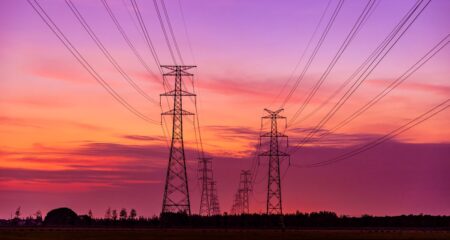
    Eskom light bulb

    The potential skew in Wetility’s data set is not just from the fact that fewer than 25% of South African municipalities are represented. The high cost of solar panels means their distribution tends to skew towards higher-income areas, meaning the data potentially fails to represent a broad enough sample.

    Even so, the insights Wetility has drawn from its data can be corroborated by reports from the telecommunications sector. Earlier this month, TechCentral reported that despite an end to load shedding, mobile operators are still being forced to redirect capex budgeted for network expansion towards power resilience because power cuts remain an everyday occurrence across large parts of South Africa.

    Read: Setback for South Africa’s electricity market reform

    “Telecoms networks require constant power to operate and our members report burning more diesel now due to power outages and vandalism, because wherever there are power outages vandalism also increases,” ACT CEO Nomvuyiso Batyi said.  – © 2026 NewsCentral Media

    Get breaking news from TechCentral on WhatsApp. Sign up here.

    Follow TechCentral on Google News Add TechCentral as your preferred source on Google


    ACT Eskom Franta Pour Nomvuyiso Batyi Wetility
    WhatsApp YouTube
    Share. Facebook Twitter LinkedIn WhatsApp Telegram Email Copy Link
    Previous ArticleAmazon ramps up satellite war with $11.6-billion Globalstar buy
    Next Article R85-million for SA start-up reinventing the stethoscope with AI

    Related Posts

    Load shedding is over - and that's exposing a new energy crisis

    Load shedding is over – and that’s exposing a new energy crisis

    23 July 2026
    Eskom quashes Koeberg contamination reports

    Eskom scrambles to quash Koeberg contamination reports

    19 July 2026
    Eskom appoints group executive for renewable energy - Rivoningo Mnisi

    Eskom Green cleared for take-off

    16 July 2026
    Company News
    Why Europe is turning to South Africa for cross-border innovation - BBD Software

    Why Europe is turning to South Africa for cross-border innovation

    24 July 2026
    Green dashboards, stalled change: the CIO's blind spot - Change Logic Marchant van den Heever

    Green dashboards, stalled change: the CIO’s blind spot

    24 July 2026
    Why Africa's cloud needs more than one path - Africa Data Centres

    Why Africa’s cloud needs more than one path

    23 July 2026
    Opinion
    Selling vapour is corporate suicide in slow motion - Jannie van Zyl

    Selling vapour is corporate suicide in slow motion

    16 July 2026
    Brazil's online gambling crackdown is a lesson for South Africa

    How Amazon outmanoeuvred Starlink in South Africa

    15 July 2026
    The Popia problem with agentic AI - Herman Haasbroek

    The Popia problem with agentic AI

    14 July 2026

    Subscribe to Updates

    Get the best South African technology news and analysis delivered to your e-mail inbox every morning.

    Latest Posts
    Africa's most popular phones have a tracking problem

    Africa’s most popular phones have a tracking problem

    24 July 2026
    Vodacom taps UJ, AWS to build its AI talent pipeline - Vodacom Group CEO Shameel Joosub

    Vodacom taps UJ, AWS to build its AI talent pipeline

    24 July 2026
    Intel is back in the game - Intel CEO Lip-Bu Tan. Laure Andrillon/Reuters

    Intel is back in the game

    24 July 2026
    Why Europe is turning to South Africa for cross-border innovation - BBD Software

    Why Europe is turning to South Africa for cross-border innovation

    24 July 2026
    © 2009 - 2026 NewsCentral Media
    Built and maintained by Chronon
    • Cookie policy (ZA)
    • TechCentral – privacy and Popia

    Type above and press Enter to search. Press Esc to cancel.

    Manage consent

    TechCentral uses cookies to enhance its offerings. Consenting to these technologies allows us to serve you better. Not consenting or withdrawing consent may adversely affect certain features and functions of the website.

    Functional Always active
    The technical storage or access is strictly necessary for the legitimate purpose of enabling the use of a specific service explicitly requested by the subscriber or user, or for the sole purpose of carrying out the transmission of a communication over an electronic communications network.
    Preferences
    The technical storage or access is necessary for the legitimate purpose of storing preferences that are not requested by the subscriber or user.
    Statistics
    The technical storage or access that is used exclusively for statistical purposes. The technical storage or access that is used exclusively for anonymous statistical purposes. Without a subpoena, voluntary compliance on the part of your Internet Service Provider, or additional records from a third party, information stored or retrieved for this purpose alone cannot usually be used to identify you.
    Marketing
    The technical storage or access is required to create user profiles to send advertising, or to track the user on a website or across several websites for similar marketing purposes.
    • Manage options
    • Manage services
    • Manage {vendor_count} vendors
    • Read more about these purposes
    View preferences
    • {title}
    • {title}
    • {title}