Close Menu
TechCentralTechCentral

    Subscribe to the newsletter

    Get the best South African technology news and analysis delivered to your e-mail inbox every morning.

    Facebook X (Twitter) YouTube LinkedIn
    WhatsApp Facebook X (Twitter) LinkedIn YouTube
    TechCentralTechCentral
    • News
      Cabinet approves draft AI policy for public comment

      Cabinet approves draft AI policy for public comment

      6 April 2026
      Icasa data confirms the scale of South Africa's pay-TV collapse

      Icasa data confirms the scale of South Africa’s pay-TV collapse

      6 April 2026
      How AI agents are reshaping banking in South Africa - Lindelani Ramukumba, Absa

      How agentic AI is reshaping banking in South Africa

      5 April 2026
      South Africa's 5G boom is bypassing rural areas: Icasa

      South Africa’s 5G boom is bypassing rural areas: Icasa

      5 April 2026
      WhatsApp is eating South African operators' revenue

      WhatsApp is eating South African operators’ revenue

      4 April 2026
    • World
      DeepSeek V4 to run on Huawei silicon as China builds its own AI stack

      DeepSeek V4 to run on Huawei silicon as China builds its own AI stack

      4 April 2026
      Amazon in talks to buy satellite operator Globalstar

      Amazon in talks to buy satellite operator Globalstar

      2 April 2026

      Apple plans to open Siri to rival AI services

      27 March 2026
      It's official: ads are coming to ChatGPT

      It’s official: ads are coming to ChatGPT

      23 March 2026
      Mystery Chinese AI model revealed to be Xiaomi's

      Mystery Chinese AI model revealed to be Xiaomi’s

      19 March 2026
    • In-depth
      The biggest untapped EV market on Earth is hiding in plain sight

      The biggest untapped EV market on Earth is hiding in plain sight

      1 April 2026
      The R18-billion tech giant hiding in plain sight - Jens Montanana

      The R16-billion tech giant hiding in plain sight

      26 March 2026
      The last generation of coders

      The last generation of coders

      18 February 2026
      Sentech is in dire straits

      Sentech is in dire straits

      10 February 2026
      How liberalisation is rewiring South Africa's power sector

      How liberalisation is rewiring South Africa’s power sector

      21 January 2026
    • TCS
      TCS | MTN's Divysh Joshi on the strategy behind Pi - Divyesh Joshi

      TCS | MTN’s Divyesh Joshi on the strategy behind Pi

      1 April 2026
      Anoosh Rooplal

      TCS | Anoosh Rooplal on the Post Office’s last stand

      27 March 2026
      Meet the CIO | HealthBridge CTO Anton Fatti on the future of digital health

      Meet the CIO | Healthbridge CTO Anton Fatti on the future of digital health

      23 March 2026
      TCS+ | Arctic Wolf unpacks the evolving threat landscape for SA businesses - Clare Loveridge and Jason Oehley

      TCS+ | Arctic Wolf unpacks the evolving threat landscape for SA businesses

      19 March 2026
      TCS+ | Vox Kiwi: a wireless solution promising a fibre-like experience - Theo van Zyl

      TCS+ | Vox Kiwi: a wireless solution promising a fibre-like experience

      13 March 2026
    • Opinion
      The conflict of interest at the heart of PayShap's slow adoption - Cheslyn Jacobs

      The conflict of interest at the heart of PayShap’s slow adoption

      26 March 2026
      South Africa's energy future hinges on getting wheeling right - Aishah Gire

      South Africa’s energy future hinges on getting wheeling right

      10 March 2026
      Hold the doom: the case for a South African comeback - Duncan McLeod

      Apple just dropped a bomb on the Windows world

      5 March 2026
      VC's centre of gravity is shifting - and South Africa is in the frame - Alison Collier

      VC’s centre of gravity is shifting – and South Africa is in the frame

      3 March 2026
      Hold the doom: the case for a South African comeback - Duncan McLeod

      Hold the doom: the case for a South African comeback

      26 February 2026
    • Company Hubs
      • 1Stream
      • Africa Data Centres
      • AfriGIS
      • Altron Digital Business
      • Altron Document Solutions
      • Altron Group
      • Arctic Wolf
      • Ascent Technology
      • AvertITD
      • BBD
      • Braintree
      • CallMiner
      • CambriLearn
      • CYBER1 Solutions
      • Digicloud Africa
      • Digimune
      • Domains.co.za
      • ESET
      • Euphoria Telecom
      • HOSTAFRICA
      • Incredible Business
      • iONLINE
      • IQbusiness
      • Iris Network Systems
      • Kaspersky
      • LSD Open
      • Mitel
      • NEC XON
      • Netstar
      • Network Platforms
      • Next DLP
      • Ovations
      • Paracon
      • Paratus
      • Q-KON
      • SevenC
      • SkyWire
      • Solid8 Technologies
      • Telit Cinterion
      • Telviva
      • Tenable
      • Vertiv
      • Videri Digital
      • Vodacom Business
      • Wipro
      • Workday
      • XLink
    • Sections
      • AI and machine learning
      • Banking
      • Broadcasting and Media
      • Cloud services
      • Contact centres and CX
      • Cryptocurrencies
      • Education and skills
      • Electronics and hardware
      • Energy and sustainability
      • Enterprise software
      • Financial services
      • HealthTech
      • Information security
      • Internet and connectivity
      • Internet of Things
      • Investment
      • IT services
      • Lifestyle
      • Motoring
      • Policy and regulation
      • Public sector
      • Retail and e-commerce
      • Satellite communications
      • Science
      • SMEs and start-ups
      • Social media
      • Talent and leadership
      • Telecoms
    • Events
    • Advertise
    TechCentralTechCentral
    Home » Editor's pick » The S Africans making it big in America

    The S Africans making it big in America

    By Rowan Philp15 May 2014
    Twitter LinkedIn Facebook WhatsApp Email Telegram Copy Link
    News Alerts
    WhatsApp
    Elon Musk at Cape Canaveral
    Elon Musk at Cape Canaveral

    Most say the same thing. They came to the US either to avoid army conscription or apartheid itself in the late 1980s. They planned to stay for just a few years, but they stayed on.

    A quarter century later, this small generation of South African immigrants has risen to break through, en masse, into such key leadership roles that they’re changing the US.

    YouTube, PayPal, SolarCity, epigenetic cancer therapy and intelligent Mars robots exist only because of these expats: one of them has led the transition from PCs to cloud computing; another leads the US’s top business school; and another is replacing the space shuttle.

    But they’ve done it as individuals, and — with the notable exception of commercial spaceflight pioneer Elon Musk — almost invisibly.

    In December 2012, the Silicon Valley Business Journal made a remarkable statement regarding four of their first five winners of the US’s high-tech chief executive officer awards, which feature competition from the likes of Google’s Larry Page.

    It said: “Here’s something interesting about our executive of the year awards, something that hadn’t occurred to us at the time that these four executives were selected — they are all originally from South Africa.”

    In Silicon Valley alone, South African-born high-tech chief executives include Vinny Lingham, founder of Yola and Gyft; Willem van Biljon, co-founder of Nimbula; and Pieter de Villiers, founder and CEO of Clickatell, the world’s largest online text messaging service.

    And these weren’t even among the award winners. Those include Gauteng brothers Lyndon and Peter Rive, who have built the US’s largest provider of residential clean energy, and Paul Maritz, the former CEO of cloud computing giant VMware, who was schooled in KwaZulu-Natal.

    South African immigrants in the US number only 83 000 — a “small number even for a big city”, says professor Nancy Foner, an expert on immigration achievement at the City University of New York. So small, she says, that there are almost no figures or studies on their impact.

    Yet new South African networking organisations, such as the Sable Accelerator in California, are springing up as South Africans are suddenly appearing in front of microphones as chief executives and university deans and scientific research team leaders.

    Apart from well-established South African communities in places such as San Diego, or the tight group of professional golfers in Florida, South Africans don’t network the way they do in the UK.

    Instead, mutual recognition often happens like this: “Hey, that guy running the University of Notre Dame seems to have a Saffer accent. Come to think of it, so does the dean of Stanford Graduate School of Business. Ja, and what about the guy who was in charge of California’s High-Speed Rail Authority? And with a name like Mahlangu-Ngcobo, that elections judge in Maryland has gotta be from home.”

    Some are fairly well known. Pik Botha’s grandson, Roelof, has been ranked as high as 22nd on the Forbes Midas list of venture capitalists, ­having funded the launch of YouTube in 2005.

    Among the celebrity conscription-dodgers, singer Dave Matthews probably heads the pack. Reportedly worth R2bn, Matthews was recently declared the US’s most successful touring act of the decade.

    Roelof Botha
    Roelof Botha

    But most have risen to the cutting edge of American business with remarkable anonymity.

    Former Illovo schoolboy Steven Collis, almost unnoticed, has taken the reins of healthcare wholesaling company AmerisourceBergen, listed 29th on the Fortune 500, with 13 000 employees, and annual revenues of an almost ridiculous R600bn.

    The single greatest breakthrough in cancer treatment in recent years — epigenetic therapy — has been credited to Stellenbosch’s Peter Jones, who now runs a major research centre in California.

    And another South African, Dr Liam Pedersen, has grabbed what could be the most exotic job in the US. He leads a Nasa research team to develop the brains of “intelligent” space robots that will explore the solar system in search of extraterrestrial life. And to test his “autonomous navigation” systems, Pedersen, 43, gets to test the robots in places like Antarctica and alpine lakes in the Andes.

    In terms of sheer impact for Africa among transplants, it’s a draw between expats Dr Trevor Mundel and Nomvimbi Meriwether.

    A former Soweto businesswoman, Meriwether — now owner of Meticulous Tours travel agency in Washington, DC — is the co-founder of a multimillion-dollar health and basic education charity in Southern Africa, the Meriwether Foundation.

    She told the Mail & Guardian that her fundraising clout in the US enjoyed a major boost in December when her daughter — South African-born Nana Meriwether (28) — won the Miss USA crown.

    “We are meeting governors, presidents, billionaires, so the plight of [South Africa’s] most vulnerable ­children is being heard where it counts,” she said.

    Mundel, from Johannesburg, has been appointed as president of global health for the Bill & Melinda Gates Foundation with a grant budget of about R130bn, and a brief of nothing less than to eradicate polio and malaria from the planet.

    But it’s when you consider a professional field as specific as immigration law that the astonishing over-achievement of this group becomes clear. Bernie Wolfsdorf — another conscription dodger — has been named “the most highly rated immigration lawyer in the world” for the past three years by the peer-reviewed International Who’s Who of Business Lawyers, and South Africa’s Daryl Buffenstein is a former president of the American Immigration Lawyers Association.

    In the same field, Chris Wright, a transplant from Johannesburg, is described as “Hollywood’s go-to lawyer” — somehow securing “genius” work visas for everyone from Piers Morgan to Playboy playmate Shera Bechard. The “O-1” work visa is normally reserved for foreigners of “extraordinary ability”, including Nobel prize, winners, but Wright has controversially expanded its use to include celebrities.

    Nomvimbi Meriwether (image: Yazeed Kamaldien)
    Nomvimbi Meriwether (image: Yazeed Kamaldien)

    South African lawyers have not yet broken through, as a group, as judges in the US’s highest courts, the way they have in, say, Western Australia. But Margaret Marshall, 69, a former student leader at Wits University, recently retired as chief justice of Massachusetts, where, in a landmark case in 2003, she was the first justice in the US to grant gay couples the right to marry.

    Compared to the US’s business world, expatriates have under­achieved in Hollywood itself, but its modest breakthrough artists include Charlize Theron, District 9′s Sharlto Copley and Stelio Savante, who both co-produced and cracked a role opposite Matthew Perry in the comedy The Whole Banana last year.

    Elon Musk, poster-child
    The poster-child for the 1980s immigration generation is Musk, the founder of Tesla Motors and SpaceX — the rocket company charged with leading the replacement of the space shuttle. In an earlier interview, he told me he left the country in 1988 because the South African Defence Force promised to be “an amazing waste of time”.

    He also said that South African TV was so bad in the 1980s that he was forced to read, and that off-the-shelf consumer options — such as amateur rocket kits — were so limited that he was forced to learn how to build and innovate on his own.

    John Affleck-Graves, executive vice-president of Notre Dame, Collis and Wright were among those who told me they credit their education for much of their success, but offered few other clues as to why South Africans had risen so sharply.

    Professor Foner says white South Africans, in particular, had “invisibly” risen to the top.

    “South Africans [in the US] have gone unnoticed, especially the majority who are white, for whom there were few cultural barriers, if any,” she said. “But I have noticed that South Africans move right into elite circles in the US, immediately, and look where they’ve gone.”

    Donovan Neale-May, founder of the Sable Accelerator, says the 1980s South African immigrant generation was unique in that they did not take advantage of contacts and mobility through “ethnic communities” in the US, “as, say, Indian entrepreneurs have done so effectively”.
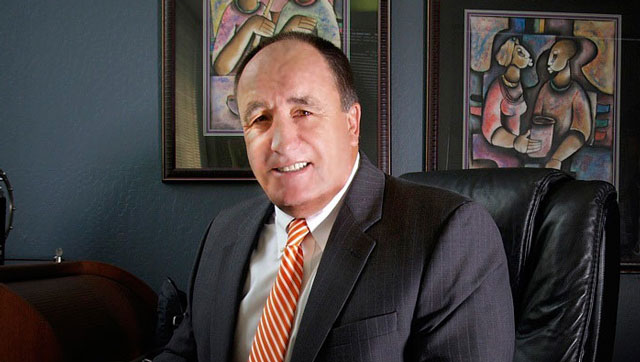
    Donovan Neale-May
    Donovan Neale-May

    Instead, Neale-May says the conscription-avoidance generation had simply outcompeted American professionals with a multitasking combination of management talent, drive and pioneering vision.

    South African emigration to the US has been an overwhelmingly white phenomenon. According to the Migration Policy Institute in Washington, DC, only 14% of South African immigrants — about 11 000 — are black.

    And they’ve had to travel a far more difficult road, says Foner. Yet a number of black South Africans have made New World leaps that are, if anything, closer to the purest form of the “American Dream” than their rich white countrymen.

    Among the exiles who remained in the US, Mahlangu-Ngcobo is one who has emerged as a national force in both government health policy and theology. She has testified on healthcare for the government’s Congressional Black Caucus and, during the violent tumult in Liberia in 1997, she led a workshop there on violence against women.

    The author of nine books — including research works on Aids and gender equality — Mahlangu-Ngcobo lectures on public health, and has founded both a US church and an international ministry.

    Gift Ngoepe, the first black South African to be offered a professional baseball contract, is one of a more recent immigrant generation to the New World.

    He discovered baseball when his mother took a job as domestic worker at the Randburg Mets clubhouse. A tiny room inside it later became his home, and he simply practiced against a wall until he was noticed by coaches and, later, a US mentor. Now, he plays professionally as a shortstop within the Pittsburg Pirates organisation.

    Richman Mahlangu, 50, has a similarly unlikely sporting story, but, in pursuing it, has carved out a classic, John Steinbeck-style American tale. He fled apartheid itself at the same time that Musk and others were ­fleeing conscription.

    Mahlangu’s “hook” into the US was a sports scholarship, after he literally discovered the sport of tennis when he found a broken tennis racket on a dusty street in Durban’s Lamontville township in the 1970s. He says that, as with Ngoepe, a local professional coach was so taken by his diligent practice with that racket that he offered free lessons, and, eventually, an introduction to a US mentor.

    Living in Las Vegas, Mahlangu has since achieved neither riches nor professional-level excellence in his sport. Instead, he has coached his two sons to the point where, last year, they were both recruited for scholarships by Ivy League universities. His youngest son, Yannik, 17, has held a national rank of ninth for his age group and his eldest, Nicholas — now on his way to Harvard — has starred with Andre Agassi in a TV ad.

    “For me, as an immigrant, this chance for my sons is my satisfaction,” he tells me, in a line that could have been inscribed on Ellis Island.  — (c) Mail & Guardian

    • Visit the Mail & Guardian Online, the smart news source
    Follow TechCentral on Google News Add TechCentral as your preferred source on Google


    AmerisourceBergen Chris Wright Clickatell Dave Matthews Donovan Neale-May Elon Musk Google John Affleck-Graves Larry Page Liam Pedersen Lyndon Rive Nimbula Nomvimbi Meriwether Paul Maritz Peter Jones Peter Rive Pieter de Villiers Roelof Botha Sable Accelerator SpaceX Steven Collis Tesla Motors Trevor Mundel VMware Willem van Biljon
    WhatsApp YouTube
    Share. Facebook Twitter LinkedIn WhatsApp Telegram Email Copy Link
    Previous ArticleDecision pending on Eskom tariffs
    Next Article SA tech firms can now transfer IP offshore

    Related Posts

    Amazon in talks to buy satellite operator Globalstar

    Amazon in talks to buy satellite operator Globalstar

    2 April 2026
    'It's done for my industry': the SA director betting everything on AI film - Donovan Marsh

    The SA director betting everything on AI filmmaking

    31 March 2026
    Starlink fires back after Namibia rejects licence bid

    Starlink fires back after Namibia rejects licence bid

    30 March 2026
    Company News
    Synthesis helps financial enterprises transform with new Gemini Enterprise - Digicloud Africa

    Synthesis helps financial enterprises transform with new Gemini Enterprise

    2 April 2026
    The next churn wave is already in your contact centre conversations - CallMiner

    The next churn wave is already in your contact centre conversations

    2 April 2026
    Mining's problem isn't output, it's execution - Workday

    Mining’s problem isn’t output, it’s execution – Workday

    1 April 2026
    Opinion
    The conflict of interest at the heart of PayShap's slow adoption - Cheslyn Jacobs

    The conflict of interest at the heart of PayShap’s slow adoption

    26 March 2026
    South Africa's energy future hinges on getting wheeling right - Aishah Gire

    South Africa’s energy future hinges on getting wheeling right

    10 March 2026
    Hold the doom: the case for a South African comeback - Duncan McLeod

    Apple just dropped a bomb on the Windows world

    5 March 2026

    Subscribe to Updates

    Get the best South African technology news and analysis delivered to your e-mail inbox every morning.

    Latest Posts
    Cabinet approves draft AI policy for public comment

    Cabinet approves draft AI policy for public comment

    6 April 2026
    Icasa data confirms the scale of South Africa's pay-TV collapse

    Icasa data confirms the scale of South Africa’s pay-TV collapse

    6 April 2026
    How AI agents are reshaping banking in South Africa - Lindelani Ramukumba, Absa

    How agentic AI is reshaping banking in South Africa

    5 April 2026
    South Africa's 5G boom is bypassing rural areas: Icasa

    South Africa’s 5G boom is bypassing rural areas: Icasa

    5 April 2026
    © 2009 - 2026 NewsCentral Media
    • Cookie policy (ZA)
    • TechCentral – privacy and Popia

    Type above and press Enter to search. Press Esc to cancel.

    Manage consent

    TechCentral uses cookies to enhance its offerings. Consenting to these technologies allows us to serve you better. Not consenting or withdrawing consent may adversely affect certain features and functions of the website.

    Functional Always active
    The technical storage or access is strictly necessary for the legitimate purpose of enabling the use of a specific service explicitly requested by the subscriber or user, or for the sole purpose of carrying out the transmission of a communication over an electronic communications network.
    Preferences
    The technical storage or access is necessary for the legitimate purpose of storing preferences that are not requested by the subscriber or user.
    Statistics
    The technical storage or access that is used exclusively for statistical purposes. The technical storage or access that is used exclusively for anonymous statistical purposes. Without a subpoena, voluntary compliance on the part of your Internet Service Provider, or additional records from a third party, information stored or retrieved for this purpose alone cannot usually be used to identify you.
    Marketing
    The technical storage or access is required to create user profiles to send advertising, or to track the user on a website or across several websites for similar marketing purposes.
    • Manage options
    • Manage services
    • Manage {vendor_count} vendors
    • Read more about these purposes
    View preferences
    • {title}
    • {title}
    • {title}