
Close Menu
TechCentralTechCentral

    Subscribe to the newsletter

    Get the best South African technology news and analysis delivered to your e-mail inbox every morning.

    Facebook X (Twitter) YouTube LinkedIn
    WhatsApp Facebook X (Twitter) LinkedIn YouTube
    TechCentralTechCentral
    • News
      Big Microsoft 365 price increases coming next year

      Big Microsoft price increases coming next year

      5 December 2025
      Vodacom to take control of Safaricom in R36-billion deal - Shameel Joosub

      Vodacom to take control of Safaricom in R36-billion deal

      4 December 2025
      Black Friday goes digital in South Africa as online spending surges to record high

      Black Friday goes digital in South Africa as online spending surges to record high

      4 December 2025
      BYD takes direct aim at Toyota with launch of sub-R500 000 Sealion 5 PHEV

      BYD takes direct aim at Toyota with launch of sub-R500 000 Sealion 5 PHEV

      4 December 2025
      'Get it now': Takealot in new instant deliveries pilot

      ‘Get it now’: Takealot in new instant deliveries pilot

      4 December 2025
    • World
      Amazon and Google launch multi-cloud service for faster connectivity

      Amazon and Google launch multi-cloud service for faster connectivity

      1 December 2025
      Google makes final court plea to stop US breakup

      Google makes final court plea to stop US breakup

      21 November 2025
      Bezos unveils monster rocket: New Glenn 9x4 set to dwarf Saturn V

      Bezos unveils monster rocket: New Glenn 9×4 set to dwarf Saturn V

      21 November 2025
      Tech shares turbocharged by Nvidia's stellar earnings

      Tech shares turbocharged by stellar Nvidia earnings

      20 November 2025
      Config file blamed for Cloudflare meltdown that disrupted the web

      Config file blamed for Cloudflare meltdown that disrupted the web

      19 November 2025
    • In-depth
      Jensen Huang Nvidia

      So, will China really win the AI race?

      14 November 2025
      Valve's Linux console takes aim at Microsoft's gaming empire

      Valve’s Linux console takes aim at Microsoft’s gaming empire

      13 November 2025
      iOCO's extraordinary comeback plan - Rhys Summerton

      iOCO’s extraordinary comeback plan

      28 October 2025
      Why smart glasses keep failing - no, it's not the tech - Mark Zuckerberg

      Why smart glasses keep failing – it’s not the tech

      19 October 2025
      BYD to blanket South Africa with megawatt-scale EV charging network - Stella Li

      BYD to blanket South Africa with megawatt-scale EV charging network

      16 October 2025
    • TCS
      TCS+ | How Cloud on Demand helps partners thrive in the AWS ecosystem - Odwa Ndyaluvane and Xenia Rhode

      TCS+ | How Cloud On Demand helps partners thrive in the AWS ecosystem

      4 December 2025
      TCS | MTN Group CEO Ralph Mupita on competition, AI and the future of mobile

      TCS | Ralph Mupita on competition, AI and the future of mobile

      28 November 2025
      TCS | Dominic Cull on fixing South Africa's ICT policy bottlenecks

      TCS | Dominic Cull on fixing South Africa’s ICT policy bottlenecks

      21 November 2025
      TCS | BMW CEO Peter van Binsbergen on the future of South Africa's automotive industry

      TCS | BMW CEO Peter van Binsbergen on the future of South Africa’s automotive industry

      6 November 2025
      TCS | Why Altron is building an AI factory - Bongani Andy Mabaso

      TCS | Why Altron is building an AI factory in Johannesburg

      28 October 2025
    • Opinion
      Your data, your hardware: the DIY AI revolution is coming - Duncan McLeod

      Your data, your hardware: the DIY AI revolution is coming

      20 November 2025
      Zero Carbon Charge founder Joubert Roux

      The energy revolution South Africa can’t afford to miss

      20 November 2025
      It's time for a new approach to government IT spend in South Africa - Richard Firth

      It’s time for a new approach to government IT spend in South Africa

      19 November 2025
      How South Africa's broken Rica system fuels murder and mayhem - Farhad Khan

      How South Africa’s broken Rica system fuels murder and mayhem

      10 November 2025
      South Africa's AI data centre boom risks overloading a fragile grid - Paul Colmer

      South Africa’s AI data centre boom risks overloading a fragile grid

      30 October 2025
    • Company Hubs
      • Africa Data Centres
      • AfriGIS
      • Altron Digital Business
      • Altron Document Solutions
      • Altron Group
      • Arctic Wolf
      • AvertITD
      • Braintree
      • CallMiner
      • CambriLearn
      • CYBER1 Solutions
      • Digicloud Africa
      • Digimune
      • Domains.co.za
      • ESET
      • Euphoria Telecom
      • Incredible Business
      • iONLINE
      • IQbusiness
      • Iris Network Systems
      • LSD Open
      • NEC XON
      • Netstar
      • Network Platforms
      • Next DLP
      • Ovations
      • Paracon
      • Paratus
      • Q-KON
      • SevenC
      • SkyWire
      • Solid8 Technologies
      • Telit Cinterion
      • Tenable
      • Vertiv
      • Videri Digital
      • Vodacom Business
      • Wipro
      • Workday
      • XLink
    • Sections
      • AI and machine learning
      • Banking
      • Broadcasting and Media
      • Cloud services
      • Contact centres and CX
      • Cryptocurrencies
      • Education and skills
      • Electronics and hardware
      • Energy and sustainability
      • Enterprise software
      • Financial services
      • Information security
      • Internet and connectivity
      • Internet of Things
      • Investment
      • IT services
      • Lifestyle
      • Motoring
      • Public sector
      • Retail and e-commerce
      • Satellite communications
      • Science
      • SMEs and start-ups
      • Social media
      • Talent and leadership
      • Telecoms
    • Events
    • Advertise
    TechCentralTechCentral
    Home » In-depth » The spectrum crisis facing SA operators

    The spectrum crisis facing SA operators

    By Duncan McLeod30 March 2016
    Twitter LinkedIn Facebook WhatsApp Email Telegram Copy Link
    News Alerts
    WhatsApp

    tower-640

    As government drags its heels on formulating a policy on so-called high-demand spectrum — the radio frequencies that can be used to deliver next-generation mobile broadband networks — the country’s three big cellular providers say they could have a dramatic impact on broadband penetration if only they could get access.

    Siya Qoza, spokesman for telecommunications & postal services minister Siyabonga Cwele, said last week that the licensing of access to spectrum can only happen after the the integrated national ICT policy white paper has been finalised. The white paper is currently being discussed at cabinet committee level, Qoza said.

    Spectrum policy falls under the policy review. “It is hoped that it will be finalised in a manner that ensures that this scarce national resource is allocated such that we achieve national objectives that include ensuring universal access, affordability and transformation,” he said.

    The big operators, however, are champing at the bit, saying that with access to spectrum now, they’d be able to deliver robust 4G infrastructure to consumers based on the latest LTE-Advanced system.

    “If Vodacom had access to additional spectrum, it would be able to offer LTE-Advanced services to more customers, across the country,” said Vodacom executive head of innovation Jannie van Zyl.

    “If we had access to more spectrum, we could easily offer our customers peak download speeds in excess of 100Mbit/s. We would also be able to more easily and cost effectively extend the coverage reach of our existing LTE network if we were able to access sub-1GHz spectrum, which is best suited for wide-area coverage for high-speed mobile broadband services and improved indoor penetration,” Van Zyl told TechCentral.
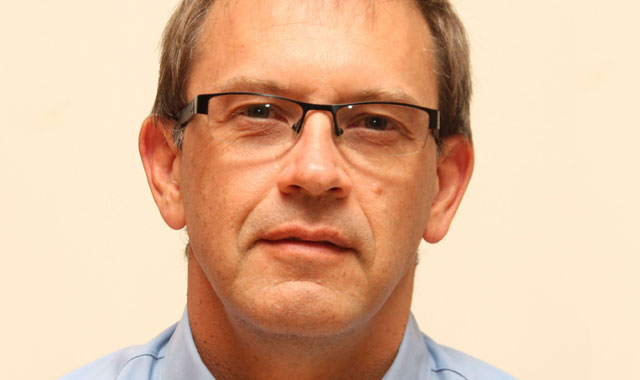
    Jannie van Zyl
    Vodacom executive head of innovation Jannie van Zyl

    Operators are particularly keen to get access to spectrum in the so-called “digital dividend” bands below 850MHz that will be vacated when South Africa completes its (long-delayed) transition from analogue to digital terrestrial television. They are also anxiously awaiting news on how the 1,9GHz, 2,3GHz and 2,6GHz bands might be licensed. These bands are well suited to delivering broadband in urban environments where base stations are closer together.

    “Considering the low levels of fixed-line penetration in the country, we believe that mobile technology has a leading role in extending broadband access to all South African citizens as well as supporting government’s 2020 Connect ambitions,” said Van Zyl.

    “If we are able to access more spectrum for mobile broadband services, this will have an extremely important benefit for all South Africans, as recent studies by the World Bank have shown that a 10% increase in a country’s broadband penetration results in a 0,6 % increase in GDP.”

    Currently, even in perfect radio conditions, we would only ever be able to achieve peak downlink throughput speeds of less than 70Mbit/s

    Van Zyl said Vodacom — and other operators — ideally need access to two complementary spectrum bands.

    “The first would be would be sub-1GHz spectrum, used for blanket coverage purposes. These sub-1GHz spectrum bands — 700MHz, 800MHz and 900MHz — are ideally suited to provide wide-scale coverage due to their superior propagation characteristics in comparison to spectrum bands beyond 1GHz.

    “By being able to use sub-1GHz spectrum, we would be able to provide better indoor coverage to our customers and also provide LTE coverage to more customers,” Van Zyl explained.

    “Instead of building more base stations to extend current LTE coverage, we would be able to extend our existing LTE coverage reach by [using] sub-1GHz [spectrum] on our existing base stations across the country.”

    Congested bands

    He said it is difficult for Vodacom to use its existing allocation at 900MHz (where it was originally licensed to provide voice telecoms) for LTE as the band is congested with legacy 2G voice services.

    “We have already re-farmed 900MHz spectrum away from 2G, to use it for 3G coverage extension. Further re-farming of our existing 900MHz allocation for LTE is not possible without seriously degrading the 2G and 3G networks which are already using this spectrum,” Van Zyl said. “Ideally, we would like to access the 800MHz (known as the digital dividend 1 spectrum) or the 700MHz (known as the digital dividend 2 spectrum).”

    But spectrum at higher frequencies such as 1,9GHz, 2,3GHz and 2,6GHz are also crucial for providing coverage, especially in the cities, he said.

    “If [these bands] are licensed to mobile operators, we would be able to quickly put them to use to offer greater speeds to our customers through mobile broadband services such as LTE-A. These capacity bands would be deployed in areas where there is a capacity demand (such as, but not limited to, metros and towns).”

    In order to deliver an optimal service, Van Zyl said Vodacom needs at least 2x10MHz of spectrum in a digital dividend band as well as a further 2x10MHz at the higher frequencies.

    In the absence of access to this spectrum, Vodacom is deploying its LTE network using the existing access it has in the 1,8GHz band, which it has reallocated away from legacy 2G services.
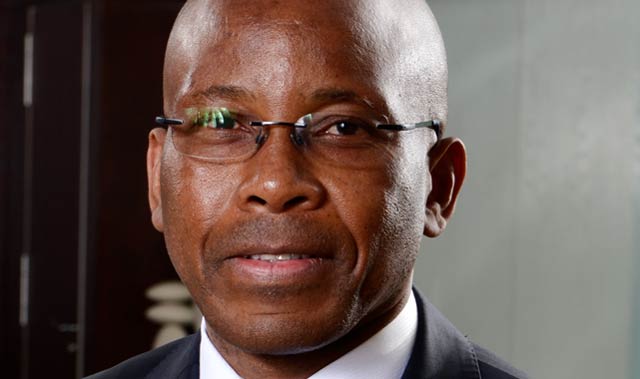
    MTN South Africa CEO Mteto Nyati
    MTN South Africa CEO Mteto Nyati

    The maximum Vodacom is able to use at 1,8GHz is 10MHz, as LTE works in carrier multiples of 5MHz and the company has only 12MHz in the band.

    “Currently, even in perfect radio conditions, we would only ever be able to achieve peak downlink throughput speeds of less than 70Mbit/s. We cannot roll out LTE-A services, which would give speeds of 100Mbit/s to 150Mbit/s on a wide scale. This is due to the requirement to ‘carrier aggregate’ spectrum from our existing 900MHz and 2,1GHz bands in the absence of additional spectrum,” he said.

    In the 900MHz band, Vodacom can’t reallocate spectrum for LTE-A due to the high traffic requirements of the existing 2G and 3G networks currently using the 900MHz spectrum. Similarly, it can’t reallocate its 2,1 GHz spectrum due to the high traffic requirements of the existing 3G network that is using this band.

    Spectrum is often considered the lifeblood of a mobile communications company

    “If we had to re-farm more spectrum from either 900MHz or 2,1GHz on a wider scale, we would seriously degrade the 2G and 3G services we provide to customers who do not have an LTE-capable device,” said Van Zyl.

    “Our ability to rollout LTE-A on a wider scale is therefore constrained by not having access to more spectrum. In addition, by not having access to more sub-1GHz spectrum, we cannot extend LTE coverage and improve indoor LTE signal levels as fast as we would like.”

    Swift licensing needed

    MTN South Africa is facing similar spectrum constraints, CEO Mteto Nyati said.

    “The availability of frequency spectrum is a very important factor in rolling out a national mobile network, and spectrum is often considered the lifeblood of a mobile communications company,” Nyati told TechCentral.

    “MTN, like most operators, is calling for swift licensing of the spectrum in order to meet consumer demands that are dependent on a quality national broadband network for 4G and LTE services,” he said.

    Nyati said that in the absence of access to additional spectrum, MTN is “densifying” its network by rolling out more base stations and reallocating its existing spectrum assets to support 4G technologies.

    Re-farming of existing frequency spectrum holdings needs to be done carefully so as not to degrade existing services

    However, this exercise has limitations, he said. “Re-farming of existing frequency spectrum holdings needs to be done carefully so as not to degrade existing services.”

    Nyati added that MTN would “welcome any progress” by government in issuing an integrated broadband strategy that would allow communications regulator Icasa to make the spectrum available.

    Cell C CEO Jose Dos Santos also bemoaned the fact that new spectrum bands have not yet been allocated to operators.

    “Access to additional spectrum is imperative for economic and social growth. Already operators abroad are rolling out next-generation technologies and South Africa will be left behind if additional spectrum is not released,” Dos Santos said. “Operators cannot effectively roll out next generation technologies like 4G and 5G without this spectrum.”
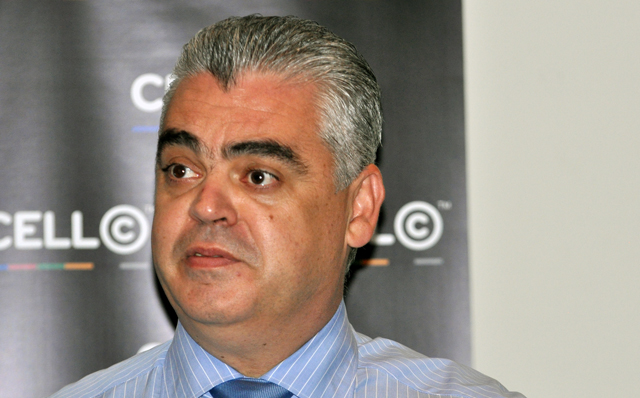
    Cell C CEO Jose Dos Santos
    Cell C CEO Jose Dos Santos

    South African consumers will not experience the benefit of future devices and new products and services when launched globally, if local operators cannot support these technologies, he added.

    “This will prohibit innovation and South Africa will not be able to compete globally. More importantly, if government wants to achieve its goal of affordable access to communication, specifically in rural areas, the allocation of spectrum must be prioritised. Without spectrum, operators cannot roll out services efficiently and affordably and the digital divide will widen.”  — © 2016 NewsCentral Media



    Cell C Icasa Jannie van Zyl Jose dos Santos Mteto Nyati MTN Siyabonga Cwele Vodacom
    Subscribe to TechCentral Subscribe to TechCentral
    Share. Facebook Twitter LinkedIn WhatsApp Telegram Email Copy Link
    Previous ArticleBackspace: ‘Upsetting the Apple cart’
    Next Article ZAR X: JSE gets a new competitor

    Related Posts

    Vodacom to take control of Safaricom in R36-billion deal - Shameel Joosub

    Vodacom to take control of Safaricom in R36-billion deal

    4 December 2025
    Building trust in a digital world: Vodacom Business's approach to security

    Building trust in a digital world – the Vodacom Business approach to security

    4 December 2025
    TCS | MTN Group CEO Ralph Mupita on competition, AI and the future of mobile

    TCS | Ralph Mupita on competition, AI and the future of mobile

    28 November 2025
    Company News
    AI is not a technology problem - iqbusiness

    AI is not a technology problem – iqbusiness

    5 December 2025
    Telcos are sitting on a data gold mine - but few know what do with it - Phillip du Plessis

    Telcos are sitting on a data gold mine – but few know what do with it

    4 December 2025
    Unlock smarter computing with your surface Copilot+ PC

    Unlock smarter computing with your Surface Copilot+ PC

    4 December 2025
    Opinion
    Your data, your hardware: the DIY AI revolution is coming - Duncan McLeod

    Your data, your hardware: the DIY AI revolution is coming

    20 November 2025
    Zero Carbon Charge founder Joubert Roux

    The energy revolution South Africa can’t afford to miss

    20 November 2025
    It's time for a new approach to government IT spend in South Africa - Richard Firth

    It’s time for a new approach to government IT spend in South Africa

    19 November 2025

    Subscribe to Updates

    Get the best South African technology news and analysis delivered to your e-mail inbox every morning.

    Latest Posts
    Big Microsoft 365 price increases coming next year

    Big Microsoft price increases coming next year

    5 December 2025
    AI is not a technology problem - iqbusiness

    AI is not a technology problem – iqbusiness

    5 December 2025
    Vodacom to take control of Safaricom in R36-billion deal - Shameel Joosub

    Vodacom to take control of Safaricom in R36-billion deal

    4 December 2025
    Black Friday goes digital in South Africa as online spending surges to record high

    Black Friday goes digital in South Africa as online spending surges to record high

    4 December 2025
    © 2009 - 2025 NewsCentral Media
    • Cookie policy (ZA)
    • TechCentral – privacy and Popia

    Type above and press Enter to search. Press Esc to cancel.

    Manage consent

    TechCentral uses cookies to enhance its offerings. Consenting to these technologies allows us to serve you better. Not consenting or withdrawing consent may adversely affect certain features and functions of the website.

    Functional Always active
    The technical storage or access is strictly necessary for the legitimate purpose of enabling the use of a specific service explicitly requested by the subscriber or user, or for the sole purpose of carrying out the transmission of a communication over an electronic communications network.
    Preferences
    The technical storage or access is necessary for the legitimate purpose of storing preferences that are not requested by the subscriber or user.
    Statistics
    The technical storage or access that is used exclusively for statistical purposes. The technical storage or access that is used exclusively for anonymous statistical purposes. Without a subpoena, voluntary compliance on the part of your Internet Service Provider, or additional records from a third party, information stored or retrieved for this purpose alone cannot usually be used to identify you.
    Marketing
    The technical storage or access is required to create user profiles to send advertising, or to track the user on a website or across several websites for similar marketing purposes.
    • Manage options
    • Manage services
    • Manage {vendor_count} vendors
    • Read more about these purposes
    View preferences
    • {title}
    • {title}
    • {title}