Close Menu
TechCentralTechCentral

    Subscribe to the newsletter

    Get the best South African technology news and analysis delivered to your e-mail inbox every morning.

    Facebook X (Twitter) YouTube LinkedIn
    WhatsApp Facebook X (Twitter) LinkedIn YouTube
    TechCentralTechCentral
    • News
      South Africa's next broadband war may be won by a bank - Capitec

      South Africa’s next broadband war may be won by a bank

      14 August 2026
      Bank robberies, ATM bombings collapse as criminals go digital

      Bank robberies, ATM bombings collapse as criminals go digital

      14 August 2026
      TCS | Herotel CEO Van Zyl Botha on beating Starlink to South Africa

      TCS | Herotel CEO Van Zyl Botha on beating Starlink to South Africa

      14 August 2026
      Blu Label's earnings just fell off a cliff - on paper - Brett Levy Mark Levy

      Blu Label’s earnings just fell off a cliff – on paper

      14 August 2026
      AI fraud is outrunning South African banking defences

      AI fraud is outrunning South African banking defences

      14 August 2026
    • World
      Russia building its own Starlink - and faster than expected - Vadym Skibitskyi

      Russia building its own Starlink – and faster than expected

      11 August 2026
      Meta AI will now tell parents if their teen is in crisis

      Meta AI will now tell parents if their teen is in crisis

      17 July 2026
      IBM shares crash 25% as AI upends software spending - Arvind Krishna

      IBM shares crash 25% as AI upends software spending

      15 July 2026
      Jony Ive's first OpenAI device: an AI smart speaker - Jony Ive and Sam Altman

      Jony Ive’s first OpenAI device: an AI smart speaker

      15 July 2026
      Stripe, Advent in talks to buy PayPal for $53-billion

      Stripe, Advent in talks to buy PayPal for $53-billion

      15 July 2026
    • In-depth
      Google DeepMind CEO Demis Hassabis. Image: John Sears

      The plan to stop AI from breaking the world

      16 July 2026
      The internet has a Strait of Hormuz problem

      The internet has a Strait of Hormuz problem

      15 July 2026
      AI boom sparks rally, frenzy and fear

      AI boom sparks rally, frenzy and fear

      11 June 2026
      Every plug-in hybrid on sale in South Africa, ranked by price - Lamborghini Temerario

      Every plug-in hybrid on sale in South Africa, ranked by price

      7 June 2026
      What Wi-Fi 8 will mean for wireless networks

      What Wi-Fi 8 will mean for wireless networks

      1 June 2026
    • TCS
      Meet the CIO | Discovery's Derek Wilcocks on AI, guardrails and growth

      Meet the CIO | Derek Wilcocks on how AI personalised Vitality

      13 August 2026
      TCS | Money just became native to the internet - Steven Boykey Sidley

      TCS | Money just became native to the internet – Steven Boykey Sidley

      12 August 2026
      TCS+ | Specops' Darren James on continuous trust in an AI world

      TCS+ | Specops’ Darren James on continuous trust in an AI world

      7 August 2026
      TCS+ | How AI is turning hardware into a subscription service - Shane van der Merwe Merchant West

      TCS+ | How AI is turning hardware into a subscription service

      6 August 2026
      TCS+ | Why South African workers must become supervisors of digital labour - Accelera Digital Group Cliff de Wit

      TCS+ | Why South African workers must become supervisors of digital labour

      31 July 2026
    • Opinion
      The author, Jannie van Zyl

      Selling vapour is corporate suicide in slow motion

      16 July 2026
      Brazil's online gambling crackdown is a lesson for South Africa

      How Amazon outmanoeuvred Starlink in South Africa

      15 July 2026
      The Popia problem with agentic AI - Herman Haasbroek

      The Popia problem with agentic AI

      14 July 2026
      The author, Fanie van Rooyen

      South Africa can still catch the AI wave – here’s how

      7 July 2026
      The author, Fanie van Rooyen

      The AI utopia South Africa can’t afford

      1 July 2026
    • Company Hubs
      • 1Stream
      • Africa Data Centres
      • AfriGIS
      • Altron Digital Business
      • Altron Document Solutions
      • Altron Group
      • Arctic Wolf
      • Ascent Technology
      • AvertITD
      • BBD
      • Braintree
      • CallMiner
      • CambriLearn
      • CM Telecom
      • Contactable
      • CYBER1 Solutions
      • Digicloud Africa
      • Digimune
      • Domains.co.za
      • ESET
      • Euphoria Telecom
      • HOSTAFRICA
      • Incredible Business
      • iONLINE
      • IQbusiness
      • Iris Network Systems
      • Kaspersky
      • LSD Open
      • Mitel
      • NEC XON
      • Netstar
      • Network Platforms
      • Next DLP
      • Ovations
      • Paracon
      • Paratus
      • Q-KON
      • SevenC
      • SkyWire
      • Solid8 Technologies
      • Telit Cinterion
      • Telviva
      • Tenable
      • Vertiv
      • Videri Digital
      • Vodacom Business
      • Vox
      • Wipro
      • Workday
      • XLink
    • Sections
      • AI and machine learning
      • Banking
      • Broadcasting and Media
      • Cloud services
      • Contact centres and CX
      • Cryptocurrencies
      • Education and skills
      • Electronics and hardware
      • Energy and sustainability
      • Enterprise software
      • Financial services
      • HealthTech
      • Information security
      • Internet and connectivity
      • Internet of Things
      • Investment
      • IT services
      • Lifestyle
      • Policy and regulation
      • Public sector
      • Retail and e-commerce
      • Satellite communications
      • Science
      • SMEs and start-ups
      • Social media
      • Talent and leadership
      • Telecoms
      • Watts & Wheels
    • Events
    • Advertise
    TechCentralTechCentral
    Home » Sections » Electronics and hardware » Wafer-thin phones prove design is trumping common sense

    Wafer-thin phones prove design is trumping common sense

    In the smartphone industry, thin is in - but it really shouldn't be.
    By Duncan McLeod15 September 2025
    Twitter LinkedIn Facebook WhatsApp Email Telegram Copy Link
    News Alerts
    WhatsApp

    Wafer-thin phones prove design is trumping common senseIn the smartphone industry, thin is in — but it really shouldn’t be.

    Last week, Apple unveiled the iPhone 17 Air, its thinnest iPhone ever, while Samsung recently debuted the Galaxy S25 Edge, also a wafer-like sliver of glass and silicon. Both launches drew headlines for their engineering feats. But let’s face facts here: this obsession with thinness is a triumph of marketing over common sense.

    The modern smartphone is no longer a luxury. It is a camera, computer, wallet, gaming console and health tracker. Shrinking it down further does nothing for functionality – and often undermines it. By chasing millimetres, the world’s top phone makers are giving up the very features consumers care about most: longer battery life, better cameras and devices that risk being bent if you sit on them by mistake.

    Shrinking transistors from the current 3nm down to 2nm means more computing power squeezed into less space

    No one should rush out to buy either the iPhone 17 Air or the Galaxy S25 Edge. First-generation designs tend to highlight problems that later iterations eventually smooth out (if they ever do). Early adopters paid for the privilege of being beta testers.

    The compromises needed to shave down thickness – smaller batteries, less robust cooling systems and tighter internal tolerances – are obvious. Repairability takes a big hit and durability becomes questionable. Yes, these phones look stunning in keynote slides, but the trade-offs are significant.

    That doesn’t mean the technology won’t improve. Apple is expected to move its next generation of A-series processors to a 2-nanometre process node at semiconductor manufacturing partner TSMC in 2026, a leap that should dramatically improve performance-per-watt. Samsung will do the same.

    Shrinking transistors from the current 3nm down to 2nm means more computing power squeezed into less space while drawing less energy. In theory, that could allow ultra-thin phones to claw back some battery efficiency.

    Moore’s law

    But let’s not fool ourselves here: the extra 5mm saved in thickness could just as easily have housed a battery with more capacity.

    The semiconductor industry has built its reputation on Moore’s law – the observation that transistor density doubles roughly every two years. Apple’s shift, with TSMC, to 2nm will move the company to the most advanced process node yet deployed.

    The benefits are substantial: smaller chips, reduced heat generation, and the ability to stack more specialised cores for AI and graphics. A 2nm chip will help offset the battery deficit by using less power for the same workloads.

    Read: iPhone Air steals the show at Apple’s 2025 launch event

    And because efficiency gains compound over time, Apple’s 2026 iPhones may well make today’s Air look like a prototype.

    But even then, consumer value doesn’t rest on advanced process nodes alone. A chip can be brilliant, but if the rest of the phone is a compromise – a tiny camera sensor or a battery that dies before dinner – then the device fails to serve its purpose. Performance gains from 2nm should be paired with design pragmatism, not this fetish for thinness.
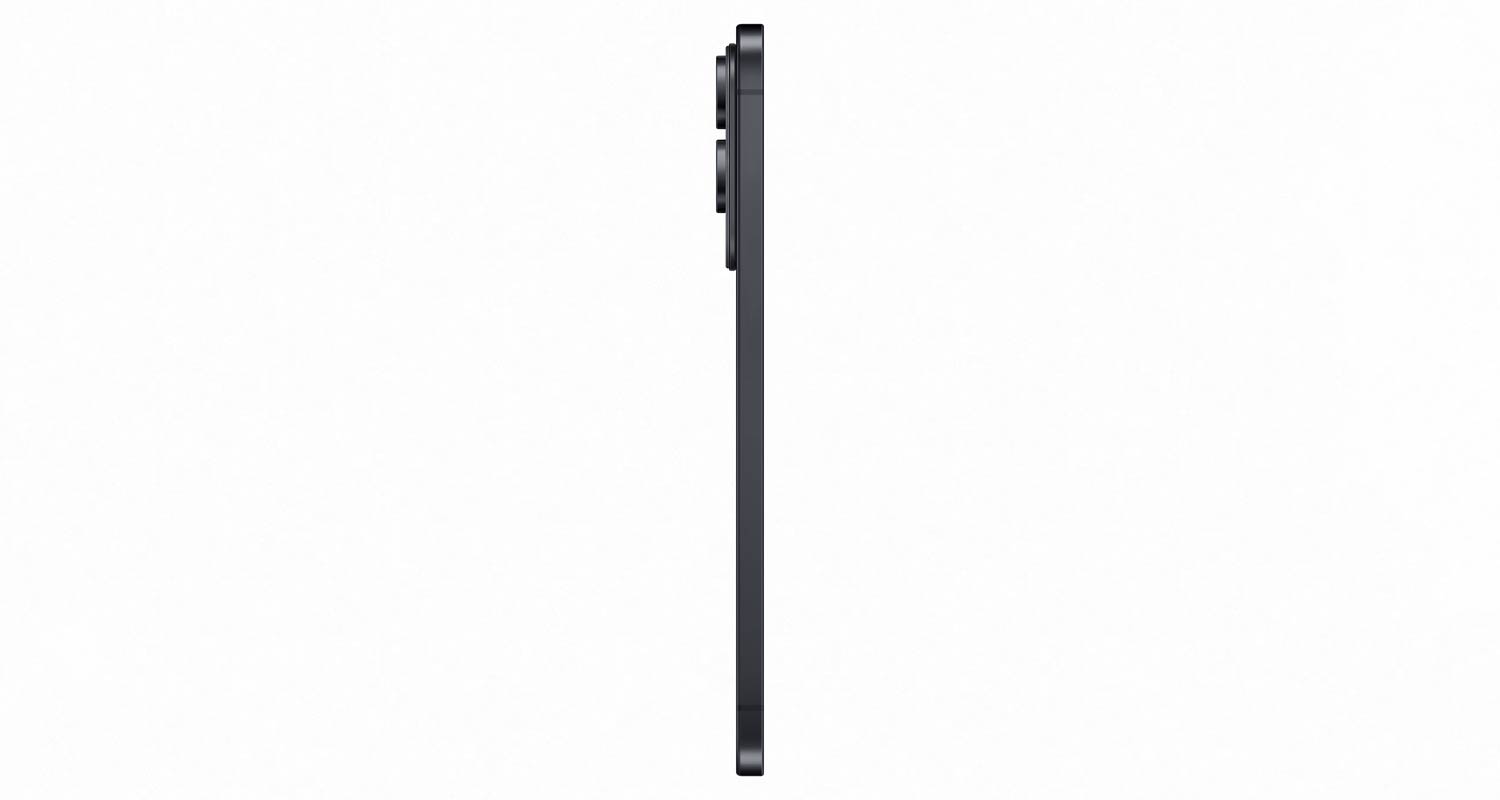
    Samsung Galaxy S25 Edge
    Samsung Galaxy S25 Edge

    Consumers consistently rank battery life and camera quality as their top priorities in surveys. Neither benefits from this newfound obsession with ultra-thinness.

    No, the drive to make thinner phones isn’t about consumer demand; rather, it’s about showroom appeal. A device that looks impossibly slim on a retail shelf grabs attention. Reviewers gasp. Share prices tick upwards. But once the honeymoon ends, users are left scrambling for their power banks.

    It’s ironic that, at the same time, accessory makers are thriving by selling bulky cases and battery packs – effectively undoing the very thinness that manufacturers trumpet. Equally ironic is that Apple is touting its own MagSafe battery pack for the iPhone 17 Air. And let’s face facts: if people genuinely wanted the thinnest possible device, phone cases wouldn’t be a multibillion-dollar industry, would they?

    Read: Why the real story at Apple’s launch was eSim, not the iPhone Air

    The sensible advice is simple: don’t buy the iPhone 17 Air or the Galaxy S25 Edge (or any of the other ultra-thin phones now sure to follow). For now, the best phones on the market are not the thinnest ones. They are the ones with balance – enough heft to pack in batteries that last, cameras that impress and chips that run cool under load.  – © 2025 NewsCentral Media

    Get breaking news from TechCentral on WhatsApp. Sign up here.

    Don’t miss:

    iPhone 17 price surprise in South Africa

    Follow TechCentral on Google News Add TechCentral as your preferred source on Google


    Apple iPhone iPhone 17 Air iPhone Air S25 Edge Samsung Samsung Galaxy S25 Edge
    WhatsApp YouTube
    Share. Facebook Twitter LinkedIn WhatsApp Telegram Email Copy Link
    Previous ArticleParks Tau turns thoughtful reform into farce
    Next Article Sentech turns in loss despite hike in revenue, clean audit

    Related Posts

    TCS+ | iStore Business on why Apple makes sense for SMEs - Sudesh Pillay and Tamia Nontsikelelo

    TCS+ | iStore Business on why Apple makes sense for SMEs

    30 July 2026
    Apple's next CEO plants his flag in Hollywood - John Ternus and Tim Cook

    Apple’s next CEO plants his flag in Hollywood

    28 July 2026
    Africa's most popular phones have a tracking problem

    Africa’s most popular phones have a tracking problem

    24 July 2026
    Company News
    Kaspersky on how to secure a supply chain you do not control

    Kaspersky on how to secure a supply chain you do not control

    13 August 2026
    Build or buy software? AI is rewriting the answer - BBD Software

    Build or buy software? AI is rewriting the answer

    12 August 2026
    Max zoom meets max speed with the new 5G Huawei Pura 90s series

    Max Zoom meets Max Speed with the 5G Huawei Pura 90s series

    11 August 2026
    Opinion
    The author, Jannie van Zyl

    Selling vapour is corporate suicide in slow motion

    16 July 2026
    Brazil's online gambling crackdown is a lesson for South Africa

    How Amazon outmanoeuvred Starlink in South Africa

    15 July 2026
    The Popia problem with agentic AI - Herman Haasbroek

    The Popia problem with agentic AI

    14 July 2026

    Subscribe to Updates

    Get the best South African technology news and analysis delivered to your e-mail inbox every morning.

    Latest Posts
    South Africa's next broadband war may be won by a bank - Capitec

    South Africa’s next broadband war may be won by a bank

    14 August 2026
    Bank robberies, ATM bombings collapse as criminals go digital

    Bank robberies, ATM bombings collapse as criminals go digital

    14 August 2026
    TCS | Herotel CEO Van Zyl Botha on beating Starlink to South Africa

    TCS | Herotel CEO Van Zyl Botha on beating Starlink to South Africa

    14 August 2026
    Blu Label's earnings just fell off a cliff - on paper - Brett Levy Mark Levy

    Blu Label’s earnings just fell off a cliff – on paper

    14 August 2026
    © 2009 - 2026 NewsCentral Media
    Built and maintained by Chronon
    • Cookie policy (ZA)
    • TechCentral – privacy and Popia

    Type above and press Enter to search. Press Esc to cancel.

    Manage consent

    TechCentral uses cookies to enhance its offerings. Consenting to these technologies allows us to serve you better. Not consenting or withdrawing consent may adversely affect certain features and functions of the website.

    Functional Always active
    The technical storage or access is strictly necessary for the legitimate purpose of enabling the use of a specific service explicitly requested by the subscriber or user, or for the sole purpose of carrying out the transmission of a communication over an electronic communications network.
    Preferences
    The technical storage or access is necessary for the legitimate purpose of storing preferences that are not requested by the subscriber or user.
    Statistics
    The technical storage or access that is used exclusively for statistical purposes. The technical storage or access that is used exclusively for anonymous statistical purposes. Without a subpoena, voluntary compliance on the part of your Internet Service Provider, or additional records from a third party, information stored or retrieved for this purpose alone cannot usually be used to identify you.
    Marketing
    The technical storage or access is required to create user profiles to send advertising, or to track the user on a website or across several websites for similar marketing purposes.
    • Manage options
    • Manage services
    • Manage {vendor_count} vendors
    • Read more about these purposes
    View preferences
    • {title}
    • {title}
    • {title}