Close Menu
TechCentralTechCentral

    Subscribe to the newsletter

    Get the best South African technology news and analysis delivered to your e-mail inbox every morning.

    Facebook X (Twitter) YouTube LinkedIn
    WhatsApp Facebook X (Twitter) LinkedIn YouTube
    TechCentralTechCentral
    • News
      Vuyani Jarana: Mobile coverage masks a deeper broadband failure

      Vuyani Jarana: Mobile coverage masks a deeper broadband failure

      30 January 2026
      SABC Plus to flight Microsoft AI training videos

      SABC Plus to flight Microsoft AI training videos

      30 January 2026
      Fibre ducts

      Fibre industry consolidation in KZN

      30 January 2026
      Watts & Wheels S1E3: 'BYD's Corolla Cross challenger'

      Watts & Wheels S1E3: ‘BYD’s Corolla Cross challenger’

      30 January 2026
      What ordinary South Africans really think of AI

      What ordinary South Africans really think of AI

      30 January 2026
    • World
      Apple acquires audio AI start-up Q.ai

      Apple acquires audio AI start-up Q.ai

      30 January 2026
      SpaceX IPO may be largest in history

      SpaceX IPO may be largest in history

      28 January 2026
      Nvidia throws AI at the weather

      Nvidia throws AI at weather forecasting

      27 January 2026
      Debate erupts over value of in-flight Wi-Fi

      Debate erupts over value of in-flight Wi-Fi

      26 January 2026
      Intel takes another hit - Intel CEO Lip-Bu Tan. Laure Andrillon/Reuters

      Intel takes another hit

      23 January 2026
    • In-depth
      How liberalisation is rewiring South Africa's power sector

      How liberalisation is rewiring South Africa’s power sector

      21 January 2026
      The top-performing South African tech shares of 2025

      The top-performing South African tech shares of 2025

      12 January 2026
      Digital authoritarianism grows as African states normalise internet blackouts

      Digital authoritarianism grows as African states normalise internet blackouts

      19 December 2025
      TechCentral's South African Newsmakers of 2025

      TechCentral’s South African Newsmakers of 2025

      18 December 2025
      Black Friday goes digital in South Africa as online spending surges to record high

      Black Friday goes digital in South Africa as online spending surges to record high

      4 December 2025
    • TCS
      TCS+ | How Cloud On Demand is helping SA businesses succeed in the cloud - Xhenia Rhode, Dion Kalicharan

      TCS+ | Cloud On Demand and Consnet: inside a real-world AWS partner success story

      30 January 2026
      Watts & Wheels S1E3: 'BYD's Corolla Cross challenger'

      Watts & Wheels S1E2: ‘China attacks, BMW digs in, Toyota’s sublime supercar’

      23 January 2026

      TCS+ | Why cybersecurity is becoming a competitive advantage for SA businesses

      20 January 2026
      Watts & Wheels S1E3: 'BYD's Corolla Cross challenger'

      Watts & Wheels: S1E1 – ‘William, Prince of Wheels’

      8 January 2026
      TCS+ | Africa's digital transformation - unlocking AI through cloud and culture - Cliff de Wit Accelera Digital Group

      TCS+ | Cloud without culture won’t deliver AI: Accelera’s Cliff de Wit

      12 December 2025
    • Opinion
      South Africa's skills advantage is being overlooked at home - Richard Firth

      South Africa’s skills advantage is being overlooked at home

      29 January 2026
      Why Elon Musk's Starlink is a 'hard no' for me - Songezo Zibi

      Why Elon Musk’s Starlink is a ‘hard no’ for me

      26 January 2026
      South Africa's new fibre broadband battle - Duncan McLeod

      South Africa’s new fibre broadband battle

      20 January 2026
      AI moves from pilots to production in South African companies - Nazia Pillay SAP

      AI moves from pilots to production in South African companies

      20 January 2026
      South Africa's new fibre broadband battle - Duncan McLeod

      ANC’s attack on Solly Malatsi shows how BEE dogma trumps economic reality

      14 December 2025
    • Company Hubs
      • Africa Data Centres
      • AfriGIS
      • Altron Digital Business
      • Altron Document Solutions
      • Altron Group
      • Arctic Wolf
      • AvertITD
      • Braintree
      • CallMiner
      • CambriLearn
      • CYBER1 Solutions
      • Digicloud Africa
      • Digimune
      • Domains.co.za
      • ESET
      • Euphoria Telecom
      • Incredible Business
      • iONLINE
      • IQbusiness
      • Iris Network Systems
      • LSD Open
      • NEC XON
      • Netstar
      • Network Platforms
      • Next DLP
      • Ovations
      • Paracon
      • Paratus
      • Q-KON
      • SevenC
      • SkyWire
      • Solid8 Technologies
      • Telit Cinterion
      • Tenable
      • Vertiv
      • Videri Digital
      • Vodacom Business
      • Wipro
      • Workday
      • XLink
    • Sections
      • AI and machine learning
      • Banking
      • Broadcasting and Media
      • Cloud services
      • Contact centres and CX
      • Cryptocurrencies
      • Education and skills
      • Electronics and hardware
      • Energy and sustainability
      • Enterprise software
      • Financial services
      • Information security
      • Internet and connectivity
      • Internet of Things
      • Investment
      • IT services
      • Lifestyle
      • Motoring
      • Public sector
      • Retail and e-commerce
      • Satellite communications
      • Science
      • SMEs and start-ups
      • Social media
      • Talent and leadership
      • Telecoms
    • Events
    • Advertise
    TechCentralTechCentral
    Home » World » West’s Swift ban on Russia could drive China to digital money

    West’s Swift ban on Russia could drive China to digital money

    By Andy Mukherjee28 February 2022
    Twitter LinkedIn Facebook WhatsApp Email Telegram Copy Link
    News Alerts
    WhatsApp

    Cutting some Russian banks’ access to Swift — the messaging network at the heart of global movement of money — may be a highly effective punishment for President Vladimir Putin’s invasion of Ukraine. But it will give other geopolitical rivals, especially China, the excuse to promote digital versions of their own central banks’ money in global trade and finance. That could weaken the dollar’s international clout.

    The key pillars of US economic hegemony are Swift, Chips and the dollar. Weaponising any one of them against the banking system of Russia, the 11th largest economy, will convince China that it needs an alternative to the trifecta to escape the ambit of American power.

    Based in Brussels, but with a data centre in the US state of Virginia, the cooperatively owned Society for Worldwide Interbank Financial Telecommunication, or Swift, is a “financial panopticon” that allows Washington to surveil cross-border fund flows. However, the actual policing often comes out of New York, where 95% of the world’s dollar payments are irrevocably settled.

    As an instrument of American power, Chips hasn’t gone unnoticed in Beijing

    The Clearing House Interbank Payments System, or Chips, is a private club of financial institutions. Its 43 members settle US$1.8-trillion in claims every day using a pre-funded account at the Federal Reserve. They all maintain US offices, and are subject to US law, which makes it easier for authorities to catch and punish. Millions of dollars in fees aren’t really worth the nearly $13-billion that Chips members like BNP Paribas, Standard Chartered and others have paid in fines over nearly two decades of Iran-related sanctions violations.

    As an instrument of American power, Chips hasn’t gone unnoticed in Beijing. In the Canadian court battle to stop the extradition to the US of Huawei Technologies finance chief Meng Wanzhou, the Chinese firm questioned HSBC Holdings’ decision to process $100-million of Skycom transactions in New York. Huawei argued that that since HSBC knew of its links with Skycom, a Hong Kong-based partner that sold equipment in Iran, the bank should have routed the funds through a smaller offshore dollar clearing system in the Chinese special administrative region — thereby avoiding putting the money on US soil.

    Yoke of Chips

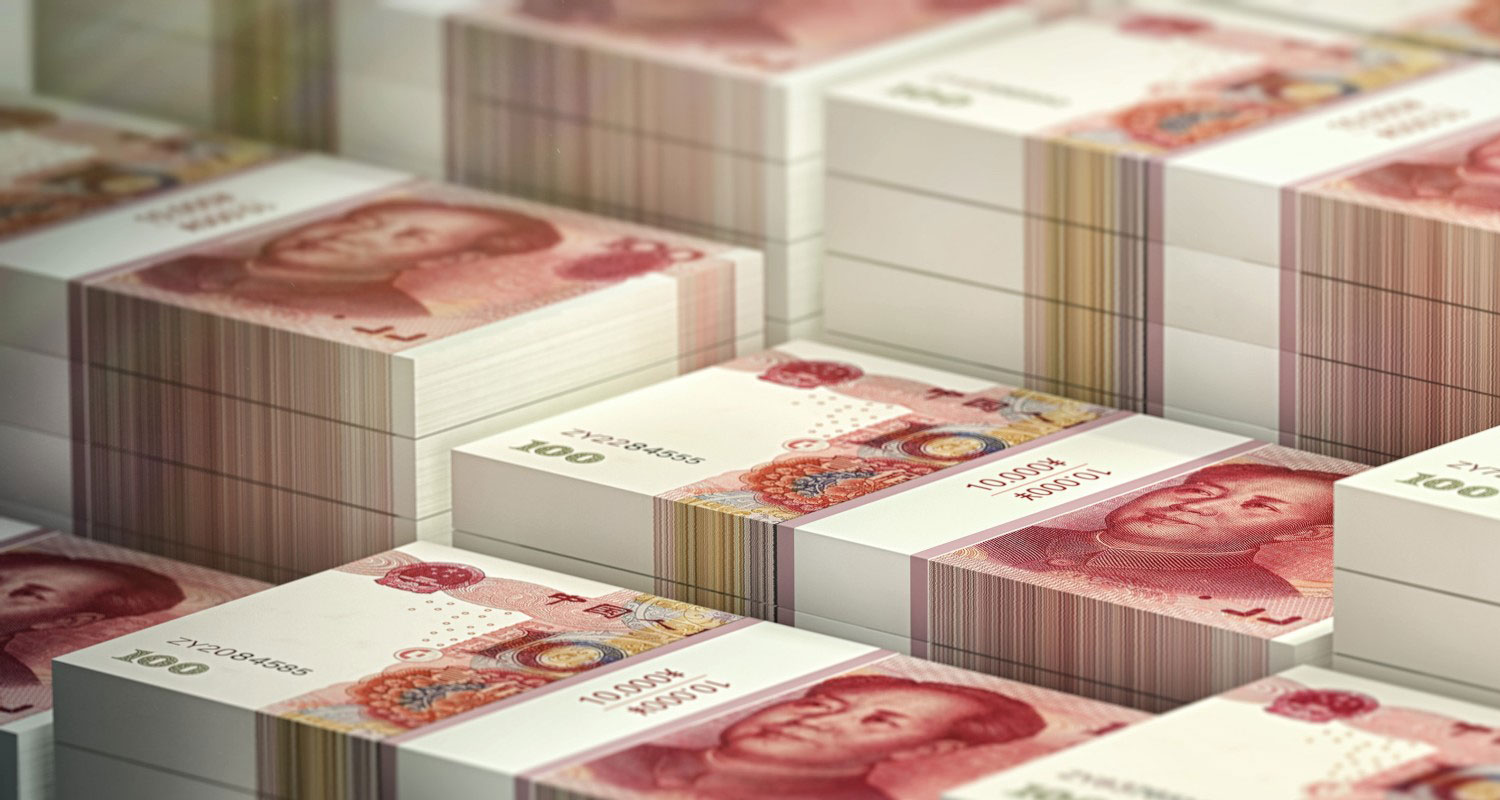
    To shrug off the yoke of Chips, China has readied its own Cross-Border Interbank Payment System (Cips). Cips settles international claims in yuan and can potentially run its own messaging network. (Since 2016, it has used Swift as its communications channel.) CIPS has grown rapidly. But as long as 40% of the world’s international payments are in dollars, a clearing facility for yuan — whose share is 3% — can’t be a replacement for Chips. Which is where e-CNY, the digital yuan that’s currently undergoing extensive pilot runs, enters the picture.

    The token is “technically ready” for cross-border use, according to a white paper released last year by the central bank, though it’s “designed mainly for domestic retail payments at present”. That could change. If a Chinese company or individual were to face the threat of not being able to send money overseas because Chips won’t clear the payment or Swift won’t carry the instructions, an intermediary in a friendly country could always be persuaded to accept e-CNY, and forward a dollar stablecoin payment to the Chinese buyer’s overseas counterparty.

    The intermediary faces no credit risk because it’s dealing in sovereign cash, backed by the taxpayers of the world’s second biggest economy. Nor will there be a settlement risk. The blockchain will make all transactions “atomic”, meaning that money will change hands — in tokenised forms — without exposing any of the counterparties to a limbo where they had parted with something of value without receiving the agreed consideration. If the Chinese buyer doesn’t have valid yuan to spend, the seller won’t receive payment; the go-between won’t be out of pocket. And to convert its digital yuan back into dollars — or a stablecoin like tether or USD coin that mimics the US dollar — the intermediary only needs people in the rest of the world to want to buy Chinese goods and assets, for which they will be required to send e-CNY.

    Swift will never see the transaction, Chips won’t have to clear it. Indeed, no Western bank may be needed to move funds across borders. Even if the US bars stablecoin firms from doing business with Chinese residents, it will not be able to prevent entities in a third country from buying dollar tokens on a cryptocurrency exchange to pay US-regulated businesses. The sphere of American economic dominance could shrink — not in a year or two, but perhaps over a decade or longer.

    And that’s probably the biggest thing about hegemonic power. It’s unrivalled as long as the consequences of its coercive use — collapsed banking systems, tanking national currencies, swooning stock markets — are left to the imagination of potential targets. However, when the muscles are actually flexed, the long-term result may be unpredictable: it could either send future rivals cowering or embolden their search for a viable alternative. Can e-CNY be the latter? Beijing may not know the answer, but after Russia’s semi-expulsion from Swift, it might want to find out.  — (c) 2022 Bloomberg LP



    Chips Huawei Meng Wanzhou Swift tether USD Coin Vladimir Putin
    WhatsApp YouTube Follow on Google News Add as preferred source on Google
    Share. Facebook Twitter LinkedIn WhatsApp Telegram Email Copy Link
    Previous ArticleTeraco connects to Oracle’s Johannesburg data centre
    Next Article IBM: Digital transformation can turn sustainability into a winning business strategy

    Related Posts

    Huawei turns 25 in South Africa, celebrates with major device discounts

    Huawei turns 25 in South Africa, celebrates with major device discounts

    30 January 2026
    Visa moves to plug stablecoins into the global payments system

    Visa moves to plug stablecoins into the global payments system

    15 January 2026
    China races to crack EUV as chip war with the West intensifies

    China races to crack EUV lithography as chip war with the West intensifies

    18 December 2025
    Company News
    Huawei turns 25 in South Africa, celebrates with major device discounts

    Huawei turns 25 in South Africa, celebrates with major device discounts

    30 January 2026
    Phishing has not disappeared, but it has grown up - KnowBe4

    Phishing has not disappeared, but it has grown up

    30 January 2026
    Smartphone affordability: South Africa's new economic divide - PayJoy

    Smartphone affordability: South Africa’s new economic divide

    29 January 2026
    Opinion
    South Africa's skills advantage is being overlooked at home - Richard Firth

    South Africa’s skills advantage is being overlooked at home

    29 January 2026
    Why Elon Musk's Starlink is a 'hard no' for me - Songezo Zibi

    Why Elon Musk’s Starlink is a ‘hard no’ for me

    26 January 2026
    South Africa's new fibre broadband battle - Duncan McLeod

    South Africa’s new fibre broadband battle

    20 January 2026

    Subscribe to Updates

    Get the best South African technology news and analysis delivered to your e-mail inbox every morning.

    Latest Posts
    Vuyani Jarana: Mobile coverage masks a deeper broadband failure

    Vuyani Jarana: Mobile coverage masks a deeper broadband failure

    30 January 2026
    TCS+ | How Cloud On Demand is helping SA businesses succeed in the cloud - Xhenia Rhode, Dion Kalicharan

    TCS+ | Cloud On Demand and Consnet: inside a real-world AWS partner success story

    30 January 2026
    Huawei turns 25 in South Africa, celebrates with major device discounts

    Huawei turns 25 in South Africa, celebrates with major device discounts

    30 January 2026
    SABC Plus to flight Microsoft AI training videos

    SABC Plus to flight Microsoft AI training videos

    30 January 2026
    © 2009 - 2026 NewsCentral Media
    • Cookie policy (ZA)
    • TechCentral – privacy and Popia

    Type above and press Enter to search. Press Esc to cancel.

    Manage consent

    TechCentral uses cookies to enhance its offerings. Consenting to these technologies allows us to serve you better. Not consenting or withdrawing consent may adversely affect certain features and functions of the website.

    Functional Always active
    The technical storage or access is strictly necessary for the legitimate purpose of enabling the use of a specific service explicitly requested by the subscriber or user, or for the sole purpose of carrying out the transmission of a communication over an electronic communications network.
    Preferences
    The technical storage or access is necessary for the legitimate purpose of storing preferences that are not requested by the subscriber or user.
    Statistics
    The technical storage or access that is used exclusively for statistical purposes. The technical storage or access that is used exclusively for anonymous statistical purposes. Without a subpoena, voluntary compliance on the part of your Internet Service Provider, or additional records from a third party, information stored or retrieved for this purpose alone cannot usually be used to identify you.
    Marketing
    The technical storage or access is required to create user profiles to send advertising, or to track the user on a website or across several websites for similar marketing purposes.
    • Manage options
    • Manage services
    • Manage {vendor_count} vendors
    • Read more about these purposes
    View preferences
    • {title}
    • {title}
    • {title}