Close Menu
TechCentralTechCentral

    Subscribe to the newsletter

    Get the best South African technology news and analysis delivered to your e-mail inbox every morning.

    Facebook X (Twitter) YouTube LinkedIn
    WhatsApp Facebook X (Twitter) LinkedIn YouTube
    TechCentralTechCentral
    • News
      Mythos forces South African banks onto high alert - Graham Lee

      Mythos forces South African banks onto high alert

      23 April 2026
      Free calls, dead voice and Shameel Joosub's Spanish ghost

      Free calls, dead voice and Shameel Joosub’s Spanish ghost

      22 April 2026
      Capitec CEO Graham Lee

      Capitec blows up MVNO pricing with free on-net calls

      22 April 2026
      Eskom developing bitcoin mining plan but needs Nersa's nod - Agnes Mlambo

      Eskom developing bitcoin mining plan but needs Nersa’s nod

      22 April 2026
      Capitec bets big on AI - and keeps hiring

      Capitec bets big on AI – and keeps hiring

      22 April 2026
    • World
      More organic compounds detected on Mars - Nasa Curiosity rover

      More organic compounds detected on Mars

      21 April 2026
      Adobe bets on AI agents to fend off cheaper rivals

      Adobe bets on AI agents to fend off cheaper rivals

      16 April 2026
      Google poised to lose ad crown to Meta

      Google poised to lose ad crown to Meta

      14 April 2026
      Grand Theft Data - hackers hit Rockstar Games - Grand Theft Auto

      Grand Theft Data – hackers hit Rockstar Games

      14 April 2026
      UK PM Keir Starmer declares war on doomscrolling

      UK PM Keir Starmer declares war on doomscrolling

      13 April 2026
    • In-depth
      Africa switches on as Europe dims the lights

      Africa switches on as Europe dims the lights

      9 April 2026
      The biggest untapped EV market on Earth is hiding in plain sight

      The biggest untapped EV market on Earth is hiding in plain sight

      1 April 2026
      The R18-billion tech giant hiding in plain sight - Jens Montanana

      The R16-billion tech giant hiding in plain sight

      26 March 2026
      The last generation of coders

      The last generation of coders

      18 February 2026
      Sentech is in dire straits

      Sentech is in dire straits

      10 February 2026
    • TCS

      TCS+ | ‘The ISP for ISPs’: Vox’s shift to wholesale aggregator

      20 April 2026
      TCS | Werner Lindemann on how AI is rewriting the infosec rulebook

      TCS | Werner Lindemann on how AI is rewriting the infosec rulebook

      15 April 2026
      TCS | Donovan Marsh on AI and the future of filmmaking

      TCS | Donovan Marsh on AI and the future of filmmaking

      7 April 2026
      TCS+ | Vodacom Business moves to crack the SME tech gap - Andrew Fulton, Sannesh Beharie

      TCS+ | Vodacom Business moves to crack the SME tech gap

      7 April 2026
      TCS | MTN's Divysh Joshi on the strategy behind Pi - Divyesh Joshi

      TCS | MTN’s Divyesh Joshi on the strategy behind Pi

      1 April 2026
    • Opinion
      The conflict of interest at the heart of PayShap's slow adoption - Cheslyn Jacobs

      The conflict of interest at the heart of PayShap’s slow adoption

      26 March 2026
      South Africa's energy future hinges on getting wheeling right - Aishah Gire

      South Africa’s energy future hinges on getting wheeling right

      10 March 2026
      Hold the doom: the case for a South African comeback - Duncan McLeod

      Apple just dropped a bomb on the Windows world

      5 March 2026
      R230-million in the bag for Endeavor's third Harvest Fund - Alison Collier

      VC’s centre of gravity is shifting – and South Africa is in the frame

      3 March 2026
      Hold the doom: the case for a South African comeback - Duncan McLeod

      Hold the doom: the case for a South African comeback

      26 February 2026
    • Company Hubs
      • 1Stream
      • Africa Data Centres
      • AfriGIS
      • Altron Digital Business
      • Altron Document Solutions
      • Altron Group
      • Arctic Wolf
      • Ascent Technology
      • AvertITD
      • BBD
      • Braintree
      • CallMiner
      • CambriLearn
      • CYBER1 Solutions
      • Digicloud Africa
      • Digimune
      • Domains.co.za
      • ESET
      • Euphoria Telecom
      • HOSTAFRICA
      • Incredible Business
      • iONLINE
      • IQbusiness
      • Iris Network Systems
      • Kaspersky
      • LSD Open
      • Mitel
      • NEC XON
      • Netstar
      • Network Platforms
      • Next DLP
      • Ovations
      • Paracon
      • Paratus
      • Q-KON
      • SevenC
      • SkyWire
      • Solid8 Technologies
      • Telit Cinterion
      • Telviva
      • Tenable
      • Vertiv
      • Videri Digital
      • Vodacom Business
      • Wipro
      • Workday
      • XLink
    • Sections
      • AI and machine learning
      • Banking
      • Broadcasting and Media
      • Cloud services
      • Contact centres and CX
      • Cryptocurrencies
      • Education and skills
      • Electronics and hardware
      • Energy and sustainability
      • Enterprise software
      • Financial services
      • HealthTech
      • Information security
      • Internet and connectivity
      • Internet of Things
      • Investment
      • IT services
      • Lifestyle
      • Motoring
      • Policy and regulation
      • Public sector
      • Retail and e-commerce
      • Satellite communications
      • Science
      • SMEs and start-ups
      • Social media
      • Talent and leadership
      • Telecoms
    • Events
    • Advertise
    TechCentralTechCentral
    Home » In-depth » What firing Gordhan would cost SA

    What firing Gordhan would cost SA

    By The Conversation21 February 2017
    Twitter LinkedIn Facebook WhatsApp Email Telegram Copy Link
    News Alerts
    WhatsApp
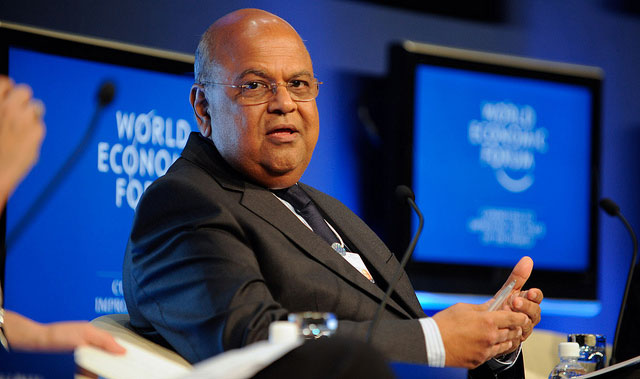
    Pravin Gordhan

    Many see the decision by the ANC to send the disgraced former CEO of the power utility Eskom to parliament as the precursor to another attack on the national treasury and to remove finance minister Pravin Gordhan.

    The decision to give Brian Molefe a seat in the country’s parliament has led to widespread speculation that he is being positioned for a cabinet post — either as finance minister or as deputy finance minister. While some commentators believe that President Jacob Zuma has his sights set on appointing Molefe as finance minister, others argue that the real target is deputy minister Mcebisi Jonas. The deputy minister blew the whistle on an alleged bribery attempt by a member of the Gupta family which is at the centre of a political storm amid allegations that it has attempted to exert undue influence on Zuma.

    Either way, there is no doubt that Molefe’s appointment to either position would cause substantial turmoil in the country’s financial system and cost South Africa billions of rand.

    The rand

    South Africa would take a massive economic blow because its currency would depreciate dramatically. The rand fell through the floor the last time Zuma made a misbegotten attempt to install one of his cronies at the helm of the national treasury in December 2015.

    This should worry South Africans. The country’s current account deficit in the third quarter of 2016 was 4,1%. This means that the sum of imports and external debt — borrowing from abroad — is larger than the sum of its exports and lending abroad. Mineral products, machinery and chemical products alone constitute more than 50% of South Africa’s imports. A weaker rand would make these more expensive since the country would have to pay more rand per dollar value. This means that prices for everything from consumer products to transportation would go up. South African firms, which often depend on intermediate inputs from abroad, would face a rise in the cost for their products and an erosion of their profits. Consequently, fewer people would invest in the country.

    A currency depreciation would affect investors in other ways, too. A weaker rand would diminish their returns and they would therefore be more likely to look for investment opportunities elsewhere. Not only will they stop investing, they would also likely unwind their existing positions. This in turn would drain liquidity from the financial system, making banks less likely to provide new loans for businesses. The knock-on effect would be lower growth and higher unemployment.

    It is difficult to put a number on the impact of a sudden depreciation of the rand. But some simple back-of-the-envelope calculations can help. South Africa spends roughly US$10bn more on imports than it gets from exports. This corresponds roughly to R130bn/year. If the rand weakens from R13 to R14/$, the country would need another R10bn to finance its trade imbalance.

    South Africa has watched this movie before. Between November 2015 and January 2016 when Zuma installed the backbencher Des van Rooyen as finance minister, the rand weakened from R14,40 to R16,90/$. This R2,50/$ increase corresponded to additional R25bn cost to finance our trade deficit. On top of this, private investors are estimated to have lost R171bn after finance minister Nhlanhla Nene was fired in 2015.

    Secondary effects

    Removing either the finance minister or his deputy would also result in rating agencies downgrading the country’s investment rating to junk status.

    Zuma has shown in the past that he has no clue about the impact of ratings on the country’s finances. Amid threats of downgrade late last year, Zuma was quoted as saying: “But although they’re important, their ratings don’t necessarily have an impact on the agreements and commissions South Africa have entered into with other countries.”

    This simply is not true. A downgrade affects the interest rates on every new bond issuance. Every year, some of our outstanding R2 trillion domestic and R141bn foreign-denominated debt has to be rolled over. Debt services are already at roughly R150bn/year — the second largest position in the country’s budget. A 5% increase in the country’s refinancing cost would already cost South Africa additional R7,5bn every year. Money that is missing to finance social grants, healthcare, police or student bursaries.

    Banking group Absa did some sample calculations on how a ratings downgrade would affect the average South African. It concluded that every adult person would lose roughly R2 000 because a ratings downgrade would mean that the banks themselves would face higher refinancing costs. These would be passed on to their customers.

    These numbers mirror a World Bank estimate that a ratings downgrade in South Africa would result in a reduction of R1 000/capita by the end of 2017.

    The numbers paint a clear picture. Zuma’s last attack on the national treasury cost South Africa billions. Molefe’s appointment would be another attack on the institution given that he was implicated by the former public protector Thuli Madonsela in her state capture report. The effect of his appointment would be equally costly for the country.

    South Africans should not allow this raid on the national treasury to happen. The last time Zuma and his allies attempted to capture a well-functioning institution for their own personal gains the private sector gave them a hiding. The good news is that it is likely that markets will show a strong reaction this time, too. The question is whether ordinary South Africans realise the threat that a captured national treasury would pose to their wallets and stand up before it is too late.The Conversation

    • Co-Pierre Georg is senior lecturer, African Institute for Financial Markets and Risk Management, University of Cape Town
    • This article was originally published on The Conversation

    Follow TechCentral on Google News Add TechCentral as your preferred source on Google


    Brian Molefe Co-Pierre Georg Des van Rooyen Jacob Zuma Mcebisi Jonas Pravin Gordhan
    WhatsApp YouTube
    Share. Facebook Twitter LinkedIn WhatsApp Telegram Email Copy Link
    Previous ArticleZAR X goes live with real-time settlement
    Next Article Interview: ZAR X CTO Jim Brent [podcast]

    Related Posts

    Hold the doom: the case for a South African comeback - Duncan McLeod

    Hold the doom: the case for a South African comeback

    26 February 2026
    Television at 50 | How the SABC lost its way - and what it must become

    Television at 50 | How the SABC lost its way – and what it must become

    5 January 2026
    ICT BEE fight deepens as MK, EFF target Malatsi - Colleen Makhubele

    ICT BEE fight deepens as MK, EFF target Malatsi

    15 December 2025
    Company News
    Your brand is invisible to the AI that's choosing your competitor - Michelle Losco

    Your brand is invisible to the AI that’s choosing your competitor

    23 April 2026
    How AnyDesk is redefining remote access for African enterprises

    How AnyDesk is redefining remote access for African enterprises

    22 April 2026
    Centracom's Pindrop takes the pain out of wholesale fibre

    Centracom’s Pindrop takes the pain out of wholesale fibre

    22 April 2026
    Opinion
    The conflict of interest at the heart of PayShap's slow adoption - Cheslyn Jacobs

    The conflict of interest at the heart of PayShap’s slow adoption

    26 March 2026
    South Africa's energy future hinges on getting wheeling right - Aishah Gire

    South Africa’s energy future hinges on getting wheeling right

    10 March 2026
    Hold the doom: the case for a South African comeback - Duncan McLeod

    Apple just dropped a bomb on the Windows world

    5 March 2026

    Subscribe to Updates

    Get the best South African technology news and analysis delivered to your e-mail inbox every morning.

    Latest Posts
    Your brand is invisible to the AI that's choosing your competitor - Michelle Losco

    Your brand is invisible to the AI that’s choosing your competitor

    23 April 2026
    Mythos forces South African banks onto high alert - Graham Lee

    Mythos forces South African banks onto high alert

    23 April 2026
    Free calls, dead voice and Shameel Joosub's Spanish ghost

    Free calls, dead voice and Shameel Joosub’s Spanish ghost

    22 April 2026
    Capitec CEO Graham Lee

    Capitec blows up MVNO pricing with free on-net calls

    22 April 2026
    © 2009 - 2026 NewsCentral Media
    • Cookie policy (ZA)
    • TechCentral – privacy and Popia

    Type above and press Enter to search. Press Esc to cancel.

    Manage consent

    TechCentral uses cookies to enhance its offerings. Consenting to these technologies allows us to serve you better. Not consenting or withdrawing consent may adversely affect certain features and functions of the website.

    Functional Always active
    The technical storage or access is strictly necessary for the legitimate purpose of enabling the use of a specific service explicitly requested by the subscriber or user, or for the sole purpose of carrying out the transmission of a communication over an electronic communications network.
    Preferences
    The technical storage or access is necessary for the legitimate purpose of storing preferences that are not requested by the subscriber or user.
    Statistics
    The technical storage or access that is used exclusively for statistical purposes. The technical storage or access that is used exclusively for anonymous statistical purposes. Without a subpoena, voluntary compliance on the part of your Internet Service Provider, or additional records from a third party, information stored or retrieved for this purpose alone cannot usually be used to identify you.
    Marketing
    The technical storage or access is required to create user profiles to send advertising, or to track the user on a website or across several websites for similar marketing purposes.
    • Manage options
    • Manage services
    • Manage {vendor_count} vendors
    • Read more about these purposes
    View preferences
    • {title}
    • {title}
    • {title}