
Close Menu
TechCentralTechCentral

    Subscribe to the newsletter

    Get the best South African technology news and analysis delivered to your e-mail inbox every morning.

    Facebook X (Twitter) YouTube LinkedIn
    WhatsApp Facebook X (Twitter) LinkedIn YouTube
    TechCentralTechCentral
    • News
      Schreiber publishes draft rules for South Africa's digital ID system

      Schreiber publishes draft rules for South Africa’s digital ID system

      5 May 2026
      From app idea to board game hit - Elijah Djan and Danei Rall FinMaster

      From app idea to board game hit

      5 May 2026
      Your biggest cyber threat is now sitting at the desk next to you - Heino Gevers Mimecast

      Your biggest cyber threat is now sitting at the desk next to you

      5 May 2026
      Vodacom advances on strong trading update

      Vodacom advances on strong trading update

      5 May 2026
      AI is quietly reshaping how F1 teams race, spend and win

      AI is quietly reshaping how F1 teams race, spend and win

      5 May 2026
    • World
      'It was my idea': Musk claims paternity of OpenAI - Elon Musk

      ‘It was my idea’: Musk claims paternity of OpenAI

      29 April 2026
      Pivotal week for US tech stocks

      Pivotal week for US tech stocks

      28 April 2026
      Worries over OpenAI's growth as Anthropic gains ground - Sam Altman. Shelby Tauber/Reuters

      Worries over OpenAI’s growth as Anthropic gains ground

      28 April 2026
      Taylor Swift trademarks her voice to fight AI fakes

      Taylor Swift trademarks her voice to fight AI fakes

      28 April 2026
      DeepSeek's long-awaited V4 model enters preview

      DeepSeek’s long-awaited V4 model enters preview

      24 April 2026
    • In-depth
      Alfa's electric rebel - Alfa Romeo Junior Elettrica Veloce

      Alfa’s electric rebel

      29 April 2026
      Africa switches on as Europe dims the lights

      Africa switches on as Europe dims the lights

      9 April 2026
      The biggest untapped EV market on Earth is hiding in plain sight

      The biggest untapped EV market on Earth is hiding in plain sight

      1 April 2026
      The R18-billion tech giant hiding in plain sight - Jens Montanana

      The R16-billion tech giant hiding in plain sight

      26 March 2026
      The last generation of coders

      The last generation of coders

      18 February 2026
    • TCS
      TCS | The Cape Town start-up listening for TB with AI - Braden van Breda

      TCS | The Cape Town start-up listening for TB with AI

      4 May 2026

      TCS+ | ‘The ISP for ISPs’: Vox’s shift to wholesale aggregator

      20 April 2026
      TCS | Werner Lindemann on how AI is rewriting the infosec rulebook

      TCS | Werner Lindemann on how AI is rewriting the infosec rulebook

      15 April 2026
      TCS | Donovan Marsh on AI and the future of filmmaking

      TCS | Donovan Marsh on AI and the future of filmmaking

      7 April 2026
      TCS+ | Vodacom Business moves to crack the SME tech gap - Andrew Fulton, Sannesh Beharie

      TCS+ | Vodacom Business moves to crack the SME tech gap

      7 April 2026
    • Opinion
      Free calls, dead voice and Shameel Joosub's Spanish ghost - Duncan McLeod

      Free calls, dead voice and Shameel Joosub’s Spanish ghost

      22 April 2026
      The conflict of interest at the heart of PayShap's slow adoption - Cheslyn Jacobs

      The conflict of interest at the heart of PayShap’s slow adoption

      26 March 2026
      South Africa's energy future hinges on getting wheeling right - Aishah Gire

      South Africa’s energy future hinges on getting wheeling right

      10 March 2026
      Free calls, dead voice and Shameel Joosub's Spanish ghost - Duncan McLeod

      Apple just dropped a bomb on the Windows world

      5 March 2026
      R230-million in the bag for Endeavor's third Harvest Fund - Alison Collier

      VC’s centre of gravity is shifting – and South Africa is in the frame

      3 March 2026
    • Company Hubs
      • 1Stream
      • Africa Data Centres
      • AfriGIS
      • Altron Digital Business
      • Altron Document Solutions
      • Altron Group
      • Arctic Wolf
      • Ascent Technology
      • AvertITD
      • BBD
      • Braintree
      • CallMiner
      • CambriLearn
      • Contactable
      • CYBER1 Solutions
      • Digicloud Africa
      • Digimune
      • Domains.co.za
      • ESET
      • Euphoria Telecom
      • HOSTAFRICA
      • Incredible Business
      • iONLINE
      • IQbusiness
      • Iris Network Systems
      • Kaspersky
      • LSD Open
      • Mitel
      • NEC XON
      • Netstar
      • Network Platforms
      • Next DLP
      • Ovations
      • Paracon
      • Paratus
      • Q-KON
      • SevenC
      • SkyWire
      • Solid8 Technologies
      • Telit Cinterion
      • Telviva
      • Tenable
      • Vertiv
      • Videri Digital
      • Vodacom Business
      • Wipro
      • Workday
      • XLink
    • Sections
      • AI and machine learning
      • Banking
      • Broadcasting and Media
      • Cloud services
      • Contact centres and CX
      • Cryptocurrencies
      • Education and skills
      • Electronics and hardware
      • Energy and sustainability
      • Enterprise software
      • Financial services
      • HealthTech
      • Information security
      • Internet and connectivity
      • Internet of Things
      • Investment
      • IT services
      • Lifestyle
      • Motoring
      • Policy and regulation
      • Public sector
      • Retail and e-commerce
      • Satellite communications
      • Science
      • SMEs and start-ups
      • Social media
      • Talent and leadership
      • Telecoms
    • Events
    • Advertise
    TechCentralTechCentral
    Home » Sections » Science » What if the Big Bang wasn’t the beginning?

    What if the Big Bang wasn’t the beginning?

    The Big Bang is often described as the explosive birth of the universe. But what if this was not the beginning at all?
    By The Conversation4 June 2025
    Twitter LinkedIn Facebook WhatsApp Email Telegram Copy Link
    News Alerts
    WhatsApp

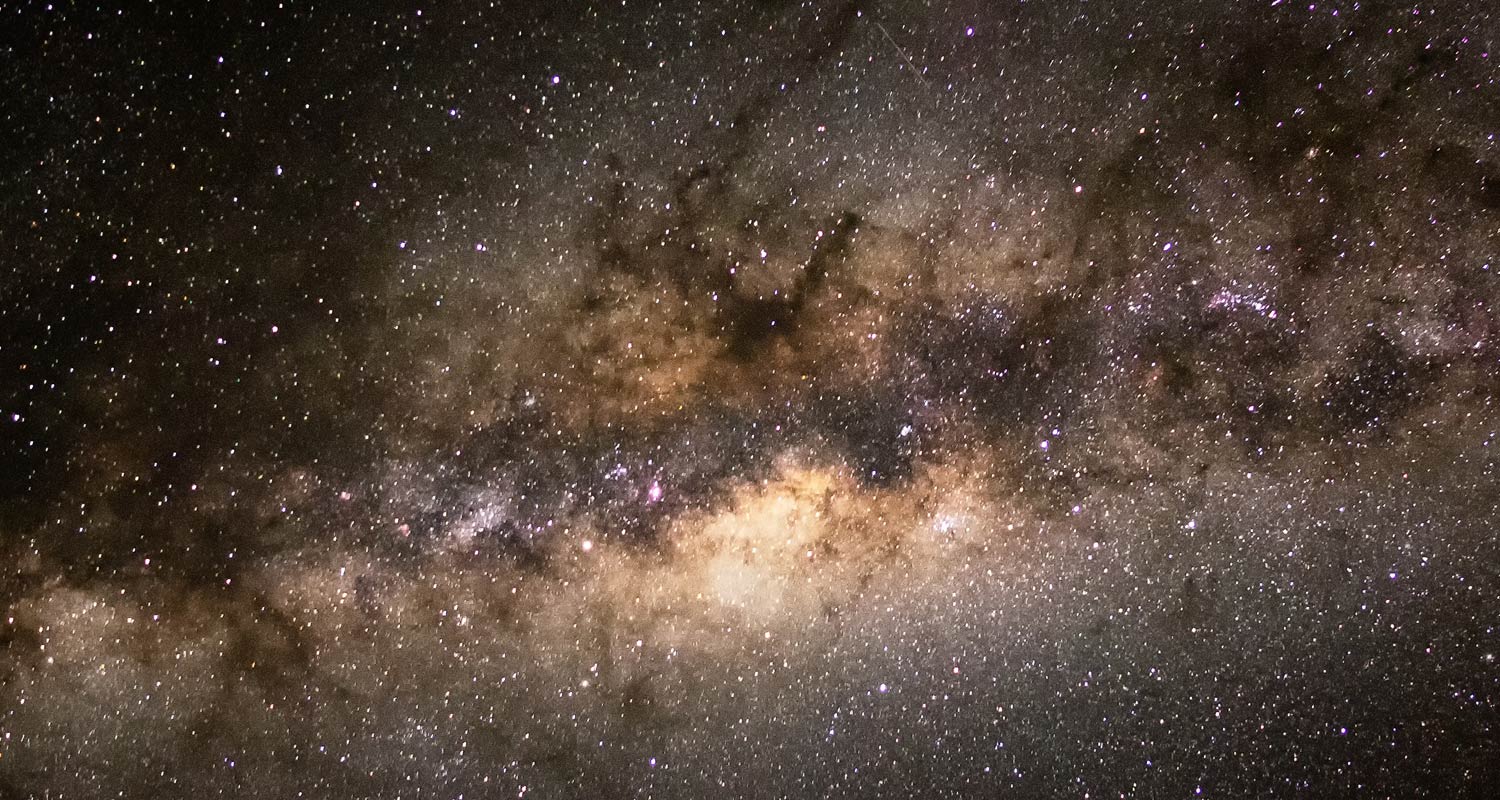
    What if the Big Bang wasn't the beginning?The Big Bang is often described as the explosive birth of the universe – a singular moment when space, time and matter sprang into existence. But what if this was not the beginning at all? What if our universe emerged from something else – something more familiar and radical at the same time?

    In a new paper, published in Physical Review D, my colleagues and I propose a striking alternative. Our calculations suggest the Big Bang was not the start of everything, but rather the outcome of a gravitational crunch or collapse that formed a very massive black hole – followed by a bounce inside it.

    This idea, which we call the black hole universe, offers a radically different view of cosmic origins, yet it is grounded entirely in known physics and observations.

    The standard model of cosmology works well – but only by introducing new ingredients we have never observed directly

    Today’s standard cosmological model, based on the Big Bang and cosmic inflation (the idea that the early universe rapidly blew up in size), has been remarkably successful in explaining the structure and evolution of the universe. But it comes at a price: it leaves some of the most fundamental questions unanswered.

    For one, the Big Bang model begins with a singularity – a point of infinite density where the laws of physics break down. This is not just a technical glitch; it’s a deep theoretical problem that suggests we don’t really understand the beginning at all.

    To explain the universe’s large-scale structure, physicists introduced a brief phase of rapid expansion into the early universe called cosmic inflation, powered by an unknown field with strange properties. Later, to explain the accelerating expansion observed today, they added another “mysterious” component: dark energy.

    In short, the standard model of cosmology works well – but only by introducing new ingredients we have never observed directly. Meanwhile, the most basic questions remain open: where did everything come from? Why did it begin this way? And why is the universe so flat, smooth and large?

    New model

    Our new model tackles these questions from a different angle – by looking inward instead of outward. Instead of starting with an expanding universe and trying to trace back how it began, we consider what happens when an overly dense collection of matter collapses under gravity.

    This is a familiar process: stars collapse into black holes, which are among the most well-understood objects in physics. But what happens inside a black hole, beyond the event horizon from which nothing can escape, remains a mystery.

    Read: Africa moves to end fragmented space efforts

    In 1965, the British physicist Roger Penrose proved that under very general conditions, gravitational collapse must lead to a singularity. This result, extended by the late British physicist Stephen Hawking and others, underpins the idea that singularities – like the one at the Big Bang – are unavoidable.

    The idea helped win Penrose a share of the 2020 Nobel prize in physics and inspired Hawking’s global bestseller A Brief History of Time: From the Big Bang to Black Holes. But there’s a caveat. These “singularity theorems” rely on “classical physics” which describes ordinary macroscopic objects. If we include the effects of quantum mechanics, which rules the tiny microcosmos of atoms and particles, as we must at extreme densities, the story may change.
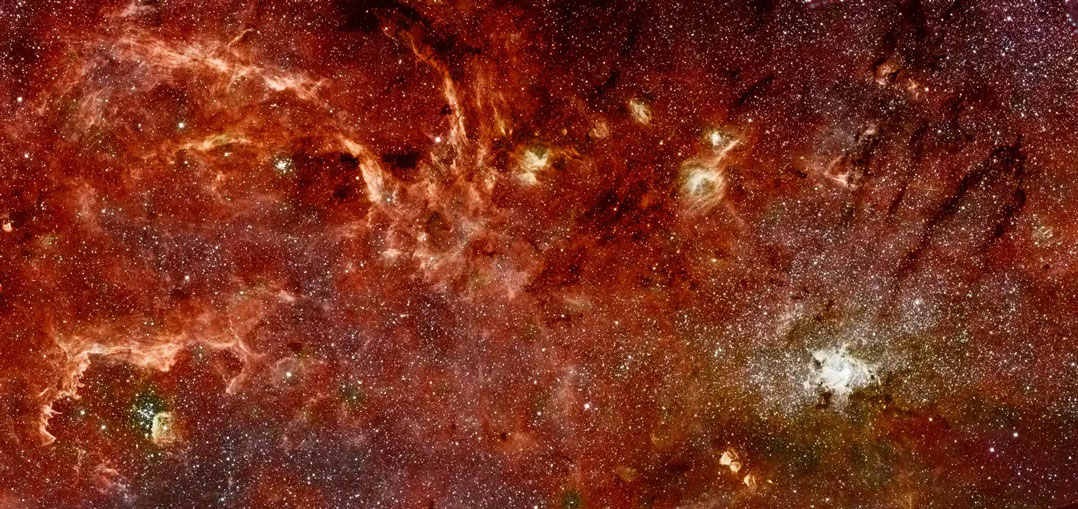
    In our new paper, we show that gravitational collapse does not have to end in a singularity. We find an exact analytical solution – a mathematical result with no approximations. Our maths shows that as we approach the potential singularity, the size of the universe changes as a (hyperbolic) function of cosmic time.

    This simple mathematical solution describes how a collapsing cloud of matter can reach a high-density state and then bounce, rebounding outward into a new expanding phase.

    But how come Penrose’s theorems forbid out such outcomes? It’s all down to a rule called the quantum exclusion principle, which states that no two identical particles known as fermions can occupy the same quantum state (such as angular momentum, or “spin”).

    In this framework, our entire observable universe lies inside the interior of a black hole

    And we show that this rule prevents the particles in the collapsing matter from being squeezed indefinitely. As a result, the collapse halts and reverses. The bounce is not only possible – it’s inevitable under the right conditions.

    Crucially, this bounce occurs entirely within the framework of general relativity, which applies on large scales such as stars and galaxies, combined with the basic principles of quantum mechanics – no exotic fields, extra dimensions or speculative physics required.

    What emerges on the other side of the bounce is a universe remarkably like our own. Even more surprisingly, the rebound naturally produces the two separate phases of accelerated expansion – inflation and dark energy – driven not by a hypothetical fields but by the physics of the bounce itself.

    Testable predictions

    One of the strengths of this model is that it makes testable predictions. It predicts a small but non-zero amount of positive spatial curvature – meaning the universe is not exactly flat, but slightly curved, like the surface of the Earth.

    This is simply a relic of the initial small over-density that triggered the collapse. If future observations, such as the ongoing Euclid mission, confirm a small positive curvature, it would be a strong hint that our universe did indeed emerge from such a bounce. It also makes predictions about the current universe’s rate of expansion, something that has already been verified.

    Read: SA scientists want Musk’s Starlink out of their space

    This model does more than fix technical problems with standard cosmology. It could also shed new light on other deep mysteries in our understanding of the early universe – such as the origin of supermassive black holes, the nature of dark matter, or the hierarchical formation and evolution of galaxies.

    These questions will be explored by future space missions such as Arrakhis, which will study diffuse features such as stellar halos (a spherical structure of stars and globular clusters surrounding galaxies) and satellite galaxies (smaller galaxies that orbit larger ones) that are difficult to detect with traditional telescopes from Earth and will help us understand dark matter and galaxy evolution.
    These phenomena might also be linked to relic compact objects – such as black holes – that formed during the collapsing phase and survived the bounce.

    The black hole universe also offers a new perspective on our place in the cosmos. In this framework, our entire observable universe lies inside the interior of a black hole formed in some larger “parent” universe.

    We are not special, no more than Earth was in the geocentric worldview that led Galileo (the astronomer who suggested the Earth revolves around the Sun in the 16th and 17th centuries) to be placed under house arrest.

    We are not witnessing the birth of everything from nothing, but rather the continuation of a cosmic cycle – one shaped by gravity, quantum mechanics and the deep interconnections between them.The Conversation

    • The author, Enrique Gaztanaga, is professor at the Institute of Cosmology and Gravitation at the University of Portsmouth
    • This article is republished from The Conversation under a Creative Commons license. Read the original article

    Don’t miss:

    Musk targeting next year for first SpaceX Mars mission

    Follow TechCentral on Google News Add TechCentral as your preferred source on Google


    Enrique Gaztanaga
    WhatsApp YouTube
    Share. Facebook Twitter LinkedIn WhatsApp Telegram Email Copy Link
    Previous ArticleShrimp Jesus and the AI ad invasion
    Next Article South African business activity growth hits four-year high
    Company News
    Cyber-physical risk: a growing concern for South African companies - Marsh

    Cyber-physical risk: a growing concern for South African companies

    5 May 2026
    Building digital twins that can be trusted - Snode Technologies - Snode Technologies

    Building digital twins that can be trusted

    5 May 2026
    CambriLearn on the right way to use AI in schools

    CambriLearn on the right way to use AI in schools

    4 May 2026
    Opinion
    Free calls, dead voice and Shameel Joosub's Spanish ghost - Duncan McLeod

    Free calls, dead voice and Shameel Joosub’s Spanish ghost

    22 April 2026
    The conflict of interest at the heart of PayShap's slow adoption - Cheslyn Jacobs

    The conflict of interest at the heart of PayShap’s slow adoption

    26 March 2026
    South Africa's energy future hinges on getting wheeling right - Aishah Gire

    South Africa’s energy future hinges on getting wheeling right

    10 March 2026

    Subscribe to Updates

    Get the best South African technology news and analysis delivered to your e-mail inbox every morning.

    Latest Posts
    Schreiber publishes draft rules for South Africa's digital ID system

    Schreiber publishes draft rules for South Africa’s digital ID system

    5 May 2026
    From app idea to board game hit - Elijah Djan and Danei Rall FinMaster

    From app idea to board game hit

    5 May 2026
    Your biggest cyber threat is now sitting at the desk next to you - Heino Gevers Mimecast

    Your biggest cyber threat is now sitting at the desk next to you

    5 May 2026
    Vodacom advances on strong trading update

    Vodacom advances on strong trading update

    5 May 2026
    © 2009 - 2026 NewsCentral Media
    • Cookie policy (ZA)
    • TechCentral – privacy and Popia

    Type above and press Enter to search. Press Esc to cancel.

    Manage consent

    TechCentral uses cookies to enhance its offerings. Consenting to these technologies allows us to serve you better. Not consenting or withdrawing consent may adversely affect certain features and functions of the website.

    Functional Always active
    The technical storage or access is strictly necessary for the legitimate purpose of enabling the use of a specific service explicitly requested by the subscriber or user, or for the sole purpose of carrying out the transmission of a communication over an electronic communications network.
    Preferences
    The technical storage or access is necessary for the legitimate purpose of storing preferences that are not requested by the subscriber or user.
    Statistics
    The technical storage or access that is used exclusively for statistical purposes. The technical storage or access that is used exclusively for anonymous statistical purposes. Without a subpoena, voluntary compliance on the part of your Internet Service Provider, or additional records from a third party, information stored or retrieved for this purpose alone cannot usually be used to identify you.
    Marketing
    The technical storage or access is required to create user profiles to send advertising, or to track the user on a website or across several websites for similar marketing purposes.
    • Manage options
    • Manage services
    • Manage {vendor_count} vendors
    • Read more about these purposes
    View preferences
    • {title}
    • {title}
    • {title}

