Close Menu
TechCentralTechCentral

    Subscribe to the newsletter

    Get the best South African technology news and analysis delivered to your e-mail inbox every morning.

    Facebook X (Twitter) YouTube LinkedIn
    WhatsApp Facebook X (Twitter) LinkedIn YouTube
    TechCentralTechCentral
    • News
      Big Microsoft 365 price increases coming next year

      Big Microsoft price increases coming next year

      5 December 2025
      Vodacom to take control of Safaricom in R36-billion deal - Shameel Joosub

      Vodacom to take control of Safaricom in R36-billion deal

      4 December 2025
      Black Friday goes digital in South Africa as online spending surges to record high

      Black Friday goes digital in South Africa as online spending surges to record high

      4 December 2025
      BYD takes direct aim at Toyota with launch of sub-R500 000 Sealion 5 PHEV

      BYD takes direct aim at Toyota with launch of sub-R500 000 Sealion 5 PHEV

      4 December 2025
      'Get it now': Takealot in new instant deliveries pilot

      ‘Get it now’: Takealot in new instant deliveries pilot

      4 December 2025
    • World
      Amazon and Google launch multi-cloud service for faster connectivity

      Amazon and Google launch multi-cloud service for faster connectivity

      1 December 2025
      Google makes final court plea to stop US breakup

      Google makes final court plea to stop US breakup

      21 November 2025
      Bezos unveils monster rocket: New Glenn 9x4 set to dwarf Saturn V

      Bezos unveils monster rocket: New Glenn 9×4 set to dwarf Saturn V

      21 November 2025
      Tech shares turbocharged by Nvidia's stellar earnings

      Tech shares turbocharged by stellar Nvidia earnings

      20 November 2025
      Config file blamed for Cloudflare meltdown that disrupted the web

      Config file blamed for Cloudflare meltdown that disrupted the web

      19 November 2025
    • In-depth
      Jensen Huang Nvidia

      So, will China really win the AI race?

      14 November 2025
      Valve's Linux console takes aim at Microsoft's gaming empire

      Valve’s Linux console takes aim at Microsoft’s gaming empire

      13 November 2025
      iOCO's extraordinary comeback plan - Rhys Summerton

      iOCO’s extraordinary comeback plan

      28 October 2025
      Why smart glasses keep failing - no, it's not the tech - Mark Zuckerberg

      Why smart glasses keep failing – it’s not the tech

      19 October 2025
      BYD to blanket South Africa with megawatt-scale EV charging network - Stella Li

      BYD to blanket South Africa with megawatt-scale EV charging network

      16 October 2025
    • TCS
      TCS+ | How Cloud on Demand helps partners thrive in the AWS ecosystem - Odwa Ndyaluvane and Xenia Rhode

      TCS+ | How Cloud On Demand helps partners thrive in the AWS ecosystem

      4 December 2025
      TCS | MTN Group CEO Ralph Mupita on competition, AI and the future of mobile

      TCS | Ralph Mupita on competition, AI and the future of mobile

      28 November 2025
      TCS | Dominic Cull on fixing South Africa's ICT policy bottlenecks

      TCS | Dominic Cull on fixing South Africa’s ICT policy bottlenecks

      21 November 2025
      TCS | BMW CEO Peter van Binsbergen on the future of South Africa's automotive industry

      TCS | BMW CEO Peter van Binsbergen on the future of South Africa’s automotive industry

      6 November 2025
      TCS | Why Altron is building an AI factory - Bongani Andy Mabaso

      TCS | Why Altron is building an AI factory in Johannesburg

      28 October 2025
    • Opinion
      Your data, your hardware: the DIY AI revolution is coming - Duncan McLeod

      Your data, your hardware: the DIY AI revolution is coming

      20 November 2025
      Zero Carbon Charge founder Joubert Roux

      The energy revolution South Africa can’t afford to miss

      20 November 2025
      It's time for a new approach to government IT spend in South Africa - Richard Firth

      It’s time for a new approach to government IT spend in South Africa

      19 November 2025
      How South Africa's broken Rica system fuels murder and mayhem - Farhad Khan

      How South Africa’s broken Rica system fuels murder and mayhem

      10 November 2025
      South Africa's AI data centre boom risks overloading a fragile grid - Paul Colmer

      South Africa’s AI data centre boom risks overloading a fragile grid

      30 October 2025
    • Company Hubs
      • Africa Data Centres
      • AfriGIS
      • Altron Digital Business
      • Altron Document Solutions
      • Altron Group
      • Arctic Wolf
      • AvertITD
      • Braintree
      • CallMiner
      • CambriLearn
      • CYBER1 Solutions
      • Digicloud Africa
      • Digimune
      • Domains.co.za
      • ESET
      • Euphoria Telecom
      • Incredible Business
      • iONLINE
      • IQbusiness
      • Iris Network Systems
      • LSD Open
      • NEC XON
      • Netstar
      • Network Platforms
      • Next DLP
      • Ovations
      • Paracon
      • Paratus
      • Q-KON
      • SevenC
      • SkyWire
      • Solid8 Technologies
      • Telit Cinterion
      • Tenable
      • Vertiv
      • Videri Digital
      • Vodacom Business
      • Wipro
      • Workday
      • XLink
    • Sections
      • AI and machine learning
      • Banking
      • Broadcasting and Media
      • Cloud services
      • Contact centres and CX
      • Cryptocurrencies
      • Education and skills
      • Electronics and hardware
      • Energy and sustainability
      • Enterprise software
      • Financial services
      • Information security
      • Internet and connectivity
      • Internet of Things
      • Investment
      • IT services
      • Lifestyle
      • Motoring
      • Public sector
      • Retail and e-commerce
      • Satellite communications
      • Science
      • SMEs and start-ups
      • Social media
      • Talent and leadership
      • Telecoms
    • Events
    • Advertise
    TechCentralTechCentral
    Home » Current affairs » Why Julius Malema is no friend of the poor

    Why Julius Malema is no friend of the poor

    By The Conversation19 May 2016
    Twitter LinkedIn Facebook WhatsApp Email Telegram Copy Link
    News Alerts
    WhatsApp
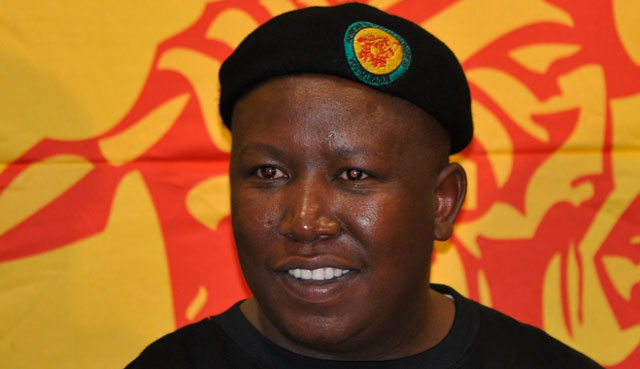
    Julius Malema
    Julius Malema

    In Why Nations Fail: The Origins of Power, Prosperity and Poverty, economist Daron Acemoglu and political scientist James A Robinson argue compellingly that the key to economic growth and prosperity lies in strong and inclusive institutions.

    Inclusive economic institutions, such as those in South Korea and the US, are those that allow and encourage participation by the great mass of people in economic activities that make best use of their talents and skills and enable individuals to make the choices they wish.
    To be inclusive economic institutions must feature secure private property, an unbiased system of law and a provision of public services that provides a level playing field in which people can exchange and contract; it must also permit the entry of new businesses and allow people to choose their careers.

    The authors go on to say: “Secure property rights are central, since only those with such rights will be willing to invest and increase productivity.”

    In the same way that inclusive institutions spur economic growth and prosperity, extractive institutions that “are structured to extract resources from the many by the few and that fail to protect property rights or provide incentives for economic activity” doom a country to perpetual poverty.

    Understandable anger about the excessive inequality in South Africa lies at the heart of the rise of Economic Freedom Fighters. The party is the most successful of the three splinters from the governing ANC since 1994. The others are the United Democratic Movement and the Congress of the People. The EFF made headway by engaging in aggressive rhetoric and proclaiming an African socialist revolution.

    The problem is not that the EFF’s analysis of South Africa’s problems is completely inaccurate — the party has a valid point about the necessity of free education, for example. The problem is how the EFF wants to address these issues and where it gets its economic policies from.

    The manifesto

    In its founding manifesto, the party outlines seven “non-negotiable cardinal pillars”, which include building state capacity, the nationalisation of strategic sectors of the economy and the expropriation of land without compensation.

    The EFF’s local government election manifesto spells out this vision in more detail. Its manifesto is a combination of lavish promises and magical thinking with regard to basic economic concepts.

    But first and foremost, the party’s manifesto is a continued attack on South Africa’s economic institutions. Among other things, the EFF wants to abolish the tender system that is used, for example, to determine who can build a road at the lowest cost.

    Doing so would diminish competition among businesses. Rather, the EFF wants to directly employ residents to do the same job, thus creating the same patronage network it criticises in the ANC. How this should lead to less corruption remains a mystery.

    Another aspect of the election manifesto is even more worrying. The EFF writes:

    A minimum of 50% of basic food items and goods would have to be produced within a municipality. A minimum of 40% of all investments in its jurisdictions should be owned and controlled by community trusts or invest a minimum of 40% of their profits in the municipality.

    The party envisions nothing less than a society where municipalities are organised in chiefdoms rather than being part of a modern nation state.

    The Venezuela option

    In a eulogy after the death of former Venezuelan president and fellow commander-in-chief Hugo Chavez in 2013, Malema praises the comrade following his visit to Venezuela in 2010 where he studied the country’s nationalisation programme:

    Chavez was able to lead Venezuela into an era where the wealth of Venezuela, particularly oil was returned to the ownership of the people as a whole.

    Venezuela has some of the world’s largest proven oil reserves that, in conjunction with a 10-fold increase in crude oil prices between 1998 and 2008, enabled Chavez to enact a series of populist socialist policies.

    But when the oil price started to fall in 2014, the party in Venezuela was, quite literally, over.

    On 29 April, Empresas Polar, the country’s largest producer of beer, stopped producing because it ran out of barley. This is only the latest in a long list of shortages that includes basic necessities such as baby food and toilet paper. Things have turned so bad that three meals a day have become a luxury many people can no longer afford.
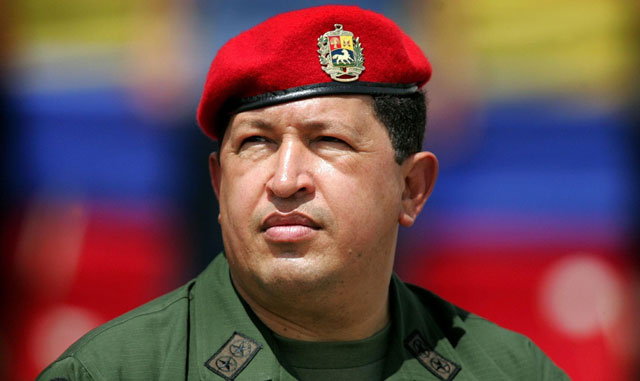
    Hugo Chavez ... ran Venezuela into the ground
    Hugo Chavez … ran Venezuela into the ground

    The reason for this shortage is that many international firms suffered billion-dollar losses and abandoned their operations.
    Russ Dallen, head of investment bank Latinvest, summarised the situation in Venezuela in grim words:

    The worst shortage is of medicine and medical equipment. To be sick in Venezuela right now is a death sentence.

    The EFF is trying to follow the Venezuelan model by heavily promoting the nationalisation of “minerals, metals, banks, energy production and telecommunications” as its core economic agenda.

    Even if nationalisation along the lines of the EFF document were legally possible — and it is not — the numbers simply do not add up.

    Primary mineral exports contribute about 30% of South Africa’s total merchandise exports. This is well below the 95% oil contributes to Venezuela’s exports. And it is less than clear that any state-owned entity will turn profits. Take power utility Eskom, for example, which would be insolvent without government bailouts, or national carrier SAA, which is currently in need of yet another guarantee from national treasury. Nationalisation will not be enough to finance the EFF’s lavish promises.

    Reservoir of resentment

    What the EFF is trying to do is tap into a reservoir of accumulated apartheid injustice. Freelance journalist Louise Ferreira summarised aptly:

    White prosperity was built on the oppression and dehumanisation of black bodies.

    The scars of the apartheid regime’s crimes, in particular of the forced resettlement of millions of people, are still visible today. In 1994, the ANC set out to redistribute 30% of farmland to black farmers by the end of 2014, but only 5% of land has actually been transferred.

    This lack of transformation is what makes the EFF attractive to so many. Early on, Malema picked up on the discontent South Africans had begun to feel towards democracy.

    He was recently quoted saying that “white monopoly capital has stolen our land”, and one of the EFF’s key promises is that, similar to Zimbabwe, it will expropriate land without compensation.

    Malema has never made a secret of his man-crush on Zimbabwe’s ruthless dictator, Robert Mugabe:

    There’s no system that has worked successfully for Africans, except the Zimbabwean system. The Zimbabweans today can be hungry and poor, but at least they own property.

    What he fails to understand, however, is that without capital, and in particular foreign capital, the only thing people can do with their land is subsistence farming that will offer neither them, nor their children, a way out of poverty.

    The EFF’s entire economic policy, it seems, consists of weakening the very institutions that economists have identified as key drivers of economic growth.

    But without inclusive institutions, South Africa will be turned into a kleptocracy akin to countries like Venezuela and Zimbabwe.The Conversation

    • Co-Pierre Georg is senior lecturer, African Institute for Financial Markets and Risk Management, University of Cape Town
    • This article was originally published on The Conversation

    Co-Pierre Georg Hugo Chavez Julius Malema
    Subscribe to TechCentral Subscribe to TechCentral
    Share. Facebook Twitter LinkedIn WhatsApp Telegram Email Copy Link
    Previous ArticleDatatec in Spanish acquisition
    Next Article MTN worried about gov’t spectrum plans

    Related Posts

    EFF vows to stop Starlink from launching in South Africa - Elon Musk

    EFF vows to stop Starlink from launching in South Africa

    11 July 2025
    South Africans head to the polls in crucial election

    South Africans head to the polls in crucial election

    29 May 2024
    EFF vows to stop Starlink from launching in South Africa - Elon Musk

    Musk vs Malema: give it a break, Elon

    8 February 2024
    Company News
    AI is not a technology problem - iqbusiness

    AI is not a technology problem – iqbusiness

    5 December 2025
    Telcos are sitting on a data gold mine - but few know what do with it - Phillip du Plessis

    Telcos are sitting on a data gold mine – but few know what do with it

    4 December 2025
    Unlock smarter computing with your surface Copilot+ PC

    Unlock smarter computing with your Surface Copilot+ PC

    4 December 2025
    Opinion
    Your data, your hardware: the DIY AI revolution is coming - Duncan McLeod

    Your data, your hardware: the DIY AI revolution is coming

    20 November 2025
    Zero Carbon Charge founder Joubert Roux

    The energy revolution South Africa can’t afford to miss

    20 November 2025
    It's time for a new approach to government IT spend in South Africa - Richard Firth

    It’s time for a new approach to government IT spend in South Africa

    19 November 2025

    Subscribe to Updates

    Get the best South African technology news and analysis delivered to your e-mail inbox every morning.

    Latest Posts
    Big Microsoft 365 price increases coming next year

    Big Microsoft price increases coming next year

    5 December 2025
    AI is not a technology problem - iqbusiness

    AI is not a technology problem – iqbusiness

    5 December 2025
    Vodacom to take control of Safaricom in R36-billion deal - Shameel Joosub

    Vodacom to take control of Safaricom in R36-billion deal

    4 December 2025
    Black Friday goes digital in South Africa as online spending surges to record high

    Black Friday goes digital in South Africa as online spending surges to record high

    4 December 2025
    © 2009 - 2025 NewsCentral Media
    • Cookie policy (ZA)
    • TechCentral – privacy and Popia

    Type above and press Enter to search. Press Esc to cancel.

    Manage consent

    TechCentral uses cookies to enhance its offerings. Consenting to these technologies allows us to serve you better. Not consenting or withdrawing consent may adversely affect certain features and functions of the website.

    Functional Always active
    The technical storage or access is strictly necessary for the legitimate purpose of enabling the use of a specific service explicitly requested by the subscriber or user, or for the sole purpose of carrying out the transmission of a communication over an electronic communications network.
    Preferences
    The technical storage or access is necessary for the legitimate purpose of storing preferences that are not requested by the subscriber or user.
    Statistics
    The technical storage or access that is used exclusively for statistical purposes. The technical storage or access that is used exclusively for anonymous statistical purposes. Without a subpoena, voluntary compliance on the part of your Internet Service Provider, or additional records from a third party, information stored or retrieved for this purpose alone cannot usually be used to identify you.
    Marketing
    The technical storage or access is required to create user profiles to send advertising, or to track the user on a website or across several websites for similar marketing purposes.
    • Manage options
    • Manage services
    • Manage {vendor_count} vendors
    • Read more about these purposes
    View preferences
    • {title}
    • {title}
    • {title}