
Close Menu
TechCentralTechCentral

    Subscribe to the newsletter

    Get the best South African technology news and analysis delivered to your e-mail inbox every morning.

    Facebook X (Twitter) YouTube LinkedIn
    WhatsApp Facebook X (Twitter) LinkedIn YouTube
    TechCentralTechCentral
    • News
      How a WhatsApp bundle exposed a fault line in SA mobile

      How a WhatsApp bundle exposed a fault line in SA mobile

      19 March 2026
      Eskom must build renewables or face extinction: Mteto Nyati

      Eskom must build renewables or face extinction: Mteto Nyati

      19 March 2026
      IT Leadership Series: Cullinan Holdings CIO Ryan Porter

      IT Leadership Series: Cullinan Holdings CIO Ryan Porter

      19 March 2026
      Adobe faces fresh probe over subscription cancellation fees

      Adobe faces fresh probe over subscription cancellation fees

      19 March 2026
      Showmax Originals find a new home on DStv Stream

      Showmax Originals find a new home on DStv Stream

      19 March 2026
    • World
      Mystery Chinese AI model revealed to be Xiaomi's

      Mystery Chinese AI model revealed to be Xiaomi’s

      19 March 2026
      A mystery AI model has developers buzzing

      A mystery AI model has developers buzzing

      18 March 2026
      Samsung's trifold gamble ends in retreat

      Samsung’s trifold gamble ends in retreat

      17 March 2026
      Nvidia targets $1-trillion in AI chip sales as inference demand surges - Jensen Huang

      Nvidia targets $1-trillion in AI chip sales as inference demand surges

      17 March 2026
      Peter Thiel's secretive Rome conference draws Church attention

      Peter Thiel’s secretive Rome conference draws Church attention

      16 March 2026
    • In-depth
      The last generation of coders

      The last generation of coders

      18 February 2026
      Sentech is in dire straits

      Sentech is in dire straits

      10 February 2026
      How liberalisation is rewiring South Africa's power sector

      How liberalisation is rewiring South Africa’s power sector

      21 January 2026
      The top-performing South African tech shares of 2025

      The top-performing South African tech shares of 2025

      12 January 2026
      Digital authoritarianism grows as African states normalise internet blackouts

      Digital authoritarianism grows as African states normalise internet blackouts

      19 December 2025
    • TCS
      TCS+ | Arctic Wolf unpacks the evolving threat landscape for SA businesses - Clare Loveridge and Jason Oehley

      TCS+ | Arctic Wolf unpacks the evolving threat landscape for SA businesses

      19 March 2026
      TCS+ | Vox Kiwi: a wireless solution promising a fibre-like experience - Theo van Zyl

      TCS+ | Vox Kiwi: a wireless solution promising a fibre-like experience

      13 March 2026
      TCS+ | Flipping the narrative on AI in the Global South - Josefin Rosén

      TCS+ | Flipping the narrative on AI in the Global South

      13 March 2026
      TCS | Sink or swim? Antony Makins on how AI is rewriting the rules of work

      TCS | Sink or swim? Antony Makins on how AI is rewriting the rules of work

      5 March 2026
      TCS+ | Bolt ups the ante on platform safety - Simo Kalajdzic

      TCS+ | Bolt ups the ante on platform safety

      4 March 2026
    • Opinion
      South Africa's energy future hinges on getting wheeling right - Aishah Gire

      South Africa’s energy future hinges on getting wheeling right

      10 March 2026
      Hold the doom: the case for a South African comeback - Duncan McLeod

      Apple just dropped a bomb on the Windows world

      5 March 2026
      VC's centre of gravity is shifting - and South Africa is in the frame - Alison Collier

      VC’s centre of gravity is shifting – and South Africa is in the frame

      3 March 2026
      Hold the doom: the case for a South African comeback - Duncan McLeod

      Hold the doom: the case for a South African comeback

      26 February 2026
      The AI fraud crisis your bank is not ready for - Andries Maritz

      The AI fraud crisis your bank is not ready for

      18 February 2026
    • Company Hubs
      • 1Stream
      • Africa Data Centres
      • AfriGIS
      • Altron Digital Business
      • Altron Document Solutions
      • Altron Group
      • Arctic Wolf
      • AvertITD
      • Braintree
      • CallMiner
      • CambriLearn
      • CYBER1 Solutions
      • Digicloud Africa
      • Digimune
      • Domains.co.za
      • ESET
      • Euphoria Telecom
      • HOSTAFRICA
      • Incredible Business
      • iONLINE
      • IQbusiness
      • Iris Network Systems
      • LSD Open
      • Mitel
      • NEC XON
      • Netstar
      • Network Platforms
      • Next DLP
      • Ovations
      • Paracon
      • Paratus
      • Q-KON
      • SevenC
      • SkyWire
      • Solid8 Technologies
      • Telit Cinterion
      • Tenable
      • Vertiv
      • Videri Digital
      • Vodacom Business
      • Wipro
      • Workday
      • XLink
    • Sections
      • AI and machine learning
      • Banking
      • Broadcasting and Media
      • Cloud services
      • Contact centres and CX
      • Cryptocurrencies
      • Education and skills
      • Electronics and hardware
      • Energy and sustainability
      • Enterprise software
      • Financial services
      • HealthTech
      • Information security
      • Internet and connectivity
      • Internet of Things
      • Investment
      • IT services
      • Lifestyle
      • Motoring
      • Policy and regulation
      • Public sector
      • Retail and e-commerce
      • Satellite communications
      • Science
      • SMEs and start-ups
      • Social media
      • Talent and leadership
      • Telecoms
    • Events
    • Advertise
    TechCentralTechCentral
    Home » Opinion » Helen Zille » Why Uber’s arrival led to gov’t paralysis

    Why Uber’s arrival led to gov’t paralysis

    By Helen Zille6 July 2015
    Twitter LinkedIn Facebook WhatsApp Email Telegram Copy Link
    News Alerts
    WhatsApp

    helen-zille-180Government is a complex beast. It can only do what the law specifically allows it to do, not what people (or the premier) think it should do. Decision making requires long processes, by numerous people in different departments, governed by a whole range of laws, regulations and by-laws.

    With that in mind, let me deal with the controversy that exploded in Cape Town last week about Uber, the e-hailing cab service. For the uninitiated, Uber is a smartphone application that is revolutionising the metered-taxi industry. It allows consumers to request a trip, locates them, and refers them to the nearest available Uber partner driver. It has proved to be a “cool”, safe, cheap and efficient service. Young people love it, and many parents (including me) sleep better at night knowing that their kids will “Uber home” rather than take risks after a night out.

    So it came as a shock to discover that over 200 Uber taxis have been impounded by the traffic police since the beginning of the year.

    Last week, public frustration exploded on Twitter. Within hours, #CTneedsUber was trending and 14 000 people had signed an online petition to legalise them.

    But here’s the thing: Uber’s e-hailing service “does not fall into any of the categories of the National Land Transport Act”, as an official explained to me this week. It is also not provided for in the integrated transport plan. And any process to regularise the e-hailing service must follow the requirements of the Promotion of Administrative Justice Act. Furthermore, just last week, a court case in the US concluded that Uber drivers were not self-employed, but employees of the Uber company, a decision with far-reaching legal implications.

    In other words, Uber is a market disrupter.  It was unheard and unthought of when South Africa’s legal framework for public transport was put in place.

    This situation creates a crisis for government. Officials must act within the law. But the law doesn’t envisage or cater for e-hailing services. The result is government paralysis.

    No wonder Business Day gave us a “red light” for not being “nimble” enough in dealing with Uber. But a figurative “red light” is far easier to survive in government than a qualified audit from the auditor-general for “irregular and unauthorised expenditure”.

    So time drags by while officials try to squeeze the new reality into the prevailing legislative framework, and the city prepares a by-law to legalise and regulate e-hailing. The solution currently on the table is to license Uber taxis in terms of the clauses covering metered taxis, while providing certain exemptions.

    But why insist on licences at all, several people have asked? Surely, consumer choice should be regulated by the market? In any event, they say, Uber is self-regulating through a star-rating system.

    When it comes to public transport operators, it is not so simple. Government cannot evade responsibility for safety, which includes roadworthiness, passenger insurance and third parties. If, for example, the vehicle does not have a valid operating licence, passengers cannot claim from the Road Accident Fund in the event of a crash.

    Moreover, regulation of the taxi industry in South Africa has proved to be one of the examples of market failure. Competition is more often resolved by violence than consumer choice. There have been 15 murders (and many more injuries) in the past year relating to taxi conflicts in an overtraded industry. And the current situation of overtrading can only be resolved by market displacement, which usually results in escalating violence. Furthermore, the law prohibits the issuing of additional licences in an overtraded market.
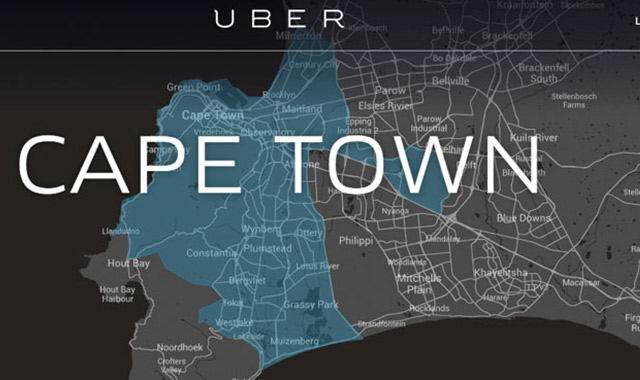
    Uber's popularity is skyrocketing in South Africa
    Uber’s popularity is skyrocketing in South Africa

    When I pointed this out last week, it only increased the controversy.  “Do you think my Uber driver in his Mercedes is going to shoot someone?”, an uber-angry user asked. No, I do not think so, but how do you know that he won’t become a target?

    This is not far-fetched. Just last month in France, President Francois Hollande called for a ban on the Uber app, following violent resistance against the service in various parts of the country. Hollande is a socialist and believes in market manipulation. We do not. But this does not exempt us from the legal requirement to prevent overtrading and take into account the comments of current licence holders before we issue new ones.

    And it is not only socialist governments that have a problem with Uber. Earlier this year, reports surfaced that Spain and Germany had prevented Uber from offering unlicensed services.

    What a minefield! Once I had investigated, I could understand why officials are treading so warily. They know they will be held responsible if something goes wrong.

    On the other hand, I can also understand the public’s fury at the red tape and inconvenience over our failure to regularise e-hailing, not to mention the impact this has on jobs. It was hardly surprising that Alan Winde, the provincial minister of economic development, signed the protest petition, while his colleague, minister Donald Grant, provincial minister of transport, defended his officials. These are some of the inevitable contradictions and conflicts that happen in government.

    Meanwhile, we are all working together on a way forward. On Thursday, 9 July, there will be a meeting of the Provincial Regulating Entity, where all the verified Uber licence applications supported by the city will be considered. Those who gave false addresses, or other deficient information, will be rejected.

    The city has also started the process of compiling a by-law to create a legal framework for the e-hailing industry, while the national government has started the process of amending section 66 of the National Land Transport Act, to make e-hailing taxis a subcategory of metered taxis.

    The vigorous public debate has been helpful, and brought the matter to my attention. This is the way open, responsive government functions. And it is the way that, I hope, we can become more “nimble” and innovative when facing market disruptions in the future.

    • Helen Zille is Western Cape premier
    Follow TechCentral on Google News Add TechCentral as your preferred source on Google


    Alan Winde Donald Grant Francois Hollande Helen Zille Uber
    WhatsApp YouTube
    Share. Facebook Twitter LinkedIn WhatsApp Telegram Email Copy Link
    Previous ArticleTelkom’s Maseko denies fraud allegations
    Next Article MTN Business to pursue acquisitions

    Related Posts

    South African tech start-ups that sold big on the world stage

    South African tech start-ups that sold big on the world stage

    3 February 2026
    Why South Africa should extend the e-hailing compliance deadline

    Why South Africa should extend the e-hailing compliance deadline

    7 January 2026
    Uber eyeing electric bike rides in South Africa

    Uber eyeing electric bike rides in South Africa

    3 December 2025
    Company News
    Africa's first Nvidia RTX Pro GPU servers have landed

    Africa’s first Nvidia RTX Pro GPU servers have landed

    19 March 2026
    How Acer Africa is bridging the digital divide through local innovation

    How Acer Africa is bridging the digital divide through local innovation

    19 March 2026
    SA is off the FATF grey list - now it's time to modernise compliance - Fenergo

    SA is off the FATF grey list – now it’s time to modernise compliance

    18 March 2026
    Opinion
    South Africa's energy future hinges on getting wheeling right - Aishah Gire

    South Africa’s energy future hinges on getting wheeling right

    10 March 2026
    Hold the doom: the case for a South African comeback - Duncan McLeod

    Apple just dropped a bomb on the Windows world

    5 March 2026
    VC's centre of gravity is shifting - and South Africa is in the frame - Alison Collier

    VC’s centre of gravity is shifting – and South Africa is in the frame

    3 March 2026

    Subscribe to Updates

    Get the best South African technology news and analysis delivered to your e-mail inbox every morning.

    Latest Posts
    How a WhatsApp bundle exposed a fault line in SA mobile

    How a WhatsApp bundle exposed a fault line in SA mobile

    19 March 2026
    Eskom must build renewables or face extinction: Mteto Nyati

    Eskom must build renewables or face extinction: Mteto Nyati

    19 March 2026
    IT Leadership Series: Cullinan Holdings CIO Ryan Porter

    IT Leadership Series: Cullinan Holdings CIO Ryan Porter

    19 March 2026
    Adobe faces fresh probe over subscription cancellation fees

    Adobe faces fresh probe over subscription cancellation fees

    19 March 2026
    © 2009 - 2026 NewsCentral Media
    • Cookie policy (ZA)
    • TechCentral – privacy and Popia

    Type above and press Enter to search. Press Esc to cancel.

    Manage consent

    TechCentral uses cookies to enhance its offerings. Consenting to these technologies allows us to serve you better. Not consenting or withdrawing consent may adversely affect certain features and functions of the website.

    Functional Always active
    The technical storage or access is strictly necessary for the legitimate purpose of enabling the use of a specific service explicitly requested by the subscriber or user, or for the sole purpose of carrying out the transmission of a communication over an electronic communications network.
    Preferences
    The technical storage or access is necessary for the legitimate purpose of storing preferences that are not requested by the subscriber or user.
    Statistics
    The technical storage or access that is used exclusively for statistical purposes. The technical storage or access that is used exclusively for anonymous statistical purposes. Without a subpoena, voluntary compliance on the part of your Internet Service Provider, or additional records from a third party, information stored or retrieved for this purpose alone cannot usually be used to identify you.
    Marketing
    The technical storage or access is required to create user profiles to send advertising, or to track the user on a website or across several websites for similar marketing purposes.
    • Manage options
    • Manage services
    • Manage {vendor_count} vendors
    • Read more about these purposes
    View preferences
    • {title}
    • {title}
    • {title}