Close Menu
TechCentralTechCentral

    Subscribe to the newsletter

    Get the best South African technology news and analysis delivered to your e-mail inbox every morning.

    Facebook X (Twitter) YouTube LinkedIn
    WhatsApp Facebook X (Twitter) LinkedIn YouTube
    TechCentralTechCentral
    • News
      Nedbank hires MTN's former tech chief as group CIO - Nikos Angelopoulos

      Nedbank hires MTN’s former tech chief as group CIO

      31 July 2026
      Eskom's diesel bill falls 86% as breakdowns hit eight-year low

      Eskom’s diesel bill falls 86% as breakdowns hit eight-year low

      31 July 2026
      Ramaphosa signs off on taking the grid away from Eskom

      Ramaphosa signs off on taking the grid away from Eskom

      31 July 2026
      Microsoft just had the biggest day in stock market history

      Microsoft just had the biggest day in stock market history

      31 July 2026
      MTN Nigeria's growth engine stalled in second quarter - Karl Toriola

      MTN Nigeria’s growth engine stalled in second quarter

      31 July 2026
    • World
      Meta AI will now tell parents if their teen is in crisis

      Meta AI will now tell parents if their teen is in crisis

      17 July 2026
      IBM shares crash 25% as AI upends software spending - Arvind Krishna

      IBM shares crash 25% as AI upends software spending

      15 July 2026
      Jony Ive's first OpenAI device: an AI smart speaker - Jony Ive and Sam Altman

      Jony Ive’s first OpenAI device: an AI smart speaker

      15 July 2026
      Stripe, Advent in talks to buy PayPal for $53-billion

      Stripe, Advent in talks to buy PayPal for $53-billion

      15 July 2026
      Memory crisis sends smartphone market into steep decline

      Memory crisis sends smartphone market into steep decline

      13 July 2026
    • In-depth
      The plan to stop AI from breaking the world - Google DeepMind CEO Demis Hassabis. Image: John Sears

      The plan to stop AI from breaking the world

      16 July 2026
      The internet has a Strait of Hormuz problem

      The internet has a Strait of Hormuz problem

      15 July 2026
      AI boom sparks rally, frenzy and fear

      AI boom sparks rally, frenzy and fear

      11 June 2026
      Every plug-in hybrid on sale in South Africa, ranked by price - Lamborghini Temerario

      Every plug-in hybrid on sale in South Africa, ranked by price

      7 June 2026
      What Wi-Fi 8 will mean for wireless networks

      What Wi-Fi 8 will mean for wireless networks

      1 June 2026
    • TCS
      TCS+ | Why South African workers must become supervisors of digital labour - Accelera Digital Group Cliff de Wit

      TCS+ | Why South African workers must become supervisors of digital labour

      31 July 2026
      TCS | Rapid deployment rules can't work without municipalities: ACT - Nomvuyiso Batyi

      TCS | Icasa’s rules skip the real bottleneck: ACT

      30 July 2026
      TCS+ | iStore Business on why Apple makes sense for SMEs - Sudesh Pillay and Tamia Nontsikelelo

      TCS+ | iStore Business on why Apple makes sense for SMEs

      30 July 2026
      TCS+ | A smarter approach to cloud for South African businesses - Joel Chacko and Jonathan Oaker

      TCS+ | A smarter approach to cloud for South African businesses

      28 July 2026
      TCS | How Optasia lends billions to people banks can't see - Salvador Anglada

      TCS | How Optasia lends billions to people banks can’t see

      23 July 2026
    • Opinion
      The author, Jannie van Zyl

      Selling vapour is corporate suicide in slow motion

      16 July 2026
      Brazil's online gambling crackdown is a lesson for South Africa

      How Amazon outmanoeuvred Starlink in South Africa

      15 July 2026
      The Popia problem with agentic AI - Herman Haasbroek

      The Popia problem with agentic AI

      14 July 2026
      The author, Fanie van Rooyen

      South Africa can still catch the AI wave – here’s how

      7 July 2026
      The author, Fanie van Rooyen

      The AI utopia South Africa can’t afford

      1 July 2026
    • Company Hubs
      • 1Stream
      • Africa Data Centres
      • AfriGIS
      • Altron Digital Business
      • Altron Document Solutions
      • Altron Group
      • Arctic Wolf
      • Ascent Technology
      • AvertITD
      • BBD
      • Braintree
      • CallMiner
      • CambriLearn
      • CM Telecom
      • Contactable
      • CYBER1 Solutions
      • Digicloud Africa
      • Digimune
      • Domains.co.za
      • ESET
      • Euphoria Telecom
      • HOSTAFRICA
      • Incredible Business
      • iONLINE
      • IQbusiness
      • Iris Network Systems
      • Kaspersky
      • LSD Open
      • Mitel
      • NEC XON
      • Netstar
      • Network Platforms
      • Next DLP
      • Ovations
      • Paracon
      • Paratus
      • Q-KON
      • SevenC
      • SkyWire
      • Solid8 Technologies
      • Telit Cinterion
      • Telviva
      • Tenable
      • Vertiv
      • Videri Digital
      • Vodacom Business
      • Vox
      • Wipro
      • Workday
      • XLink
    • Sections
      • AI and machine learning
      • Banking
      • Broadcasting and Media
      • Cloud services
      • Contact centres and CX
      • Cryptocurrencies
      • Education and skills
      • Electronics and hardware
      • Energy and sustainability
      • Enterprise software
      • Financial services
      • HealthTech
      • Information security
      • Internet and connectivity
      • Internet of Things
      • Investment
      • IT services
      • Lifestyle
      • Policy and regulation
      • Public sector
      • Retail and e-commerce
      • Satellite communications
      • Science
      • SMEs and start-ups
      • Social media
      • Talent and leadership
      • Telecoms
      • Watts & Wheels
    • Events
    • Advertise
    TechCentralTechCentral
    Home » In-depth » With Tesla Model 3, Musk aims to crush rivals

    With Tesla Model 3, Musk aims to crush rivals

    By Agency Staff27 March 2017
    Twitter LinkedIn Facebook WhatsApp Email Telegram Copy Link
    News Alerts
    WhatsApp
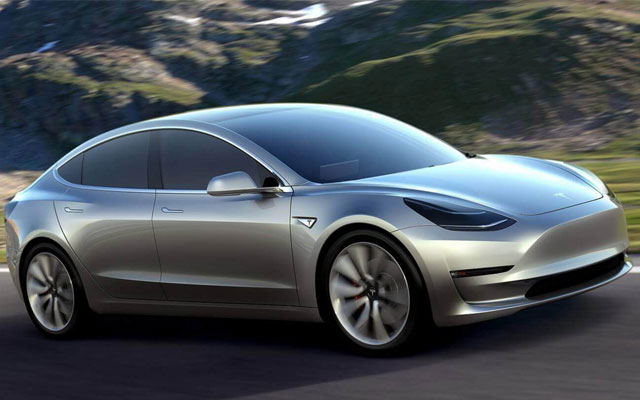
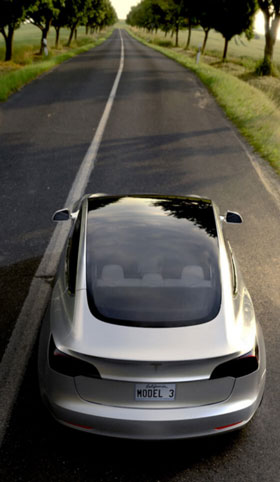
    The Tesla Model 3

    One year ago this week, Elon Musk took to a stage to unveil his most important vehicle yet: the US$35 000 (R435 000) Model 3. The electric five-seater accelerates as fast as the the best-selling luxury sport sedans in America — the BMW 3 Series and the Mercedes C Class — and costs about the same.

    The value proposition was the best ever for an electric car, and the crowd ate it up.

    But none of his pronouncements that night were as audacious as those to come. After taking in about 400 000 deposits at $1 000 a piece, Musk ramped up production plans. And then he ramped them up some more. Now, three months from the official start of production, the billionaire Tesla CEO seems to think he can not only match the performance of those top luxury brands, but outsell them in the US, too — in just one year.

    Tesla has a number of tricks in store for the Model 3 launch, but first it’s worth taking a moment to appreciate just how high Musk has set the bar: with unusual specificity for an car maker, he disclosed detailed production targets in a call with investors last month that begin to paint us a picture.

    First, Musk said the company is placing orders with suppliers for “1 000 cars a week in July, 2 000/week in August and 4 000/week in September”. Tesla then plans to increase production to 5 000 cars a week by the end of the year, and 10 000/week by the end of 2018. For context, the company is currently able to make about 2 000 Model S and Model X cars a week. Here’s what the Model 3 ramp begins to look like.

    For Musk to hit all of his targets, Tesla would need to build about 430 000 Model 3s by the end of next year. That’s more than all of the all-electric cars sold planet-wide last year. The roll-out will begin in California and move east, focusing on US reservation holders. Even if half of the Model 3 inventory shipped to other countries, US sales under Musk’s targets would outpace the BMW 3 Series and the Mercedes C class — combined.

    Another forecast Musk reiterated is that Tesla thinks it can build 500 000 total cars next year. Model S and Model X growth would continue, but at a slowing rate.

    To sell that many $35 000 sedans in the US “would be absolutely unprecedented based on what we know about car markets today and how people spend their dollars”, said Salim Morsy, electric car analyst at Bloomberg New Energy Finance. “It could happen. I’m pretty sure it won’t.”
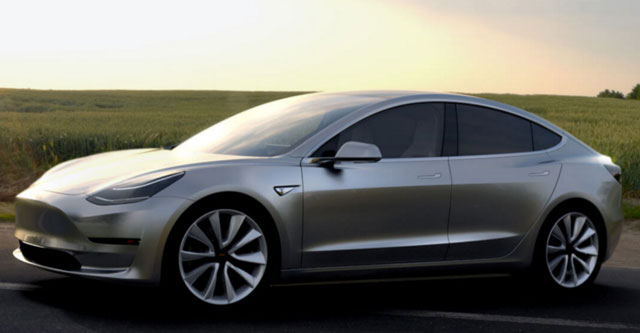
    The Tesla Model 3

    Virtually every Wall Street analyst agrees. Even the most bullish among them don’t think Tesla can sell half a million electric cars next year, and Musk has a long history of never setting a deadline that he’s likely to keep. But it’s still important to understand the lofty targets Musk is setting, and some of the crafty ways he’s trying to make it happen.

    Tesla is redefining how cars are developed, built, sold and updated. Some of the tricks Musk plans to speed up the launch can only be done once. Others may transform the automotive industry much like Telsa’s over-the-air software updates. Here’s what we know:

    Tesla is skipping “beta” — sort of. On Friday, Musk fired off a barrage of 50 messages on Twitter while on a flight to Cape Canaveral, Florida. Among them was the first glimpse of what he calls a “release candidate” Model 3. The term is more typically used in the software industry, referring to a final version that’s almost ready for public release.

    Musk is condensing the typical timeline for a car release. A traditional car manufacturer spends about six months testing a beta car prior to a roll-out. Musk seems to have skipped a step, and is building test vehicles using the same equipment line that will feed mass production. If that’s the case — and this truly is a “release candidate” — then it implies that production is on track. The car looks very much like the vehicles Musk showed a year ago, and that fidelity to the original prototype will have helped keep engineers on schedule.

    A standing army of testers. There’s tremendous demand for the Model 3 among Tesla’s 30 000 employees — most of whom are probably unable to afford the pricier Model S and Model X. Musk is putting that interest to use, releasing the first several thousand Model 3’s to employee reservation holders.

    This is a huge advantage unique to the Model 3. As early problems are identified, they can be fixed at the work site. If there’s a hardware problem that requires a recall of the fleet — as happened with a seat defect in the first 2 700 Model Xs — employees need only drive to work to have them fixed. This means that even while Tesla shortens pre-launch testing, by the time production ramps up to a wider audience, the Model 3 may have nevertheless undergone more rigorous internal troubleshooting than most cars.
    Features are being stripped down. One of the primary goals of last week’s Twitter barrage appears to be downplaying expectations for new features. Musk said there will only be one display — the car’s 15-inch touchscreen — with no additional gauges or heads-up-display projected at the windshield.

    Additionally, the dual-motor all-wheel drive, and high performance versions of the Model 3 will be delayed for six to nine months to keep the roll-out simple. Musk’s stream of clues may have taken the place of a second unveiling he had previously indicated would come by April. It looks like the company decided to keep it simple, and there’s not much more to unveil.

    It’s simpler to make. Musk has been making the case for the last year that the Model 3 is designed for manufacturing efficiency. Steel is used for some of the body instead of being all-aluminium. The amount of wiring used has been cut in half, from 3km worth in the Model S to 1,5km in the Model 3. There’s one screen and one computer instead of two of each in the Model S. And there are no eccentric flourishes like self-presenting door handles or falcon-wing doors.

    Top-tier suppliers. Tesla also gets to pick from the best, most reliable suppliers. When the car maker first built the Model S, suppliers assumed it would never sell more than 3 000 units and the company would eventually go bankrupt, according to Musk. That’s changed. It “went from basically getting like the worst team on second-tier suppliers to getting the best team on first-tier suppliers”, he said in February. “Really big difference.”

    Levers of demand

    If, against all odds, Tesla is actually able to produce 500 000 cars in 2018, there’s still the question of whether it will be able to sustain that kind of demand, which would establish it as the leading US luxury car manufacturer.

    Again, Tesla has some levers left to pull. The company has never paid for television or print advertising. There will also be attention-grabbing upgrades. In addition to the all-wheel drive and performance models, Musk said last week that a crossover version of the Model 3, called the Model Y, will be coming in the next few years. Given US preferences, that’s likely to be Tesla’s most popular car yet, and it’s a good strategy to first establish the scale of a mass-market manufacturer before releasing it.

    And of course, there is the last big mystery… How far is Tesla going with Autopilot for the launch?
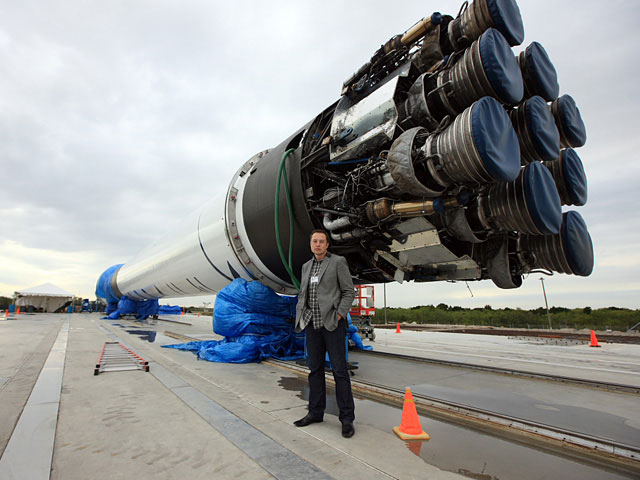
    Elon Musk (picture: Dan Taylor / Heisenberg Media)

    In October, Musk set some wild timelines for full self-driving capabilities in the Tesla fleet. The company upgraded the hardware suite of its full line-up of cars to eight surround cameras, 12 ultrasonic sensors, a radar and a massively powerful new computer. It was all the hardware that will be needed for driverless transport, he said. By the end of 2017, the company said it hoped to drive coast to coast without any driver interaction.

    Tesla immediately started charging new customers an extra $3 000 for an option called “full self-driving capability”. However, the software hasn’t been released that would take advantage of it, and to date, the pricey option adds no new functionality to the normal “enhanced Autopilot” features.

    Musk has dropped a number of hints that those features will start being available around the launch of the Model 3. In January, I asked him at what point full self-driving capability will depart from enhanced Autopilot features. His response, via Twitter: “Three months maybe, six months definitely.”

    Six months would coincide with the July launch. As Musk wrote last week, when explaining why a heads-up display would be unnecessary: “The more autonomous a car is, the less dash info you need. How often do you look at the instrument pane…”

    It’s possible that whatever Tesla has planned for self-driving features will be delayed. The company has had a slog over the past few months getting its new enhanced Autopilot hardware suite to match the performance of the old Autopilot.

    But it’s also possible the Model 3 will be the first car designed from scratch for automation — navigating city streets, responding to stop signs and stop lights, possibly even making its own turns. Musk is currently engaged in a bit of what he calls “anti-selling” on Twitter, downplaying features that will be unique to the Model 3 as he tries to convert some reservation holders to the more expensive Model S. Differentiating the two classes of vehicle will be important going forward. But with Autopilot, the entire Tesla line-up may be headed for a launch upgrade.  — (c) 2017 Bloomberg LP

    Follow TechCentral on Google News Add TechCentral as your preferred source on Google


    BMW Elon Musk Mercedes Tesla Tesla Model 3
    WhatsApp YouTube
    Share. Facebook Twitter LinkedIn WhatsApp Telegram Email Copy Link
    Previous ArticleVodacom to offer ‘free’ data for ShowMax
    Next Article Zuma cuts short Gordhan roadshow

    Related Posts

    How Chinese cars took over South African showrooms

    How Chinese cars took over South African showrooms

    30 July 2026
    Intel is back in the game - Intel CEO Lip-Bu Tan. Laure Andrillon/Reuters

    Intel is back in the game

    24 July 2026
    From care homes to production lines, the robots are coming

    From care homes to production lines, the robots are coming

    21 July 2026
    Company News
    Domains.co.za launches self-hosted n8n VPS hosting

    Domains.co.za launches self-hosted n8n VPS hosting

    31 July 2026
    Smarter.tech '26 shows why smarter technology begins with context - Obsidian Systems

    Context is the missing piece in enterprise AI: Obsidian

    31 July 2026
    Huawei launches 12 intelligent transport solutions in South Africa - Sam Tang

    Huawei launches 12 intelligent transport solutions in South Africa

    30 July 2026
    Opinion
    The author, Jannie van Zyl

    Selling vapour is corporate suicide in slow motion

    16 July 2026
    Brazil's online gambling crackdown is a lesson for South Africa

    How Amazon outmanoeuvred Starlink in South Africa

    15 July 2026
    The Popia problem with agentic AI - Herman Haasbroek

    The Popia problem with agentic AI

    14 July 2026

    Subscribe to Updates

    Get the best South African technology news and analysis delivered to your e-mail inbox every morning.

    Latest Posts
    Nedbank hires MTN's former tech chief as group CIO - Nikos Angelopoulos

    Nedbank hires MTN’s former tech chief as group CIO

    31 July 2026
    Eskom's diesel bill falls 86% as breakdowns hit eight-year low

    Eskom’s diesel bill falls 86% as breakdowns hit eight-year low

    31 July 2026
    Ramaphosa signs off on taking the grid away from Eskom

    Ramaphosa signs off on taking the grid away from Eskom

    31 July 2026
    TCS+ | Why South African workers must become supervisors of digital labour - Accelera Digital Group Cliff de Wit

    TCS+ | Why South African workers must become supervisors of digital labour

    31 July 2026
    © 2009 - 2026 NewsCentral Media
    Built and maintained by Chronon
    • Cookie policy (ZA)
    • TechCentral – privacy and Popia

    Type above and press Enter to search. Press Esc to cancel.

    Manage consent

    TechCentral uses cookies to enhance its offerings. Consenting to these technologies allows us to serve you better. Not consenting or withdrawing consent may adversely affect certain features and functions of the website.

    Functional Always active
    The technical storage or access is strictly necessary for the legitimate purpose of enabling the use of a specific service explicitly requested by the subscriber or user, or for the sole purpose of carrying out the transmission of a communication over an electronic communications network.
    Preferences
    The technical storage or access is necessary for the legitimate purpose of storing preferences that are not requested by the subscriber or user.
    Statistics
    The technical storage or access that is used exclusively for statistical purposes. The technical storage or access that is used exclusively for anonymous statistical purposes. Without a subpoena, voluntary compliance on the part of your Internet Service Provider, or additional records from a third party, information stored or retrieved for this purpose alone cannot usually be used to identify you.
    Marketing
    The technical storage or access is required to create user profiles to send advertising, or to track the user on a website or across several websites for similar marketing purposes.
    • Manage options
    • Manage services
    • Manage {vendor_count} vendors
    • Read more about these purposes
    View preferences
    • {title}
    • {title}
    • {title}