

Close Menu
TechCentralTechCentral

    Subscribe to the newsletter

    Get the best South African technology news and analysis delivered to your e-mail inbox every morning.

    Facebook X (Twitter) YouTube LinkedIn
    WhatsApp Facebook X (Twitter) LinkedIn YouTube
    TechCentralTechCentral
    • News
      Sixty60 smashes 100 million orders

      Shoprite keeps Sixty60 momentum as group sales rise 7.2%

      2 February 2026
      iOCO deploys R9.6-million in fresh share buybacks

      iOCO deploys R9.6-million in fresh share buybacks

      2 February 2026
      South Africa must defend its car industry - before it's too late

      South Africa must defend its car industry – before it’s too late

      2 February 2026
      Starlink updates privacy policy to allow consumer data to train AI

      Privacy alarm as SpaceX opens Starlink user data to AI models

      2 February 2026
      Vuyani Jarana: Mobile coverage masks a deeper broadband failure

      Vuyani Jarana: Mobile coverage masks a deeper broadband failure

      30 January 2026
    • World
      Apple acquires audio AI start-up Q.ai

      Apple acquires audio AI start-up Q.ai

      30 January 2026
      SpaceX IPO may be largest in history

      SpaceX IPO may be largest in history

      28 January 2026
      Nvidia throws AI at the weather

      Nvidia throws AI at weather forecasting

      27 January 2026
      Debate erupts over value of in-flight Wi-Fi

      Debate erupts over value of in-flight Wi-Fi

      26 January 2026
      Intel takes another hit - Intel CEO Lip-Bu Tan. Laure Andrillon/Reuters

      Intel takes another hit

      23 January 2026
    • In-depth
      How liberalisation is rewiring South Africa's power sector

      How liberalisation is rewiring South Africa’s power sector

      21 January 2026
      The top-performing South African tech shares of 2025

      The top-performing South African tech shares of 2025

      12 January 2026
      Digital authoritarianism grows as African states normalise internet blackouts

      Digital authoritarianism grows as African states normalise internet blackouts

      19 December 2025
      TechCentral's South African Newsmakers of 2025

      TechCentral’s South African Newsmakers of 2025

      18 December 2025
      Black Friday goes digital in South Africa as online spending surges to record high

      Black Friday goes digital in South Africa as online spending surges to record high

      4 December 2025
    • TCS
      TCS+ | How Cloud On Demand is helping SA businesses succeed in the cloud - Xhenia Rhode, Dion Kalicharan

      TCS+ | Cloud On Demand and Consnet: inside a real-world AWS partner success story

      30 January 2026
      Watts & Wheels S1E3: 'BYD's Corolla Cross challenger'

      Watts & Wheels S1E3: ‘BYD’s Corolla Cross challenger’

      30 January 2026
      Watts & Wheels S1E3: 'BYD's Corolla Cross challenger'

      Watts & Wheels S1E2: ‘China attacks, BMW digs in, Toyota’s sublime supercar’

      23 January 2026

      TCS+ | Why cybersecurity is becoming a competitive advantage for SA businesses

      20 January 2026
      Watts & Wheels S1E3: 'BYD's Corolla Cross challenger'

      Watts & Wheels: S1E1 – ‘William, Prince of Wheels’

      8 January 2026
    • Opinion
      South Africa's skills advantage is being overlooked at home - Richard Firth

      South Africa’s skills advantage is being overlooked at home

      29 January 2026
      Why Elon Musk's Starlink is a 'hard no' for me - Songezo Zibi

      Why Elon Musk’s Starlink is a ‘hard no’ for me

      26 January 2026
      South Africa's new fibre broadband battle - Duncan McLeod

      South Africa’s new fibre broadband battle

      20 January 2026
      AI moves from pilots to production in South African companies - Nazia Pillay SAP

      AI moves from pilots to production in South African companies

      20 January 2026
      South Africa's new fibre broadband battle - Duncan McLeod

      ANC’s attack on Solly Malatsi shows how BEE dogma trumps economic reality

      14 December 2025
    • Company Hubs
      • Africa Data Centres
      • AfriGIS
      • Altron Digital Business
      • Altron Document Solutions
      • Altron Group
      • Arctic Wolf
      • AvertITD
      • Braintree
      • CallMiner
      • CambriLearn
      • CYBER1 Solutions
      • Digicloud Africa
      • Digimune
      • Domains.co.za
      • ESET
      • Euphoria Telecom
      • Incredible Business
      • iONLINE
      • IQbusiness
      • Iris Network Systems
      • LSD Open
      • NEC XON
      • Netstar
      • Network Platforms
      • Next DLP
      • Ovations
      • Paracon
      • Paratus
      • Q-KON
      • SevenC
      • SkyWire
      • Solid8 Technologies
      • Telit Cinterion
      • Tenable
      • Vertiv
      • Videri Digital
      • Vodacom Business
      • Wipro
      • Workday
      • XLink
    • Sections
      • AI and machine learning
      • Banking
      • Broadcasting and Media
      • Cloud services
      • Contact centres and CX
      • Cryptocurrencies
      • Education and skills
      • Electronics and hardware
      • Energy and sustainability
      • Enterprise software
      • Financial services
      • Information security
      • Internet and connectivity
      • Internet of Things
      • Investment
      • IT services
      • Lifestyle
      • Motoring
      • Public sector
      • Retail and e-commerce
      • Satellite communications
      • Science
      • SMEs and start-ups
      • Social media
      • Talent and leadership
      • Telecoms
    • Events
    • Advertise
    TechCentralTechCentral
    Home » In-depth » World’s leading electric car visionary isn’t Elon Musk

    World’s leading electric car visionary isn’t Elon Musk

    By Agency Staff27 September 2018
    Twitter LinkedIn Facebook WhatsApp Email Telegram Copy Link
    News Alerts
    WhatsApp
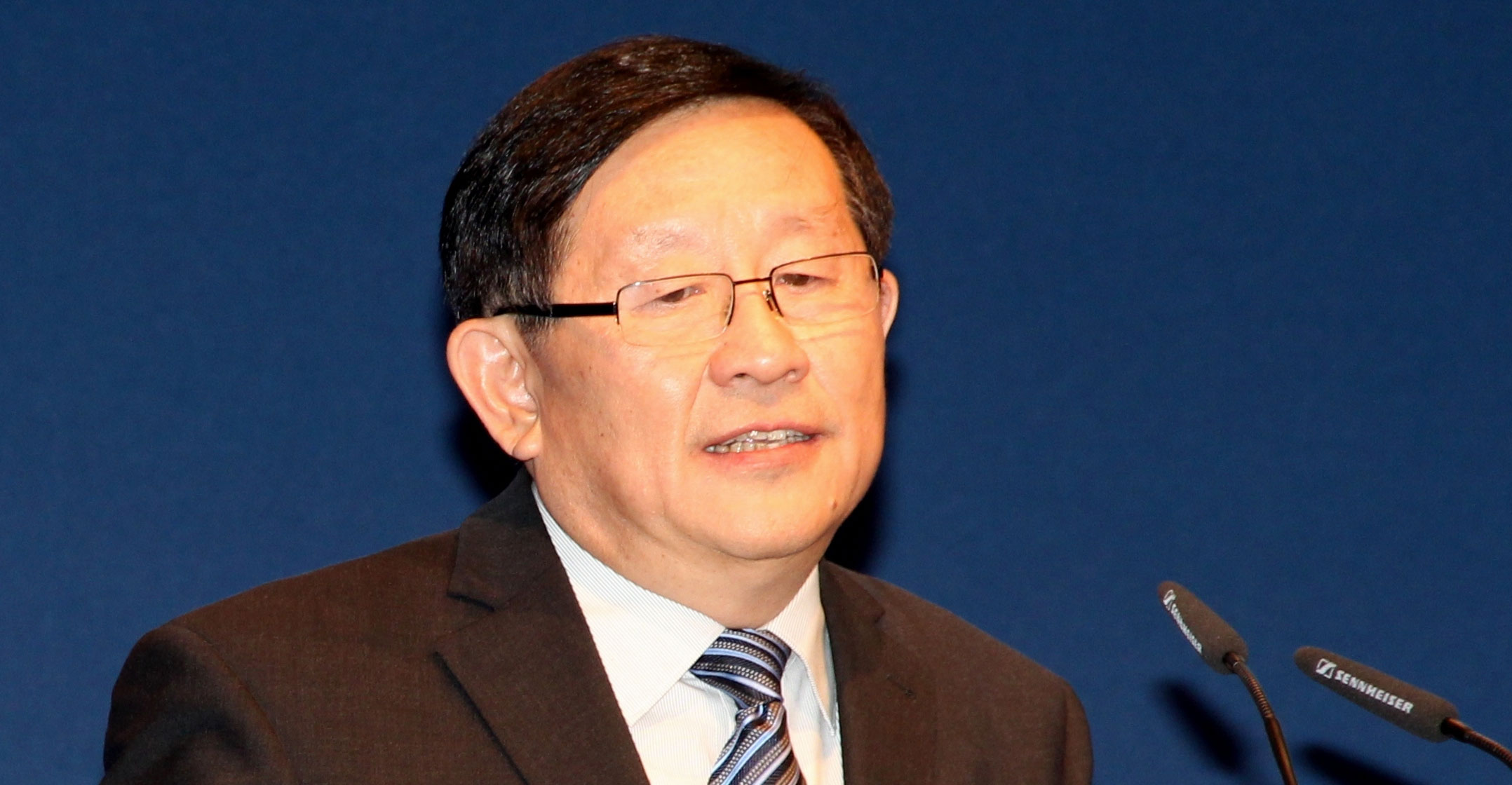
    Wan Gang. Image: Rudolf Simon

    At this year’s Beijing Auto Show, a retired Chinese bureaucrat bent down to run his hands over the hood of a sleek sports coupe billed as the world’s fastest battery-powered car, and he smiled like a proud father.

    In a way, that’s exactly what he was. Two decades earlier, Wan Gang persuaded China’s State Council to throw its vast power behind the risky, unproven technology of electric cars. He advocated using government money, including subsidies, to help create a world champion industry that would surpass Western car makers. That coupe he was admiring at the April auto show? It was built by homegrown NIO.

    Elon Musk made a name for himself promoting new-energy vehicles, but when the history of the electric car is finally written, Wan may loom larger. Chinese drivers buy one of every two EVs sold, and the global car industry is pivoting to adjust. It’s a revolution fomented by Wan, a former minister of science & technology whose achievements are even more extraordinary when you consider that he never joined the Chinese Communist Party.

    He’s the father of China’s electric vehicle industry. Without Wan Gang, it’s unlikely China would have pushed to surpass the West

    “He’s the father of China’s electric vehicle industry,” said Levi Tillemann, a former US department of energy adviser and author of The Great Race: The Global Quest for the Car of the Future. “Without Wan Gang, it’s unlikely China would have pushed to surpass the West. That was his big idea.”

    Wan, 66, who stepped down in March and now holds an academic post at a Beijing-based think-tank, currently isn’t giving interviews, his office said.

    After decades of hype and false starts, electric vehicles are on course to represent a significant segment of the auto industry. This year, China’s production of NEVs is expected to reach a million vehicles, a 26% increase from last year. The UK, France and India are proposing bans on vehicles powered by internal combustion engines, according to Bloomberg New Energy Finance.

    Long before becoming the nation’s top futurist, Wan suffered through the Cultural Revolution of the 1960s, China’s great leap backward for science and technology. Sent from Shanghai to a remote village near North Korea at age 16 to learn values from peasants, he spent his days repairing the town’s smoke-belching tractor and building its electricity grid from scratch, according to the state-run People’s Daily and author Lisa Margonelli, who interviewed Wan.

    Lucky few

    One of the lucky few of his generation to attend college, Wan was admitted to a PhD programme in mechanical engineering at Clausthal University of Technology in Germany. When he graduated in 1991, job offers came from all the big German car makers, but he picked Audi because it was the smallest and provided the best chances for promotion.

    As an executive in Audi’s planning department, Wan played the role of ambassador, showing its state-of-the-art factory in Ingolstadt to Chinese delegates trying to resurrect their decrepit auto industry. One guest was then-science minister Zhu Lilan, who took a liking to the engineer.

    Months after their first meeting, in 2000, Wan was back home selling Zhu and the rest of the State Council on the idea of leapfrogging. China was choking in smog, and its car makers, Wan reasoned, could never hope to catch up with Japanese, American or German manufacturers when it came to traditional vehicles.
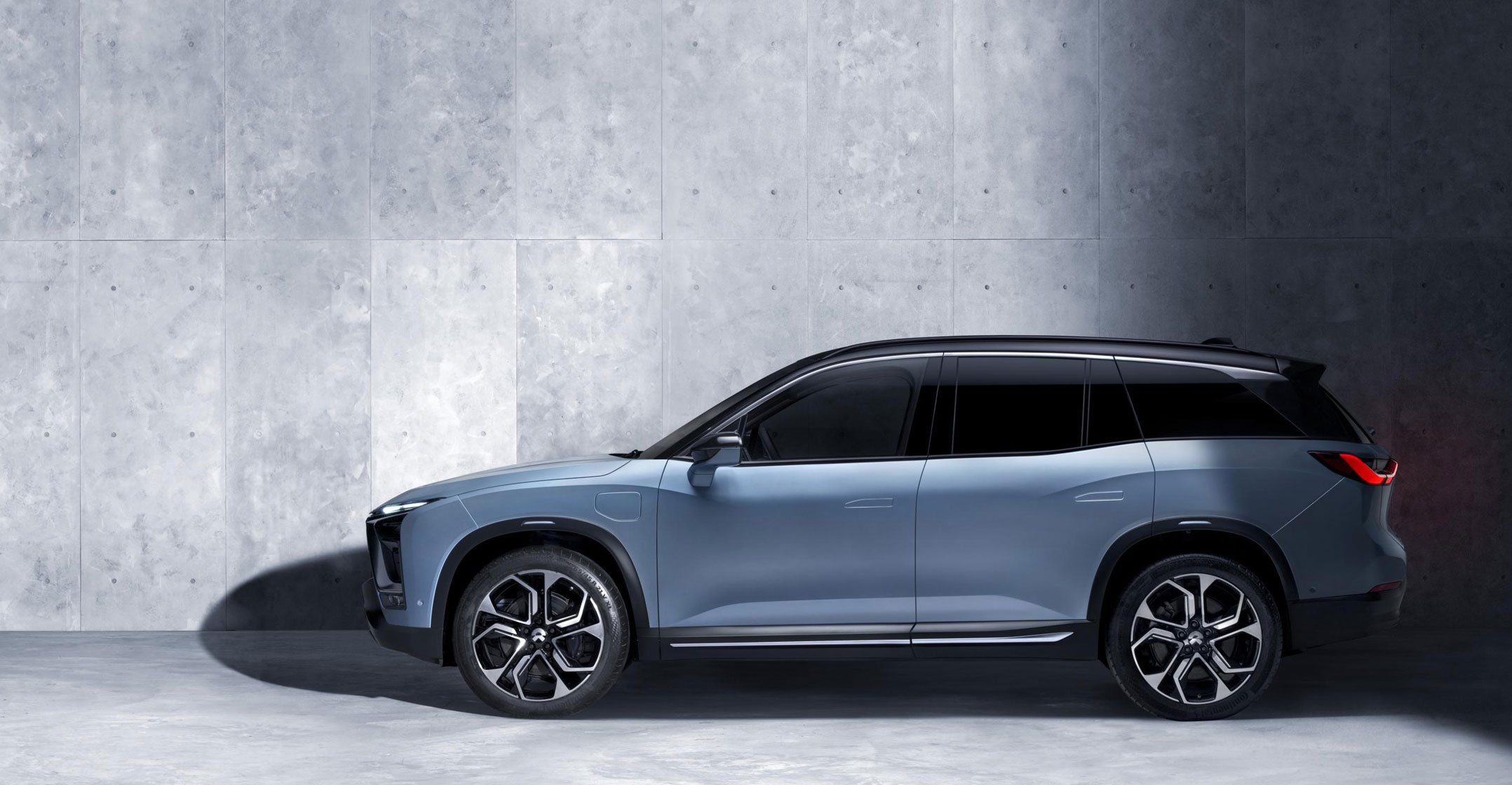
    Nio’s ES8 electric vehicle

    A bet on new technologies could put China on more equal footing or even allow it to take the lead, he theorised. It also could help the country break its dependence on foreign oil.

    “Wan Gang was saying, ‘I want to create a system where we can be energy secure and there’s a more level playing field for our companies,”’ said Bill Russo, a former Chrysler executive who now heads auto consultant Gao Feng Advisory in Beijing. “He knew you couldn’t win playing the old game.”

    And so did some high-powered colleagues. Former vice Premier Li Lanqing, who started in 1952 at the automaker now known as China FAW Group, developed the plan to create the NEV research program. And Ma Kai spearheaded NEV stimulus policies while running the National Development and Reform Commission that helps oversee the economy.

    We were just scientists comparing notes. I never felt once, not evenly remotely, that he was fishing

    By 2007, Wan was minister of science & technology, overseeing billions of yuan with sway to help funnel research-and-development money toward favoured industries. In that job, he repeatedly challenged China’s engineers: build a fleet of electric buses for the 2008 Beijing Olympics; put a thousand battery-powered vehicles on the streets of every major city. The spring of 2010 brought subsidies of as much as US$10 000 for every EV the car makers could sell.

    “There will be a strategic window for developing electric vehicles over the next 10 to 20 years,” Wan told state media that March. “We have to take action now.” China’s R&D rush was on.

    A few months later, the mood was tense at Argonne National Laboratory, the US federal research centre near Chicago, where scientists invented the lithium-ion battery technology used in GM’s plug-in hybrid, the Volt.

    Wan was visiting the lab to learn about chemical recipes for batteries. US counterintelligence briefed scientist Jeff Chamberlain and his team about the dangers of letting secrets slip. The Americans were wary, until they got to know Wan.

    No choice

    “It all dissolved the moment you talked to him,” Chamberlain said. “We were just scientists comparing notes. I never felt once, not evenly remotely, that he was fishing. That doesn’t mean he wasn’t doing it, but we never felt it.”

    The world’s automakers invited Wan inside, too. They had no choice.

    “He was our most important customer in China,” said Makoto Yoshida, a government affairs officer at Nissan, who last summer gave Wan a tour of a facility near Yokohama, where the minister drove hybrid cars. “If China says ‘we can’t accept your technology’, it’s a big problem for us, which is why Wan Gang was the key person.”

    If China says ‘we can’t accept your technology’, it’s a big problem for us, which is why Wan Gang was the key person

    Today, there are more than 100 Chinese-made electric car models on the market, built by giants like Warren Buffett-backed BYD and start-ups such as NIO, which raised about $1-billion in an initial public offering this month.

    Wang Chuanfu, the billionaire founder of BYD, China’s biggest maker of NEVs, recalled meeting Wan in 2014. “I was impressed by Wan’s obsession with clean-energy technology,” he said.

    NEVs account for about one of every 20 passenger cars purchased in China, numbers likely to rise because of state incentives — Wan’s real legacy.

    The government is building a vast network of charging stations and strong-arming consumers into buying EVs by making them the only sure way to get a licence plate in big cities. (Otherwise, drivers have to enter lotteries.) Starting next year, every automaker wanting to operate in China has to meet production targets for battery-powered vehicles or buy credits from rivals.

    For Chamberlain, these are beneficial changes. Since 2016, the American scientist has run Volta Energy Technologies, a battery start-up in Naperville, Illinois. He said the revolution wrought by Wan means it no longer matters if the US rolls back emissions or fuel-efficiency standards, as President Donald Trump talks about.

    “Whether it’s Ford or General Motors or VW, or Hyundai or Toyota, if they want to participate in the Chinese market they must have electric vehicles,” Chamberlain said. “I’m happy for Wan Gang because that was his vision from many years ago.”  — Reported with assistance from Jason Clenfield, Ying Tian, Elisabeth Behrmann, David Welch, Jie Ma, Yan Zhang, Lee Miller, Brent O’Brien and Kevin Dharmawan, (c) 2018 Bloomberg LP


    Elon Musk Nio Tesla top Wan Gang
    WhatsApp YouTube Follow on Google News Add as preferred source on Google
    Share. Facebook Twitter LinkedIn WhatsApp Telegram Email Copy Link
    Previous ArticleFacebook unveils Oculus Quest in bid to take VR mainstream
    Next Article Woolworths dives headfirst into m-commerce

    Related Posts

    Starlink updates privacy policy to allow consumer data to train AI

    Privacy alarm as SpaceX opens Starlink user data to AI models

    2 February 2026
    A single Musk super-company may be taking shape - Elon Musk

    A single Musk super-company may be taking shape

    30 January 2026
    Tesla abandons traditional EV growth for a high-stakes AI future

    Tesla abandons traditional EV growth for a high-stakes AI future

    29 January 2026
    Company News
    Breaking silos with SAS: Agile insurance in an uncertain world

    Breaking silos with SAS: agile insurance in an uncertain world

    2 February 2026
    Stellar year expected for Digicloud Africa and its reseller partners - Gregory MacLennan

    Stellar year expected for Digicloud Africa and its reseller partners

    2 February 2026
    Huawei turns 25 in South Africa, celebrates with major device discounts

    Huawei turns 25 in South Africa, celebrates with major device discounts

    30 January 2026
    Opinion
    South Africa's skills advantage is being overlooked at home - Richard Firth

    South Africa’s skills advantage is being overlooked at home

    29 January 2026
    Why Elon Musk's Starlink is a 'hard no' for me - Songezo Zibi

    Why Elon Musk’s Starlink is a ‘hard no’ for me

    26 January 2026
    South Africa's new fibre broadband battle - Duncan McLeod

    South Africa’s new fibre broadband battle

    20 January 2026

    Subscribe to Updates

    Get the best South African technology news and analysis delivered to your e-mail inbox every morning.

    Latest Posts
    Sixty60 smashes 100 million orders

    Shoprite keeps Sixty60 momentum as group sales rise 7.2%

    2 February 2026
    Breaking silos with SAS: Agile insurance in an uncertain world

    Breaking silos with SAS: agile insurance in an uncertain world

    2 February 2026
    Stellar year expected for Digicloud Africa and its reseller partners - Gregory MacLennan

    Stellar year expected for Digicloud Africa and its reseller partners

    2 February 2026
    iOCO deploys R9.6-million in fresh share buybacks

    iOCO deploys R9.6-million in fresh share buybacks

    2 February 2026
    © 2009 - 2026 NewsCentral Media
    • Cookie policy (ZA)
    • TechCentral – privacy and Popia

    Type above and press Enter to search. Press Esc to cancel.

    Manage consent

    TechCentral uses cookies to enhance its offerings. Consenting to these technologies allows us to serve you better. Not consenting or withdrawing consent may adversely affect certain features and functions of the website.

    Functional Always active
    The technical storage or access is strictly necessary for the legitimate purpose of enabling the use of a specific service explicitly requested by the subscriber or user, or for the sole purpose of carrying out the transmission of a communication over an electronic communications network.
    Preferences
    The technical storage or access is necessary for the legitimate purpose of storing preferences that are not requested by the subscriber or user.
    Statistics
    The technical storage or access that is used exclusively for statistical purposes. The technical storage or access that is used exclusively for anonymous statistical purposes. Without a subpoena, voluntary compliance on the part of your Internet Service Provider, or additional records from a third party, information stored or retrieved for this purpose alone cannot usually be used to identify you.
    Marketing
    The technical storage or access is required to create user profiles to send advertising, or to track the user on a website or across several websites for similar marketing purposes.
    • Manage options
    • Manage services
    • Manage {vendor_count} vendors
    • Read more about these purposes
    View preferences
    • {title}
    • {title}
    • {title}