Close Menu
TechCentralTechCentral

    Subscribe to the newsletter

    Get the best South African technology news and analysis delivered to your e-mail inbox every morning.

    Facebook X (Twitter) YouTube LinkedIn
    WhatsApp Facebook X (Twitter) LinkedIn YouTube
    TechCentralTechCentral
    • News
      Digital authoritarianism grows as African states normalise internet blackouts

      Digital authoritarianism grows as African states normalise internet blackouts

      19 December 2025
      Starlink satellite anomaly creates debris in rare orbital mishap

      Starlink satellite anomaly creates debris in rare orbital mishap

      19 December 2025
      TechCentral's South African Newsmakers of 2025

      TechCentral’s South African Newsmakers of 2025

      18 December 2025
      Malatsi buries Post Office's long-dead monopoly

      Malatsi buries Post Office monopoly the market ignored

      18 December 2025
      China races to crack EUV as chip war with the West intensifies

      China races to crack EUV lithography as chip war with the West intensifies

      18 December 2025
    • World
      Trump space order puts the moon back at centre of US, China rivalry - US President Donald Trump

      Trump space order puts the moon back at centre of US, China rivalry

      19 December 2025
      Warner Bros slams the door on Paramount

      Warner Bros slams the door on Paramount

      17 December 2025
      X moves to block bid to revive Twitter brand

      X moves to block bid to revive Twitter brand

      17 December 2025
      Oracle’s AI ambitions face scrutiny on earnings miss

      Oracle’s AI ambitions face scrutiny on earnings miss

      11 December 2025
      China will get Nvidia H200 chips - but not without paying Washington first

      China will get Nvidia H200 chips – but not without paying Washington first

      9 December 2025
    • In-depth
      Black Friday goes digital in South Africa as online spending surges to record high

      Black Friday goes digital in South Africa as online spending surges to record high

      4 December 2025
      Canal+ plays hardball - and DStv viewers feel the pain

      Canal+ plays hardball – and DStv viewers feel the pain

      3 December 2025
      Jensen Huang Nvidia

      So, will China really win the AI race?

      14 November 2025
      Valve's Linux console takes aim at Microsoft's gaming empire

      Valve’s Linux console takes aim at Microsoft’s gaming empire

      13 November 2025
      iOCO's extraordinary comeback plan - Rhys Summerton

      iOCO’s extraordinary comeback plan

      28 October 2025
    • TCS
      TCS+ | Africa's digital transformation - unlocking AI through cloud and culture - Cliff de Wit Accelera Digital Group

      TCS+ | Cloud without culture won’t deliver AI: Accelera’s Cliff de Wit

      12 December 2025
      TCS+ | How Cloud on Demand helps partners thrive in the AWS ecosystem - Odwa Ndyaluvane and Xenia Rhode

      TCS+ | How Cloud On Demand helps partners thrive in the AWS ecosystem

      4 December 2025
      TCS | MTN Group CEO Ralph Mupita on competition, AI and the future of mobile

      TCS | Ralph Mupita on competition, AI and the future of mobile

      28 November 2025
      TCS | Dominic Cull on fixing South Africa's ICT policy bottlenecks

      TCS | Dominic Cull on fixing South Africa’s ICT policy bottlenecks

      21 November 2025
      TCS | BMW CEO Peter van Binsbergen on the future of South Africa's automotive industry

      TCS | BMW CEO Peter van Binsbergen on the future of South Africa’s automotive industry

      6 November 2025
    • Opinion
      Netflix, Warner Bros deal raises fresh headaches for MultiChoice - Duncan McLeod

      Netflix, Warner Bros deal raises fresh headaches for MultiChoice

      5 December 2025
      BIN scans, DDoS and the next cybercrime wave hitting South Africa's banks - Entersekt Gerhard Oosthuizen

      BIN scans, DDoS and the next cybercrime wave hitting South Africa’s banks

      3 December 2025
      Your data, your hardware: the DIY AI revolution is coming - Duncan McLeod

      Your data, your hardware: the DIY AI revolution is coming

      20 November 2025
      Zero Carbon Charge founder Joubert Roux

      The energy revolution South Africa can’t afford to miss

      20 November 2025
      It's time for a new approach to government IT spend in South Africa - Richard Firth

      It’s time for a new approach to government IT spend in South Africa

      19 November 2025
    • Company Hubs
      • Africa Data Centres
      • AfriGIS
      • Altron Digital Business
      • Altron Document Solutions
      • Altron Group
      • Arctic Wolf
      • AvertITD
      • Braintree
      • CallMiner
      • CambriLearn
      • CYBER1 Solutions
      • Digicloud Africa
      • Digimune
      • Domains.co.za
      • ESET
      • Euphoria Telecom
      • Incredible Business
      • iONLINE
      • IQbusiness
      • Iris Network Systems
      • LSD Open
      • NEC XON
      • Netstar
      • Network Platforms
      • Next DLP
      • Ovations
      • Paracon
      • Paratus
      • Q-KON
      • SevenC
      • SkyWire
      • Solid8 Technologies
      • Telit Cinterion
      • Tenable
      • Vertiv
      • Videri Digital
      • Vodacom Business
      • Wipro
      • Workday
      • XLink
    • Sections
      • AI and machine learning
      • Banking
      • Broadcasting and Media
      • Cloud services
      • Contact centres and CX
      • Cryptocurrencies
      • Education and skills
      • Electronics and hardware
      • Energy and sustainability
      • Enterprise software
      • Financial services
      • Information security
      • Internet and connectivity
      • Internet of Things
      • Investment
      • IT services
      • Lifestyle
      • Motoring
      • Public sector
      • Retail and e-commerce
      • Satellite communications
      • Science
      • SMEs and start-ups
      • Social media
      • Talent and leadership
      • Telecoms
    • Events
    • Advertise
    TechCentralTechCentral
    Home » Sections » Energy and sustainability » Eskom unhappy with private solar installations as revenue evaporates

    Eskom unhappy with private solar installations as revenue evaporates

    By Staff Reporter28 January 2021
    Twitter LinkedIn Facebook WhatsApp Email Telegram Copy Link
    News Alerts
    WhatsApp

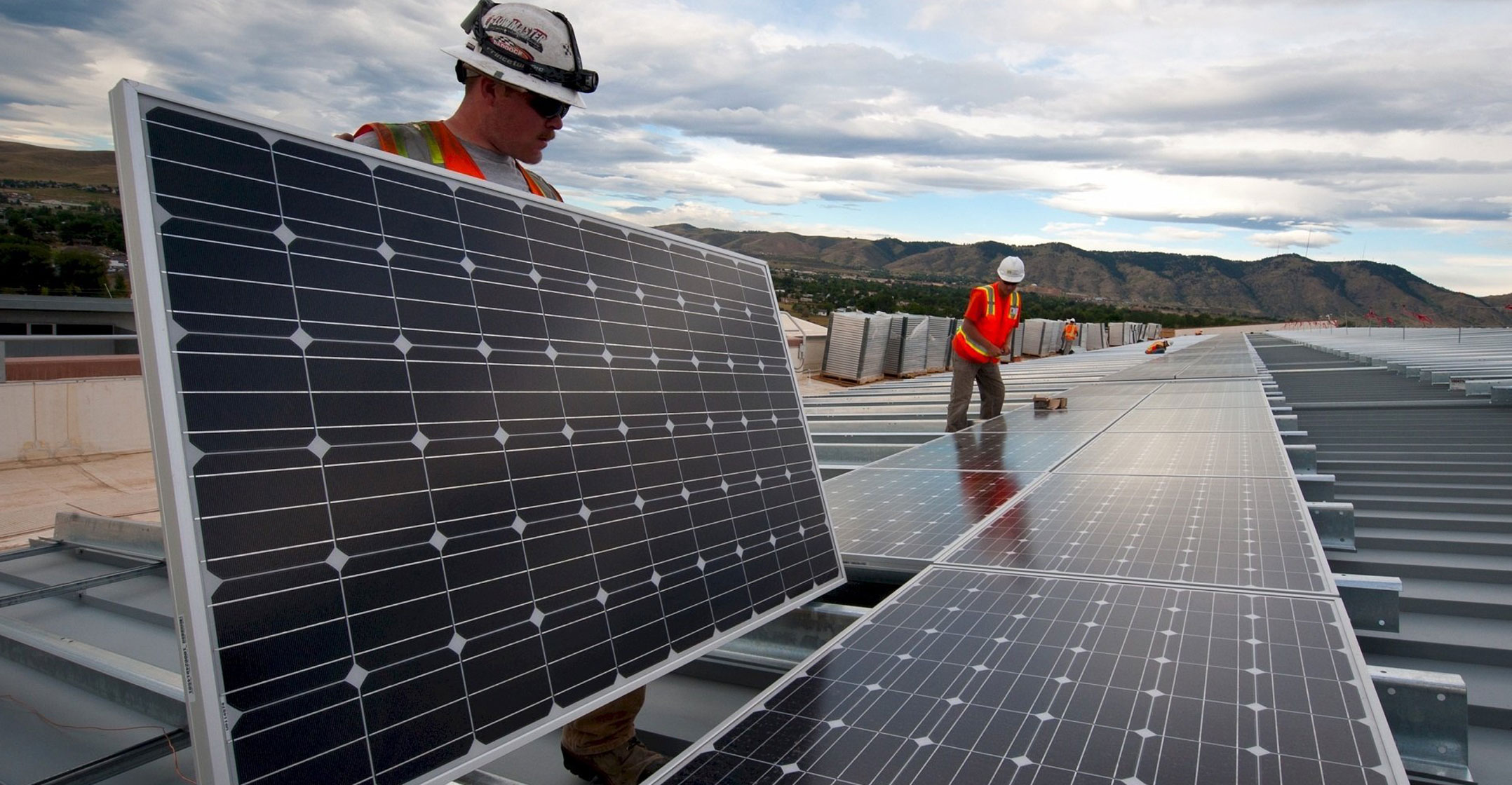
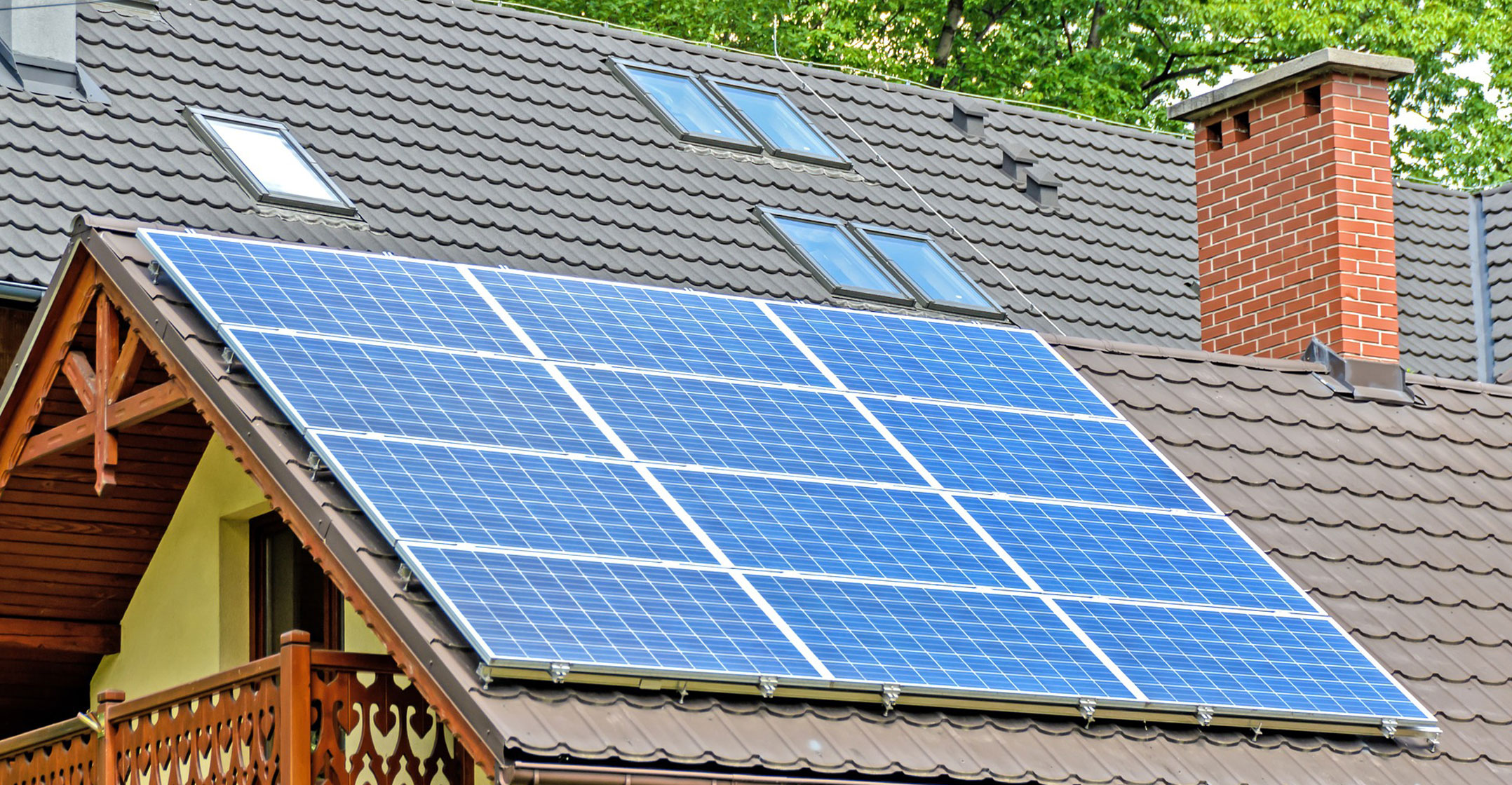
    Eskom hopes its proposed retail tariffs for 2021 will help solve a looming problem triggered by increased solar generation across the country.

    It cites a research study that projects between R3.5-billion and R4-billion in revenue will be lost to photovoltaic (PV) solar generation by the end of this year. Many would argue these numbers are on the low side.

    The shift to solar generation by business and households has resulted in two major problems for Eskom.

    As solar usage increases, so demand during the day will continue to decline, including a flattening of the morning peak

    First, it says “customers using PV systems during the day results in drop in the demand for electricity during the day – with the highest drop in system demand in the middle of the day. This midday demand drop (called the ‘duck curve’) affects the power system negatively, as it means that the generators have to ramp up at an even faster rate than before to meet the evening peak demand.”

    As solar usage increases, so demand during the day will continue to decline, including a flattening of the morning peak. This causes an ever-increasing ramp up to the evening peak.

    Lost revenue

    Second, because existing tariffs are largely variable-usage based (charged per kilowatt-hour), Eskom argues that they do not adequately “reflect the fixed costs and also the demand a customer imposes on the network”.

    As customers move to solar, Eskom contends they could become a “zero net or very low net” consumer as they feed excess power back into the grid during the day. Because they still use the network, this resultant “loss of revenue” will not be commensurate with a reduction in costs.

    Eskom says “it also results in customers with PV being subsidised by customers without PV”. The utility argues that its current tariff structure has caused this.
    This view is supported by the South African Local Government Association (Salga), which in its draft comments on the proposed tariffs says “the challenge is that current tariffs have sent incorrect tariff signals to end customers creating a falsely attractive business case for own generation”.

    Eskom is adamant that its proposed changes “must not be viewed as ‘anti-renewable’, but rather as an attempt to support the connection of alternative energy resources in a responsible way and to avoid unwarranted and non-economic cross-subsidies”.

    It says the proposed changes will not “hamper the uptake of small-scale electricity generation” or households or larger consumers generating their own power, “but rather that more correct and economic signals are provided when making alternative energy choices”.

    Aside from the rationalisation and simplification of its tariff plans, there are three major adjustments proposed by Eskom:

    1. Changes to peak pricing

    Eskom wants to change the peak versus standard versus off-peak periods as well as prices in its time-of-use (TOU) tariffs. It argues that “the current TOU charges last changed in 2005 and no longer reflect the current system and customer requirements”. Because 80% of its sales are on these tariffs, any distinctions between peak/off-peak and seasonality are critical.

    It wants to increase the evening peak to three hours (from two) and decrease the morning peak to two hours (from three), introduce a “standard period” on a Sunday evening, and – importantly – change the ratios between summer (low demand) and winter pricing (higher demand).

    The proposed structure will see the gap between peak as well as weekday day-time pricing narrow when comparing winter versus summer.
    2. Removing the incline block tariff structure

    It proposes the removal of the incline block tariff (IBT) structure for residential customers it supplies directly (like greater Sandton and Soweto).

    Consumers, particularly those on prepaid, are mostly confused by the incline block structure, where the more you use, the more you pay per unit of electricity.

    Eskom says it is “very unpopular in community discussions” and that some “customers buy legally at the low block and then illegally once they reach the higher block consumption”.

    At the higher end (Homepower), Eskom says “the use of inclining block tariffs greatly incentivises higher-consumption customers to use alternative energy sources and energy efficiency, resulting in a real revenue loss not commensurate with a real cost reduction”.

    It stresses that the overall subsidy received by Homelight (for low-consumption households) does not change. However, within each of the residential tariffs (Homelight and Homepower), there are obvious impacts: “Lower-consumption customers will pay slightly more and higher-consumption customers less.”

    3. New way of charging households that want to sell solar back to the grid

    Eskom wants to introduce a new tariff, Homeflex, for urban residential customers (think wealthier households in, say, Bryanston). It will be mandatory for those who want to sell power back to the grid from their solar installations (and voluntary for any other residential customer).

    In this tariff, Eskom notes “customers would need to pay for the required smart time-of-use meter”. No further details on the meter are provided, given this is a tariff application. Homeflex unbundles charges into energy and network charges (something done by City Power and many other metros).

    It will pay the same rate for energy sold back to the grid that the tariff charges in its time-of-use breakdown. In other words, it will pay the winter daytime rate if you’re feeding back solar to the grid during that time. But customers will pay fixed network charges regardless of their power consumption.

    All three of these changes will have wide ramifications for all users of electricity, even if they are not directly supplied by Eskom

    All three of these changes will have wide ramifications for all users of electricity, even if they are not directly supplied by Eskom. Changes to peak pricing and time-of-use tariffs will filter through to municipal tariffs, even if these aren’t based on time of use.

    Salga says “the rationale to remove the IBT tariff is plausible and supported”. Energy regulator Nersa “needs to make a decision on the sustainability of the IBT tariff so that the entire country can move in the same direction. Again, a transition plan will be needed to educate and inform customers of the proposed changes and the impact of the changes on their electricity bill.”

    Raft of changes

    If approved, Nersa will likely nudge (or force) municipalities away from incline block tariffs in future.

    Eskom’s hefty 113-page submission to Nersa provides detailed motivation for a raft of proposed changes beyond those highlighted above. It says there has been consultation with the System Operator, Eskom divisions, the Energy Intensive Users Group and the Association of Municipal Electricity Utilities.

    Nersa is expected to pronounce on the tariffs by March. These will be implemented from 1 April for Eskom-direct customers and on 1 July for municipalities that bulk-buy power from the utility.

    • This article was originally published on Moneyweb and is used here with permission


    Eskom Nersa Salga top
    Subscribe to TechCentral Subscribe to TechCentral
    Share. Facebook Twitter LinkedIn WhatsApp Telegram Email Copy Link
    Previous ArticleRetailer Musica to cease trading
    Next Article Xerox’s Intelligent Workplace Services and Digital Services win top awards

    Related Posts

    Ramokgopa bullish on energy outlook as new projects get green light - Kgosientsho Ramokgopa

    Ramokgopa bullish on energy outlook as new projects get green light

    15 December 2025
    Eskom unveils four-subsidiary structure for future South African grid

    Eskom unveils four-subsidiary structure for future South African grid

    10 December 2025
    Nersa plan ushers in major shift in South Africa's electricity market

    Nersa plan ushers in major shift in South Africa’s electricity market

    8 December 2025
    Company News
    Why TechCentral is the most powerful platform for reaching IT decision makers

    Why TechCentral is the most powerful platform for reaching IT decision makers

    17 December 2025
    Business trends to watch in 2026 - Domains.co.za

    Business trends to watch in 2026

    17 December 2025
    MTN Zambia launches world's first 4G cloud smartphone solution - Huawei

    MTN Zambia launches world’s first 4G cloud smartphone solution

    17 December 2025
    Opinion
    Netflix, Warner Bros deal raises fresh headaches for MultiChoice - Duncan McLeod

    Netflix, Warner Bros deal raises fresh headaches for MultiChoice

    5 December 2025
    BIN scans, DDoS and the next cybercrime wave hitting South Africa's banks - Entersekt Gerhard Oosthuizen

    BIN scans, DDoS and the next cybercrime wave hitting South Africa’s banks

    3 December 2025
    Your data, your hardware: the DIY AI revolution is coming - Duncan McLeod

    Your data, your hardware: the DIY AI revolution is coming

    20 November 2025

    Subscribe to Updates

    Get the best South African technology news and analysis delivered to your e-mail inbox every morning.

    Latest Posts
    Digital authoritarianism grows as African states normalise internet blackouts

    Digital authoritarianism grows as African states normalise internet blackouts

    19 December 2025
    Starlink satellite anomaly creates debris in rare orbital mishap

    Starlink satellite anomaly creates debris in rare orbital mishap

    19 December 2025
    Trump space order puts the moon back at centre of US, China rivalry - US President Donald Trump

    Trump space order puts the moon back at centre of US, China rivalry

    19 December 2025
    TechCentral's South African Newsmakers of 2025

    TechCentral’s South African Newsmakers of 2025

    18 December 2025
    © 2009 - 2025 NewsCentral Media
    • Cookie policy (ZA)
    • TechCentral – privacy and Popia

    Type above and press Enter to search. Press Esc to cancel.

    Manage consent

    TechCentral uses cookies to enhance its offerings. Consenting to these technologies allows us to serve you better. Not consenting or withdrawing consent may adversely affect certain features and functions of the website.

    Functional Always active
    The technical storage or access is strictly necessary for the legitimate purpose of enabling the use of a specific service explicitly requested by the subscriber or user, or for the sole purpose of carrying out the transmission of a communication over an electronic communications network.
    Preferences
    The technical storage or access is necessary for the legitimate purpose of storing preferences that are not requested by the subscriber or user.
    Statistics
    The technical storage or access that is used exclusively for statistical purposes. The technical storage or access that is used exclusively for anonymous statistical purposes. Without a subpoena, voluntary compliance on the part of your Internet Service Provider, or additional records from a third party, information stored or retrieved for this purpose alone cannot usually be used to identify you.
    Marketing
    The technical storage or access is required to create user profiles to send advertising, or to track the user on a website or across several websites for similar marketing purposes.
    • Manage options
    • Manage services
    • Manage {vendor_count} vendors
    • Read more about these purposes
    View preferences
    • {title}
    • {title}
    • {title}