Close Menu
TechCentralTechCentral

    Subscribe to the newsletter

    Get the best South African technology news and analysis delivered to your e-mail inbox every morning.

    Facebook X (Twitter) YouTube LinkedIn
    WhatsApp Facebook X (Twitter) LinkedIn YouTube
    TechCentralTechCentral
    • News
      Digital authoritarianism grows as African states normalise internet blackouts

      Digital authoritarianism grows as African states normalise internet blackouts

      19 December 2025
      Starlink satellite anomaly creates debris in rare orbital mishap

      Starlink satellite anomaly creates debris in rare orbital mishap

      19 December 2025
      TechCentral's South African Newsmakers of 2025

      TechCentral’s South African Newsmakers of 2025

      18 December 2025
      Malatsi buries Post Office's long-dead monopoly

      Malatsi buries Post Office monopoly the market ignored

      18 December 2025
      China races to crack EUV as chip war with the West intensifies

      China races to crack EUV lithography as chip war with the West intensifies

      18 December 2025
    • World
      Trump space order puts the moon back at centre of US, China rivalry - US President Donald Trump

      Trump space order puts the moon back at centre of US, China rivalry

      19 December 2025
      Warner Bros slams the door on Paramount

      Warner Bros slams the door on Paramount

      17 December 2025
      X moves to block bid to revive Twitter brand

      X moves to block bid to revive Twitter brand

      17 December 2025
      Oracle’s AI ambitions face scrutiny on earnings miss

      Oracle’s AI ambitions face scrutiny on earnings miss

      11 December 2025
      China will get Nvidia H200 chips - but not without paying Washington first

      China will get Nvidia H200 chips – but not without paying Washington first

      9 December 2025
    • In-depth
      Black Friday goes digital in South Africa as online spending surges to record high

      Black Friday goes digital in South Africa as online spending surges to record high

      4 December 2025
      Canal+ plays hardball - and DStv viewers feel the pain

      Canal+ plays hardball – and DStv viewers feel the pain

      3 December 2025
      Jensen Huang Nvidia

      So, will China really win the AI race?

      14 November 2025
      Valve's Linux console takes aim at Microsoft's gaming empire

      Valve’s Linux console takes aim at Microsoft’s gaming empire

      13 November 2025
      iOCO's extraordinary comeback plan - Rhys Summerton

      iOCO’s extraordinary comeback plan

      28 October 2025
    • TCS
      TCS+ | Africa's digital transformation - unlocking AI through cloud and culture - Cliff de Wit Accelera Digital Group

      TCS+ | Cloud without culture won’t deliver AI: Accelera’s Cliff de Wit

      12 December 2025
      TCS+ | How Cloud on Demand helps partners thrive in the AWS ecosystem - Odwa Ndyaluvane and Xenia Rhode

      TCS+ | How Cloud On Demand helps partners thrive in the AWS ecosystem

      4 December 2025
      TCS | MTN Group CEO Ralph Mupita on competition, AI and the future of mobile

      TCS | Ralph Mupita on competition, AI and the future of mobile

      28 November 2025
      TCS | Dominic Cull on fixing South Africa's ICT policy bottlenecks

      TCS | Dominic Cull on fixing South Africa’s ICT policy bottlenecks

      21 November 2025
      TCS | BMW CEO Peter van Binsbergen on the future of South Africa's automotive industry

      TCS | BMW CEO Peter van Binsbergen on the future of South Africa’s automotive industry

      6 November 2025
    • Opinion
      Netflix, Warner Bros deal raises fresh headaches for MultiChoice - Duncan McLeod

      Netflix, Warner Bros deal raises fresh headaches for MultiChoice

      5 December 2025
      BIN scans, DDoS and the next cybercrime wave hitting South Africa's banks - Entersekt Gerhard Oosthuizen

      BIN scans, DDoS and the next cybercrime wave hitting South Africa’s banks

      3 December 2025
      Your data, your hardware: the DIY AI revolution is coming - Duncan McLeod

      Your data, your hardware: the DIY AI revolution is coming

      20 November 2025
      Zero Carbon Charge founder Joubert Roux

      The energy revolution South Africa can’t afford to miss

      20 November 2025
      It's time for a new approach to government IT spend in South Africa - Richard Firth

      It’s time for a new approach to government IT spend in South Africa

      19 November 2025
    • Company Hubs
      • Africa Data Centres
      • AfriGIS
      • Altron Digital Business
      • Altron Document Solutions
      • Altron Group
      • Arctic Wolf
      • AvertITD
      • Braintree
      • CallMiner
      • CambriLearn
      • CYBER1 Solutions
      • Digicloud Africa
      • Digimune
      • Domains.co.za
      • ESET
      • Euphoria Telecom
      • Incredible Business
      • iONLINE
      • IQbusiness
      • Iris Network Systems
      • LSD Open
      • NEC XON
      • Netstar
      • Network Platforms
      • Next DLP
      • Ovations
      • Paracon
      • Paratus
      • Q-KON
      • SevenC
      • SkyWire
      • Solid8 Technologies
      • Telit Cinterion
      • Tenable
      • Vertiv
      • Videri Digital
      • Vodacom Business
      • Wipro
      • Workday
      • XLink
    • Sections
      • AI and machine learning
      • Banking
      • Broadcasting and Media
      • Cloud services
      • Contact centres and CX
      • Cryptocurrencies
      • Education and skills
      • Electronics and hardware
      • Energy and sustainability
      • Enterprise software
      • Financial services
      • Information security
      • Internet and connectivity
      • Internet of Things
      • Investment
      • IT services
      • Lifestyle
      • Motoring
      • Public sector
      • Retail and e-commerce
      • Satellite communications
      • Science
      • SMEs and start-ups
      • Social media
      • Talent and leadership
      • Telecoms
    • Events
    • Advertise
    TechCentralTechCentral
    Home » Editor's pick » New light shed on Homo naledi mystery

    New light shed on Homo naledi mystery

    By The Conversation28 July 2016
    Twitter LinkedIn Facebook WhatsApp Email Telegram Copy Link
    News Alerts
    WhatsApp
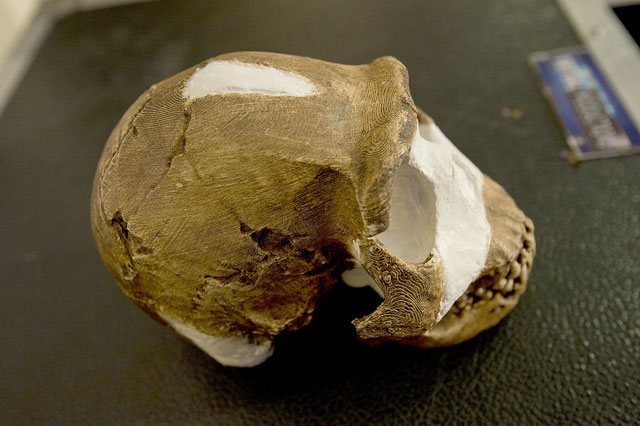
    A replica of a Homo naledi skull
    A replica of a Homo naledi skull

    Many questions have been thrown up by the discovery in South Africa of a previously unidentified human relative, Homo naledi. Perhaps the one that’s grabbed people’s attention the most is how Homo naledi’s bones ended up in the Dinaledi Chamber in the Rising Star cave complex in the Cradle of Humankind near Johannesburg.

    The team that found and classified the remains has suggested that the Homo naledi group deliberately deposited carcasses in complete darkness at the very back of the cave system. According to this claim, Homo naledi adopted a relatively “modern” or ritualistic form of behaviour even though the species had smaller brains than today’s humans.

    To date, no opening has been found within the Dinaledi Chamber apart from the existing entrance. But might there have been an additional entrance at some time in the past? New research I have conducted and published in the South African Journal of Science centred on mysterious black spots found on Homo naledi bones from the cave. My findings suggest that the answer to this question may have been “yes” — there very well may have been an entrance.

    I strongly believe that there was possibly a temporary entrance into the chamber, in addition to the one used by explorers today. This temporary entrance may been covered up by a rock fall that also trapped the individuals whose bones were found some time later.

    Why do I believe this? Because those mysterious black spots are manganese dioxide and were probably deposited on the bones by lichen. And lichen need light to grow — so there must have been some light penetrating into the Dinaledi chamber. My scenario is that the Homo naledi family group was trapped in the Dinaledi Chamber after a rockfall — but that there was still, for a time, enough light to penetrate the chamber. This allowed lichen to grow on many of the bones of Homo naledi.

    Then, with subsequent rockfalls in a phreatic maze, the Dinaledi Chamber was sealed except for the difficult route whereby explorers can enter the cave at the present time.

    Evidence from elsewhere

    The team which discovered the remains noted that “some bones and teeth are dotted with black iron-manganese oxy-hydroxide deposits and coatings”.

    I examined the remains in question and found that the spots were analogous to the kind of associated with modern lichen which are “symbionts”, including fungi — that disperse in spots — and algae, which require at least some light to grow.

    My colleagues and I have previously examined instances of lichen in the Cradle of Humankind area. Lichen can grow on certain substrates, including bone or rock, with a dotted or spotted distribution. The spotted distribution of lichen is sometimes associated with dotted distributions of manganese oxy-hydroxide on the same surfaces.
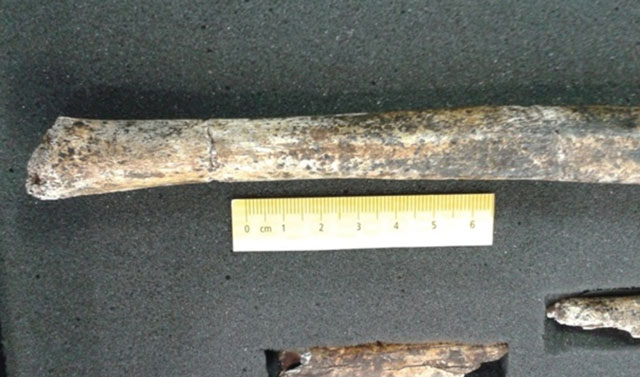
    The black markings on these Homo naledi bones are manganese dioxide
    The black markings on these Homo naledi bones are manganese dioxide

    The source of the manganese in the Cradle of Humankind region would include dolomite and chert. These are rock materials that date back two billion years ago, related to a shallow saline sea that existed at that time.

    In the Cradle of Humankind, lichen has proved to grow not only on chert, but also on dolomite. It can also grow on bone surfaces.

    Hominid cranial specimens from the nearby Sterkfontein caves have small dots or spots of manganese oxyhydroxide on surfaces of bone, even within the inner cranial wall of these skulls. It seems likely that these dots or spots of manganese oxyhydroxide may have been areas where lichens were able to grow — in a partially sunlit micro-environment — for a relatively short period of time. Then sand would have covered the crania, blocking out the light and halting the lichen’s ability to keep growing.

    So, what does such evidence in the Cradle of Humankind tell us about Homo naledi’s mysterious black spots?

    The circumstances in the Wonder Cave — which is within 10kms of the Rising Star cave complex — offer some important clues to what might have happened to create spots on the Homo naledi remains.

    When one walks from the entrance of the cavern into the darkness of the dolomitic solution cavity, the following becomes obvious.

    Where there is intense light and heat on dry exposed surfaces outside the cave, there is little or no lichen growth at all. But, in the moister and slightly darker regions of the cave, there is an area where light and moisture appear to be optimal for the present lichen colonists.

    Then, in the darkness at the back of the cave where very little light penetrates, there’s a decrease in the mean size of lichens, until there is no lichen growth at all — although there may be some moisture because of water dripping through the phreatic maze of the dolomitic cave system.

    All of this suggests that, for the Homo naledi bones in the Rising Star cave to have become spotted with manganese dioxide, they had to have some exposure to light. That could only have happened if light got into the cave. And this was only possible if there was some sort of entrance that has, in the distant past, been covered over. If correct, this would contradict the original team’s proposal that, in prehistory, the Dinaledi Chamber could only be accessed by means of very narrow and circuitous passages, in complete darkness.

    Time to reassess?

    Based on my findings I believe that there was, at some time, a second entrance to the Dinaledi Chamber. This allowed at least some light to penetrate into the cave and to facilitate the growth of lichen and the subsequent deposition of manganese oxyhydroxide on the Homo naledi bones.

    I’d further hypothesise that such an entrance, if it existed at all, was temporary. A rockfall in the maze cave system may have subsequently sealed the entrance at some stage in the dolomitic solution cavity. The darkness that settled over the cave would have terminated any lichen growth.

    If there was more than one entrance into the Dinaledi Chamber, as suggested by my work and research conducted by Aurore Val, the “intentional depositional model” will need to be reassessed. It would seem unlikely that the Homo naledi group deliberately deposited or buried its dead.

    Author’s note: I would like to acknowledge the support of the National Research Foundation, the Andrew Mellon Foundation, and the Centre of Excellence for the Palaeosciences.The Conversation

    • Francis Thackeray is Phillip Tobias Chair in Palaeoanthropology, Evolutionary Studies Institute, University of the Witwatersrand
    • This article was originally published on The Conversation
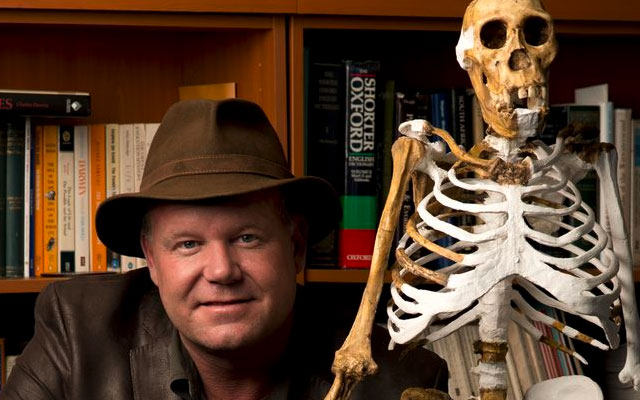

    Francis Thackeray Homo naledi
    Subscribe to TechCentral Subscribe to TechCentral
    Share. Facebook Twitter LinkedIn WhatsApp Telegram Email Copy Link
    Previous ArticleSA telecoms policy ‘dysfunctional’
    Next Article MTN targets 2017 Nigeria listing

    Related Posts

    SA scientist named in Time 100 list

    22 April 2016

    Picture essay: meet Homo naledi

    10 September 2015
    Company News
    Why TechCentral is the most powerful platform for reaching IT decision makers

    Why TechCentral is the most powerful platform for reaching IT decision makers

    17 December 2025
    Business trends to watch in 2026 - Domains.co.za

    Business trends to watch in 2026

    17 December 2025
    MTN Zambia launches world's first 4G cloud smartphone solution - Huawei

    MTN Zambia launches world’s first 4G cloud smartphone solution

    17 December 2025
    Opinion
    Netflix, Warner Bros deal raises fresh headaches for MultiChoice - Duncan McLeod

    Netflix, Warner Bros deal raises fresh headaches for MultiChoice

    5 December 2025
    BIN scans, DDoS and the next cybercrime wave hitting South Africa's banks - Entersekt Gerhard Oosthuizen

    BIN scans, DDoS and the next cybercrime wave hitting South Africa’s banks

    3 December 2025
    Your data, your hardware: the DIY AI revolution is coming - Duncan McLeod

    Your data, your hardware: the DIY AI revolution is coming

    20 November 2025

    Subscribe to Updates

    Get the best South African technology news and analysis delivered to your e-mail inbox every morning.

    Latest Posts
    Digital authoritarianism grows as African states normalise internet blackouts

    Digital authoritarianism grows as African states normalise internet blackouts

    19 December 2025
    Starlink satellite anomaly creates debris in rare orbital mishap

    Starlink satellite anomaly creates debris in rare orbital mishap

    19 December 2025
    Trump space order puts the moon back at centre of US, China rivalry - US President Donald Trump

    Trump space order puts the moon back at centre of US, China rivalry

    19 December 2025
    TechCentral's South African Newsmakers of 2025

    TechCentral’s South African Newsmakers of 2025

    18 December 2025
    © 2009 - 2025 NewsCentral Media
    • Cookie policy (ZA)
    • TechCentral – privacy and Popia

    Type above and press Enter to search. Press Esc to cancel.

    Manage consent

    TechCentral uses cookies to enhance its offerings. Consenting to these technologies allows us to serve you better. Not consenting or withdrawing consent may adversely affect certain features and functions of the website.

    Functional Always active
    The technical storage or access is strictly necessary for the legitimate purpose of enabling the use of a specific service explicitly requested by the subscriber or user, or for the sole purpose of carrying out the transmission of a communication over an electronic communications network.
    Preferences
    The technical storage or access is necessary for the legitimate purpose of storing preferences that are not requested by the subscriber or user.
    Statistics
    The technical storage or access that is used exclusively for statistical purposes. The technical storage or access that is used exclusively for anonymous statistical purposes. Without a subpoena, voluntary compliance on the part of your Internet Service Provider, or additional records from a third party, information stored or retrieved for this purpose alone cannot usually be used to identify you.
    Marketing
    The technical storage or access is required to create user profiles to send advertising, or to track the user on a website or across several websites for similar marketing purposes.
    • Manage options
    • Manage services
    • Manage {vendor_count} vendors
    • Read more about these purposes
    View preferences
    • {title}
    • {title}
    • {title}