Close Menu
TechCentralTechCentral

    Subscribe to the newsletter

    Get the best South African technology news and analysis delivered to your e-mail inbox every morning.

    Facebook X (Twitter) YouTube LinkedIn
    WhatsApp Facebook X (Twitter) LinkedIn YouTube
    TechCentralTechCentral
    • News
      TechCentral's South African Newsmakers of 2025

      TechCentral’s South African Newsmakers of 2025

      18 December 2025
      Malatsi buries Post Office's long-dead monopoly

      Malatsi buries Post Office monopoly the market ignored

      18 December 2025
      China races to crack EUV as chip war with the West intensifies

      China races to crack EUV lithography as chip war with the West intensifies

      18 December 2025
      Coursera to buy Udemy, in which Prosus is an investor

      Coursera to buy Udemy, in which Prosus is an investor

      18 December 2025
      It has been a year of policy victories, but crypto firms warn momentum could fade without durable US legislation.- Donald Trump

      Crypto’s Trump-era boom faces a 2026 reality check

      18 December 2025
    • World
      Warner Bros slams the door on Paramount

      Warner Bros slams the door on Paramount

      17 December 2025
      X moves to block bid to revive Twitter brand

      X moves to block bid to revive Twitter brand

      17 December 2025
      Oracle’s AI ambitions face scrutiny on earnings miss

      Oracle’s AI ambitions face scrutiny on earnings miss

      11 December 2025
      China will get Nvidia H200 chips - but not without paying Washington first

      China will get Nvidia H200 chips – but not without paying Washington first

      9 December 2025
      IBM reportedly close to $11-billion deal to buy Confluent - Arvind Krishna

      IBM reportedly close to $11-billion deal to buy Confluent

      8 December 2025
    • In-depth
      Black Friday goes digital in South Africa as online spending surges to record high

      Black Friday goes digital in South Africa as online spending surges to record high

      4 December 2025
      Canal+ plays hardball - and DStv viewers feel the pain

      Canal+ plays hardball – and DStv viewers feel the pain

      3 December 2025
      Jensen Huang Nvidia

      So, will China really win the AI race?

      14 November 2025
      Valve's Linux console takes aim at Microsoft's gaming empire

      Valve’s Linux console takes aim at Microsoft’s gaming empire

      13 November 2025
      iOCO's extraordinary comeback plan - Rhys Summerton

      iOCO’s extraordinary comeback plan

      28 October 2025
    • TCS
      TCS+ | Africa's digital transformation - unlocking AI through cloud and culture - Cliff de Wit Accelera Digital Group

      TCS+ | Cloud without culture won’t deliver AI: Accelera’s Cliff de Wit

      12 December 2025
      TCS+ | How Cloud on Demand helps partners thrive in the AWS ecosystem - Odwa Ndyaluvane and Xenia Rhode

      TCS+ | How Cloud On Demand helps partners thrive in the AWS ecosystem

      4 December 2025
      TCS | MTN Group CEO Ralph Mupita on competition, AI and the future of mobile

      TCS | Ralph Mupita on competition, AI and the future of mobile

      28 November 2025
      TCS | Dominic Cull on fixing South Africa's ICT policy bottlenecks

      TCS | Dominic Cull on fixing South Africa’s ICT policy bottlenecks

      21 November 2025
      TCS | BMW CEO Peter van Binsbergen on the future of South Africa's automotive industry

      TCS | BMW CEO Peter van Binsbergen on the future of South Africa’s automotive industry

      6 November 2025
    • Opinion
      Netflix, Warner Bros deal raises fresh headaches for MultiChoice - Duncan McLeod

      Netflix, Warner Bros deal raises fresh headaches for MultiChoice

      5 December 2025
      BIN scans, DDoS and the next cybercrime wave hitting South Africa's banks - Entersekt Gerhard Oosthuizen

      BIN scans, DDoS and the next cybercrime wave hitting South Africa’s banks

      3 December 2025
      Your data, your hardware: the DIY AI revolution is coming - Duncan McLeod

      Your data, your hardware: the DIY AI revolution is coming

      20 November 2025
      Zero Carbon Charge founder Joubert Roux

      The energy revolution South Africa can’t afford to miss

      20 November 2025
      It's time for a new approach to government IT spend in South Africa - Richard Firth

      It’s time for a new approach to government IT spend in South Africa

      19 November 2025
    • Company Hubs
      • Africa Data Centres
      • AfriGIS
      • Altron Digital Business
      • Altron Document Solutions
      • Altron Group
      • Arctic Wolf
      • AvertITD
      • Braintree
      • CallMiner
      • CambriLearn
      • CYBER1 Solutions
      • Digicloud Africa
      • Digimune
      • Domains.co.za
      • ESET
      • Euphoria Telecom
      • Incredible Business
      • iONLINE
      • IQbusiness
      • Iris Network Systems
      • LSD Open
      • NEC XON
      • Netstar
      • Network Platforms
      • Next DLP
      • Ovations
      • Paracon
      • Paratus
      • Q-KON
      • SevenC
      • SkyWire
      • Solid8 Technologies
      • Telit Cinterion
      • Tenable
      • Vertiv
      • Videri Digital
      • Vodacom Business
      • Wipro
      • Workday
      • XLink
    • Sections
      • AI and machine learning
      • Banking
      • Broadcasting and Media
      • Cloud services
      • Contact centres and CX
      • Cryptocurrencies
      • Education and skills
      • Electronics and hardware
      • Energy and sustainability
      • Enterprise software
      • Financial services
      • Information security
      • Internet and connectivity
      • Internet of Things
      • Investment
      • IT services
      • Lifestyle
      • Motoring
      • Public sector
      • Retail and e-commerce
      • Satellite communications
      • Science
      • SMEs and start-ups
      • Social media
      • Talent and leadership
      • Telecoms
    • Events
    • Advertise
    TechCentralTechCentral
    Home » In-depth » Why Eskom’s finances are deeply troubling

    Why Eskom’s finances are deeply troubling

    By The Conversation20 November 2016
    Twitter LinkedIn Facebook WhatsApp Email Telegram Copy Link
    News Alerts
    WhatsApp

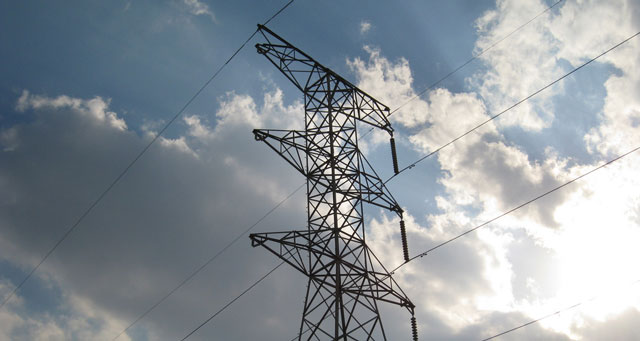
    eskom-640

    With news of state capture making headlines across South Africa, and the unexpected resignation of the state power utility’s CEO Brian Molefe, it was easy to overlook an annexure in the finance minister’s medium-term budget statement dealing with government’s exposure to state-owned enterprises, and some of the finer points of Eskom’s interim financial results.

    A closer look suggests that South Africa’s largest state-owned enterprise may not be in as strong financial shape as generally thought.

    The power utility’s interim results show increasing costs and a decline in profits for the first half of the year. The relatively modest level of profits that were achieved provide little comfort when looking at a set of high probability risk factors unfolding over the next few years.

    These include the fact that about R40bn of under-recovered costs that had been expected to be decided by the end of this year are now unlikely to be reflected in tariffs until 2018/2019, or later. It also seems highly feasible that tariff increases scheduled to start in April 2018 will be delayed in the courts, with the next major tariff increase perhaps set back to 2019/2020 under this scenario.

    The picture becomes more troubling when looking at the medium term. Eskom’s borrowings and finance costs are set to increase significantly over the next few years. Payments to independent power producers could easily double, and further increases in revenue are unlikely to match historical trend.

    With government financial exposure to the power utility at R368,5bn — and perhaps doubling over the medium term — this has implications for both Eskom and South Africa’s public finances more generally.

    What the numbers say

    In assessing government’s financial risk exposure to Eskom, National Treasury noted, as a positive factor, its recent recapitalisation programme and subsequent improvement in liquidity. Indeed, there might be reason for optimism in some of the numbers. These include a 10,5% increase in revenue as compared to the first six months of 2015/2016, a 23% increase in earnings before interest, tax and depreciation and profits of R9,3bn, and various cost reductions of some R14,4bn.

    But symptoms of a deeper problem emerge when unpacking these numbers.

    For example, revenue gains of some R21bn were driven primarily by an increase in regulated tariffs. The problem is that Eskom has relied on significant year-on-year increases in tariffs since 2008. There is no guarantee this will continue, with flat — or decreasing — tariff and revenue scenarios more likely for the next few years.

    The reason for this comes from an understanding of Eskom’s regulatory environment. First, there’s a huge question mark over R11bn of tariff increases allowed by the utility regulator for 2016/2017. This has been set aside by the high court and sent back to the regulator for further review.

    On top of this, the effect of the court battle is that other important regulatory decisions have been parked until the matter is resolved. This alone has already delayed other decisions on some R40bn of under-recovered costs dating back to 2014/2015. Whatever the amount finally awarded to Eskom, it isn’t likely to be reflected in tariffs until 2018/2019, if at all.

    Eskom does, of course, have room to reduce costs. That said, the cost base is increasing, and in areas that are largely outside Eskom’s control.

    Take the long-term power supply agreements which government has placed with the power utility. The annual cost of power purchases came to some R15,1 billion last year, an increase of R5,6bn over the previous year. This cost could easily double over the next several years as government programmes in renewable power generation, gas to power projects and coal independent power produce projects come into commercial operation.

    eskom-640

    Another way Eskom could conceivably cut costs is by substituting its own generation with supply from independent power producers. But there are two problems with this. Firstly, Eskom now has an excess of generating capacity. With weak demand and new generating units at Ingula, Medupi and Kusile in various stages of construction, it will be some time before this generating capacity can be fully utilised. Secondly, borrowings on capital invested in existing assets and those under construction must be repaid, whether used at full capacity or not.

    What about savings on coal costs as Eskom outsources power generation to independent producers? There isn’t a great deal of room for manoeuvre here either. The regulator has required Eskom to engage in long-term coal supply arrangements. These are generally not easy to terminate, and storage or transfer to locations where the coal might be used is costly.

    Debt cliff

    Eskom’s debt obligations were reported as R317bn, with an increase in finance costs of roughly R4bn for the six-month period. While not significant in itself, this may well be the tip of the iceberg.

    For example, Eskom reported capitalised finance costs of R9,5bn. These are costs that are deferred and don’t affect the reported bottom line of profits. This number wipes out the accounting profits Eskom reported of R9,3bn.

    And Eskom proposes to borrow more.

    To finance its capital expansion programme over the next five years, the board has approved a further R327bn through to 31 March 2021. Assuming most of the costs on those borrowings will be capitalised during construction — a common accounting practice — the full effect of finance costs will only be reflected in Eskom’s bottom line profits (or losses) on completion of the current build programme.

    In looking at cash flow, Eskom’s interest payments on debt last year reached R22,8bn. Considering that total borrowings are projected to roughly double by 2020/2021, it is not unrealistic to anticipate annual interest payments of well over R40bn. If repayments on principal debt are added, this could reach over R50bn/year within the next five years.

    So, can’t it cut costs? Yes. But by as much as R80bn/year to compensate for long-term power purchase agreements, and borrowings? Not really.

    The Eskom board has highlighted a continued focus on identifying cost savings and efficiency opportunities. But as South Africa’s de facto electricity supplier of last resort there is not the flexibility to cut costs as might otherwise be the case.

    On top of this, key cost drivers are largely determined by government. That is not to suggest that savings can’t be made. But in providing essential services and implementing government policy, Eskom isn’t free to aggressively initiate cost savings as it might want to.

    It would be comforting if the risks Eskom faces could be mitigated by large-scale efficiency initiatives — but it is now probably too late for that alone. In managing this sea change, national treasury may have no choice but to consider more fundamental policy responses and structural solutions to stop Eskom’s finances from turning into a financial tsunami.The Conversation

    • Stephen Labson is senior research fellow at the Centre for Competition, Regulation and Economic Development, University of Johannesburg
    • This article was originally published on The Conversation


    Eskom Stephen Labson
    Subscribe to TechCentral Subscribe to TechCentral
    Share. Facebook Twitter LinkedIn WhatsApp Telegram Email Copy Link
    Previous ArticleFacebook to crack down on fake news
    Next Article Don’t destroy our industry, MTN pleads

    Related Posts

    Ramokgopa bullish on energy outlook as new projects get green light - Kgosientsho Ramokgopa

    Ramokgopa bullish on energy outlook as new projects get green light

    15 December 2025
    Eskom unveils four-subsidiary structure for future South African grid

    Eskom unveils four-subsidiary structure for future South African grid

    10 December 2025
    Nersa plan ushers in major shift in South Africa's electricity market

    Nersa plan ushers in major shift in South Africa’s electricity market

    8 December 2025
    Company News
    Why TechCentral is the most powerful platform for reaching IT decision makers

    Why TechCentral is the most powerful platform for reaching IT decision makers

    17 December 2025
    Business trends to watch in 2026 - Domains.co.za

    Business trends to watch in 2026

    17 December 2025
    MTN Zambia launches world's first 4G cloud smartphone solution - Huawei

    MTN Zambia launches world’s first 4G cloud smartphone solution

    17 December 2025
    Opinion
    Netflix, Warner Bros deal raises fresh headaches for MultiChoice - Duncan McLeod

    Netflix, Warner Bros deal raises fresh headaches for MultiChoice

    5 December 2025
    BIN scans, DDoS and the next cybercrime wave hitting South Africa's banks - Entersekt Gerhard Oosthuizen

    BIN scans, DDoS and the next cybercrime wave hitting South Africa’s banks

    3 December 2025
    Your data, your hardware: the DIY AI revolution is coming - Duncan McLeod

    Your data, your hardware: the DIY AI revolution is coming

    20 November 2025

    Subscribe to Updates

    Get the best South African technology news and analysis delivered to your e-mail inbox every morning.

    Latest Posts
    TechCentral's South African Newsmakers of 2025

    TechCentral’s South African Newsmakers of 2025

    18 December 2025
    Malatsi buries Post Office's long-dead monopoly

    Malatsi buries Post Office monopoly the market ignored

    18 December 2025
    China races to crack EUV as chip war with the West intensifies

    China races to crack EUV lithography as chip war with the West intensifies

    18 December 2025
    Coursera to buy Udemy, in which Prosus is an investor

    Coursera to buy Udemy, in which Prosus is an investor

    18 December 2025
    © 2009 - 2025 NewsCentral Media
    • Cookie policy (ZA)
    • TechCentral – privacy and Popia

    Type above and press Enter to search. Press Esc to cancel.

    Manage consent

    TechCentral uses cookies to enhance its offerings. Consenting to these technologies allows us to serve you better. Not consenting or withdrawing consent may adversely affect certain features and functions of the website.

    Functional Always active
    The technical storage or access is strictly necessary for the legitimate purpose of enabling the use of a specific service explicitly requested by the subscriber or user, or for the sole purpose of carrying out the transmission of a communication over an electronic communications network.
    Preferences
    The technical storage or access is necessary for the legitimate purpose of storing preferences that are not requested by the subscriber or user.
    Statistics
    The technical storage or access that is used exclusively for statistical purposes. The technical storage or access that is used exclusively for anonymous statistical purposes. Without a subpoena, voluntary compliance on the part of your Internet Service Provider, or additional records from a third party, information stored or retrieved for this purpose alone cannot usually be used to identify you.
    Marketing
    The technical storage or access is required to create user profiles to send advertising, or to track the user on a website or across several websites for similar marketing purposes.
    • Manage options
    • Manage services
    • Manage {vendor_count} vendors
    • Read more about these purposes
    View preferences
    • {title}
    • {title}
    • {title}