Close Menu
TechCentralTechCentral

    Subscribe to the newsletter

    Get the best South African technology news and analysis delivered to your e-mail inbox every morning.

    Facebook X (Twitter) YouTube LinkedIn
    WhatsApp Facebook X (Twitter) LinkedIn YouTube
    TechCentralTechCentral
    • News
      How AI agents are reshaping banking in South Africa - Lindelani Ramukumba, Absa

      How agentic AI is reshaping banking in South Africa

      5 April 2026
      South Africa's 5G boom is bypassing rural areas: Icasa

      South Africa’s 5G boom is bypassing rural areas: Icasa

      5 April 2026
      WhatsApp is eating South African operators' revenue

      WhatsApp is eating South African operators’ revenue

      4 April 2026
      DeepSeek V4 to run on Huawei silicon as China builds its own AI stack

      DeepSeek V4 to run on Huawei silicon as China builds its own AI stack

      4 April 2026
      Gaping holes in South African government cyber defences

      Gaping holes in South African government cyber defences

      2 April 2026
    • World
      Amazon in talks to buy satellite operator Globalstar

      Amazon in talks to buy satellite operator Globalstar

      2 April 2026

      Apple plans to open Siri to rival AI services

      27 March 2026
      It's official: ads are coming to ChatGPT

      It’s official: ads are coming to ChatGPT

      23 March 2026
      Mystery Chinese AI model revealed to be Xiaomi's

      Mystery Chinese AI model revealed to be Xiaomi’s

      19 March 2026
      A mystery AI model has developers buzzing

      A mystery AI model has developers buzzing

      18 March 2026
    • In-depth
      The biggest untapped EV market on Earth is hiding in plain sight

      The biggest untapped EV market on Earth is hiding in plain sight

      1 April 2026
      The R18-billion tech giant hiding in plain sight - Jens Montanana

      The R16-billion tech giant hiding in plain sight

      26 March 2026
      The last generation of coders

      The last generation of coders

      18 February 2026
      Sentech is in dire straits

      Sentech is in dire straits

      10 February 2026
      How liberalisation is rewiring South Africa's power sector

      How liberalisation is rewiring South Africa’s power sector

      21 January 2026
    • TCS
      TCS | MTN's Divysh Joshi on the strategy behind Pi - Divyesh Joshi

      TCS | MTN’s Divyesh Joshi on the strategy behind Pi

      1 April 2026
      Anoosh Rooplal

      TCS | Anoosh Rooplal on the Post Office’s last stand

      27 March 2026
      Meet the CIO | HealthBridge CTO Anton Fatti on the future of digital health

      Meet the CIO | Healthbridge CTO Anton Fatti on the future of digital health

      23 March 2026
      TCS+ | Arctic Wolf unpacks the evolving threat landscape for SA businesses - Clare Loveridge and Jason Oehley

      TCS+ | Arctic Wolf unpacks the evolving threat landscape for SA businesses

      19 March 2026
      TCS+ | Vox Kiwi: a wireless solution promising a fibre-like experience - Theo van Zyl

      TCS+ | Vox Kiwi: a wireless solution promising a fibre-like experience

      13 March 2026
    • Opinion
      The conflict of interest at the heart of PayShap's slow adoption - Cheslyn Jacobs

      The conflict of interest at the heart of PayShap’s slow adoption

      26 March 2026
      South Africa's energy future hinges on getting wheeling right - Aishah Gire

      South Africa’s energy future hinges on getting wheeling right

      10 March 2026
      Hold the doom: the case for a South African comeback - Duncan McLeod

      Apple just dropped a bomb on the Windows world

      5 March 2026
      VC's centre of gravity is shifting - and South Africa is in the frame - Alison Collier

      VC’s centre of gravity is shifting – and South Africa is in the frame

      3 March 2026
      Hold the doom: the case for a South African comeback - Duncan McLeod

      Hold the doom: the case for a South African comeback

      26 February 2026
    • Company Hubs
      • 1Stream
      • Africa Data Centres
      • AfriGIS
      • Altron Digital Business
      • Altron Document Solutions
      • Altron Group
      • Arctic Wolf
      • Ascent Technology
      • AvertITD
      • BBD
      • Braintree
      • CallMiner
      • CambriLearn
      • CYBER1 Solutions
      • Digicloud Africa
      • Digimune
      • Domains.co.za
      • ESET
      • Euphoria Telecom
      • HOSTAFRICA
      • Incredible Business
      • iONLINE
      • IQbusiness
      • Iris Network Systems
      • Kaspersky
      • LSD Open
      • Mitel
      • NEC XON
      • Netstar
      • Network Platforms
      • Next DLP
      • Ovations
      • Paracon
      • Paratus
      • Q-KON
      • SevenC
      • SkyWire
      • Solid8 Technologies
      • Telit Cinterion
      • Telviva
      • Tenable
      • Vertiv
      • Videri Digital
      • Vodacom Business
      • Wipro
      • Workday
      • XLink
    • Sections
      • AI and machine learning
      • Banking
      • Broadcasting and Media
      • Cloud services
      • Contact centres and CX
      • Cryptocurrencies
      • Education and skills
      • Electronics and hardware
      • Energy and sustainability
      • Enterprise software
      • Financial services
      • HealthTech
      • Information security
      • Internet and connectivity
      • Internet of Things
      • Investment
      • IT services
      • Lifestyle
      • Motoring
      • Policy and regulation
      • Public sector
      • Retail and e-commerce
      • Satellite communications
      • Science
      • SMEs and start-ups
      • Social media
      • Talent and leadership
      • Telecoms
    • Events
    • Advertise
    TechCentralTechCentral
    Home » Sections » Science » Bizarre ‘dark fluid’ with negative mass could dominate the universe

    Bizarre ‘dark fluid’ with negative mass could dominate the universe

    By The Conversation5 December 2018
    Twitter LinkedIn Facebook WhatsApp Email Telegram Copy Link
    News Alerts
    WhatsApp

    It’s embarrassing, but astrophysicists are the first to admit it. Our best theoretical model can only explain 5% of the universe. The remaining 95% is famously made up almost entirely of invisible, unknown material dubbed dark energy and dark matter. So even though there are a billion trillion stars in the observable universe, they are extremely rare.

    The two mysterious dark substances can only be inferred from gravitational effects. Dark matter may be an invisible material, but it exerts a gravitational force on surrounding matter that we can measure. Dark energy is a repulsive force that makes the universe expand at an accelerating rate. The two have always been treated as separate phenomena. But my new study, published in Astronomy and Astrophysics, suggests they may both be part of the same strange concept — a single, unified “dark fluid” of negative masses.

    Negative masses are a hypothetical form of matter that would have a type of negative gravity — repelling all other material around them. Unlike familiar positive mass matter, if a negative mass was pushed, it would accelerate towards you rather than away from you.

    Negative masses are a hypothetical form of matter that would have a type of negative gravity – repelling all other material around them

    Negative masses are not a new idea in cosmology. Just like normal matter, negative mass particles would become more spread out as the universe expands — meaning that their repulsive force would become weaker over time. However, studies have shown that the force driving the accelerating expansion of the universe is relentlessly constant. This inconsistency has previously led researchers to abandon this idea. If a dark fluid exists, it should not thin out over time.

    In the new study, I propose a modification to Einstein’s theory of general relativity to allow negative masses to not only exist, but to be created continuously. “Matter creation” was already included in an early alternative theory to the Big Bang, known as the Steady State model. The main assumption was that (positive mass) matter was continuously created to replenish material as the universe expands. We now know from observational evidence that this is incorrect. However, that doesn’t mean that negative mass matter can’t be continuously created. I show that this assumed dark fluid is never spread too thinly. Instead it behaves exactly like dark energy.
    SKA Organisation/Swinburne Astronomy Productions

    I also developed a 3D computer model of this hypothetical universe to see if it could also explain the physical nature of dark matter. Dark matter was introduced to explain the fact that galaxies are spinning much faster than our models predict. This implies that some additional invisible matter must be present to prevent them from spinning themselves apart.

    My model shows that the surrounding repulsive force from dark fluid can also hold a galaxy together. The gravity from the positive mass galaxy attracts negative masses from all directions, and as the negative mass fluid comes nearer to the galaxy it in turn exerts a stronger repulsive force onto the galaxy that allows it to spin at higher speeds without flying apart. It therefore appears that a simple minus sign may solve one of the longest standing problems in physics.

    Is the universe really this weird?

    One may argue that this sounds a little far-fetched. But while negative masses are bizarre, they are considerably less strange than you may immediately think. For starters, these effects may only seem peculiar and unfamiliar to us, as we reside in a region dominated by positive mass.

    Whether physically real or not, negative masses already have a theoretical role in a vast number of areas. Air bubbles in water can be modelled as having a negative mass. Recent laboratory research has also generated particles that behave exactly as they would if they had negative mass.

    Whether physically real or not, negative masses already have a theoretical role in a vast number of areas

    And physicists are already comfortable with the concept of negative energy density. According to quantum mechanics, empty space is made up of a field of fluctuating background energy that can be negative in places — giving rise to waves and virtual particles that pop into and out of existence. This can even create a tiny force that can be measured in the lab.

    The new study could help solve many problems in modern physics. String theory, which is our best hope for unifying the physics of the quantum world with Einstein’s theory of the cosmos, is currently seen as being incompatible with observational evidence. However, string theory does suggest that the energy in empty space must be negative, which corroborates the theoretical expectations for a negative mass dark fluid.

    Moreover, the team behind the groundbreaking discovery of an accelerating universe surprisingly detected evidence for a negative mass cosmology, but took the reasonable precaution of interpreting these controversial findings as “unphysical”.
    The theory could also solve the problem of measuring the universe’s expansion. This is explained by the Hubble-Lemaître Law, the observation that more distant galaxies are moving away at a faster rate. The relationship between the speed and the distance of a galaxy is set by the “Hubble constant”, but measurements of it have continued to vary. This has led to a crisis in cosmology. Fortunately, a negative mass cosmology mathematically predicts that the Hubble “constant” should vary over time. Clearly, there is evidence that this weird and unconventional new theory deserves our scientific attention.

    Where to from here

    The creator of the field of cosmology, Albert Einstein, did — along with other scientists including Stephen Hawking — consider negative masses. In fact, in 1918 Einstein even wrote that his theory of general relativity may have to be modified to include them.

    Despite these efforts, a negative mass cosmology could be wrong. The theory seems to provide answers to so many currently open questions that scientists will — quite rightly — be rather suspicious. However, it is often the out-of-the-box ideas that provide answers to longstanding problems. The strong accumulating evidence has now grown to the point that we must consider this unusual possibility.

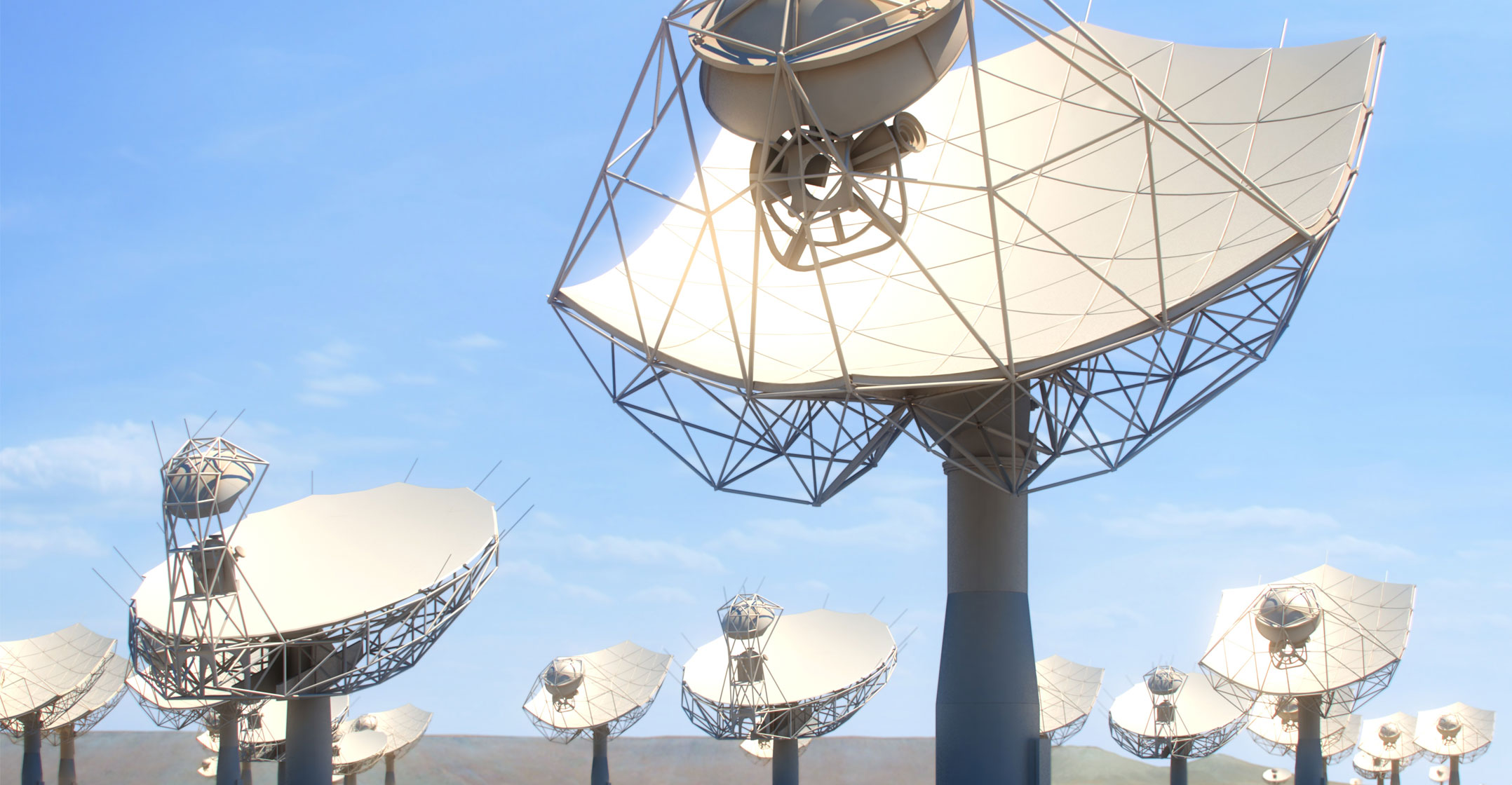
    The largest telescope to ever be built — the Square Kilometre Array (SKA) — will measure the distribution of galaxies throughout the history of the universe. I’m planning to use the SKA to compare its observations to theoretical predictions for both a negative mass cosmology and the standard one — helping to ultimately prove whether negative masses exist in our reality.

    What is clear is that this new theory generates a wealth of new questions. So, as with all scientific discoveries, the adventure does not end here. In fact, the quest to understand the true nature of this beautiful, unified and perhaps polarised universe has only just begun.The Conversation

    • Written by Jamie Farnes, research associate and astrophysicist based at Oxford’s e-Research Centre, University of Oxford
    • This article is republished from The Conversation under a Creative Commons licence

    Follow TechCentral on Google News Add TechCentral as your preferred source on Google


    Albert Einstein Jamie Farnes Stephen Hawking top
    WhatsApp YouTube
    Share. Facebook Twitter LinkedIn WhatsApp Telegram Email Copy Link
    Previous ArticleXerox wins coveted 2019 document imaging software award
    Next Article Don’t believe the 5G hype

    Related Posts

    Scientists discover universe is awash in gravitational waves

    29 June 2023

    Go higher with Xerox Iridesse

    30 August 2022

    The standard model of particle physics may be broken

    11 May 2022
    Company News
    Synthesis helps financial enterprises transform with new Gemini Enterprise - Digicloud Africa

    Synthesis helps financial enterprises transform with new Gemini Enterprise

    2 April 2026
    The next churn wave is already in your contact centre conversations - CallMiner

    The next churn wave is already in your contact centre conversations

    2 April 2026
    Mining's problem isn't output, it's execution - Workday

    Mining’s problem isn’t output, it’s execution – Workday

    1 April 2026
    Opinion
    The conflict of interest at the heart of PayShap's slow adoption - Cheslyn Jacobs

    The conflict of interest at the heart of PayShap’s slow adoption

    26 March 2026
    South Africa's energy future hinges on getting wheeling right - Aishah Gire

    South Africa’s energy future hinges on getting wheeling right

    10 March 2026
    Hold the doom: the case for a South African comeback - Duncan McLeod

    Apple just dropped a bomb on the Windows world

    5 March 2026

    Subscribe to Updates

    Get the best South African technology news and analysis delivered to your e-mail inbox every morning.

    Latest Posts
    How AI agents are reshaping banking in South Africa - Lindelani Ramukumba, Absa

    How agentic AI is reshaping banking in South Africa

    5 April 2026
    South Africa's 5G boom is bypassing rural areas: Icasa

    South Africa’s 5G boom is bypassing rural areas: Icasa

    5 April 2026
    WhatsApp is eating South African operators' revenue

    WhatsApp is eating South African operators’ revenue

    4 April 2026
    DeepSeek V4 to run on Huawei silicon as China builds its own AI stack

    DeepSeek V4 to run on Huawei silicon as China builds its own AI stack

    4 April 2026
    © 2009 - 2026 NewsCentral Media
    • Cookie policy (ZA)
    • TechCentral – privacy and Popia

    Type above and press Enter to search. Press Esc to cancel.

    Manage consent

    TechCentral uses cookies to enhance its offerings. Consenting to these technologies allows us to serve you better. Not consenting or withdrawing consent may adversely affect certain features and functions of the website.

    Functional Always active
    The technical storage or access is strictly necessary for the legitimate purpose of enabling the use of a specific service explicitly requested by the subscriber or user, or for the sole purpose of carrying out the transmission of a communication over an electronic communications network.
    Preferences
    The technical storage or access is necessary for the legitimate purpose of storing preferences that are not requested by the subscriber or user.
    Statistics
    The technical storage or access that is used exclusively for statistical purposes. The technical storage or access that is used exclusively for anonymous statistical purposes. Without a subpoena, voluntary compliance on the part of your Internet Service Provider, or additional records from a third party, information stored or retrieved for this purpose alone cannot usually be used to identify you.
    Marketing
    The technical storage or access is required to create user profiles to send advertising, or to track the user on a website or across several websites for similar marketing purposes.
    • Manage options
    • Manage services
    • Manage {vendor_count} vendors
    • Read more about these purposes
    View preferences
    • {title}
    • {title}
    • {title}