
Close Menu
TechCentralTechCentral

    Subscribe to the newsletter

    Get the best South African technology news and analysis delivered to your e-mail inbox every morning.

    Facebook X (Twitter) YouTube LinkedIn
    WhatsApp Facebook X (Twitter) LinkedIn YouTube
    TechCentralTechCentral
    • News
      Digital authoritarianism grows as African states normalise internet blackouts

      Digital authoritarianism grows as African states normalise internet blackouts

      19 December 2025
      Starlink satellite anomaly creates debris in rare orbital mishap

      Starlink satellite anomaly creates debris in rare orbital mishap

      19 December 2025
      TechCentral's South African Newsmakers of 2025

      TechCentral’s South African Newsmakers of 2025

      18 December 2025
      Malatsi buries Post Office's long-dead monopoly

      Malatsi buries Post Office monopoly the market ignored

      18 December 2025
      China races to crack EUV as chip war with the West intensifies

      China races to crack EUV lithography as chip war with the West intensifies

      18 December 2025
    • World
      Trump space order puts the moon back at centre of US, China rivalry - US President Donald Trump

      Trump space order puts the moon back at centre of US, China rivalry

      19 December 2025
      Warner Bros slams the door on Paramount

      Warner Bros slams the door on Paramount

      17 December 2025
      X moves to block bid to revive Twitter brand

      X moves to block bid to revive Twitter brand

      17 December 2025
      Oracle’s AI ambitions face scrutiny on earnings miss

      Oracle’s AI ambitions face scrutiny on earnings miss

      11 December 2025
      China will get Nvidia H200 chips - but not without paying Washington first

      China will get Nvidia H200 chips – but not without paying Washington first

      9 December 2025
    • In-depth
      Black Friday goes digital in South Africa as online spending surges to record high

      Black Friday goes digital in South Africa as online spending surges to record high

      4 December 2025
      Canal+ plays hardball - and DStv viewers feel the pain

      Canal+ plays hardball – and DStv viewers feel the pain

      3 December 2025
      Jensen Huang Nvidia

      So, will China really win the AI race?

      14 November 2025
      Valve's Linux console takes aim at Microsoft's gaming empire

      Valve’s Linux console takes aim at Microsoft’s gaming empire

      13 November 2025
      iOCO's extraordinary comeback plan - Rhys Summerton

      iOCO’s extraordinary comeback plan

      28 October 2025
    • TCS
      TCS+ | Africa's digital transformation - unlocking AI through cloud and culture - Cliff de Wit Accelera Digital Group

      TCS+ | Cloud without culture won’t deliver AI: Accelera’s Cliff de Wit

      12 December 2025
      TCS+ | How Cloud on Demand helps partners thrive in the AWS ecosystem - Odwa Ndyaluvane and Xenia Rhode

      TCS+ | How Cloud On Demand helps partners thrive in the AWS ecosystem

      4 December 2025
      TCS | MTN Group CEO Ralph Mupita on competition, AI and the future of mobile

      TCS | Ralph Mupita on competition, AI and the future of mobile

      28 November 2025
      TCS | Dominic Cull on fixing South Africa's ICT policy bottlenecks

      TCS | Dominic Cull on fixing South Africa’s ICT policy bottlenecks

      21 November 2025
      TCS | BMW CEO Peter van Binsbergen on the future of South Africa's automotive industry

      TCS | BMW CEO Peter van Binsbergen on the future of South Africa’s automotive industry

      6 November 2025
    • Opinion
      Netflix, Warner Bros deal raises fresh headaches for MultiChoice - Duncan McLeod

      Netflix, Warner Bros deal raises fresh headaches for MultiChoice

      5 December 2025
      BIN scans, DDoS and the next cybercrime wave hitting South Africa's banks - Entersekt Gerhard Oosthuizen

      BIN scans, DDoS and the next cybercrime wave hitting South Africa’s banks

      3 December 2025
      Your data, your hardware: the DIY AI revolution is coming - Duncan McLeod

      Your data, your hardware: the DIY AI revolution is coming

      20 November 2025
      Zero Carbon Charge founder Joubert Roux

      The energy revolution South Africa can’t afford to miss

      20 November 2025
      It's time for a new approach to government IT spend in South Africa - Richard Firth

      It’s time for a new approach to government IT spend in South Africa

      19 November 2025
    • Company Hubs
      • Africa Data Centres
      • AfriGIS
      • Altron Digital Business
      • Altron Document Solutions
      • Altron Group
      • Arctic Wolf
      • AvertITD
      • Braintree
      • CallMiner
      • CambriLearn
      • CYBER1 Solutions
      • Digicloud Africa
      • Digimune
      • Domains.co.za
      • ESET
      • Euphoria Telecom
      • Incredible Business
      • iONLINE
      • IQbusiness
      • Iris Network Systems
      • LSD Open
      • NEC XON
      • Netstar
      • Network Platforms
      • Next DLP
      • Ovations
      • Paracon
      • Paratus
      • Q-KON
      • SevenC
      • SkyWire
      • Solid8 Technologies
      • Telit Cinterion
      • Tenable
      • Vertiv
      • Videri Digital
      • Vodacom Business
      • Wipro
      • Workday
      • XLink
    • Sections
      • AI and machine learning
      • Banking
      • Broadcasting and Media
      • Cloud services
      • Contact centres and CX
      • Cryptocurrencies
      • Education and skills
      • Electronics and hardware
      • Energy and sustainability
      • Enterprise software
      • Financial services
      • Information security
      • Internet and connectivity
      • Internet of Things
      • Investment
      • IT services
      • Lifestyle
      • Motoring
      • Public sector
      • Retail and e-commerce
      • Satellite communications
      • Science
      • SMEs and start-ups
      • Social media
      • Talent and leadership
      • Telecoms
    • Events
    • Advertise
    TechCentralTechCentral
    Home » Sections » Science » Saving the Hubble telescope is worth paying for

    Saving the Hubble telescope is worth paying for

    Since 1977, the US has spent at least $16-billion to design, build and operate the Hubble Space Telescope. What a bargain.
    By Agency Staff18 June 2023
    Twitter LinkedIn Facebook WhatsApp Email Telegram Copy Link
    News Alerts
    WhatsApp
    Through a phenomenon called gravitational lensing, three different moments in a far-off supernova explosion were captured in a single snapshot by Nasa’s Hubble Space Telescope. Nasa, ESA, STScI, Wenlei Chen (UMN), Patrick Kelly (UMN), Hubble Frontier Fields

    Since 1977, the US has spent at least US$16-billion to design, build and operate the Hubble Space Telescope. What a bargain. Not only has Hubble redefined how humans understand the universe, but it’s played a critical role in training a generation of scientists and engineers.

    Unfortunately, Hubble is steadily losing altitude — essentially falling back to Earth — and soon Nasa will have to make a decision. It must either boost the telescope to a higher orbit, or let it continue falling until it crashes back to Earth, hopefully in the ocean.

    The good news is that technology is emerging to save the Hubble, and Nasa is willing to work with companies to make a mission happen. The bad news is that Nasa will not pay for the effort. That’s the wrong call. If Nasa is serious about prolonging a national asset’s life, it should pay for it. Doing so will attract more and potentially better bidders and play a role in accelerating the development of the emerging satellite repair industry.

    Fortunately, what could have been a multibillion-dollar fiasco turned into a triumph

    For at least a century, scientists speculated on what might be seen by a telescope situated beyond the distorting effects of Earth’s atmosphere. That dream became a funded reality in the 1970s, when Nasa authorised the development of the Hubble. From the start, it was designed to be repaired and serviced in space. Reparability came in handy, quickly: when Hubble launched in 1990, years late and wildly over-budget, it had a flaw in its mirror that rendered its images blurry.

    Fortunately, what could have been a multibillion-dollar fiasco turned into a triumph. In 1993, Nasa launched the Space Shuttle on a mission to correct the Hubble’s optics. It worked, and over the next three decades the public has been gifted with Hubble’s photos and discoveries, while scientists have published more than 19 000 papers using Hubble data, cementing the US as the preeminent hub for astronomy and astrophysics. These discoveries have inspired new generations of students to enter science and engineering fields, furthering US scientific leadership.

    Servicing

    Maintaining those benefits has required maintaining the telescope. Four more servicing missions have been launched since that first fix, with the most recent in 2009. That was to be the last one because of the Space Shuttle retirement. But at least a few folks held out hope for another rescue.

    Since at least the 1990s, public and private researchers have been working on technology to service and boost in-orbit satellites. For example, last month the US military selected Impulse Space, a start-up, to build an outer space refuelling depot for an in-orbit demonstration in 2025. Nasa has a refuelling project scheduled for launch no earlier than 2026.

    The numbers of private companies seeking to accomplish other kinds of satellite servicing, from boosting orbits to mechanical repairs, are expanding rapidly. As of early 2022, there were at least 30 companies, globally. The advances are coming quick: in April, Lockheed Martin used two in-flight satellites to demonstrate its AI servicing algorithms and associated technologies.

    Meanwhile, Hubble remains scientifically relevant, providing valuable observations of nearby stars, galaxies and black holes. It also complements the recently launched James Webb Space Telescope, which can observe older, more distant objects that might be obscured by time and physical obstructions like dust.
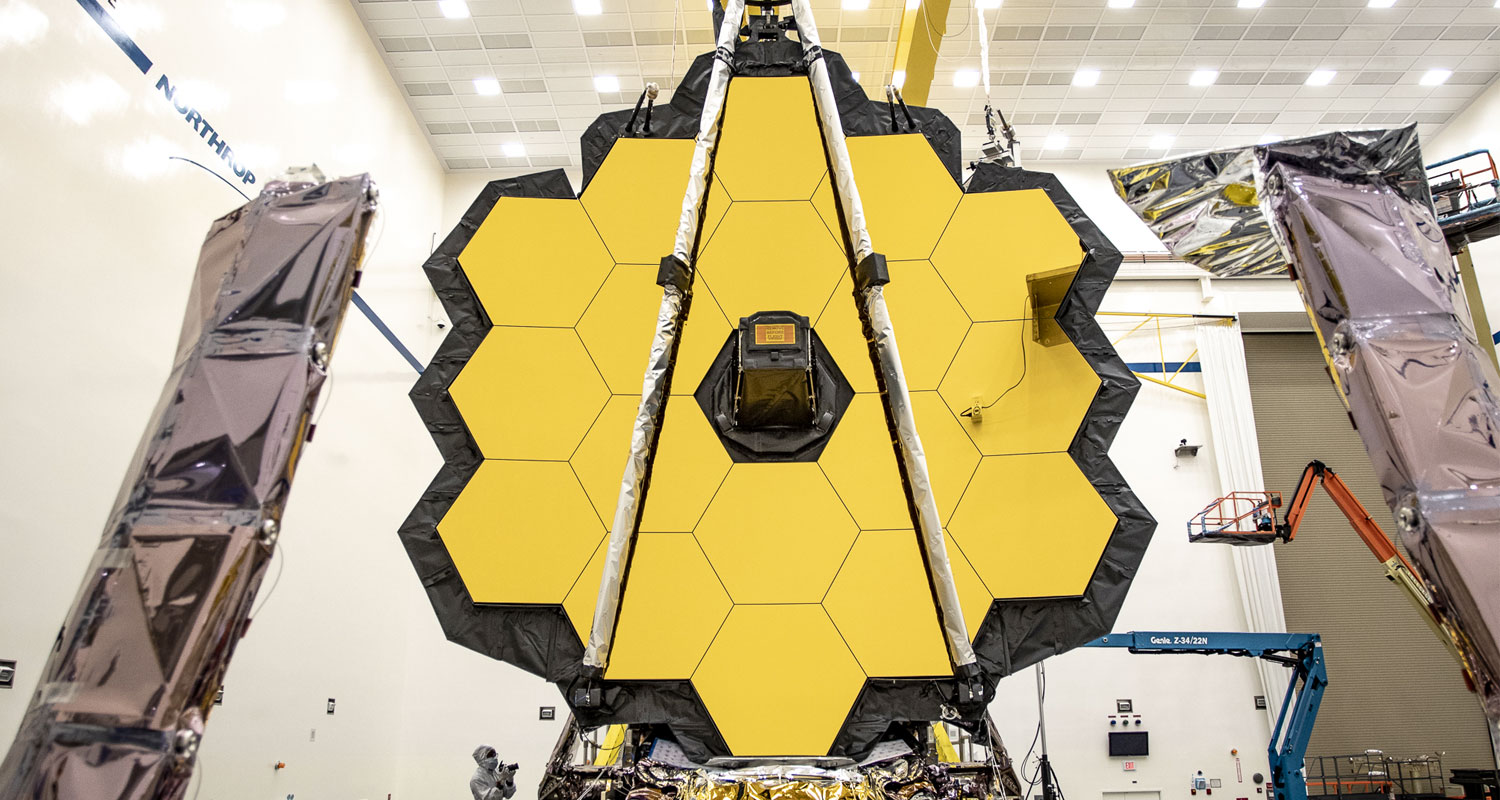
    The James Webb Space Telescope’s main mirror, photographed in April 2020. Image: Nasa

    Without intervention, Hubble should be able to keep doing its job into the latter part of this decade. After that, the prospects become hazy, in part due to its gradual but inevitable descent to Earth. In 2009, the Space Shuttle lifted Hubble to a safe 560km above the Earth; since then, it’s fallen to about 530km; Nasa told me it believes a boost would be possible as low as roughly 500km, an altitude it will reach around 2025 (science can continue into the 2030s). After that, Nasa’s options will be limited, and the telescope will likely burn up in the atmosphere, with the remaining fragments crashing into Earth.

    Help could be on the way. In September, Nasa agreed to study whether it would be possible to boost — and possibly repair — the telescope using a spacecraft from Elon Musk’s SpaceX. A few months later, Nasa formally requested that other companies interested in “demonstrating commercial capabilities to re-boost the orbit of a satellite” send over proposals applicable to the Hubble. There’s just one catch: Nasa expects the mission to be performed on a “no-exchange-of-funds basis”. In other words: please fix our telescope for free.

    Nasa didn’t respond when asked why it isn’t willing to pay to extend this asset. Perhaps, at a time of tight federal budgeting in the US, Nasa doesn’t want to tempt the budget cutters. But there’s another, more optimistic scenario: Nasa is betting that a Hubble repair mission is a priceless marketing opportunity for companies in the emerging satellite servicing sector. Why wouldn’t they do it for free?

    The better path for Nasa, and the Hubble Space Telescope, is to offer to pay for a servicing mission

    As of mid-May, Nasa had received eight responses to its request to re-boost Hubble for free. Of these, only one has been publicised. Astroscale US, a space junk removal and satellite servicing company, and Momentus, a provider of space services, propose to launch a robotic vehicle that will attach to Hubble, boost it 50km higher, and then clear any space junk out of the way of the new orbital path. If successful, it would mark the starting line for the next stage in the space economy. If it failed, questions might be asked as to why Nasa entrusted a national asset to the rescue efforts of volunteers.

    The better path for Nasa, and the Hubble Space Telescope, is to offer to pay for a servicing mission. Doing so would likely incentivise more and potentially better proposals, and spur further innovation in the emerging satellite repair industry. How much to pay for such a mission is up to the US congress. But the fact that an instrument essential to American competitiveness is at stake requires that it be more than a token.

    The Hubble was once the future of American science and engineering. Paying to save it ensures that it will continue to be so for decades to come.  — Adam Minter, (c) 2023 Bloomberg LP

    Get TechCentral’s daily newsletter


    Hubble Space Telescope James Webb Space Telescope JWST Nasa
    Subscribe to TechCentral Subscribe to TechCentral
    Share. Facebook Twitter LinkedIn WhatsApp Telegram Email Copy Link
    Previous ArticleBroadcasters agree to vacate digital dividend bands
    Next Article Intel to invest record $25-billion in Israel chip plant

    Related Posts

    Starlink satellite anomaly creates debris in rare orbital mishap

    Starlink satellite anomaly creates debris in rare orbital mishap

    19 December 2025
    Trump space order puts the moon back at centre of US, China rivalry - US President Donald Trump

    Trump space order puts the moon back at centre of US, China rivalry

    19 December 2025
    For first time, Webb telescope discovers an alien planet

    For first time, Webb telescope discovers an alien planet

    26 June 2025
    Company News
    Why TechCentral is the most powerful platform for reaching IT decision makers

    Why TechCentral is the most powerful platform for reaching IT decision makers

    17 December 2025
    Business trends to watch in 2026 - Domains.co.za

    Business trends to watch in 2026

    17 December 2025
    MTN Zambia launches world's first 4G cloud smartphone solution - Huawei

    MTN Zambia launches world’s first 4G cloud smartphone solution

    17 December 2025
    Opinion
    Netflix, Warner Bros deal raises fresh headaches for MultiChoice - Duncan McLeod

    Netflix, Warner Bros deal raises fresh headaches for MultiChoice

    5 December 2025
    BIN scans, DDoS and the next cybercrime wave hitting South Africa's banks - Entersekt Gerhard Oosthuizen

    BIN scans, DDoS and the next cybercrime wave hitting South Africa’s banks

    3 December 2025
    Your data, your hardware: the DIY AI revolution is coming - Duncan McLeod

    Your data, your hardware: the DIY AI revolution is coming

    20 November 2025

    Subscribe to Updates

    Get the best South African technology news and analysis delivered to your e-mail inbox every morning.

    Latest Posts
    Digital authoritarianism grows as African states normalise internet blackouts

    Digital authoritarianism grows as African states normalise internet blackouts

    19 December 2025
    Starlink satellite anomaly creates debris in rare orbital mishap

    Starlink satellite anomaly creates debris in rare orbital mishap

    19 December 2025
    Trump space order puts the moon back at centre of US, China rivalry - US President Donald Trump

    Trump space order puts the moon back at centre of US, China rivalry

    19 December 2025
    TechCentral's South African Newsmakers of 2025

    TechCentral’s South African Newsmakers of 2025

    18 December 2025
    © 2009 - 2025 NewsCentral Media
    • Cookie policy (ZA)
    • TechCentral – privacy and Popia

    Type above and press Enter to search. Press Esc to cancel.

    Manage consent

    TechCentral uses cookies to enhance its offerings. Consenting to these technologies allows us to serve you better. Not consenting or withdrawing consent may adversely affect certain features and functions of the website.

    Functional Always active
    The technical storage or access is strictly necessary for the legitimate purpose of enabling the use of a specific service explicitly requested by the subscriber or user, or for the sole purpose of carrying out the transmission of a communication over an electronic communications network.
    Preferences
    The technical storage or access is necessary for the legitimate purpose of storing preferences that are not requested by the subscriber or user.
    Statistics
    The technical storage or access that is used exclusively for statistical purposes. The technical storage or access that is used exclusively for anonymous statistical purposes. Without a subpoena, voluntary compliance on the part of your Internet Service Provider, or additional records from a third party, information stored or retrieved for this purpose alone cannot usually be used to identify you.
    Marketing
    The technical storage or access is required to create user profiles to send advertising, or to track the user on a website or across several websites for similar marketing purposes.
    • Manage options
    • Manage services
    • Manage {vendor_count} vendors
    • Read more about these purposes
    View preferences
    • {title}
    • {title}
    • {title}