
Close Menu
TechCentralTechCentral

    Subscribe to the newsletter

    Get the best South African technology news and analysis delivered to your e-mail inbox every morning.

    Facebook X (Twitter) YouTube LinkedIn
    WhatsApp Facebook X (Twitter) LinkedIn YouTube
    TechCentralTechCentral
    • News
      Estonia's digital ID lesson for South Africa

      Estonia’s digital ID lesson for South Africa

      4 February 2026
      Vodacom's real growth story isn't mobile

      Vodacom’s real growth story isn’t mobile

      4 February 2026
      Why stablecoins are booming in Africa - Yellow Card MD Lasbery Oludimu

      Why stablecoins are booming in Africa

      4 February 2026
      Prosus inks three-year AWS deal to scale AI across its global portfolio

      Prosus inks three-year AWS deal to scale AI across its global portfolio

      4 February 2026
      South African fintech Lula lands R340m to scale SME working capital - Trevor Gosling

      South African fintech Lula lands R340m to scale SME working capital

      4 February 2026
    • World
      AI won't replace software, says Nvidia CEO amid market rout - Jensen Huang

      AI won’t replace software, says Nvidia CEO amid market rout

      4 February 2026
      Apple acquires audio AI start-up Q.ai

      Apple acquires audio AI start-up Q.ai

      30 January 2026
      SpaceX IPO may be largest in history

      SpaceX IPO may be largest in history

      28 January 2026
      Nvidia throws AI at the weather

      Nvidia throws AI at weather forecasting

      27 January 2026
      Debate erupts over value of in-flight Wi-Fi

      Debate erupts over value of in-flight Wi-Fi

      26 January 2026
    • In-depth
      How liberalisation is rewiring South Africa's power sector

      How liberalisation is rewiring South Africa’s power sector

      21 January 2026
      The top-performing South African tech shares of 2025

      The top-performing South African tech shares of 2025

      12 January 2026
      Digital authoritarianism grows as African states normalise internet blackouts

      Digital authoritarianism grows as African states normalise internet blackouts

      19 December 2025
      TechCentral's South African Newsmakers of 2025

      TechCentral’s South African Newsmakers of 2025

      18 December 2025
      Black Friday goes digital in South Africa as online spending surges to record high

      Black Friday goes digital in South Africa as online spending surges to record high

      4 December 2025
    • TCS
      TCS+ | How Cloud On Demand is helping SA businesses succeed in the cloud - Xhenia Rhode, Dion Kalicharan

      TCS+ | Cloud On Demand and Consnet: inside a real-world AWS partner success story

      30 January 2026
      Watts & Wheels S1E3: 'BYD's Corolla Cross challenger'

      Watts & Wheels S1E3: ‘BYD’s Corolla Cross challenger’

      30 January 2026
      Watts & Wheels S1E3: 'BYD's Corolla Cross challenger'

      Watts & Wheels S1E2: ‘China attacks, BMW digs in, Toyota’s sublime supercar’

      23 January 2026

      TCS+ | Why cybersecurity is becoming a competitive advantage for SA businesses

      20 January 2026
      Watts & Wheels S1E3: 'BYD's Corolla Cross challenger'

      Watts & Wheels: S1E1 – ‘William, Prince of Wheels’

      8 January 2026
    • Opinion
      South Africa's skills advantage is being overlooked at home - Richard Firth

      South Africa’s skills advantage is being overlooked at home

      29 January 2026
      Why Elon Musk's Starlink is a 'hard no' for me - Songezo Zibi

      Why Elon Musk’s Starlink is a ‘hard no’ for me

      26 January 2026
      South Africa's new fibre broadband battle - Duncan McLeod

      South Africa’s new fibre broadband battle

      20 January 2026
      AI moves from pilots to production in South African companies - Nazia Pillay SAP

      AI moves from pilots to production in South African companies

      20 January 2026
      South Africa's new fibre broadband battle - Duncan McLeod

      ANC’s attack on Solly Malatsi shows how BEE dogma trumps economic reality

      14 December 2025
    • Company Hubs
      • Africa Data Centres
      • AfriGIS
      • Altron Digital Business
      • Altron Document Solutions
      • Altron Group
      • Arctic Wolf
      • AvertITD
      • Braintree
      • CallMiner
      • CambriLearn
      • CYBER1 Solutions
      • Digicloud Africa
      • Digimune
      • Domains.co.za
      • ESET
      • Euphoria Telecom
      • Incredible Business
      • iONLINE
      • IQbusiness
      • Iris Network Systems
      • LSD Open
      • NEC XON
      • Netstar
      • Network Platforms
      • Next DLP
      • Ovations
      • Paracon
      • Paratus
      • Q-KON
      • SevenC
      • SkyWire
      • Solid8 Technologies
      • Telit Cinterion
      • Tenable
      • Vertiv
      • Videri Digital
      • Vodacom Business
      • Wipro
      • Workday
      • XLink
    • Sections
      • AI and machine learning
      • Banking
      • Broadcasting and Media
      • Cloud services
      • Contact centres and CX
      • Cryptocurrencies
      • Education and skills
      • Electronics and hardware
      • Energy and sustainability
      • Enterprise software
      • Financial services
      • Information security
      • Internet and connectivity
      • Internet of Things
      • Investment
      • IT services
      • Lifestyle
      • Motoring
      • Public sector
      • Retail and e-commerce
      • Satellite communications
      • Science
      • SMEs and start-ups
      • Social media
      • Talent and leadership
      • Telecoms
    • Events
    • Advertise
    TechCentralTechCentral
    Home » Sections » Social media » Alternatives to Twitter: Elon Musk has users flocking elsewhere

    Alternatives to Twitter: Elon Musk has users flocking elsewhere

    Shortly after Musk acquired Twitter, #TwitterMigration began trending. But what are the alternatives?
    By The Conversation7 November 2022
    Twitter LinkedIn Facebook WhatsApp Email Telegram Copy Link
    News Alerts
    WhatsApp

    It’s been a week since Elon Musk strode into the Twitter headquarters with a kitchen sink, signalling his official takeover of the company.

    Having had some time to let the news of his US$44-billion purchase “sink in”, Twitter users are now wondering what he’ll do with the platform.

    After months of trying to walk away from his commitment to buy the platform, and just before entering what was looking to be a long, potentially embarrassing and costly court battle to enforce his original agreement, Twitter is now privately owned.

    Many have been concerned that Musk’s approach to moderation may fuel more hate speech on Twitter

    If we wade through some of the early reactionary media punditry, we see Musk has paid far too much for a platform that has not yet fulfilled its business potential to investors, nor its social potential to users.

    This probably explains some of his first moves since taking over, such as planning to charge users $8 (adjusted by country) for a blue tick, and firing half of Twitter’s staff.

    Musk’s intentions were perhaps best signalled with his first tweet after he bought the platform: “The bird is freed”.

    Before the purchase, one of his oft-tweeted criticisms of Twitter was that there were too many limits on “free speech”, and moderation would need to be reframed to unlock Twitter’s potential as a “de facto public town square”.

    There’s no doubt Musk is quite good at performative social media statements, but we’re yet to see any actual changes made to content moderation – let alone Musk’s utopian vision of a digital town square.

    Moderation

    The “chief twit” has suggested the future appointment of “a content moderation council with widely diverse viewpoints” that would be charged with making decisions about moderation and account reinstatements.

    This isn’t a new idea. Meta has convened such an oversight board since 2018, made up of former political leaders, human rights activists, academics and journalists. The board oversees content decisions and has been known to oppose CEO Mark Zuckerberg’s decisions, in particular his “indefinite” Facebook suspension of former US President Donald Trump after the US Capitol building riots.

    It’s unclear whether a council would convene to discuss Musk’s suggestion to “reverse the permanent ban” Twitter imposed on Trump, or if Musk would allow a board to override his decisions.

    Nonetheless, Musk’s suggestion of a moderation board is a step back from his previously self-described “free speech absolutist” views on content moderation.

    Many have been concerned his approach to moderation may fuel more hate speech on Twitter.

    In the past week, coordinated troll accounts have tried to test the limits of a Musk-run Twitter by flooding the platform with racial slurs. According to the US-based National Contagion Research Institute, the use of the N-word skyrocketed by more than 500% on 28 October. However, the head of safety and integrity at Twitter, Yoel Roth, said many of the offending tweets came from a small number of accounts.

    Another study by Montclair State University researchers found a massive spike in hateful terms in the lead-up to Musk’s acquisition.

    Both Roth and Musk have confirmed “Twitter’s policies haven’t changed”. Rules on “hateful conduct” remain the same.

    Perhaps more concerning than troll reactions is Musk’s decision to tweet and then delete a conspiracy theory about US house speaker Nancy Pelosi’s husband, Paul Pelosi. We could dismiss this as Musk’s love of shitposting, but if the right to post disinformation and personal attacks is the kind of speech he wants to protect, it’s worth questioning what kind of public square he envisions.

    Musk takes a technocratic approach to the social issues that emerge from our use of online communication tools. It implies free access to technology absolves “free speech” of its cultural and social context and makes it easily and readily available to everyone.

    The infrastructure that supports Twitter must hold up at the most crucial moments

    This is often not the case. That’s why we need content moderation and protections for the vulnerable and marginalised.

    The other question is whether we want billionaires to have a direct influence on our public squares. If so, how do we ensure transparency, and that users’ interests are being upheld?

    In less bombastic reportage of the takeover, Musk this week directed Twitter to find more than $1-billion in annual infrastructure cost savings, which will allegedly occur through cuts to cloud services and server space. These cuts could put Twitter at risk of going down during high-traffic periods, such as around election times.

    This might be where Musk’s digital town square vision fails. If Twitter is to resemble such a space, the infrastructure that supports it must hold up at the most crucial moments.

    Twitter alternatives

    While there’s so far no indication of a mass Twitter exodus, a number of users are flocking elsewhere. Shortly after Musk acquired Twitter, #TwitterMigration began trending. In the week since, micro-blogging platform Mastodon has reportedly gained tens of thousands of new users.

    Mastodon is made up of independent, user-managed servers. Each server is owned, operated and moderated by its community and can also be made private. The downside is servers cost money to run and if a server is no longer running, all the content may be lost.

    Twitter defectors have also moved to sites such as Reddit, Tumblr, CounterSocial, LinkedIn and Discord.

    Of course, many will be waiting to see what Twitter co-founder Jack Dorsey comes up with. While Dorsey retains a stake in Twitter, he has launched a decentralised social media network, Bluesky Social, which is now in beta testing.
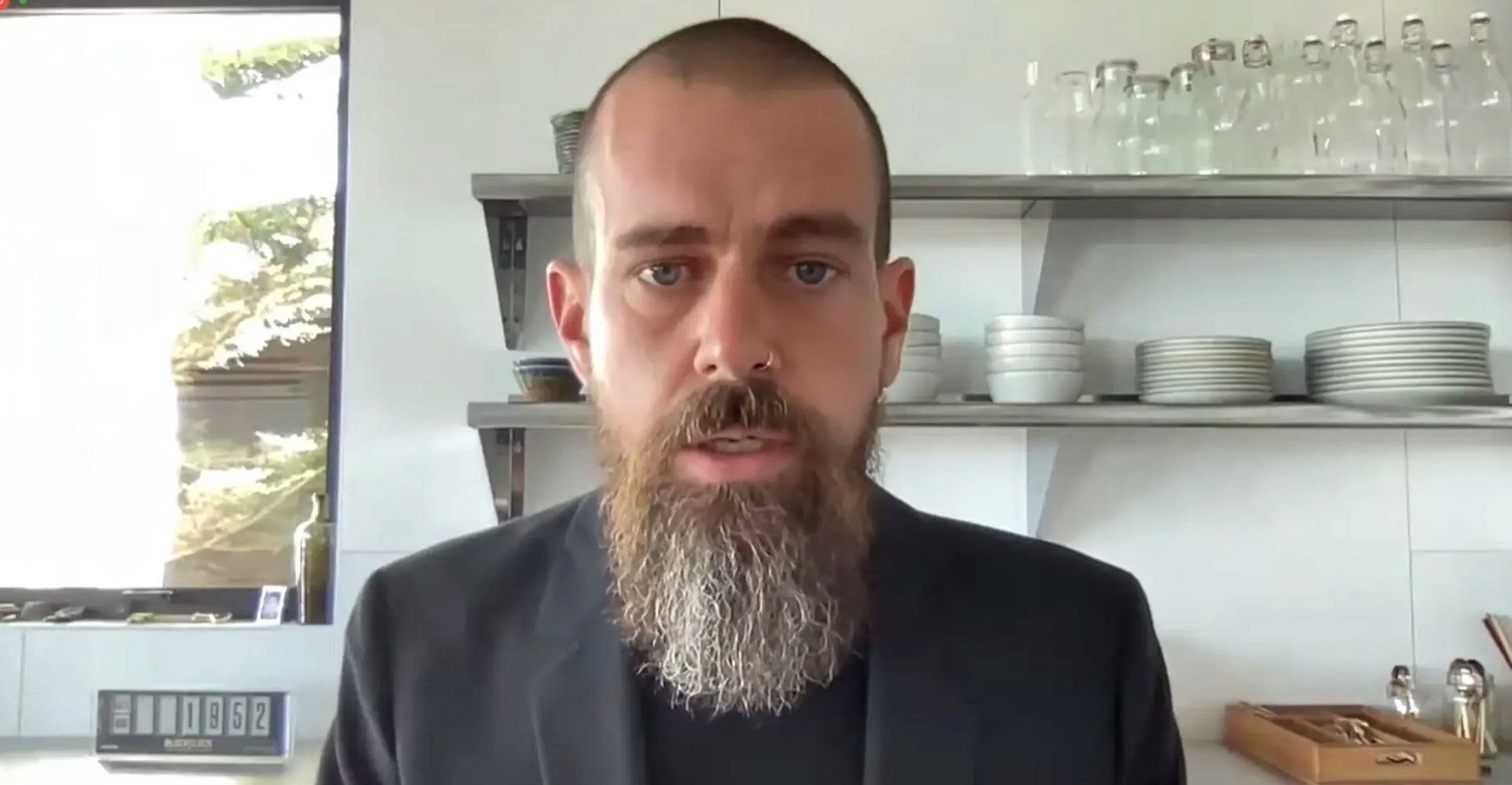
     

    Jack Dorsey. Image via YouTube

    Bluesky aims to provide an open social network protocol. This means it would allow for multiple social media networks to interact with one another through an open standard.

    If this experiment is successful, it would be more than a competitor for Twitter. It would mean users could easily switch services and take their content with them to other providers.

    It would be a totally new user-focused model for social networking. And it might force traditional platforms to rethink their current data harvesting and targeted advertising practices. That might just be a platform takeover worth waiting for.The Conversation

    • The author, Diana Bossio, is associate professor, media and communications, Swinburne University of Technology
    • This article is republished from The Conversation under a Creative Commons licence


    BlueSky Diana Bossio Elon Musk Jack Dorsey Mastodon Twitter
    WhatsApp YouTube Follow on Google News Add as preferred source on Google
    Share. Facebook Twitter LinkedIn WhatsApp Telegram Email Copy Link
    Previous ArticleMusk sows chaos at Twitter with flurry of drastic measures
    Next Article Mastodon on the rise: what is it, and how does it work?

    Related Posts

    SpaceX acquires xAI in record-breaking deal

    SpaceX acquires xAI in record-breaking deal

    3 February 2026
    Starlink updates privacy policy to allow consumer data to train AI

    Privacy alarm as SpaceX opens Starlink user data to AI models

    2 February 2026
    A single Musk super-company may be taking shape - Elon Musk

    A single Musk super-company may be taking shape

    30 January 2026
    Company News
    Most business owners don't worry about IT, until they have to - Graeme Millar SevenC

    Most business owners don’t worry about IT – until they have to

    4 February 2026
    Why cloud projects fail - and how three days can fix it - LSD Open

    Why cloud projects fail – and how three days can fix this

    4 February 2026
    Zero downtime, 12 months: XLink raises the bar for mission-critical networks

    Zero downtime, 12 months: XLink raises the bar for mission-critical networks

    4 February 2026
    Opinion
    South Africa's skills advantage is being overlooked at home - Richard Firth

    South Africa’s skills advantage is being overlooked at home

    29 January 2026
    Why Elon Musk's Starlink is a 'hard no' for me - Songezo Zibi

    Why Elon Musk’s Starlink is a ‘hard no’ for me

    26 January 2026
    South Africa's new fibre broadband battle - Duncan McLeod

    South Africa’s new fibre broadband battle

    20 January 2026

    Subscribe to Updates

    Get the best South African technology news and analysis delivered to your e-mail inbox every morning.

    Latest Posts
    Estonia's digital ID lesson for South Africa

    Estonia’s digital ID lesson for South Africa

    4 February 2026
    Vodacom's real growth story isn't mobile

    Vodacom’s real growth story isn’t mobile

    4 February 2026
    Why stablecoins are booming in Africa - Yellow Card MD Lasbery Oludimu

    Why stablecoins are booming in Africa

    4 February 2026
    Prosus inks three-year AWS deal to scale AI across its global portfolio

    Prosus inks three-year AWS deal to scale AI across its global portfolio

    4 February 2026
    © 2009 - 2026 NewsCentral Media
    • Cookie policy (ZA)
    • TechCentral – privacy and Popia

    Type above and press Enter to search. Press Esc to cancel.

    Manage consent

    TechCentral uses cookies to enhance its offerings. Consenting to these technologies allows us to serve you better. Not consenting or withdrawing consent may adversely affect certain features and functions of the website.

    Functional Always active
    The technical storage or access is strictly necessary for the legitimate purpose of enabling the use of a specific service explicitly requested by the subscriber or user, or for the sole purpose of carrying out the transmission of a communication over an electronic communications network.
    Preferences
    The technical storage or access is necessary for the legitimate purpose of storing preferences that are not requested by the subscriber or user.
    Statistics
    The technical storage or access that is used exclusively for statistical purposes. The technical storage or access that is used exclusively for anonymous statistical purposes. Without a subpoena, voluntary compliance on the part of your Internet Service Provider, or additional records from a third party, information stored or retrieved for this purpose alone cannot usually be used to identify you.
    Marketing
    The technical storage or access is required to create user profiles to send advertising, or to track the user on a website or across several websites for similar marketing purposes.
    • Manage options
    • Manage services
    • Manage {vendor_count} vendors
    • Read more about these purposes
    View preferences
    • {title}
    • {title}
    • {title}