
Close Menu
TechCentralTechCentral

    Subscribe to the newsletter

    Get the best South African technology news and analysis delivered to your e-mail inbox every morning.

    Facebook X (Twitter) YouTube LinkedIn
    WhatsApp Facebook X (Twitter) LinkedIn YouTube
    TechCentralTechCentral
    • News
      Xneelo breaks ground on second Samrand data centre

      Xneelo breaks ground on second Samrand data centre

      3 February 2026
      Heavyweights backing ZARU, a new rand-based stablecoin in South Africa

      Heavyweights backing ZARU, a new rand-based stablecoin

      3 February 2026
      China's Haier takes aim at Samsung, LG and Hisense in South Africa

      China’s Haier takes aim at Samsung, LG and Hisense in South Africa

      3 February 2026
      South African tech start-ups that sold big on the world stage

      South African tech start-ups that sold big on the world stage

      3 February 2026
      Standard Bank branches are going cashless - Kabelo Makeke

      Standard Bank branches are going cashless

      3 February 2026
    • World
      Apple acquires audio AI start-up Q.ai

      Apple acquires audio AI start-up Q.ai

      30 January 2026
      SpaceX IPO may be largest in history

      SpaceX IPO may be largest in history

      28 January 2026
      Nvidia throws AI at the weather

      Nvidia throws AI at weather forecasting

      27 January 2026
      Debate erupts over value of in-flight Wi-Fi

      Debate erupts over value of in-flight Wi-Fi

      26 January 2026
      Intel takes another hit - Intel CEO Lip-Bu Tan. Laure Andrillon/Reuters

      Intel takes another hit

      23 January 2026
    • In-depth
      How liberalisation is rewiring South Africa's power sector

      How liberalisation is rewiring South Africa’s power sector

      21 January 2026
      The top-performing South African tech shares of 2025

      The top-performing South African tech shares of 2025

      12 January 2026
      Digital authoritarianism grows as African states normalise internet blackouts

      Digital authoritarianism grows as African states normalise internet blackouts

      19 December 2025
      TechCentral's South African Newsmakers of 2025

      TechCentral’s South African Newsmakers of 2025

      18 December 2025
      Black Friday goes digital in South Africa as online spending surges to record high

      Black Friday goes digital in South Africa as online spending surges to record high

      4 December 2025
    • TCS
      TCS+ | How Cloud On Demand is helping SA businesses succeed in the cloud - Xhenia Rhode, Dion Kalicharan

      TCS+ | Cloud On Demand and Consnet: inside a real-world AWS partner success story

      30 January 2026
      Watts & Wheels S1E3: 'BYD's Corolla Cross challenger'

      Watts & Wheels S1E3: ‘BYD’s Corolla Cross challenger’

      30 January 2026
      Watts & Wheels S1E3: 'BYD's Corolla Cross challenger'

      Watts & Wheels S1E2: ‘China attacks, BMW digs in, Toyota’s sublime supercar’

      23 January 2026

      TCS+ | Why cybersecurity is becoming a competitive advantage for SA businesses

      20 January 2026
      Watts & Wheels S1E3: 'BYD's Corolla Cross challenger'

      Watts & Wheels: S1E1 – ‘William, Prince of Wheels’

      8 January 2026
    • Opinion
      South Africa's skills advantage is being overlooked at home - Richard Firth

      South Africa’s skills advantage is being overlooked at home

      29 January 2026
      Why Elon Musk's Starlink is a 'hard no' for me - Songezo Zibi

      Why Elon Musk’s Starlink is a ‘hard no’ for me

      26 January 2026
      South Africa's new fibre broadband battle - Duncan McLeod

      South Africa’s new fibre broadband battle

      20 January 2026
      AI moves from pilots to production in South African companies - Nazia Pillay SAP

      AI moves from pilots to production in South African companies

      20 January 2026
      South Africa's new fibre broadband battle - Duncan McLeod

      ANC’s attack on Solly Malatsi shows how BEE dogma trumps economic reality

      14 December 2025
    • Company Hubs
      • Africa Data Centres
      • AfriGIS
      • Altron Digital Business
      • Altron Document Solutions
      • Altron Group
      • Arctic Wolf
      • AvertITD
      • Braintree
      • CallMiner
      • CambriLearn
      • CYBER1 Solutions
      • Digicloud Africa
      • Digimune
      • Domains.co.za
      • ESET
      • Euphoria Telecom
      • Incredible Business
      • iONLINE
      • IQbusiness
      • Iris Network Systems
      • LSD Open
      • NEC XON
      • Netstar
      • Network Platforms
      • Next DLP
      • Ovations
      • Paracon
      • Paratus
      • Q-KON
      • SevenC
      • SkyWire
      • Solid8 Technologies
      • Telit Cinterion
      • Tenable
      • Vertiv
      • Videri Digital
      • Vodacom Business
      • Wipro
      • Workday
      • XLink
    • Sections
      • AI and machine learning
      • Banking
      • Broadcasting and Media
      • Cloud services
      • Contact centres and CX
      • Cryptocurrencies
      • Education and skills
      • Electronics and hardware
      • Energy and sustainability
      • Enterprise software
      • Financial services
      • Information security
      • Internet and connectivity
      • Internet of Things
      • Investment
      • IT services
      • Lifestyle
      • Motoring
      • Public sector
      • Retail and e-commerce
      • Satellite communications
      • Science
      • SMEs and start-ups
      • Social media
      • Talent and leadership
      • Telecoms
    • Events
    • Advertise
    TechCentralTechCentral
    Home » Opinion » David Glance » Apple vs FBI has left us more vulnerable

    Apple vs FBI has left us more vulnerable

    By David Glance30 March 2016
    Twitter LinkedIn Facebook WhatsApp Email Telegram Copy Link
    News Alerts
    WhatsApp

    david-glance-180The FBI has succeeded in hacking into an iPhone that belonged to San Bernardino shooter Syed Farook without Apple’s help. As a consequence, the bureau has dropped its legal case in which it was trying to force Apple to do what has now been done by an unknown “third party”.

    Given the emotional investment by the FBI in this case and the apparent ease of giving it up, it is confusing many as to the motivation of bringing the case up in the first place.

    The most obvious possibility is that this case was all about the broader issue of encryption of software and the FBI’s case against software companies implementing technology that makes US law enforcement’s jobs more difficult in getting access to information.

    The second possibility is that the FBI used the publicity surrounding this case as a means of advertising to security firms and hackers that it needed help in cracking the phone. Either way, bringing the case to the courts was in the FBI’s interest.

    In the end, someone came forward to show the FBI how to do something it claimed was impossible. The exact technique used is not known and it is unlikely that the FBI will disclose this information to Apple.

    Apple has made it abundantly clear that it would plug any particular security holes it became aware of; it is in its long-term interest to create software that can’t be hacked by governments and even itself.

    Another consequence of the FBI not revealing its methods is that it is not known whether the particular exploit can be used against more modern phones with the latest version of iOS.

    Apple has since released a statement that it is committed to helping law enforcement but wants to increase the security of its products while engaging in a conversation about civil liberties, security and privacy.

    Whatever the FBI’s motives, it has successfully avoided the central issues that should have been discussed

    For the FBI, the ability to access the phone will in all likelihood be a pyrrhic victory. It is unlikely to reveal anything given that the San Bernardino shooters were careful about destroying other evidence before their rampage and the phone in question was a work phone and unlikely to contain any evidence related to their motives.

    To a large extent, technology, and in particular encryption, is being used as a convenient excuse for law enforcement’s general inability to prevent these sorts of crimes and to make meaningful progress after them. Blaming Apple or Google for the FBI’s inability to answer questions about the motives and means of these sorts of crimes is extremely convenient.

    It should be accepted that there will be limitations to the FBI’s ability to know about and prevent these sorts of acts of violence. It may be that the general public has to accept that some small part of this is a consequence of all of us having security and privacy.
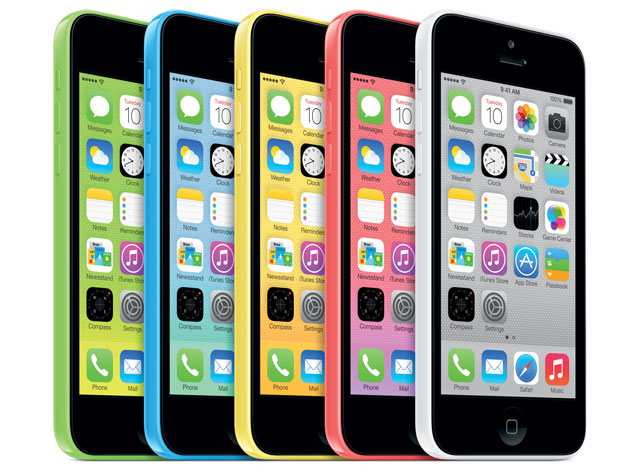
    The FBI have successfully gained access to a locked iPhone 5c belonging to the San Bernadino shooter
    The FBI have successfully gained access to a locked iPhone 5c belonging to the San Bernadino shooter

    People will feel conflicted about this, and that is to be expected. Nobody wants to see the perpetrators of such gross acts of violence getting away with their crimes or to have the possibility of people who could be apprehended still at large. However, the other side of the argument is equally unacceptable: that everyone cannot expect a certain level of security and privacy against all agencies, friendly or otherwise.

    The questions being debated by Apple, the FBI and the general public are not ones of technology or pragmatic issues of convenient access. They are questions about whether the general public deserves a certain level of privacy and security that is effective even against their own government. The consequences of this may be inconvenient but then we are willing to accept a wider democratic political system despite its obvious failings.

    The FBI should never have brought this particular case to the courts. Whatever its motives, it has successfully avoided the central issues that should have been discussed and, as a side effect, broadcast to the world that the iPhone is vulnerable and can be hacked with relative ease. This has only succeeded in making things worse for the security of the general public, the very thing that the FBI was arguing that it was trying to protect.The Conversation

    • David Glance is director of the UWA Centre for Software Practice, University of Western Australia
    • This article was originally published on The Conversation


    Apple David Glance FBI
    WhatsApp YouTube Follow on Google News Add as preferred source on Google
    Share. Facebook Twitter LinkedIn WhatsApp Telegram Email Copy Link
    Previous ArticleHow the big banks’ ATM networks stack up
    Next Article Malema to graduate with BA degree

    Related Posts

    Apple acquires audio AI start-up Q.ai

    Apple acquires audio AI start-up Q.ai

    30 January 2026
    Chip shortage will get worse, Samsung warns

    Chip shortage will get worse, Samsung warns

    29 January 2026
    Reports of the smartphone's impending death are greatly exaggerated

    Reports of the smartphone’s impending death are greatly exaggerated

    28 January 2026
    Company News
    Breaking silos with SAS: Agile insurance in an uncertain world

    Breaking silos with SAS: agile insurance in an uncertain world

    2 February 2026
    Stellar year expected for Digicloud Africa and its reseller partners - Gregory MacLennan

    Stellar year expected for Digicloud Africa and its reseller partners

    2 February 2026
    How to subscribe to South Africa's best tech podcasts - TechCentral

    How to subscribe to South Africa’s best tech podcasts

    2 February 2026
    Opinion
    South Africa's skills advantage is being overlooked at home - Richard Firth

    South Africa’s skills advantage is being overlooked at home

    29 January 2026
    Why Elon Musk's Starlink is a 'hard no' for me - Songezo Zibi

    Why Elon Musk’s Starlink is a ‘hard no’ for me

    26 January 2026
    South Africa's new fibre broadband battle - Duncan McLeod

    South Africa’s new fibre broadband battle

    20 January 2026

    Subscribe to Updates

    Get the best South African technology news and analysis delivered to your e-mail inbox every morning.

    Latest Posts
    Xneelo breaks ground on second Samrand data centre

    Xneelo breaks ground on second Samrand data centre

    3 February 2026
    Heavyweights backing ZARU, a new rand-based stablecoin in South Africa

    Heavyweights backing ZARU, a new rand-based stablecoin

    3 February 2026
    China's Haier takes aim at Samsung, LG and Hisense in South Africa

    China’s Haier takes aim at Samsung, LG and Hisense in South Africa

    3 February 2026
    South African tech start-ups that sold big on the world stage

    South African tech start-ups that sold big on the world stage

    3 February 2026
    © 2009 - 2026 NewsCentral Media
    • Cookie policy (ZA)
    • TechCentral – privacy and Popia

    Type above and press Enter to search. Press Esc to cancel.

    Manage consent

    TechCentral uses cookies to enhance its offerings. Consenting to these technologies allows us to serve you better. Not consenting or withdrawing consent may adversely affect certain features and functions of the website.

    Functional Always active
    The technical storage or access is strictly necessary for the legitimate purpose of enabling the use of a specific service explicitly requested by the subscriber or user, or for the sole purpose of carrying out the transmission of a communication over an electronic communications network.
    Preferences
    The technical storage or access is necessary for the legitimate purpose of storing preferences that are not requested by the subscriber or user.
    Statistics
    The technical storage or access that is used exclusively for statistical purposes. The technical storage or access that is used exclusively for anonymous statistical purposes. Without a subpoena, voluntary compliance on the part of your Internet Service Provider, or additional records from a third party, information stored or retrieved for this purpose alone cannot usually be used to identify you.
    Marketing
    The technical storage or access is required to create user profiles to send advertising, or to track the user on a website or across several websites for similar marketing purposes.
    • Manage options
    • Manage services
    • Manage {vendor_count} vendors
    • Read more about these purposes
    View preferences
    • {title}
    • {title}
    • {title}