Close Menu
TechCentralTechCentral

    Subscribe to the newsletter

    Get the best South African technology news and analysis delivered to your e-mail inbox every morning.

    Facebook X (Twitter) YouTube LinkedIn
    WhatsApp Facebook X (Twitter) LinkedIn YouTube
    TechCentralTechCentral
    • News
      Solly Malatsi stakes South Africa's AI future on staying neutral

      Solly Malatsi stakes South Africa’s AI future on staying neutral

      5 August 2026
      Netcare bets on AI to catch deterioration doctors cannot see - Prof Reitze Rodseth

      Netcare bets on AI to catch deterioration doctors cannot see

      5 August 2026
      Icasa promises business as usual through strike

      Icasa promises business as usual through strike

      5 August 2026
      JSE triples software spend in push for digital marketplace - Valdene Reddy

      JSE triples software spend in push for digital marketplace

      5 August 2026
      Starlink wants to be your next mobile operator

      Starlink wants to be your next mobile operator

      5 August 2026
    • World
      Meta AI will now tell parents if their teen is in crisis

      Meta AI will now tell parents if their teen is in crisis

      17 July 2026
      IBM shares crash 25% as AI upends software spending - Arvind Krishna

      IBM shares crash 25% as AI upends software spending

      15 July 2026
      Jony Ive's first OpenAI device: an AI smart speaker - Jony Ive and Sam Altman

      Jony Ive’s first OpenAI device: an AI smart speaker

      15 July 2026
      Stripe, Advent in talks to buy PayPal for $53-billion

      Stripe, Advent in talks to buy PayPal for $53-billion

      15 July 2026
      Memory crisis sends smartphone market into steep decline

      Memory crisis sends smartphone market into steep decline

      13 July 2026
    • In-depth
      The plan to stop AI from breaking the world - Google DeepMind CEO Demis Hassabis. Image: John Sears

      The plan to stop AI from breaking the world

      16 July 2026
      The internet has a Strait of Hormuz problem

      The internet has a Strait of Hormuz problem

      15 July 2026
      AI boom sparks rally, frenzy and fear

      AI boom sparks rally, frenzy and fear

      11 June 2026
      Every plug-in hybrid on sale in South Africa, ranked by price - Lamborghini Temerario

      Every plug-in hybrid on sale in South Africa, ranked by price

      7 June 2026
      What Wi-Fi 8 will mean for wireless networks

      What Wi-Fi 8 will mean for wireless networks

      1 June 2026
    • TCS
      TCS+ | Why South African workers must become supervisors of digital labour - Accelera Digital Group Cliff de Wit

      TCS+ | Why South African workers must become supervisors of digital labour

      31 July 2026
      TCS | Rapid deployment rules can't work without municipalities: ACT - Nomvuyiso Batyi

      TCS | Icasa’s rules skip the real bottleneck: ACT

      30 July 2026
      TCS+ | iStore Business on why Apple makes sense for SMEs - Sudesh Pillay and Tamia Nontsikelelo

      TCS+ | iStore Business on why Apple makes sense for SMEs

      30 July 2026
      TCS+ | A smarter approach to cloud for South African businesses - Joel Chacko and Jonathan Oaker

      TCS+ | A smarter approach to cloud for South African businesses

      28 July 2026
      TCS | How Optasia lends billions to people banks can't see - Salvador Anglada

      TCS | How Optasia lends billions to people banks can’t see

      23 July 2026
    • Opinion
      The author, Jannie van Zyl

      Selling vapour is corporate suicide in slow motion

      16 July 2026
      Brazil's online gambling crackdown is a lesson for South Africa

      How Amazon outmanoeuvred Starlink in South Africa

      15 July 2026
      The Popia problem with agentic AI - Herman Haasbroek

      The Popia problem with agentic AI

      14 July 2026
      The author, Fanie van Rooyen

      South Africa can still catch the AI wave – here’s how

      7 July 2026
      The author, Fanie van Rooyen

      The AI utopia South Africa can’t afford

      1 July 2026
    • Company Hubs
      • 1Stream
      • Africa Data Centres
      • AfriGIS
      • Altron Digital Business
      • Altron Document Solutions
      • Altron Group
      • Arctic Wolf
      • Ascent Technology
      • AvertITD
      • BBD
      • Braintree
      • CallMiner
      • CambriLearn
      • CM Telecom
      • Contactable
      • CYBER1 Solutions
      • Digicloud Africa
      • Digimune
      • Domains.co.za
      • ESET
      • Euphoria Telecom
      • HOSTAFRICA
      • Incredible Business
      • iONLINE
      • IQbusiness
      • Iris Network Systems
      • Kaspersky
      • LSD Open
      • Mitel
      • NEC XON
      • Netstar
      • Network Platforms
      • Next DLP
      • Ovations
      • Paracon
      • Paratus
      • Q-KON
      • SevenC
      • SkyWire
      • Solid8 Technologies
      • Telit Cinterion
      • Telviva
      • Tenable
      • Vertiv
      • Videri Digital
      • Vodacom Business
      • Vox
      • Wipro
      • Workday
      • XLink
    • Sections
      • AI and machine learning
      • Banking
      • Broadcasting and Media
      • Cloud services
      • Contact centres and CX
      • Cryptocurrencies
      • Education and skills
      • Electronics and hardware
      • Energy and sustainability
      • Enterprise software
      • Financial services
      • HealthTech
      • Information security
      • Internet and connectivity
      • Internet of Things
      • Investment
      • IT services
      • Lifestyle
      • Policy and regulation
      • Public sector
      • Retail and e-commerce
      • Satellite communications
      • Science
      • SMEs and start-ups
      • Social media
      • Talent and leadership
      • Telecoms
      • Watts & Wheels
    • Events
    • Advertise
    TechCentralTechCentral
    Home » Sections » Telecoms » From balloons to beams: could photonics bridge the digital divide?
    From balloons to beams: could photonics bridge the digital divide?
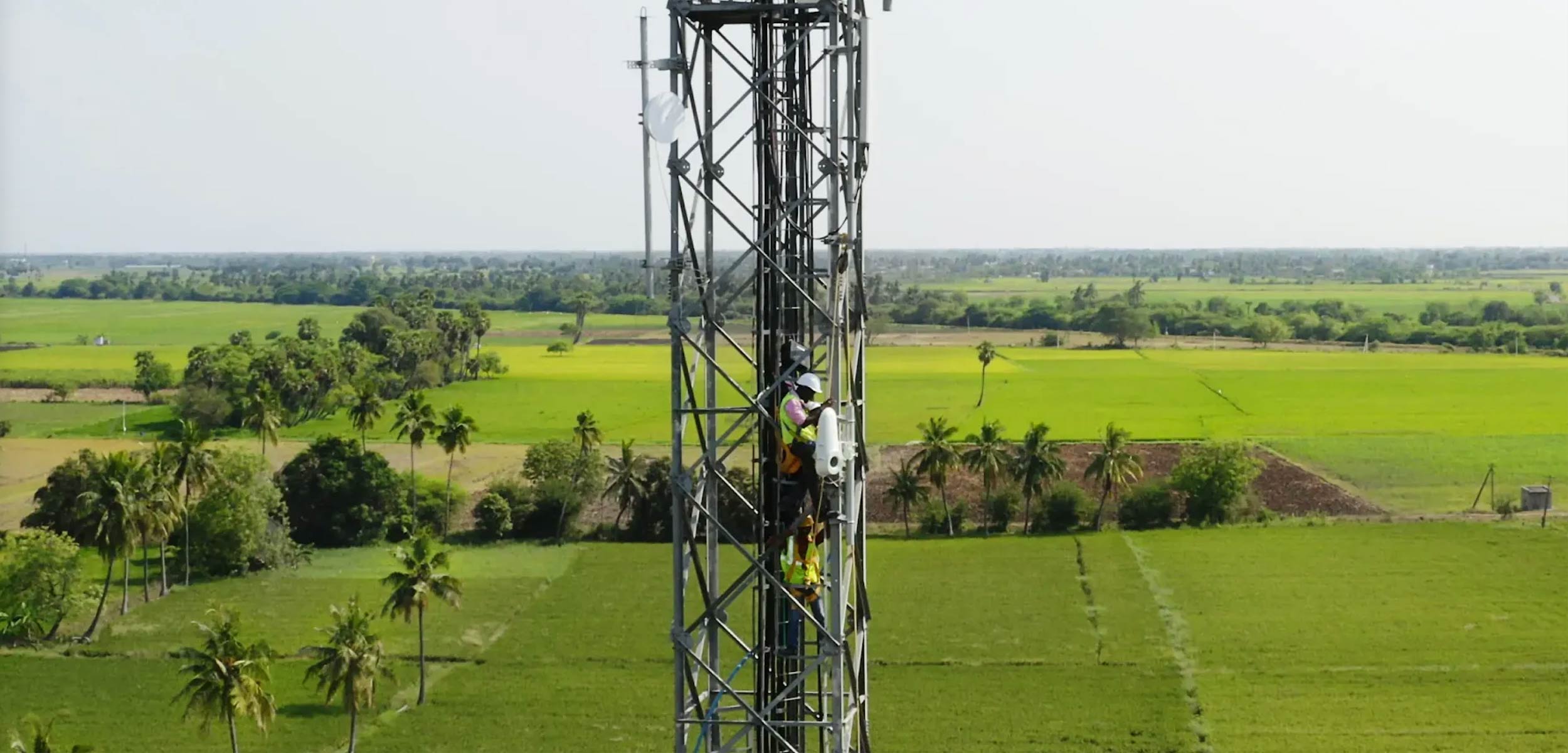
    Taara in rural India

    From balloons to beams: could photonics bridge the digital divide?

    By Tadek Szutowicz15 April 2025

    Nearly three billion people worldwide still don’t have reliable internet access. This hinders access to education, health care, economic advancement and basic communication, disproportionately affecting underserved regions across Africa, South Asia and Latin America.

    To try to address this problem, Google parent Alphabet’s X, The Moonshot Factory (previously X Lab) created Project Taara to harness the power of light to deliver high-speed internet wirelessly at low cost.

    Taara’s technological foundation lies in the legacy of another X project, Project Loon, which was cancelled before it reached commercial fruition. While Loon’s vision of stratospheric balloons delivering internet faced scalability and cost hurdles, its work in the field of “free-space optical communication” (FSOC) became the bedrock upon which Taara was built.

    It transmits data wirelessly through focused, invisible beams of light, typically in the near-infrared spectrum

    Leading the project is Mahesh Krishnaswamy, who suffered from limited internet access in his hometown of Chennai, India.

    Taara’s innovation lies in FSOC, which is essentially fibre-optic internet without the cables. It transmits data wirelessly through focused, invisible beams of light, typically in the near-infrared spectrum.

    The initial hardware solution, the Taara Lightbridge, achieved transmission speeds up to 20Gbit/s over distances reaching 20km using little power.

    This first-generation technology relied on a system of mirrors, sensors and precision optics, guided by intelligent software, to align the light beam mechanically with high accuracy within a traffic light-sized unit.

    A recent breakthrough has been the development of a silicon photonic chip, roughly the size of a fingernail (13mm). This miniaturised chip uses software and an optical phased array system with hundreds of tiny light emitters to steer, track and correct the light beam.

    Beyond the lab

    Laboratory tests have shown successful data transmission at 10Gbit/s over a 1km outdoor distance, with future iterations promising greater speeds and ranges through thousands of emitters. This miniaturisation and shift towards software-based control systems could potentially lead to lower costs, simpler deployment and the roll-out of mesh networks.

    Since its inception in 2017, Taara has moved beyond the lab:

    • In Kenya, an early deployment with Poa Internet, an internet service provider, revealed unexpected bandwidth reselling by customers. This led to the development of “Taara Share”, allowing local entrepreneurs to become internet providers, offering affordable connectivity to their communities through pay-as-you-go transactions.
    • In India, a partnership with Bharti Airtel extended internet access to rural and urban areas where fibre deployment is challenging, with Krishnaswamy personally connecting his ancestral village of Osur.
    • In Nima, a densely populated suburb of Ghana’s capital city, Accra, Teledata ICT has used Taara to deliver low-cost broadband.
    • In the Caribbean, Liberty Networks in Anguilla used Taara to maintain connections between islands during a subsea cable repair.
    • Even in the US, with its well-developed telecommunications infrastructure, Taara has partnered with T-Mobile USA for temporary 5G backhaul at events like the Coachella music festival.

    Read: Nokia to give Liquid’s fibre network a big speed upgrade

    The project has had some challenges, too, notably the susceptibility of air-transmitted data to weather conditions like fog, rain and dust, as well as the need for a clear line of sight. Maintaining precise alignment of narrow light beams on swaying infrastructure also poses an engineering hurdle.

    However, the Taara team has developed AI-driven mirror systems and predictive algorithms for rapid beam alignment. AI-based adaptive beam control systems dynamically adjust laser power based on real-time conditions.
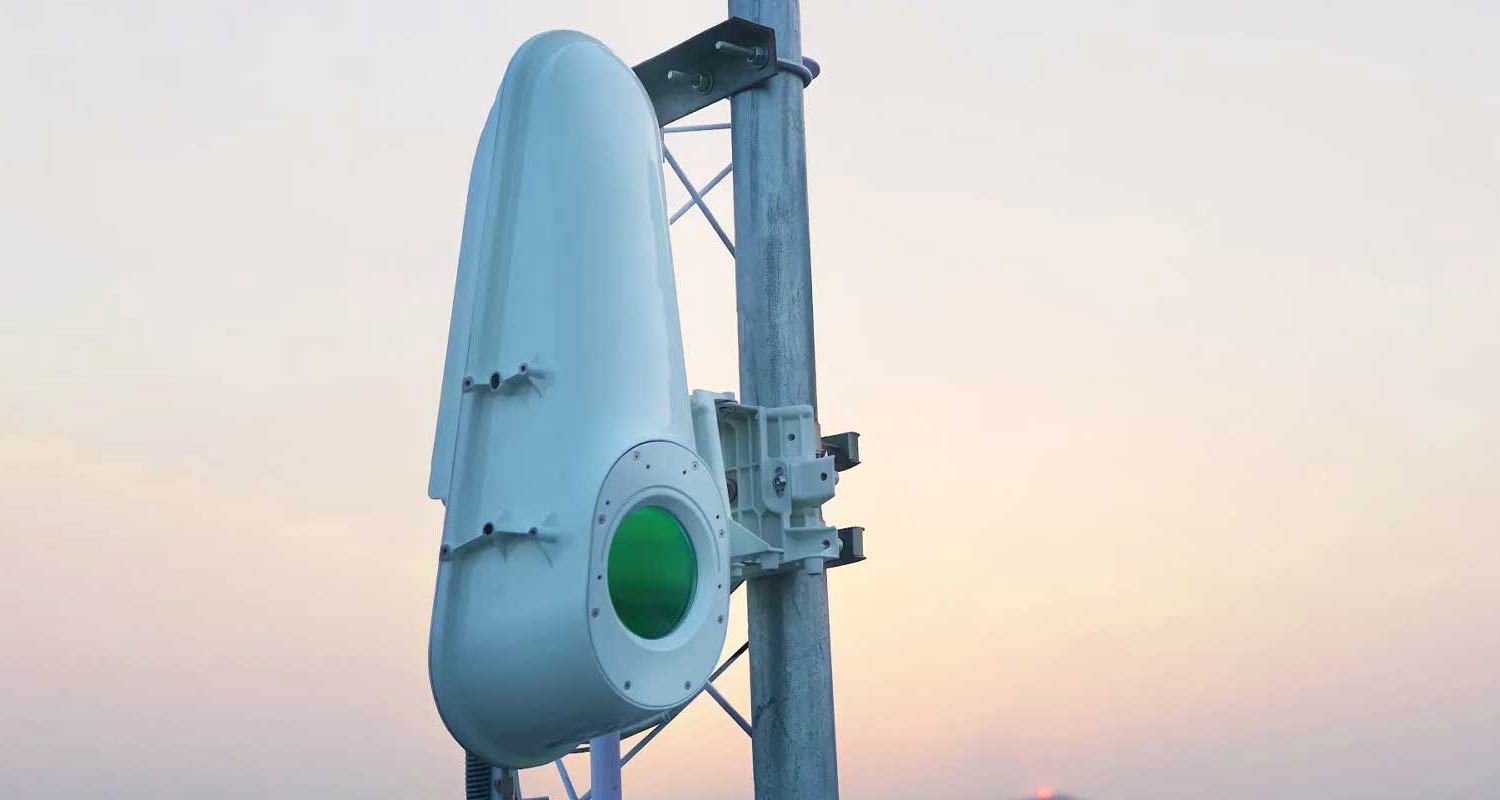
    Taara communications equipment

    The silicon-photonic chip further mitigates misalignment issues through software-based controls. Error-correction protocols address brief interruptions, and redundant links are potential solutions for longer disruptions. Network planning tools optimise terminal placement based on weather patterns. Even unexpected challenges, like interference from monkeys, have spurred solutions.

    Liquid Intelligent Technologies, a pan-African technology group, has been a partner of Taara’s over the past five years, delivering high-speed connectivity using its technology in areas with infrastructure gaps and affordability challenges.
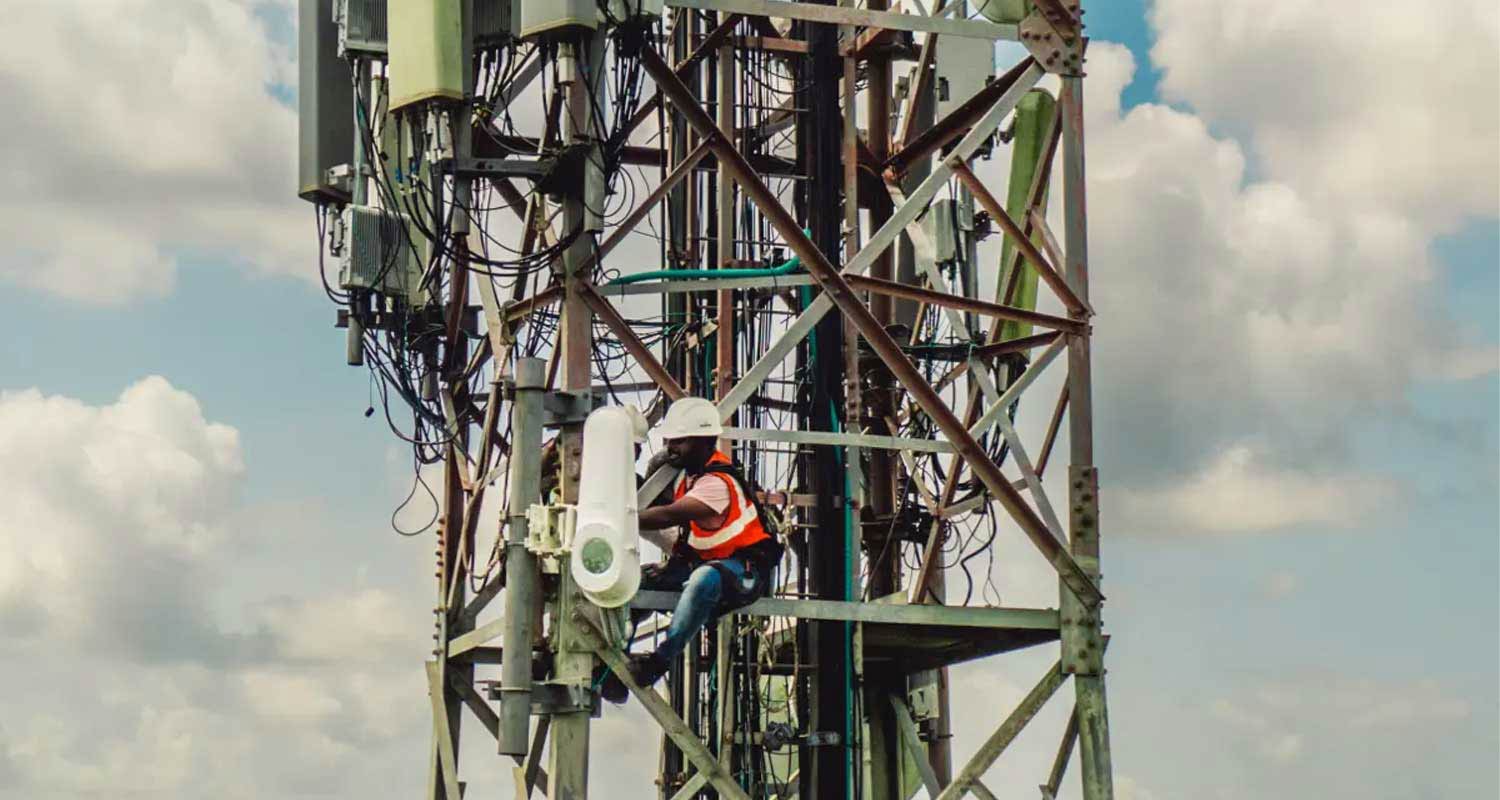
    A Taara installation in progress
    A Taara installation in progress

    Taara and Liquid have expanded to about 50 communities in seven African countries, including South Africa, with Liquid ensuring network reliability through backhaul links. The partnership often involves local ISPs in a three-way collaboration, with Liquid and Taara providing bandwidth as a service, allowing local service providers to distribute low-cost broadband to homes, schools and businesses.

    Pilot tests in Kenya started in 2019 and included connecting the towns of Mombasa Old Town and Diani Beach. Liquid also connected Kinshasa with Brazzaville across the Congo River, establishing high-speed connectivity with 99.9% uptime. Further deployments in 2025 will involve mesh technology in various African markets.  – © 2025 NewsCentral Media

    Get breaking news from TechCentral on WhatsApp. Sign up here.

    Don’t miss:

    Terahertz beamforming – building the ultrafast wireless internet of the future

    Follow TechCentral on Google News Add TechCentral as your preferred source on Google


    Alphabet Liquid Liquid Intelligent Technologies Mahesh Krishnaswamy Project Loon Project Taara Taara X X Lab
    WhatsApp YouTube
    Share. Facebook Twitter LinkedIn WhatsApp Telegram Email Copy Link
    Previous ArticleNEC XON thwarts human-operated ransomware attack
    Next Article OpenAI plotting X rival?

    Related Posts

    Meta cash flow collapses as AI bill hits $145-billion - Mark Zuckerberg

    Meta cash flow collapses as AI bill hits $145-billion

    30 July 2026
    World's first teen social media ban is failing

    World’s first teen social media ban is failing

    7 July 2026
    South Africa's fibre underdogs are beating the giants

    South Africa’s fibre underdogs are beating the giants

    30 June 2026
    Company News
    South Africa agrees on a shared language for location - AfriGIS

    South Africa agrees on a shared language for location

    5 August 2026
    IUX brings its trading platform to South Africa

    IUX brings its trading platform to South Africa

    5 August 2026
    Paratus Namibia takes resilient connectivity to Mining Expo 2026 - Cherica Levin and Christo van Wyk

    Paratus Namibia takes resilient connectivity to Mining Expo 2026

    5 August 2026
    Opinion
    The author, Jannie van Zyl

    Selling vapour is corporate suicide in slow motion

    16 July 2026
    Brazil's online gambling crackdown is a lesson for South Africa

    How Amazon outmanoeuvred Starlink in South Africa

    15 July 2026
    The Popia problem with agentic AI - Herman Haasbroek

    The Popia problem with agentic AI

    14 July 2026

    Subscribe to Updates

    Get the best South African technology news and analysis delivered to your e-mail inbox every morning.

    Latest Posts
    Solly Malatsi stakes South Africa's AI future on staying neutral

    Solly Malatsi stakes South Africa’s AI future on staying neutral

    5 August 2026
    South Africa agrees on a shared language for location - AfriGIS

    South Africa agrees on a shared language for location

    5 August 2026
    IUX brings its trading platform to South Africa

    IUX brings its trading platform to South Africa

    5 August 2026
    Netcare bets on AI to catch deterioration doctors cannot see - Prof Reitze Rodseth

    Netcare bets on AI to catch deterioration doctors cannot see

    5 August 2026
    © 2009 - 2026 NewsCentral Media
    Built and maintained by Chronon
    • Cookie policy (ZA)
    • TechCentral – privacy and Popia

    Type above and press Enter to search. Press Esc to cancel.

    Manage consent

    TechCentral uses cookies to enhance its offerings. Consenting to these technologies allows us to serve you better. Not consenting or withdrawing consent may adversely affect certain features and functions of the website.

    Functional Always active
    The technical storage or access is strictly necessary for the legitimate purpose of enabling the use of a specific service explicitly requested by the subscriber or user, or for the sole purpose of carrying out the transmission of a communication over an electronic communications network.
    Preferences
    The technical storage or access is necessary for the legitimate purpose of storing preferences that are not requested by the subscriber or user.
    Statistics
    The technical storage or access that is used exclusively for statistical purposes. The technical storage or access that is used exclusively for anonymous statistical purposes. Without a subpoena, voluntary compliance on the part of your Internet Service Provider, or additional records from a third party, information stored or retrieved for this purpose alone cannot usually be used to identify you.
    Marketing
    The technical storage or access is required to create user profiles to send advertising, or to track the user on a website or across several websites for similar marketing purposes.
    • Manage options
    • Manage services
    • Manage {vendor_count} vendors
    • Read more about these purposes
    View preferences
    • {title}
    • {title}
    • {title}