Close Menu
TechCentralTechCentral

    Subscribe to the newsletter

    Get the best South African technology news and analysis delivered to your e-mail inbox every morning.

    Facebook X (Twitter) YouTube LinkedIn
    WhatsApp Facebook X (Twitter) LinkedIn YouTube
    TechCentralTechCentral
    • News
      Cell C cleans up its balance sheet but faces tough trading reality

      Cell C cleans up its balance sheet but faces tough trading reality

      13 February 2026
      MVNO business shines in Cell C's first post-listing results - Jorges Mendes

      MVNO business shines in Cell C’s first post-listing results

      13 February 2026
      Ramaphosa presses ahead with Eskom break-up - Cyril Ramaphosa

      Ramaphosa presses ahead with Eskom break-up

      13 February 2026
      The key technology takeaways from Ramaphosa's 2026 Sona - Cyril Ramaphosa

      The key technology takeaways from Ramaphosa’s 2026 Sona

      13 February 2026
      Toyota SA CEO: NEV inaction will cost South Africa its motoring industry - Andrew Kirby

      Toyota SA CEO: NEV inaction will cost South Africa its motoring industry

      12 February 2026
    • World
      Russia bans WhatsApp

      Russia bans WhatsApp

      12 February 2026
      EU regulators take aim at WhatsApp

      EU regulators take aim at WhatsApp

      9 February 2026
      Musk hits brakes on Mars mission

      Musk hits brakes on Mars mission

      9 February 2026
      Crypto firm accidentally sends R700-billion in bitcoin to its users

      Crypto firm accidentally sends R700-billion in bitcoin to its users

      8 February 2026
      AI won't replace software, says Nvidia CEO amid market rout - Jensen Huang

      AI won’t replace software, says Nvidia CEO amid market rout

      4 February 2026
    • In-depth
      How liberalisation is rewiring South Africa's power sector

      How liberalisation is rewiring South Africa’s power sector

      21 January 2026
      The top-performing South African tech shares of 2025

      The top-performing South African tech shares of 2025

      12 January 2026
      Digital authoritarianism grows as African states normalise internet blackouts

      Digital authoritarianism grows as African states normalise internet blackouts

      19 December 2025
      TechCentral's South African Newsmakers of 2025

      TechCentral’s South African Newsmakers of 2025

      18 December 2025
      Black Friday goes digital in South Africa as online spending surges to record high

      Black Friday goes digital in South Africa as online spending surges to record high

      4 December 2025
    • TCS
      Watts & Wheels S1E4: 'We drive an electric Uber'

      Watts & Wheels S1E4: ‘We drive an electric Uber’

      10 February 2026
      TCS+ | How Cloud On Demand is helping SA businesses succeed in the cloud - Xhenia Rhode, Dion Kalicharan

      TCS+ | Cloud On Demand and Consnet: inside a real-world AWS partner success story

      30 January 2026
      Watts & Wheels S1E4: 'We drive an electric Uber'

      Watts & Wheels S1E3: ‘BYD’s Corolla Cross challenger’

      30 January 2026
      Watts & Wheels S1E4: 'We drive an electric Uber'

      Watts & Wheels S1E2: ‘China attacks, BMW digs in, Toyota’s sublime supercar’

      23 January 2026

      TCS+ | Why cybersecurity is becoming a competitive advantage for SA businesses

      20 January 2026
    • Opinion
      A million reasons monopolies don't work - Duncan McLeod

      A million reasons monopolies don’t work

      10 February 2026
      Eskom unbundling U-turn threatens to undo hard-won electricity gains - Busi Mavuso

      Eskom unbundling U-turn threatens to undo hard-won electricity gains

      9 February 2026
      South Africa's skills advantage is being overlooked at home - Richard Firth

      South Africa’s skills advantage is being overlooked at home

      29 January 2026
      Why Elon Musk's Starlink is a 'hard no' for me - Songezo Zibi

      Why Elon Musk’s Starlink is a ‘hard no’ for me

      26 January 2026
      A million reasons monopolies don't work - Duncan McLeod

      South Africa’s new fibre broadband battle

      20 January 2026
    • Company Hubs
      • Africa Data Centres
      • AfriGIS
      • Altron Digital Business
      • Altron Document Solutions
      • Altron Group
      • Arctic Wolf
      • AvertITD
      • Braintree
      • CallMiner
      • CambriLearn
      • CYBER1 Solutions
      • Digicloud Africa
      • Digimune
      • Domains.co.za
      • ESET
      • Euphoria Telecom
      • Incredible Business
      • iONLINE
      • IQbusiness
      • Iris Network Systems
      • LSD Open
      • Mitel
      • NEC XON
      • Netstar
      • Network Platforms
      • Next DLP
      • Ovations
      • Paracon
      • Paratus
      • Q-KON
      • SevenC
      • SkyWire
      • Solid8 Technologies
      • Telit Cinterion
      • Tenable
      • Vertiv
      • Videri Digital
      • Vodacom Business
      • Wipro
      • Workday
      • XLink
    • Sections
      • AI and machine learning
      • Banking
      • Broadcasting and Media
      • Cloud services
      • Contact centres and CX
      • Cryptocurrencies
      • Education and skills
      • Electronics and hardware
      • Energy and sustainability
      • Enterprise software
      • Financial services
      • Information security
      • Internet and connectivity
      • Internet of Things
      • Investment
      • IT services
      • Lifestyle
      • Motoring
      • Public sector
      • Retail and e-commerce
      • Satellite communications
      • Science
      • SMEs and start-ups
      • Social media
      • Talent and leadership
      • Telecoms
    • Events
    • Advertise
    TechCentralTechCentral
    Home » Sections » Science » Billionaire space race hots up

    Billionaire space race hots up

    When the Vulcan rocket lifts off for the first time as soon as next week, multiple billionaires are sure to be watching.
    By Agency Staff4 January 2024
    Twitter LinkedIn Facebook WhatsApp Email Telegram Copy Link
    News Alerts
    WhatsApp

    When the Vulcan rocket lifts off for the first time as soon as next week, multiple billionaires are sure to be watching.

    Built through a joint venture of Boeing and Lockheed Martin, the new vehicle is poised to take on Elon Musk’s SpaceX and ferry satellites and cargo for the likes of the Pentagon, Nasa and even Amazon.com.

    Vulcan is also helping fuel takeover offers for the company building it, the United Launch Alliance. Among them is a multibillion-dollar bid from Blue Origin, the ambitious space venture run by billionaire Jeff Bezos, according to people familiar with the matter.

    If Vulcan proves it can fly, the vehicle is the company’s best hope to gain ground on Musk’s launch behemoth

    It’s a pivotal moment for ULA, a once-dominant launch provider for the US government whose star has faded in recent years. With SpaceX now leading the commercial market and making inroads with the government on the strength of its reusable Falcon 9 rocket, ULA finds itself needing to adapt to avoid being left behind.

    “SpaceX likes to say they have a monopoly” in the launch market, Tory Bruno, ULA’s CEO, said in an October interview. “They don’t.”

    Vulcan, set to debut on Monday after almost a decade in development, enters a market starved for more capacity. The rocket is meant to be a cheaper, all-American alternative to ULA’s legacy Atlas and Delta vehicles to carry the government’s highest-profile satellites.

    If Vulcan proves it can fly — and then fly again and again — the vehicle is the company’s best hope to gain ground on Musk’s launch behemoth. ULA, which also aims to build out the commercial side of its business, has already signed contracts worth billions for roughly 70 Vulcan missions.

    ‘Virtual monopoly’

    “It’s important to demonstrate success as soon as they can,” said Cristina Chaplain, an independent space analyst and former director at the Government Accountability Office overseeing space and defence programmes. “They really want to be able to stay in the game.”

    ULA was formed by Boeing and Lockheed in 2006. The pioneering venture had “a virtual monopoly on US government launches” in those early years, said George Sowers, the company’s former chief scientist. Those contracts were sweetened with extra money to ensure the US defence department could maintain access to space at a time when there were few viable launch providers.

    But the ownership structure — with two publicly traded companies that compete for defence contracts — also muddied its strategy. Sowers, who’s now a professor at the Colorado School of Mines, likened it to “being owned by the Hatfields and McCoys”.

    Read: SpaceX valuation soars to nearly $180-billion

    “Trying to get them to agree on anything at the level of the board of directors was nearly impossible,” he said.

    Unlike newer launch rivals that have tapped the public and private markets for capital in pursuit of ambitious new technologies, ULA doesn’t get cash infusions from investors, according to Bruno. That has forced the CEO to keep the company’s operations and staff lean.

    “We are profitable every year,” Bruno said. “Always have been.”
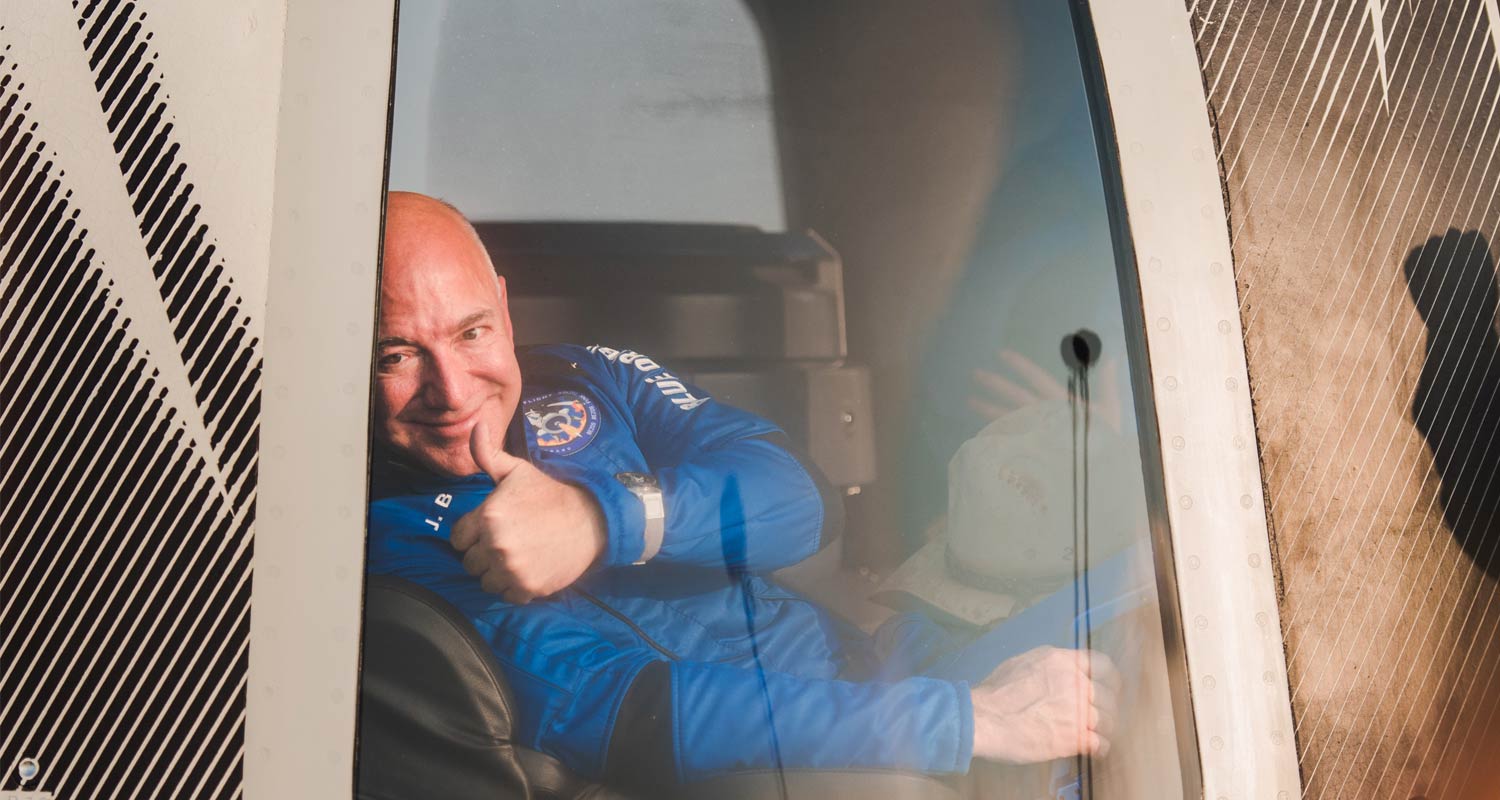
    Jeff Bezos. Image: Blue Origin

    Now ULA must execute an increasingly busy flight schedule in the coming years with even fewer launch operations personnel after recent layoffs, a person familiar with the matter said. ULA’s headcount is hovering around 2 300 employees, the person said, compared with the more than 10 000 employees at both SpaceX and Blue Origin.

    Last winter, ULA laid off some 75 people, roughly 40% of launch operations staff at its Vandenberg Space Force Base site in California and around 12% at Cape Canaveral in Florida, the person said, speaking on condition of anonymity because the matter is private.

    “We work in an extremely competitive industry and as a company we continue to evolve to meet emerging mission requirements,” Ron Fortson, director and GM of ULA Launch Operations, told employees in a 13 August e-mail announcing the layoffs. “Due to strategic business alignments, we determined that a reduction in force was necessary.”

    When Vulcan finally does launch from Cape Canaveral, it’ll be carrying a robotic lander bound for the moon

    A ULA spokesperson did not respond to a request for comment in time for publication.

    A spinoff or sale could give ULA access to more capital and free it from constraints that have limited growth. The company, which has been running a formal sale process, recently called for bids, according to the people familiar with the matter who asked not to be identified.

    The timing, coinciding with the debut of Vulcan, offers bidders a glimpse of ULA’s future. Aside from Blue Origin, potential buyers include private equity giant Cerberus and aviation manufacturer Textron, the Wall Street Journal reported last month.

    The Vulcan programme extends back to 2015, when ULA decided to move on from the decades-old Atlas V rocket, which used engines made in Russia. By that time, relying on Russia was becoming increasingly untenable for Western companies, especially for a US contractor like ULA tasked with launching spy satellites.

    Challenges

    For Vulcan, the company opted for Blue Origin-made engines, which became a more palatable option to lawmakers. But switching providers and pursuing new designs came with challenges. ULA had originally hoped to launch Vulcan as early as 2019, but Blue Origin didn’t deliver the hardware until late 2022. Then ULA suffered another setback last March after a Vulcan part exploded on a test stand.

    When Vulcan finally does launch from Cape Canaveral, it’ll be carrying a robotic lander bound for the moon.

    The stakes are high for ULA, which plans seven Vulcan launches in 2024, and then expects to double that cadence by the first half of 2025. It’s an ambitious schedule, especially since new rockets are notoriously slow to ramp up.

    Read: Blue Origin wins Nasa contract to build lunar lander

    ULA is scheduled to handle about two dozen national security launches over the next two to three years, and Bruno said a working Vulcan will let it compete again for Nasa contracts. The rocket also is in line for 38 launches on behalf of Amazon to send its Project Kuiper internet satellites into orbit.

    In building a commercial business to complement its government work, ULA is trying to position itself as a price-competitive alternative to other providers. Though critics have lambasted the lack of reusability in ULA’s rockets and the relatively higher price tag for launches — with Musk once calling the company “a complete waste of taxpayer money”.
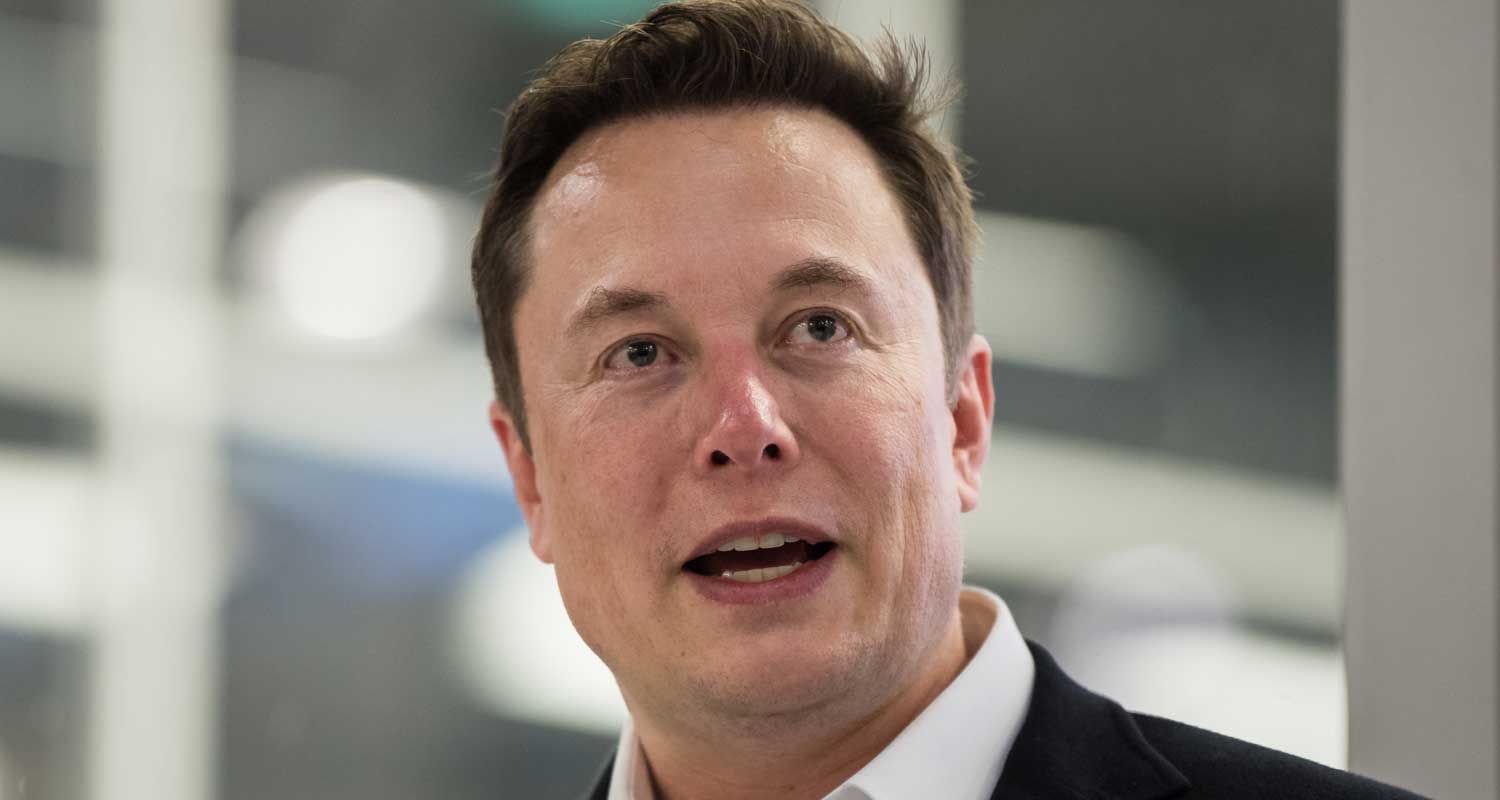
    Elon Musk. Image: Nasa, CC BY-NC-ND 2.0

    Bruno wouldn’t reveal how much ULA plans to charge, but he said Vulcan launches would “be very competitive with SpaceX”.

    A Space Force contract awarded to both ULA and SpaceX in October provides a hint of what the government expects. The award gave 11 launches to ULA, worth a total of $1.3-billion, or roughly $118-million per launch. SpaceX’s 10-launch deal was worth $1.23-billion, coming to $123-million per launch.

    Aside from pricing, ULA says Vulcan’s biggest advantage is that it’s optimised for so-called high-energy missions — flights that need to take larger payloads directly to very high orbits.

    Watch | Jeff Bezos and crew blast into space on Blue Origin rocket

    “No one has chosen to design for that; we have,” Bruno said, arguing that the Falcon 9 is better suited for low-Earth-orbit flights. High-energy missions are “pretty much exclusively for the government”, he said.

    It’s a critical stretch for ULA, which has a new vehicle and little room for error before jumping into a busy flight schedule. “That’s a change to your whole launch operations,” said Chaplain, the space analyst. “Can they do that?”  — Loren Grush, with Kiel Porter, (c) 2024 Bloomberg LP
    Get breaking news alerts from TechCentral on WhatsApp


    Blue Origin Elon Musk Jeff Bezos SpaceX Tory Bruno ULA United Launch Alliance
    WhatsApp YouTube Follow on Google News Add as preferred source on Google
    Share. Facebook Twitter LinkedIn WhatsApp Telegram Email Copy Link
    Previous ArticleIntel appoints outsider to lead its crucial data centre unit
    Next Article Home affairs offline due to Sita mainframe ‘glitch’

    Related Posts

    Musk hits brakes on Mars mission

    Musk hits brakes on Mars mission

    9 February 2026
    Starlink considers building its own phone - Elon Musk

    Starlink considers building its own phone

    5 February 2026
    SpaceX acquires xAI in record-breaking deal

    SpaceX acquires xAI in record-breaking deal

    3 February 2026
    Company News
    Cell C delivers maiden results with growth momentum, financial flexibility - Jorges Mendes

    Cell C delivers maiden results with growth momentum, financial flexibility

    13 February 2026
    Start-up king joins Paratus Rwanda - Innocent Mutimura

    Start-up king joins Paratus Rwanda

    13 February 2026
    How NEC XON tackled identity risk for a major telco - Michael de Neuilly Rice

    How NEC XON tackled identity risk for a major telco

    11 February 2026
    Opinion
    A million reasons monopolies don't work - Duncan McLeod

    A million reasons monopolies don’t work

    10 February 2026
    Eskom unbundling U-turn threatens to undo hard-won electricity gains - Busi Mavuso

    Eskom unbundling U-turn threatens to undo hard-won electricity gains

    9 February 2026
    South Africa's skills advantage is being overlooked at home - Richard Firth

    South Africa’s skills advantage is being overlooked at home

    29 January 2026

    Subscribe to Updates

    Get the best South African technology news and analysis delivered to your e-mail inbox every morning.

    Latest Posts
    Cell C cleans up its balance sheet but faces tough trading reality

    Cell C cleans up its balance sheet but faces tough trading reality

    13 February 2026
    MVNO business shines in Cell C's first post-listing results - Jorges Mendes

    MVNO business shines in Cell C’s first post-listing results

    13 February 2026
    Ramaphosa presses ahead with Eskom break-up - Cyril Ramaphosa

    Ramaphosa presses ahead with Eskom break-up

    13 February 2026
    The key technology takeaways from Ramaphosa's 2026 Sona - Cyril Ramaphosa

    The key technology takeaways from Ramaphosa’s 2026 Sona

    13 February 2026
    © 2009 - 2026 NewsCentral Media
    • Cookie policy (ZA)
    • TechCentral – privacy and Popia

    Type above and press Enter to search. Press Esc to cancel.

    Manage consent

    TechCentral uses cookies to enhance its offerings. Consenting to these technologies allows us to serve you better. Not consenting or withdrawing consent may adversely affect certain features and functions of the website.

    Functional Always active
    The technical storage or access is strictly necessary for the legitimate purpose of enabling the use of a specific service explicitly requested by the subscriber or user, or for the sole purpose of carrying out the transmission of a communication over an electronic communications network.
    Preferences
    The technical storage or access is necessary for the legitimate purpose of storing preferences that are not requested by the subscriber or user.
    Statistics
    The technical storage or access that is used exclusively for statistical purposes. The technical storage or access that is used exclusively for anonymous statistical purposes. Without a subpoena, voluntary compliance on the part of your Internet Service Provider, or additional records from a third party, information stored or retrieved for this purpose alone cannot usually be used to identify you.
    Marketing
    The technical storage or access is required to create user profiles to send advertising, or to track the user on a website or across several websites for similar marketing purposes.
    • Manage options
    • Manage services
    • Manage {vendor_count} vendors
    • Read more about these purposes
    View preferences
    • {title}
    • {title}
    • {title}