Close Menu
TechCentralTechCentral

    Subscribe to the newsletter

    Get the best South African technology news and analysis delivered to your e-mail inbox every morning.

    Facebook X (Twitter) YouTube LinkedIn
    WhatsApp Facebook X (Twitter) LinkedIn YouTube
    TechCentralTechCentral
    • News
      South Africa's AI policy is a bureaucrat's dream - Solly Malatsi

      South Africa’s draft AI policy is a bureaucrat’s dream

      10 April 2026
      Big Tech is going nuclear

      Big Tech is going nuclear

      10 April 2026
      5G expected to reshape South Africa's wireless broadband market

      5G expected to reshape South Africa’s wireless broadband market

      10 April 2026
      Warning that South Africa's digital competitiveness is in retreat

      Warning that South Africa’s digital competitiveness is in retreat

      10 April 2026
      South Africa's biggest banks are lining up behind Optasia - Salvador Anglada

      South Africa’s biggest banks are lining up behind Optasia

      10 April 2026
    • World
      Anthropic mulls building its own AI chips

      Anthropic mulls building its own AI chips

      10 April 2026
      DeepSeek V4 to run on Huawei silicon as China builds its own AI stack

      DeepSeek V4 to run on Huawei silicon as China builds its own AI stack

      4 April 2026
      Amazon in talks to buy satellite operator Globalstar

      Amazon in talks to buy satellite operator Globalstar

      2 April 2026

      Apple plans to open Siri to rival AI services

      27 March 2026
      It's official: ads are coming to ChatGPT

      It’s official: ads are coming to ChatGPT

      23 March 2026
    • In-depth
      Africa switches on as Europe dims the lights

      Africa switches on as Europe dims the lights

      9 April 2026
      The biggest untapped EV market on Earth is hiding in plain sight

      The biggest untapped EV market on Earth is hiding in plain sight

      1 April 2026
      The R18-billion tech giant hiding in plain sight - Jens Montanana

      The R16-billion tech giant hiding in plain sight

      26 March 2026
      The last generation of coders

      The last generation of coders

      18 February 2026
      Sentech is in dire straits

      Sentech is in dire straits

      10 February 2026
    • TCS
      TCS+ | Vodacom Business moves to crack the SME tech gap - Andrew Fulton, Sannesh Beharie

      TCS+ | Vodacom Business moves to crack the SME tech gap

      7 April 2026
      TCS | MTN's Divysh Joshi on the strategy behind Pi - Divyesh Joshi

      TCS | MTN’s Divyesh Joshi on the strategy behind Pi

      1 April 2026
      Anoosh Rooplal

      TCS | Anoosh Rooplal on the Post Office’s last stand

      27 March 2026
      Meet the CIO | HealthBridge CTO Anton Fatti on the future of digital health

      Meet the CIO | Healthbridge CTO Anton Fatti on the future of digital health

      23 March 2026
      TCS+ | Arctic Wolf unpacks the evolving threat landscape for SA businesses - Clare Loveridge and Jason Oehley

      TCS+ | Arctic Wolf unpacks the evolving threat landscape for SA businesses

      19 March 2026
    • Opinion
      The conflict of interest at the heart of PayShap's slow adoption - Cheslyn Jacobs

      The conflict of interest at the heart of PayShap’s slow adoption

      26 March 2026
      South Africa's energy future hinges on getting wheeling right - Aishah Gire

      South Africa’s energy future hinges on getting wheeling right

      10 March 2026
      Hold the doom: the case for a South African comeback - Duncan McLeod

      Apple just dropped a bomb on the Windows world

      5 March 2026
      R230-million in the bag for Endeavor's third Harvest Fund - Alison Collier

      VC’s centre of gravity is shifting – and South Africa is in the frame

      3 March 2026
      Hold the doom: the case for a South African comeback - Duncan McLeod

      Hold the doom: the case for a South African comeback

      26 February 2026
    • Company Hubs
      • 1Stream
      • Africa Data Centres
      • AfriGIS
      • Altron Digital Business
      • Altron Document Solutions
      • Altron Group
      • Arctic Wolf
      • Ascent Technology
      • AvertITD
      • BBD
      • Braintree
      • CallMiner
      • CambriLearn
      • CYBER1 Solutions
      • Digicloud Africa
      • Digimune
      • Domains.co.za
      • ESET
      • Euphoria Telecom
      • HOSTAFRICA
      • Incredible Business
      • iONLINE
      • IQbusiness
      • Iris Network Systems
      • Kaspersky
      • LSD Open
      • Mitel
      • NEC XON
      • Netstar
      • Network Platforms
      • Next DLP
      • Ovations
      • Paracon
      • Paratus
      • Q-KON
      • SevenC
      • SkyWire
      • Solid8 Technologies
      • Telit Cinterion
      • Telviva
      • Tenable
      • Vertiv
      • Videri Digital
      • Vodacom Business
      • Wipro
      • Workday
      • XLink
    • Sections
      • AI and machine learning
      • Banking
      • Broadcasting and Media
      • Cloud services
      • Contact centres and CX
      • Cryptocurrencies
      • Education and skills
      • Electronics and hardware
      • Energy and sustainability
      • Enterprise software
      • Financial services
      • HealthTech
      • Information security
      • Internet and connectivity
      • Internet of Things
      • Investment
      • IT services
      • Lifestyle
      • Motoring
      • Policy and regulation
      • Public sector
      • Retail and e-commerce
      • Satellite communications
      • Science
      • SMEs and start-ups
      • Social media
      • Talent and leadership
      • Telecoms
    • Events
    • Advertise
    TechCentralTechCentral
    Home » Opinion » Wahjid Nasser » How the blockchain could put an end to identity theft

    How the blockchain could put an end to identity theft

    By Wahjid Nasser3 November 2017
    Twitter LinkedIn Facebook WhatsApp Email Telegram Copy Link
    News Alerts
    WhatsApp

    Somebody could be using your personal information right now to commit fraud. The scary thing is, you wouldn’t know until it was too late — maybe you get a credit card bill running into the thousands or an exorbitant cellphone account for a number you don’t own.

    You and I could be among the 60m or more South Africans whose personal information was compromised in the country’s largest data breach to date. It’s a very real possibility that our information is on that list (let’s call them the Hunt Files, after the researcher): our ID numbers, names, addresses, genders, birth dates, ethnicities, occupations, marital status and more.

    South Africa has the third highest number of cybercrime victims worldwide and loses more than R2.2bn to Internet fraud and phishing attacks annually

    The hack has brought cybersecurity into the spotlight once again. South Africa has the third highest number of cybercrime victims worldwide and loses more than R2.2bn to Internet fraud and phishing attacks annually, according to the South African Banking Risk Information Centre. Gartner predicts that cybercrime might become the greatest threat to every person, place and thing in the world within the next five years.

    Clearly, something must change.

    Enter the blockchain, a shared, digital, decentralised, secure online ledger that facilitates online transactions — and not just monetary ones. Had the Hunt Files been stored on the blockchain, the hack would never have happened.

    Here’s why:

    Decentralised
    The Hunt Files were stored on a central database with questionable security, which is why it was possible to access all the information easily and in one go.

    The blockchain is stored on a decentralised database — the blockchain, comprising thousands if not hundreds of thousands of nodes, scattered all over the world. An attacker will need to control more than 51% of the nodes in compromise the database, and the chance of that happening is virtually impossible.

    Secure
    The blockchain uses public-key cryptography, which is one of the strongest form of encryptions available today. It’s used to secure websites, certificates and just about everything on the Internet. Together with the decentralised nature of the blockchain, this means that not even the combined power of the world’s supercomputers could crack the chain. It has stood the test of time for the past nine years, securing hundreds of billions of dollars.

    Without the blockchain, our data is “owned” by hundreds of different service providers — banks, telecommunications operators, e-commerce stores and more. This means our information is stored on potentially thousands of different databases that, hopefully, have robust security in place. Clearly, some don’t.

    Power shift

    With the blockchain — and with apps like Vinny Lingham’s Civic — consumers regain control of their data. They decide who can access it, for what purposes and for how long. And, when we no longer need the service (for example, when we switch banks), we take our information with us, rather than leaving a copy of it on the bank’s database.

    Civic makes it as easy to log into a website as it is to log in with Facebook, except our information is stored on our phones and not in a public database. When we log in with Civic, we scan a barcode on the website that allows the site to only access the bare minimum of information. If it only needs our e-mail address to log in, that’s all it gets. If we were to log in with Facebook, we share a lot more about ourselves than the site needs to know — like personal information, interests and connections.

    From next year, Civic will be able to process Know Your Customer (KYC) and anti-money-laundering (AML) requests, making it a viable option for quick, cheap and secure compliance and regulatory verifications.

    Challenges

    The biggest challenge hampering the widescale uptake of the blockchain is throughput. The fastest blockchain platforms currently available can process around a thousand transactions a second. When we first started using blockchain for transaction processing, it could only handle around seven transactions — making it ideal for the processing of cryptocurrency transactions at the time.

    While we’ve come a long way in a short space of time, we’re still far from the 40 000 transactions processed every second by the likes of Visa and Mastercard. But at the current rate of development, we anticipate serious contenders by the end of 2018.

    Many people still believe that the blockchain only has financial applications. But because of the reduced cost and ease of developing decentralised apps, we’re already seeing a lot more use cases

    Many people still believe that the blockchain only has financial applications. But because of the reduced cost and ease of developing decentralised apps, we’re already seeing a lot more use cases, across every industry, including government, healthcare, manufacturing, supply chain and identify verification.

    Like the Internet of things, artificial intelligence and machine learning, the blockchain is going to radically change many industries, and now is as good a time as any for businesses to start exploring its use cases and opportunities — especially if they’re still running their operations on legacy infrastructure.

    Before embarking on a blockchain project, ensure your team has the skills to develop decentralised apps and that they understand cryptography. Chances are, if you handle any kind of sensitive information, the blockchain will provide an unmatched level of security and user control, helping you to meet governance requirements and to gain the trust of your customers.

    The blockchain is going to fundamentally challenge traditional power structures by giving control of information back to the consumer. Innovating in this space is a business’s best defence mechanism. If businesses don’t embrace the blockchain, they may very likely have their own Kodak moment.

    • By Wahjid Nasser is technical lead at Entelect
    Follow TechCentral on Google News Add TechCentral as your preferred source on Google


    Civic Entelect Vinny Lingham Wahjid Nasser
    WhatsApp YouTube
    Share. Facebook Twitter LinkedIn WhatsApp Telegram Email Copy Link
    Previous ArticleThe Best in Tech: Ep 2 – ‘The HTC Vive’
    Next Article Icasa turns its attention to 5G

    Related Posts

    Entelect: an unwavering emphasis on growth

    Entelect: an unwavering emphasis on growth

    21 February 2024
    Flutter vs React Native: a comprehensive comparison

    Flutter vs React Native: a comprehensive comparison

    27 October 2023
    Entelec research report

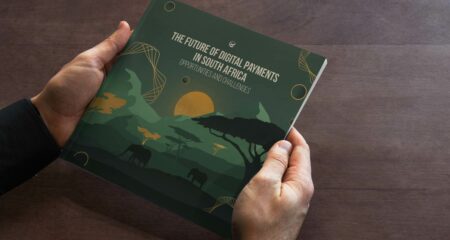
    Entelect releases research on the future of payments in SA

    7 August 2023
    Company News
    Vertiv AI Innovation Roadshow returns to Africa as virtual event

    Vertiv AI Innovation Roadshow returns to Africa as virtual event

    10 April 2026
    What South African parents look for in an online school - CambriLearn

    What South African parents look for in an online school

    9 April 2026
    Modernising legacy systems - without the downtime - BBD Software

    Modernising legacy systems – without the downtime

    9 April 2026
    Opinion
    The conflict of interest at the heart of PayShap's slow adoption - Cheslyn Jacobs

    The conflict of interest at the heart of PayShap’s slow adoption

    26 March 2026
    South Africa's energy future hinges on getting wheeling right - Aishah Gire

    South Africa’s energy future hinges on getting wheeling right

    10 March 2026
    Hold the doom: the case for a South African comeback - Duncan McLeod

    Apple just dropped a bomb on the Windows world

    5 March 2026

    Subscribe to Updates

    Get the best South African technology news and analysis delivered to your e-mail inbox every morning.

    Latest Posts
    South Africa's AI policy is a bureaucrat's dream - Solly Malatsi

    South Africa’s draft AI policy is a bureaucrat’s dream

    10 April 2026
    Big Tech is going nuclear

    Big Tech is going nuclear

    10 April 2026
    5G expected to reshape South Africa's wireless broadband market

    5G expected to reshape South Africa’s wireless broadband market

    10 April 2026
    Warning that South Africa's digital competitiveness is in retreat

    Warning that South Africa’s digital competitiveness is in retreat

    10 April 2026
    © 2009 - 2026 NewsCentral Media
    • Cookie policy (ZA)
    • TechCentral – privacy and Popia

    Type above and press Enter to search. Press Esc to cancel.

    Manage consent

    TechCentral uses cookies to enhance its offerings. Consenting to these technologies allows us to serve you better. Not consenting or withdrawing consent may adversely affect certain features and functions of the website.

    Functional Always active
    The technical storage or access is strictly necessary for the legitimate purpose of enabling the use of a specific service explicitly requested by the subscriber or user, or for the sole purpose of carrying out the transmission of a communication over an electronic communications network.
    Preferences
    The technical storage or access is necessary for the legitimate purpose of storing preferences that are not requested by the subscriber or user.
    Statistics
    The technical storage or access that is used exclusively for statistical purposes. The technical storage or access that is used exclusively for anonymous statistical purposes. Without a subpoena, voluntary compliance on the part of your Internet Service Provider, or additional records from a third party, information stored or retrieved for this purpose alone cannot usually be used to identify you.
    Marketing
    The technical storage or access is required to create user profiles to send advertising, or to track the user on a website or across several websites for similar marketing purposes.
    • Manage options
    • Manage services
    • Manage {vendor_count} vendors
    • Read more about these purposes
    View preferences
    • {title}
    • {title}
    • {title}