
Close Menu
TechCentralTechCentral

    Subscribe to the newsletter

    Get the best South African technology news and analysis delivered to your e-mail inbox every morning.

    Facebook X (Twitter) YouTube LinkedIn
    WhatsApp Facebook X (Twitter) LinkedIn YouTube
    TechCentralTechCentral
    • News
      DA MP's fintech denies clients were kept in the dark - Mark Burke

      DA MP’s fintech denies clients were kept in the dark

      19 August 2026
      Absa's AI is writing its code and answering its calls - Johnson Idesoh

      Absa’s AI is writing its code and answering its calls

      19 August 2026
      WhatsApp's free lunch ends on 1 October

      WhatsApp’s free lunch ends on 1 October

      19 August 2026
      South Afircan inflation breaks its upward run

      South African inflation breaks its upward run

      19 August 2026
      Nissan's Rosslyn plant buyer now also builds police robots

      Nissan’s Rosslyn plant buyer now also builds police robots

      19 August 2026
    • World
      Russia building its own Starlink - and faster than expected - Vadym Skibitskyi

      Russia building its own Starlink – and faster than expected

      11 August 2026
      Meta AI will now tell parents if their teen is in crisis

      Meta AI will now tell parents if their teen is in crisis

      17 July 2026
      IBM shares crash 25% as AI upends software spending - Arvind Krishna

      IBM shares crash 25% as AI upends software spending

      15 July 2026
      Jony Ive's first OpenAI device: an AI smart speaker - Jony Ive and Sam Altman

      Jony Ive’s first OpenAI device: an AI smart speaker

      15 July 2026
      Stripe, Advent in talks to buy PayPal for $53-billion

      Stripe, Advent in talks to buy PayPal for $53-billion

      15 July 2026
    • In-depth
      Google DeepMind CEO Demis Hassabis. Image: John Sears

      The plan to stop AI from breaking the world

      16 July 2026
      The internet has a Strait of Hormuz problem

      The internet has a Strait of Hormuz problem

      15 July 2026
      AI boom sparks rally, frenzy and fear

      AI boom sparks rally, frenzy and fear

      11 June 2026
      Every plug-in hybrid on sale in South Africa, ranked by price - Lamborghini Temerario

      Every plug-in hybrid on sale in South Africa, ranked by price

      7 June 2026
      What Wi-Fi 8 will mean for wireless networks

      What Wi-Fi 8 will mean for wireless networks

      1 June 2026
    • TCS
      Meet the CIO | Discovery's Derek Wilcocks on AI, guardrails and growth

      Meet the CIO | Derek Wilcocks on how AI personalised Vitality

      13 August 2026
      TCS | Money just became native to the internet - Steven Boykey Sidley

      TCS | Money just became native to the internet – Steven Boykey Sidley

      12 August 2026
      TCS+ | Specops' Darren James on continuous trust in an AI world

      TCS+ | Specops’ Darren James on continuous trust in an AI world

      7 August 2026
      TCS+ | How AI is turning hardware into a subscription service - Shane van der Merwe Merchant West

      TCS+ | How AI is turning hardware into a subscription service

      6 August 2026
      TCS+ | Why South African workers must become supervisors of digital labour - Accelera Digital Group Cliff de Wit

      TCS+ | Why South African workers must become supervisors of digital labour

      31 July 2026
    • Opinion
      The author, Jannie van Zyl

      Selling vapour is corporate suicide in slow motion

      16 July 2026
      Brazil's online gambling crackdown is a lesson for South Africa

      How Amazon outmanoeuvred Starlink in South Africa

      15 July 2026
      The Popia problem with agentic AI - Herman Haasbroek

      The Popia problem with agentic AI

      14 July 2026
      The author, Fanie van Rooyen

      South Africa can still catch the AI wave – here’s how

      7 July 2026
      The author, Fanie van Rooyen

      The AI utopia South Africa can’t afford

      1 July 2026
    • Company Hubs
      • 1Stream
      • Africa Data Centres
      • AfriGIS
      • Altron Digital Business
      • Altron Document Solutions
      • Altron Group
      • Arctic Wolf
      • Ascent Technology
      • AvertITD
      • BBD
      • Braintree
      • CallMiner
      • CambriLearn
      • CM Telecom
      • Contactable
      • CYBER1 Solutions
      • Digicloud Africa
      • Digimune
      • Domains.co.za
      • ESET
      • Euphoria Telecom
      • HOSTAFRICA
      • Incredible Business
      • iONLINE
      • IQbusiness
      • Iris Network Systems
      • Kaspersky
      • LSD Open
      • Mitel
      • NEC XON
      • Netstar
      • Network Platforms
      • Next DLP
      • Ovations
      • Paracon
      • Paratus
      • Q-KON
      • SevenC
      • SkyWire
      • Solid8 Technologies
      • Telit Cinterion
      • Telviva
      • Tenable
      • Vertiv
      • Videri Digital
      • Vodacom Business
      • Vox
      • Wipro
      • Workday
      • XLink
    • Sections
      • AI and machine learning
      • Banking
      • Broadcasting and Media
      • Cloud services
      • Contact centres and CX
      • Cryptocurrencies
      • Education and skills
      • Electronics and hardware
      • Energy and sustainability
      • Enterprise software
      • Financial services
      • HealthTech
      • Information security
      • Internet and connectivity
      • Internet of Things
      • Investment
      • IT services
      • Lifestyle
      • Policy and regulation
      • Public sector
      • Retail and e-commerce
      • Satellite communications
      • Science
      • SMEs and start-ups
      • Social media
      • Talent and leadership
      • Telecoms
      • Watts & Wheels
    • Events
    • Advertise
    TechCentralTechCentral
    Home » Sections » Information security » A CISO’s guide to modern security observability

    A CISO’s guide to modern security observability

    Promoted | In 2003, Pedro Castillo witnessed the real cost of delayed threat detection. The scale and urgency of the challenge have only intensified since then.
    By Solid8 Technologies20 May 2025
    Twitter LinkedIn Facebook WhatsApp Email Telegram Copy Link
    News Alerts
    WhatsApp

    A CISO's guide to modern security observabilityIn 2003, I witnessed the real cost of delayed threat detection. As technical director of cybersecurity at Bankinter, one of Spain’s largest banks, I saw a sophisticated phishing attack unfold in real time.

    Despite our tools collecting data diligently, thousands of customer accounts were exposed. Every minute of processing delay gave attackers more time to act. That experience reshaped how I view security: when protecting people’s financial lives, delays of even a few minutes aren’t just inefficient, they’re indefensible.

    In 2025, the scale and urgency of this challenge have only intensified.

    The CISO’s imperative

    As cyberthreats grow more sophisticated and attack surfaces expand, security leaders must turn vast volumes of data into real-time intelligence – before threats strike. Global data creation is set to exceed 180 zettabytes by 2025 (Statista), a ninefold increase since 2020.

    This surge offers opportunity for smarter detection, but also risk: critical signals lost in noise can lead to costly breaches. The average MTTD (mean time to detect) for complex attacks is 277 days (IBM report, 2023).

    Recent high-profile incidents tell a stark story:

    • Capital One Bank took 127 days to detect unauthorised access
    • Marriott Hotel discovered its breach after four years
    • LastPass failed to detect its initial breach for months

    The harsh reality? The security tools we’ve trusted for years just weren’t built for today’s threat landscape, or the threats coming our way tomorrow. They’re leaving organisations vulnerable, and the cost is staggering.

    The cost of data complexity

    The impact of complex, inadequate systems extends far beyond immediate incident response costs, which reached US$4.88-million/incident this year – a 10% increase over last year and the highest total ever (IBM). Consider these alarming statistics:

    • Eighty-two percent of organisations cite data storage costs as a top security budget concern (IDC), and data storage costs are increasing around 25% annually (IDC)
    • Only 25% of enterprise data is used for analytics, while as much as 75% is “dark” and goes unused (Splunk)
    • Only 32% of data meets quality standards for analysis (Gartner)
    • Some 82% report infrastructure overload from data volume (Cloud Native Computing Foundation)

    This paints a clear picture: we’re drowning in underutilised, low-value data.

    Legacy observability tools worsen the problem:

    • Batch delays: Traditional SIEMs process data in 15-minute to 24-hour intervals – far too slow for cybersecurity.
    • High costs: Storing SIEM data can cost $2 000 to $7 000/TB annually (Gartner), an unsustainable model as volumes grow.
    • Alert fatigue: Analysts face over 11 000 alerts daily (Forrester, 2023), with nearly half being false positives – leading to burnout and missed threats.

    Despite incremental upgrades, most solutions still rely on batch processing and outdated cost models, leaving teams overwhelmed and exposed.
    The technical architecture difference

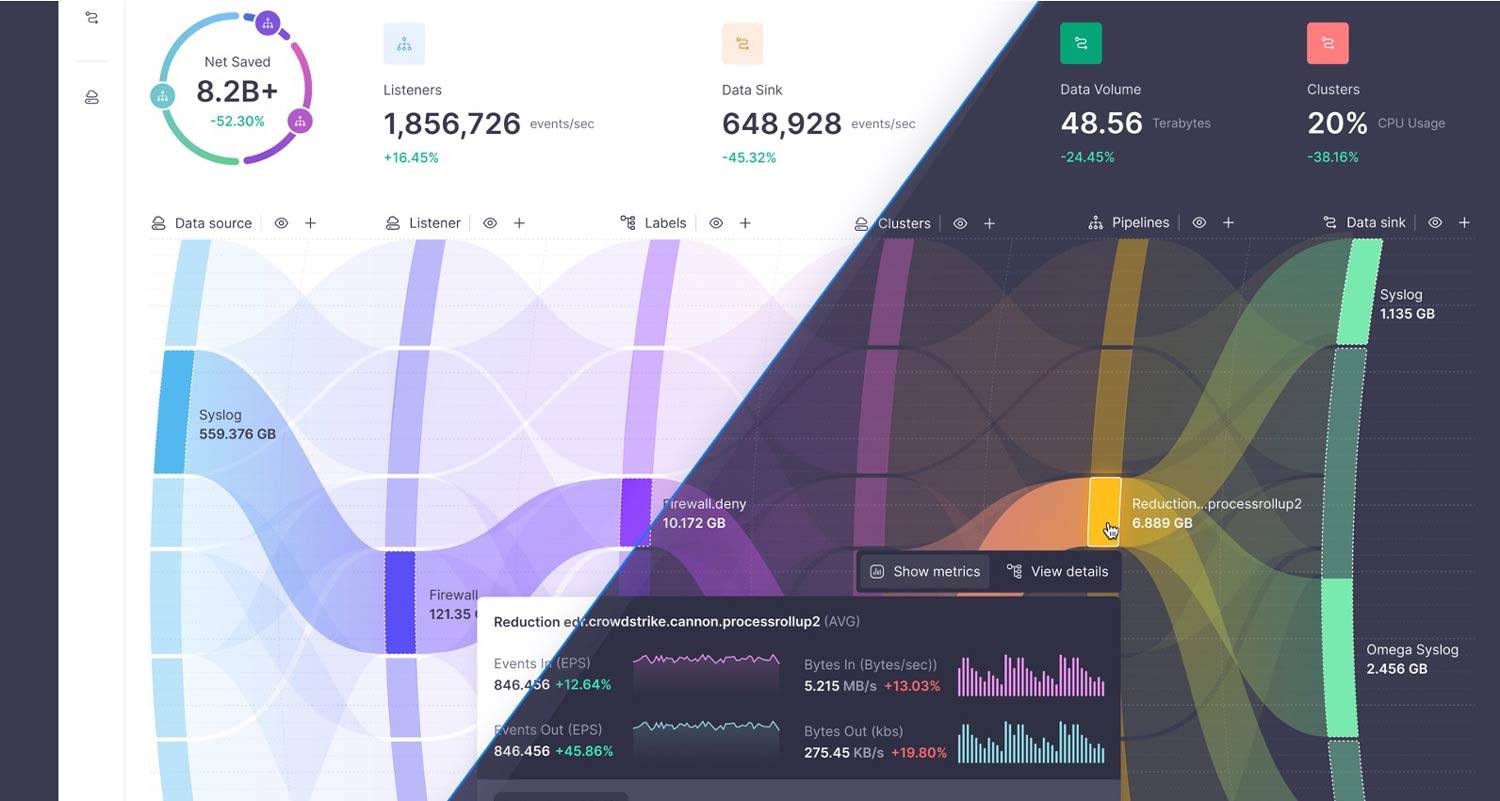
    When we started Onum, we knew solving this required a complete rethink – not just faster tools, but a paradigm shift in how data is handled.

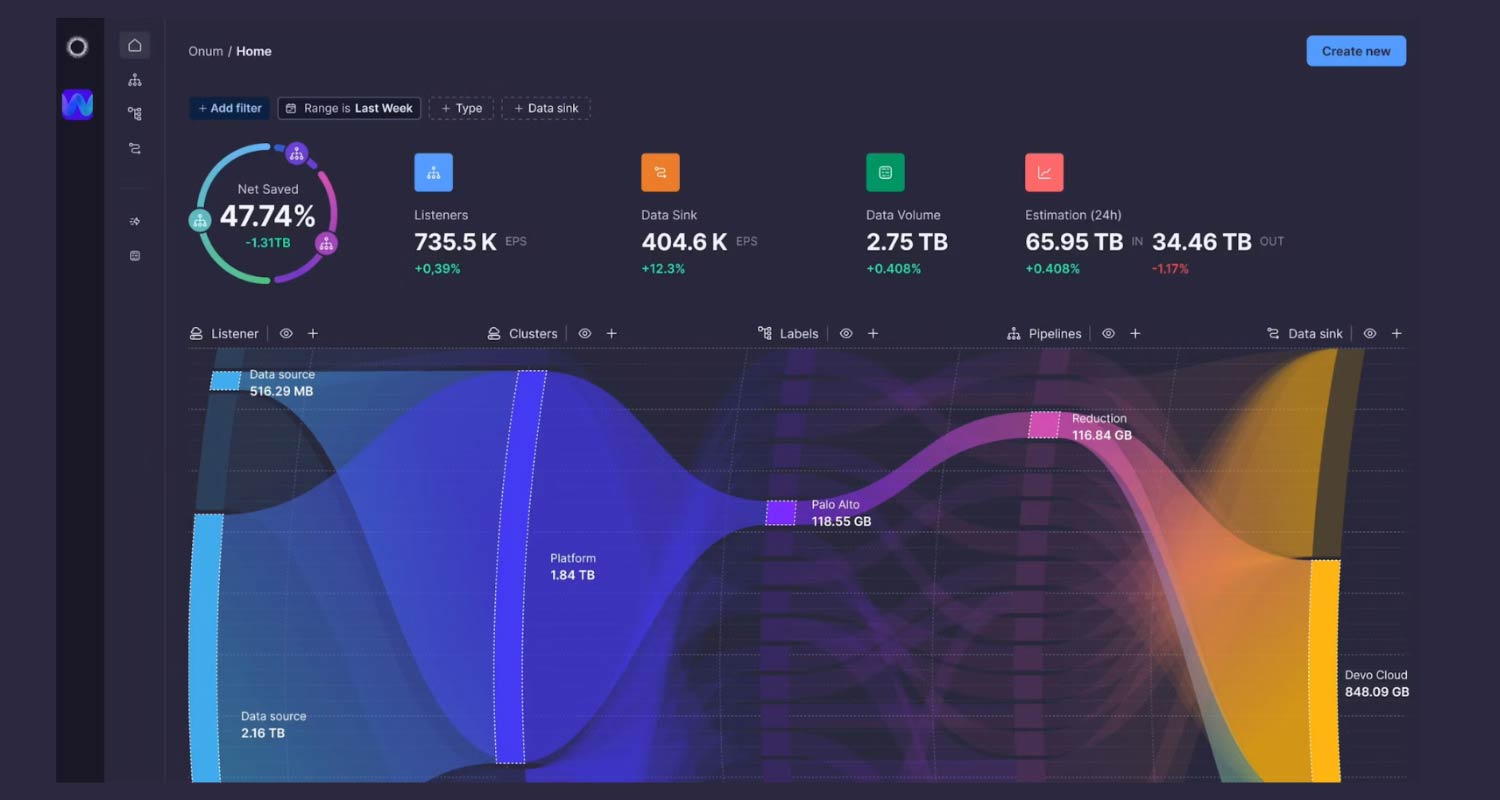
    Onum processes and enriches data at the source, helping organisations reduce complexity, outpace ever-growing risks and deliver customer value in milliseconds, not minutes. We’ve reimagined security observability through a modern, stream-based architecture designed for today’s threat landscape and tomorrow’s security challenges. Onum delivers:

    • Sub-millisecond data enrichment and analysis through stream processing
    • Real-time data classification and prioritisation
    • Native integration with major SIEM, Soar and EDR platforms through Rest APIs and dedicated connectors
    • Automated response workflow triggers with sub-second latency
    • Continuous correlation using machine learning-based threat detection

    The platform’s workflows integrate seamlessly with your existing security infrastructure, extending and enhancing current investments rather than replacing them. Onum unlocks immediate, impactful insights because we:

    • Reduce overhead and operational bottlenecks: Onum processes data at the edge, as close as possible to its source. Listeners capture and analyse it in real time – before reaching your SIEM – achieving performance up to 5x faster than batch processing, while easing the load on core systems.
    • Enrich and transform data in transit: Instead of sending all data to the SIEM, Onum identifies the value of each data field in transit. Only business-critical data goes to analytics tools, while full-fidelity logs are retained for compliance, cutting costs without sacrificing visibility.
    • Enable real-time data-backed decisions: Onum uses real-time correlation and smart triggers to detect risks and anomalies as data moves across the wire. This allows for instant remediation and fewer false positives, reducing alert fatigue.
    The cost of waiting: time is the ultimate currency

    With cybercrime expected to hit $10.5-trillion annually by 2025, the real question is: can you afford not to modernise? Every minute of detection delay sharply increases risk and potential damage.

    Organisations using Onum are seeing:

    • A 70% reduction in detection and response times
    • A 50% decrease in data storage costs
    • Significant improvement in analytics effectiveness
    • Enhanced compliance through automated controls

    The time for real time is now

    That night at Bankinter taught me a critical lesson: in cybersecurity, time isn’t just money – it’s the line between protection and compromise. As attack surfaces grow, waiting for post-incident analysis isn’t just risky – it’s reckless.

    About Onum
    Onum gives security and platform teams real-time control over the data that powers critical decisions. Built for data in motion, Onum filters noise, enriches signals and moves only the right data to the right tools with zero delay. No lag. No waste. No vendor baggage. Unlike legacy-heavy or observability-only tools, Onum delivers fast, focused control without the overhead. Teams cut costs, accelerate detection and simplify pipelines without sacrificing depth or flexibility. Whether optimising SIEMs or managing multi-cloud telemetry, Onum replaces complexity with clarity, so your data flows cleanly, securely and instantly when it matters most.

    Sign up for this upcoming webinar on May 22. And to learn more about Onum, contact our distributor partner, Solid8 Technologies at [email protected].

    • The author, Pedro Castillo, is co-founder of Onum
    • Read more articles by Solid8 Technologies on TechCentral
    • This promoted content was paid for by the party concerned

    Follow TechCentral on Google News Add TechCentral as your preferred source on Google


    Onum Solid8 Solid8 Technologies
    WhatsApp YouTube
    Share. Facebook Twitter LinkedIn WhatsApp Telegram Email Copy Link
    Previous ArticleCnnect V2 – elevating employee experience with powerful new features
    Next Article South Africa’s Sim card ‘washing machine’

    Related Posts

    When CTEM, AI and a unified attack surface meet - RedRok, Solid8 Technologies

    When CTEM, AI and a unified attack surface meet

    17 March 2026
    Weak passwords cause one in five breaches - Solid8 and Specops have the fix

    Weak passwords cause one in five breaches – Solid8 and Specops have the fix

    22 October 2025
    Trust in automation: Solid8 and AlgoSec power Africa's secure digital future

    Trust in automation: Solid8 and AlgoSec power Africa’s secure digital future

    21 October 2025
    Add A Comment

    Comments are closed.

    Company News
    Fidelity turns to Sigfox to spot fires before they start

    Fidelity turns to Sigfox to spot fires before they start

    19 August 2026
    Paratus Rwanda marks first year with AfPIF opening reception

    Paratus Rwanda marks first year with AfPIF opening reception

    18 August 2026
    Digital sovereignty on the agenda at Africa Cybersecurity Indaba

    Digital sovereignty on the agenda at Africa Cybersecurity Indaba

    18 August 2026
    Opinion
    The author, Jannie van Zyl

    Selling vapour is corporate suicide in slow motion

    16 July 2026
    Brazil's online gambling crackdown is a lesson for South Africa

    How Amazon outmanoeuvred Starlink in South Africa

    15 July 2026
    The Popia problem with agentic AI - Herman Haasbroek

    The Popia problem with agentic AI

    14 July 2026

    Subscribe to Updates

    Get the best South African technology news and analysis delivered to your e-mail inbox every morning.

    Latest Posts
    DA MP's fintech denies clients were kept in the dark - Mark Burke

    DA MP’s fintech denies clients were kept in the dark

    19 August 2026
    Absa's AI is writing its code and answering its calls - Johnson Idesoh

    Absa’s AI is writing its code and answering its calls

    19 August 2026
    Fidelity turns to Sigfox to spot fires before they start

    Fidelity turns to Sigfox to spot fires before they start

    19 August 2026
    WhatsApp's free lunch ends on 1 October

    WhatsApp’s free lunch ends on 1 October

    19 August 2026
    © 2009 - 2026 NewsCentral Media
    Built and maintained by Chronon
    • Cookie policy (ZA)
    • TechCentral – privacy and Popia

    Type above and press Enter to search. Press Esc to cancel.

    Manage consent

    TechCentral uses cookies to enhance its offerings. Consenting to these technologies allows us to serve you better. Not consenting or withdrawing consent may adversely affect certain features and functions of the website.

    Functional Always active
    The technical storage or access is strictly necessary for the legitimate purpose of enabling the use of a specific service explicitly requested by the subscriber or user, or for the sole purpose of carrying out the transmission of a communication over an electronic communications network.
    Preferences
    The technical storage or access is necessary for the legitimate purpose of storing preferences that are not requested by the subscriber or user.
    Statistics
    The technical storage or access that is used exclusively for statistical purposes. The technical storage or access that is used exclusively for anonymous statistical purposes. Without a subpoena, voluntary compliance on the part of your Internet Service Provider, or additional records from a third party, information stored or retrieved for this purpose alone cannot usually be used to identify you.
    Marketing
    The technical storage or access is required to create user profiles to send advertising, or to track the user on a website or across several websites for similar marketing purposes.
    • Manage options
    • Manage services
    • Manage {vendor_count} vendors
    • Read more about these purposes
    View preferences
    • {title}
    • {title}
    • {title}