Close Menu
TechCentralTechCentral

    Subscribe to the newsletter

    Get the best South African technology news and analysis delivered to your e-mail inbox every morning.

    Facebook X (Twitter) YouTube LinkedIn
    WhatsApp Facebook X (Twitter) LinkedIn YouTube
    TechCentralTechCentral
    • News
      Sentech is in dire straits

      Sentech is in dire straits

      10 February 2026
      A million reasons monopolies don't work

      A million reasons monopolies don’t work

      10 February 2026
      South Africa's data centre market ripe for consolidation - Joshua Smythwood

      South Africa’s data centre market ripe for consolidation

      10 February 2026
      Watts & Wheels S1E4: 'We drive an electric Uber'

      Watts & Wheels S1E4: ‘We drive an electric Uber’

      10 February 2026
      Online sales can't save Pick n Pay from Black Friday hangover

      Online sales can’t save Pick n Pay from Black Friday hangover

      10 February 2026
    • World
      EU regulators take aim at WhatsApp

      EU regulators take aim at WhatsApp

      9 February 2026
      Musk hits brakes on Mars mission

      Musk hits brakes on Mars mission

      9 February 2026
      Crypto firm accidentally sends R700-billion in bitcoin to its users

      Crypto firm accidentally sends R700-billion in bitcoin to its users

      8 February 2026
      AI won't replace software, says Nvidia CEO amid market rout - Jensen Huang

      AI won’t replace software, says Nvidia CEO amid market rout

      4 February 2026
      Apple acquires audio AI start-up Q.ai

      Apple acquires audio AI start-up Q.ai

      30 January 2026
    • In-depth
      How liberalisation is rewiring South Africa's power sector

      How liberalisation is rewiring South Africa’s power sector

      21 January 2026
      The top-performing South African tech shares of 2025

      The top-performing South African tech shares of 2025

      12 January 2026
      Digital authoritarianism grows as African states normalise internet blackouts

      Digital authoritarianism grows as African states normalise internet blackouts

      19 December 2025
      TechCentral's South African Newsmakers of 2025

      TechCentral’s South African Newsmakers of 2025

      18 December 2025
      Black Friday goes digital in South Africa as online spending surges to record high

      Black Friday goes digital in South Africa as online spending surges to record high

      4 December 2025
    • TCS
      TCS+ | How Cloud On Demand is helping SA businesses succeed in the cloud - Xhenia Rhode, Dion Kalicharan

      TCS+ | Cloud On Demand and Consnet: inside a real-world AWS partner success story

      30 January 2026
      Watts & Wheels S1E4: 'We drive an electric Uber'

      Watts & Wheels S1E3: ‘BYD’s Corolla Cross challenger’

      30 January 2026
      Watts & Wheels S1E4: 'We drive an electric Uber'

      Watts & Wheels S1E2: ‘China attacks, BMW digs in, Toyota’s sublime supercar’

      23 January 2026

      TCS+ | Why cybersecurity is becoming a competitive advantage for SA businesses

      20 January 2026
      Watts & Wheels S1E4: 'We drive an electric Uber'

      Watts & Wheels: S1E1 – ‘William, Prince of Wheels’

      8 January 2026
    • Opinion
      South Africa's skills advantage is being overlooked at home - Richard Firth

      South Africa’s skills advantage is being overlooked at home

      29 January 2026
      Why Elon Musk's Starlink is a 'hard no' for me - Songezo Zibi

      Why Elon Musk’s Starlink is a ‘hard no’ for me

      26 January 2026
      South Africa's new fibre broadband battle - Duncan McLeod

      South Africa’s new fibre broadband battle

      20 January 2026
      AI moves from pilots to production in South African companies - Nazia Pillay SAP

      AI moves from pilots to production in South African companies

      20 January 2026
      South Africa's new fibre broadband battle - Duncan McLeod

      ANC’s attack on Solly Malatsi shows how BEE dogma trumps economic reality

      14 December 2025
    • Company Hubs
      • Africa Data Centres
      • AfriGIS
      • Altron Digital Business
      • Altron Document Solutions
      • Altron Group
      • Arctic Wolf
      • AvertITD
      • Braintree
      • CallMiner
      • CambriLearn
      • CYBER1 Solutions
      • Digicloud Africa
      • Digimune
      • Domains.co.za
      • ESET
      • Euphoria Telecom
      • Incredible Business
      • iONLINE
      • IQbusiness
      • Iris Network Systems
      • LSD Open
      • NEC XON
      • Netstar
      • Network Platforms
      • Next DLP
      • Ovations
      • Paracon
      • Paratus
      • Q-KON
      • SevenC
      • SkyWire
      • Solid8 Technologies
      • Telit Cinterion
      • Tenable
      • Vertiv
      • Videri Digital
      • Vodacom Business
      • Wipro
      • Workday
      • XLink
    • Sections
      • AI and machine learning
      • Banking
      • Broadcasting and Media
      • Cloud services
      • Contact centres and CX
      • Cryptocurrencies
      • Education and skills
      • Electronics and hardware
      • Energy and sustainability
      • Enterprise software
      • Financial services
      • Information security
      • Internet and connectivity
      • Internet of Things
      • Investment
      • IT services
      • Lifestyle
      • Motoring
      • Public sector
      • Retail and e-commerce
      • Satellite communications
      • Science
      • SMEs and start-ups
      • Social media
      • Talent and leadership
      • Telecoms
    • Events
    • Advertise
    TechCentralTechCentral
    Home » In-depth » Davos elite fear cyberattacks and war

    Davos elite fear cyberattacks and war

    By Agency Staff17 January 2018
    Twitter LinkedIn Facebook WhatsApp Email Telegram Copy Link
    News Alerts
    WhatsApp
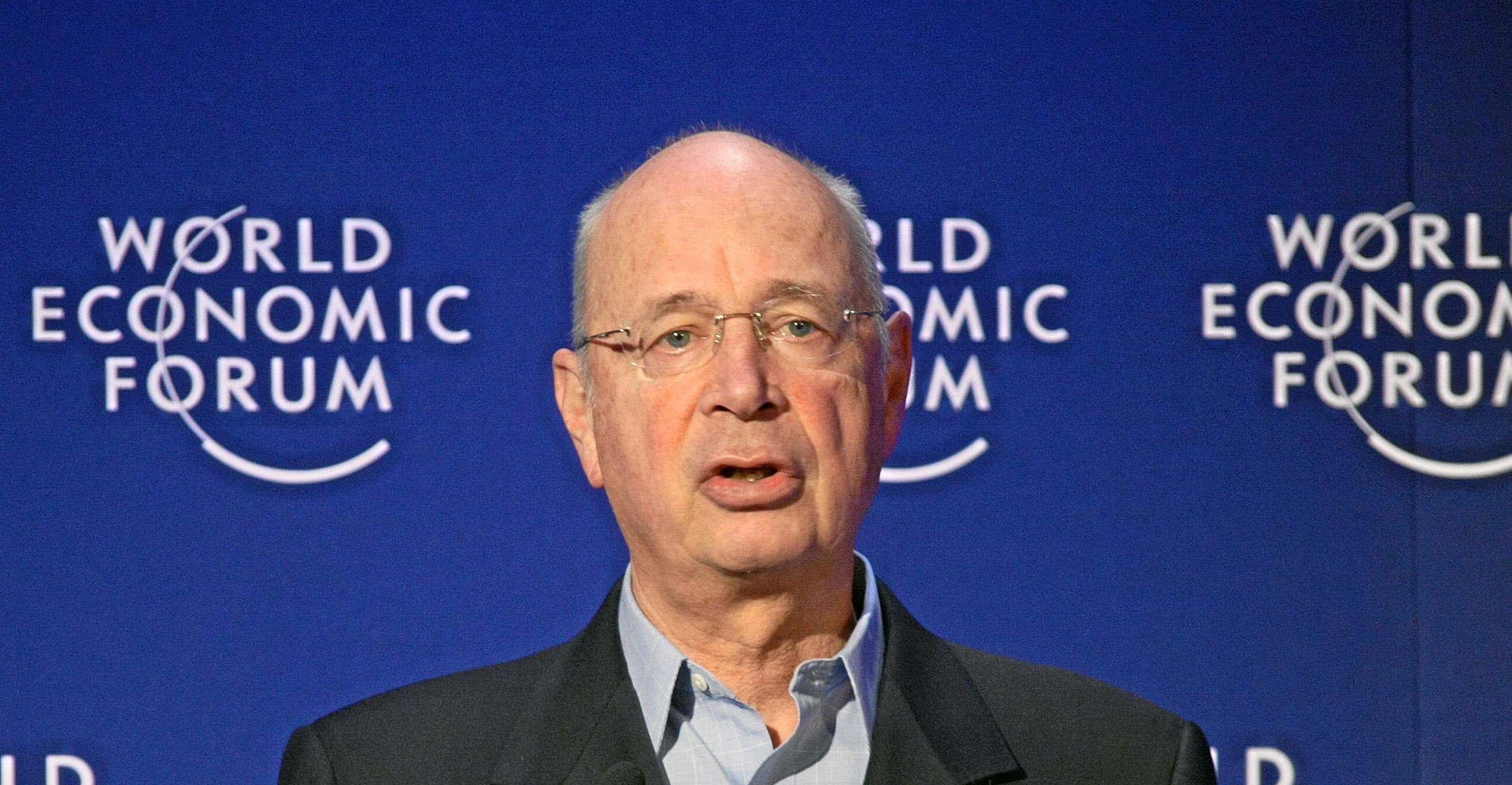
    World Economic Forum founder Klaus Schwab

    The threat of large-scale cyberattacks and a “deteriorating geopolitical landscape” since the election of US President Donald Trump have jumped to the top of the global elite’s list of concerns, the World Economic Forum said ahead of its annual meeting in Davos, Switzerland.

    The growing cyber-dependency of governments and companies, and the associated risks of hacking by criminals or hostile states, has replaced social polarisation as a main threat to stability over the next decade, according to the WEF’s yearly assessment of global risks, published on Wednesday at Bloomberg’s new European headquarters in London. The Davos forum starts 23 January in the Swiss ski resort.

    While the economic outlook has improved, nine in 10 of those surveyed said they expect political or trade clashes between major powers to worsen. Some 80% saw an increased chance of war.

    Cybersecurity is the issue most on the minds of boards and executives, given the visibility of state-sponsored attacks in an environment of increasing geopolitical friction

    “Cybersecurity is the issue most on the minds of boards and executives, given the visibility of state-sponsored attacks in an environment of increasing geopolitical friction,” John Drzik, president of global risk at Marsh USA, which contributed to the study, said in an interview. “Businesses are increasingly dependent on technology and are aware that the openings hackers have are growing. As they invest in things like artificial intelligence, they are widening their attack surface.”

    Drzik said recent high-profile security breaches that have fuelled this perception include the WannaCry ransomware attack, which infected more than 300 000 computers across 150 countries, and NotPetya, which caused two companies losses in excess of US$300m. The cost of cybercrime to firms over the next five years could reach $8 trillion, the WEF said.

    Similarly, thousands of attacks every month on critical infrastructure from European aviation systems to US nuclear power stations show state-sponsored hackers are attempting to “trigger a breakdown in the systems that keep societies functioning”, the WEF said.

    In the preview, which would suggest Davos attendees are in for one of the bleaker forums in recent memory, almost two-thirds of global leaders saw risks intensifying from 2017. Climate change and extreme weather remained the greatest concerns of those surveyed. Economic worries receded as a unified pickup in growth and stocks at record highs suggest the world may finally be recovering from the financial crisis, a decade on.

    Trump appearance

    Donald Trump’s appearance at the WEF’s annual meeting — the first for a sitting US president since Bill Clinton in 2000 — is sure to dominate proceedings, as well as ruffle feathers. Treasury secretary Steve Mnuchin has said Trump and his advisers will use the event to talk about the president’s “America First” agenda, arguing that an economy that’s good for the US is good for everyone else.

    However “America First” is interpreted, Marsh’s Drzik said “unilateral, protectionist policies and nationalism are another key risk” that Davos attendees have identified, and one that clashes with the WEF’s core philosophy.

    “To address complex issues like climate change, cyber warfare and food security requires a multilateral response, but the political direction is going in exactly the opposite way,” Drzik said. “Trump is an example of this, but far from the only one.”

    The town of Davos in Switzerland

    The report singled out the US on trade after Trump pulled out of the Trans-Pacific Partnership and sought a renegotiation of the North Atlantic Free Trade Agreement. Around the world in 2016, about three-quarters of so-called interventions — such as imposing tariffs, or blocking imports of certain goods to protect domestic jobs — were protectionist in nature, and the trend appears to have continued through last year, the WEF said. The UK’s trade barriers may also increase as it leaves the European Union, it noted.

    The Global Risks Perception Survey quizzed 999 business leaders, politicians and academics — of whom 70% were male — on 30 potential global risks, ranging from deflation and asset bubbles to natural disasters, terrorist attacks and water crises. They identified trends that could exacerbate those risks, including an aging population and income inequality.

    Each year, the forum ranks these perceived dangers by impact and likelihood. While weapons of mass destruction retained their place as the most destructive risk, their use was judged the least likely to occur. Extreme weather events and other natural disasters were the next most impactful, and were also rated the most likely to occur. The next most likely: cyberattacks, mass data frauds or thefts and a failure to slow climate change.

    This generation enjoys unprecedented technological, scientific and financial resources” but is “the first generation to take the world to the brink of a systems breakdown

    The report also delineated some more far-fetched dangers, including fleets of AI-controlled pirate drone ships that decimate the ocean’s fish stocks.

    Societal polarisation — 2017’s headline risk, after the populist wave led to Brexit and Trump’s victory — slipped down the rankings, but remained one of the main destabilising forces, according to the report. The WEF reiterated that rising income inequality is one of the most important underlying trends determining global events.

    The report will provide the backbone for the talks in Davos, whose theme this year is “Creating a Shared Future in a Fractured World”.

    That slogan might clash with some of the realities of the $50 000/head event, which takes place in a sealed-off Alpine retreat guarded by thousands of soldiers and police. Famed for lavish, booze-fuelled, corporate-sponsored parties with tight guest lists that take place after the official meetings are done for the day, the WEF has drawn criticism over whether it’s an appropriate forum to discuss solutions to society’s biggest problems.

    WEF founder Klaus Schwab, in the report’s preface, didn’t address this criticism head-on, but said the forum aims to support change for the better of humanity by encouraging cooperation between governments and the private and charitable sectors. That said, even he struck a pessimistic tone.

    “This generation enjoys unprecedented technological, scientific and financial resources” but is “the first generation to take the world to the brink of a systems breakdown”, Schwab wrote.

    Optimists, if there are any left, be warned: the forum also identified several more tail risks.  — Reported by Stephen Morris, (c) 2018 Bloomberg LP



    Donald Trump Klaus Schwab top WEF World Economic Forum
    WhatsApp YouTube Follow on Google News Add as preferred source on Google
    Share. Facebook Twitter LinkedIn WhatsApp Telegram Email Copy Link
    Previous ArticleDid the bitcoin bubble just burst?
    Next Article Planned obsolescence is our fault, not Apple’s

    Related Posts

    Taiwan, US strike strategic AI and chip supply-chain pact - TSMC

    Taiwan, US strike strategic AI and chip supply-chain pact

    20 January 2026
    Excuse me while I slip past your security - Richard Frost

    Excuse me while I slip past your security

    12 January 2026
    Nvidia's next AI chips are in full production - Jensen Huang

    Nvidia’s next AI chips are in full production

    6 January 2026
    Company News
    Breaking down the data silos: why single views require collaboration - Altron Digital Business

    Breaking down the data silos: why single views require collaboration

    10 February 2026
    How Avast and Gen Digital are raising the bar in cybersecurity

    How Avast and Gen Digital are raising the bar in cybersecurity

    10 February 2026
    How mobile platforms are transforming online trading - Exness

    How mobile platforms are transforming online trading

    10 February 2026
    Opinion
    South Africa's skills advantage is being overlooked at home - Richard Firth

    South Africa’s skills advantage is being overlooked at home

    29 January 2026
    Why Elon Musk's Starlink is a 'hard no' for me - Songezo Zibi

    Why Elon Musk’s Starlink is a ‘hard no’ for me

    26 January 2026
    South Africa's new fibre broadband battle - Duncan McLeod

    South Africa’s new fibre broadband battle

    20 January 2026

    Subscribe to Updates

    Get the best South African technology news and analysis delivered to your e-mail inbox every morning.

    Latest Posts
    Sentech is in dire straits

    Sentech is in dire straits

    10 February 2026
    A million reasons monopolies don't work

    A million reasons monopolies don’t work

    10 February 2026
    South Africa's data centre market ripe for consolidation - Joshua Smythwood

    South Africa’s data centre market ripe for consolidation

    10 February 2026
    Watts & Wheels S1E4: 'We drive an electric Uber'

    Watts & Wheels S1E4: ‘We drive an electric Uber’

    10 February 2026
    © 2009 - 2026 NewsCentral Media
    • Cookie policy (ZA)
    • TechCentral – privacy and Popia

    Type above and press Enter to search. Press Esc to cancel.

    Manage consent

    TechCentral uses cookies to enhance its offerings. Consenting to these technologies allows us to serve you better. Not consenting or withdrawing consent may adversely affect certain features and functions of the website.

    Functional Always active
    The technical storage or access is strictly necessary for the legitimate purpose of enabling the use of a specific service explicitly requested by the subscriber or user, or for the sole purpose of carrying out the transmission of a communication over an electronic communications network.
    Preferences
    The technical storage or access is necessary for the legitimate purpose of storing preferences that are not requested by the subscriber or user.
    Statistics
    The technical storage or access that is used exclusively for statistical purposes. The technical storage or access that is used exclusively for anonymous statistical purposes. Without a subpoena, voluntary compliance on the part of your Internet Service Provider, or additional records from a third party, information stored or retrieved for this purpose alone cannot usually be used to identify you.
    Marketing
    The technical storage or access is required to create user profiles to send advertising, or to track the user on a website or across several websites for similar marketing purposes.
    • Manage options
    • Manage services
    • Manage {vendor_count} vendors
    • Read more about these purposes
    View preferences
    • {title}
    • {title}
    • {title}